• Menu
  • Skip to primary navigation
  • Skip to main content
  • Skip to primary sidebar

Country Life In BC Logo

The agricultural news source in British Columbia since 1915

  • Headlines
  • Calendar
  • Subscribe
  • Advertise
  • About
  • Archives
  • Contact
  • Search
  • Headlines
  • Calendar
  • Subscribe
  • Advertise
  • About
  • Archives
  • Contact
  • Search

Primary Sidebar

Originally published:

MARCH 2024
Vol. 110 Issue 3

Subscribe Now!

Sign up for free weekly FARM NEWS UPDATES

Loading form…

Your information will not be
shared or sold ever

Stories In This Edition

Crown land shakeup

Start me up!

BC Veg mandate expands

Trade show, gala celebrate the best in agriculture

Editorial: Reconciliation is never a one-way street

Back 40: We need to do better, and we can

Viewpoint: The Land Act: important context, faulty process

BC vineyards wiped out by freeze event

Sidebar: Cherries, tender fruits affected

Apple industry eyes orderly marketing plan

Ag Briefs: BC Tree Fruits members vote down hostile motions

Ag Briefs: Farmers lead protest in Duncan

BC FIRB strategic plan aims to clarify role

Two Interior farms face abuse claims

Good times!

Study shows BC farmers markets add value

Story  tellers

Berry farmer recognized for achievements

Nursery specialist appointed

Blueberries top pick amid strong demand

Awards generate buzz for BC beekeepers

Promising developments in berry breeding

Help takes stress out of Farmgate meat licences

New abattoir offers lifeline to local growers

Pest science

Cattle spark fencing debate

Thistle require innovative management

Job well done!

Pruners should focus on needs of the bush

Islands show brings community together

Farm Story: Spring is claling, but my phone is in pieces

Forecasting will improve with AI technology

Woodshed: Breakfast gives Delta time to do her research

New honeybee program in works for Cariboo

Jude’s Kitchen: Food trend points to healthier eating

More Headlines

Follow us on Facebook

Comments Box SVG iconsUsed for the like, share, comment, and reaction icons

6 hours ago

The Township of Langley Farm and Ranch Exhibition Society is hosting a public open house this evening to gather input on plans to transform the historic Belmont Farm into an agricultural exhibition, education and heritage hub. Farmers, ranchers, and community members are invited to share their feedback. The open house is at the George Preston Rec Centre, 6-8 pm.

Township of Langley Farm and Ranch Exhibition Society
#BCAg
... See MoreSee Less

The Township of Langley Farm and Ranch Exhibition Society is hosting a public open house this evening to gather input on plans to transform the historic Belmont Farm into an agricultural exhibition, education and heritage hub. Farmers, ranchers, and community members are invited to share their feedback. The open house is at the George Preston Rec Centre, 6-8 pm. 

Township of Langley Farm and Ranch Exhibition Society 
#BCAg
View Comments
  • Likes: 6
  • Shares: 0
  • Comments: 0

Comment on Facebook

9 hours ago

The sold-out Southern Interior Horticulture show continues today. Education sessions range from rodent control to new tree fruit varieties, with the afternoon devoted to improving spraying techniques for orchardists and vineyard managers. When not listening to speakers, producers are checking the trade show.

#BCAg
... See MoreSee Less

The sold-out Southern Interior Horticulture show continues today. Education sessions range from rodent control to new tree fruit varieties, with the afternoon devoted to improving spraying techniques for orchardists and vineyard managers. When not listening to speakers, producers are checking the trade show.

#BCAg
View Comments
  • Likes: 6
  • Shares: 0
  • Comments: 0

Comment on Facebook

11 hours ago

The BC Poultry Association has lowered its avian flu biosecurity threat level from red to yellow, citing declining HPAI risk factors and fewer wild bird infections. Strong biosecurity practices helped BC limit cases this winter to 38 premises, down from 81 last year. For more, see today's Farm News Update from Country Life in #BCAg#BCAg ... See MoreSee Less

Link thumbnail

Poultry biosecurity notches down

www.countrylifeinbc.com

Declining risk factors for highly pathogenic avian influenza (HPAI) have prompted the BC Poultry Association to lower the industry’s biosecurity threat level from red to yellow. The decision…
View Comments
  • Likes: 11
  • Shares: 2
  • Comments: 1

Comment on Facebook

🐥💛

1 day ago

The application deadline for cost-shared funding through the Buy BC program is coming up on February 20. Up to $2 million through the Buy BC Partnership Program is available annually to BC producers and processors to support local marketing activities that increase consumer awareness of BC agriculture and BC food and beverages. For more information, visit buybcpartnershipprogram.ca/.

Buy BC

#BCAg
... See MoreSee Less

Link thumbnail

Home - Buy BC Partnership Program

buybcpartnershipprogram.ca

Buy BC Partnership Program Increase your visibility with Buy BC The Buy BC Partnership Program is a fundamental component of Buy BC that provides up to $2 million in cost-shared funding annually to lo...
View Comments
  • Likes: 3
  • Shares: 0
  • Comments: 0

Comment on Facebook

1 day ago

The Sik-E-Dakh (Glen Vowell) First Nation's Skeena Fresh hydroponic operation has doubled production capacity thanks to a $130,632 Northern Development Infrastructure Trust grant. Growing lettuce, kale, herbs and more in shipping containers, the operation uses 90% less water than traditional farming while providing 1,200 people with year-round access to fresh, locally grown greens. Their story is in the February edition of Country Life in BC, the agricultural news source for BC’s farmers and ranchers.

Northern Development Initiative Trust
#BCAg
... See MoreSee Less

The Sik-E-Dakh (Glen Vowell) First Nations Skeena Fresh hydroponic operation has doubled production capacity thanks to a $130,632 Northern Development Infrastructure Trust grant. Growing lettuce, kale, herbs and more in shipping containers, the operation uses 90% less water than traditional farming while providing 1,200 people with year-round access to fresh, locally grown greens. Their story is in the February edition of Country Life in BC, the agricultural news source for BC’s farmers and ranchers. 

Northern Development Initiative Trust 
#BCAg
View Comments
  • Likes: 15
  • Shares: 1
  • Comments: 0

Comment on Facebook

Subscribe | Advertise

The agricultural news source in British Columbia since 1915
  • Email
  • Facebook

Study shows BC farmers markets add value

BCAFM, UNBC conduct economic impact research

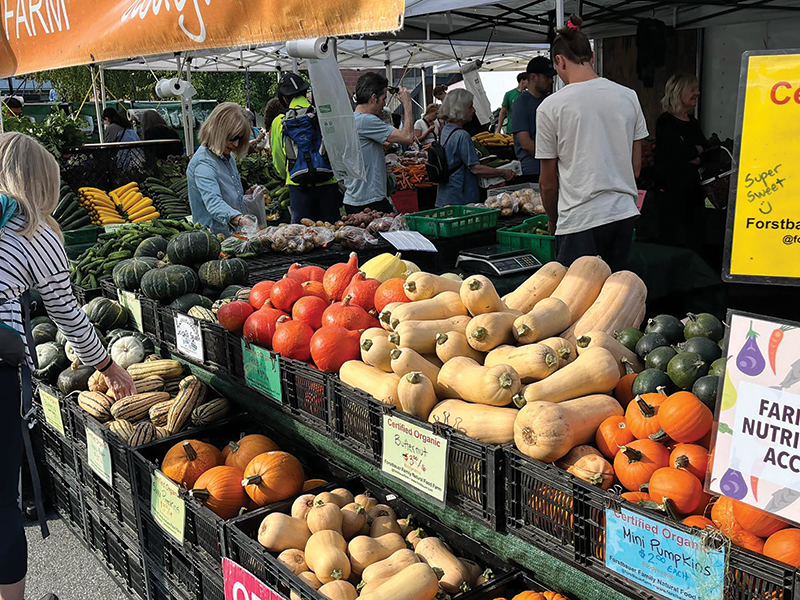
Farmers markets are the sole source of income for Forstbauer Family Natural Food Farm in Chilliwack, which means a recent study showing growing market traffic is good news. FACEBOOK / FORSTBAUER FAMILY NATURAL FOOD FARM

February 28, 2024 byKate Ayers

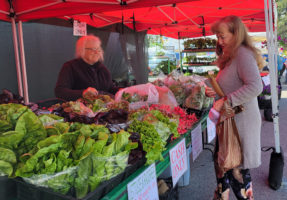
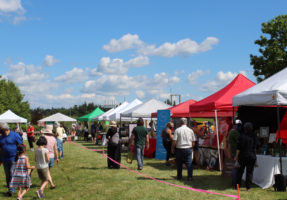
VANCOUVER – A farmers market is much more than a place to buy food, serving as a social hub, tourism destination and economic driver with significant community benefits, a new study shows.

“What this study does is really bring a lot of data and credibility,” says BC Association of Farmers Markets executive director Heather O’Hara. “It’s really compelling to people who already believe in farmers markets, but it’s also really compelling to those who are maybe discounting or not seeing farmers markets as the legitimate economic development engines that they are.”

The 2023 study examined 70 BCAFM members, which is double the number of markets that participated in a 2012 study and represents 51% of the province’s 137 markets.

The broader scope was thanks in part to support from the BC Ministry of Agriculture and Food, in addition to a special allocation in BCAFM’s own budget funded from revenues.

“We wanted to go big because we could; we had some money to invest,” O’Hara says. “We know how important this study is and we wanted to reach as many markets as we could. So, we embarked on that.”

The study was conducted in partnership with University of Northern British Columbia associate professor David Connell, who also led two previous studies in 2006 and 2012.

The research team began recruiting farmers markets in winter and spring 2023, gathered data between June and August, and analyzed the data through October. Connell developed the report with BCAFM staff in November 2023.

The results showed growth and more growth.

“The operative word to describe everything is more. More direct sales, more visitors, more tourists, more shoppers, more markets, bigger markets, more vendors, more indirect sales to adjacent businesses who neighbour farmers markets,” O’Hara says. “We’ve only seen a trajectory of more since 2006 to 2012, similarly 2012 to 2023.”

The aggregated data shows $155 million in direct sales and $233 million in annual economic impact across the province. Farmers markets see nearly five million visitors every year and 3.7 million of those visitors are shoppers. On average, each shopper spends $42.50 at a farmers market. In addition, farmers markets bring business to adjacent businesses.

“Where a farmers market bumps up against other businesses outside of the market, they’re responsible for generating about $118 million of direct sales to those neighbouring businesses,” O’Hara says. “It’s a pretty big deal in terms of drawing people to an area.”

About 17% of the annual visitors to farmers markets and their surrounding communities are tourists.

Also, the study showed that the BC Farmers Market Nutrition Coupon Program provides nearly $4 million worth of fresh BC-farmed food to low-income families.

While direct sales were not broken down by vendor type, anecdotally, O’Hara estimates that over 50% of farmers market vendors are primary producers and prepared food, which equates to around 2,000 farmers who use markets for direct-to-consumer sales.

Sole source of income

At Forstbauer Family Natural Food Farm in Chilliwack, farmers markets are the sole source of the family’s income.

“We sell almost everything at farmers markets now. We used to sell to stores and to wholesalers but moved away from that and now we’re doing all farmers markets,” says farm co-owner Niklaus Forstbauer.

Forstbauer, along with his wife Lindsey, father, and siblings’ families participate in five markets throughout the year: Trout Lake, West End, Riley Park, Coquitlam and Port Moody.

Since the 1970s, the family has grown mixed vegetables, cattle and poultry to provide food for local communities.

The Forstbauers appreciate the market atmosphere and the opportunity to build relationships with their customers.

“It has a big impact on a community like Coquitlam because people are meeting the person who grows their food, and they are able to get that much closer to understanding how food is grown, how we do things and what kind of people we are,” Lindsey Forstbauer says.

The family also enjoys interacting with other farmers on a weekly basis to share stories and tips and tricks.

Overall, this study points to the value of farmers markets and that perhaps, in fact, bigger is better, so these community mainstays are a solid investment.

“[The study] makes a case for municipalities, government (and) other kinds of decision-makers to invest in these farmers markets because of the power of impact they bring, whether it be economic impact, community social hub, tourism destination, free and family entertainment, community building,” O’Hara says.

Such investments could include dedicated equipment and infrastructure and useable market space at cost or for free. Another significant improvement could be budgets for paid and dedicated market staff.

“This study is demonstrating that that is a good place to put your money to help pay for the operations of these markets, which are bringing so much value to your community and region,” O’Hara says.

Lindsey Forstbauer agrees that consistent space as well as ample parking and accessible transit nearby would help farmers markets and their vendors.

Increase footprint

The study calls for increasing the footprint of farmers markets instead of limiting it, to benefit businesses and ultimately support food security.

“We want to shorten food supply chains. We want to sustain our food and farmlands because these are the people that feed us, and especially in crisis, especially with climate change,” O’Hara says. “With pandemics and other kinds of challenges, local food, which is grown and sold through farmers markets, is really important. We need to support more local direct food sales channels, not fewer.”

BCAFM staff have shared the study results with member markets and provided them with tools and resources to use the information for their individual contexts.

The results are also scheduled for presentation and discussion at the BCAFM annual general meeting and conference in North Vancouver at the beginning of March.

For more information about the study and its results, visit [bcfarmersmarket.org].
 

Related Posts

You may be interested in these posts from the same category.

Denman Island farmers supported

BC Veg mandate questioned

Northern vets in short supply

Province funds market purchases

Farmers market returns

Non-BC market vendors approved

Record nutrition coupon funding

Province boosts online funding

BC farmers markets go online

Farmers Market

BC markets question “local” definition

Previous Post: « Metchosin farm transitions to new owners with high hopes
Next Post: Fruit growers discuss challenges »

Copyright © 2026 Country Life in BC · All Rights Reserved