
ABBOTSFORD – A sheaf of recommendations for creating a better business environment for BC producers is now in the hands of the province.
The final recommendations of the Premier’s Task Force on Agriculture and Food Economy were submitted in late November and published by the province almost immediately on November 24.
“They were published on the website the same day we had our final meeting, which was faster than we even anticipated they would go up,” says Chris Bodnar, who represented primary agriculture on the task force.
“Now we’ll see how they’re responded to,” he says. “Because this went to the premier’s office, the expectation is that the action is probably going to be delegated across more than one ministry.”
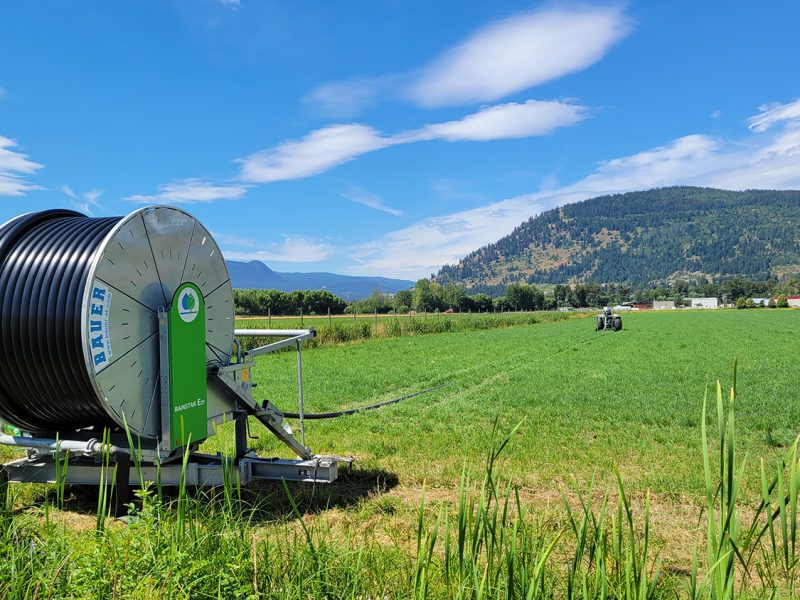
Recommendations include streamlining permitting processes for water and clearing the backlog of existing applications, as well as ensuring water access for food production.
Competitiveness is the focus of 10 recommendations, including a review of government programs in partnership with industry to hone support for growers. The long-standing demand of exempting farm inputs and equipment from the provincial sales tax also features.
A training gap analysis to ensure a domestic workforce exists and improving access to foreign workers – and the protections for those workers – are key to the labour recommendations.
A review of the Agricultural Land Reserve and the criteria for farm class status are key recommendations for land, with the province also called to prioritize investments in agriculture and food and related infrastructure to support the sector.
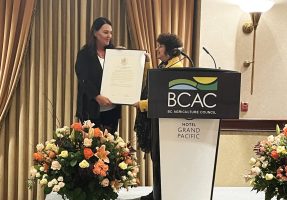
Co-chaired by BC Agriculture Council chair Danielle Synotte representing primary producers, BC Food & Beverage CEO James Donaldson representing processors and Michelle Koski, deputy minister with the BC Ministry of Agriculture and Food, the 13-member task force was announced in January 2025 in response to BCAC requests.
While recommendations aren’t binding on government, the task force hopes to ensure action through ongoing monitoring.
“This process has built strong relationships, trust and goodwill across industry and government. The task force has been clear that this momentum must continue,” says Synotte. “Moving forward, BCAC and taskforce members see a need to sustain this collaboration and to hold both government and industry leaders accountable for taking meaningful steps toward implementation.”
A stand-alone recommendation of the task force is implementation, calling specifically for bi-annual meetings to track progress.
Discussions within industry, coordinated by the BCAC, are also on the books in the coming weeks to sift through the 32 recommendations, establish priorities and create a work plan for 2026 on where the sector wishes to focus its efforts.
These priorities will inform sector requests for funding under the next federal-provincial agricultural policy framework, following the expiry of the Sustainable Canadian Agricultural Partnership in 2028.
“Some of what is on the table is going to help the (BC) Ministry of Agriculture move forward with how it approaches the negotiations for the next five-year funding arrangement with the federal government,” says Bodnar. “This forms the basis for actually thinking strategically in the ministry.”
While many of the recommendations address issues familiar to both large and small producers, Julia Smith, executive director of the Small-Scale Meat Producers Association, says there needs to be an explicit acknowledgment of small producers.
“If policies are shaped around large-scale commodity models, small-scale producers will continue to face barriers,” she says. “We need to be intentionally included in these conversations or we will be unintentionally excluded. And that would be a real blow to regional food security in BC, especially in rural areas.”
But scaling up production is critical if BC wants to attract and retain a healthy food system.
Processing is a case in point. While the decline of processing in the 1970s and 1980s was associated with the loss of frozen vegetable processors, today’s processors are large, often national or multinational entities that operate at a scale BC alone can’t supply.
“We don’t have enough production of a lot of product in BC to fully support a processing business,”: says Bodnar. “The decisions that have to be made there are complex, and represent the complexities of international markets that didn’t exist in the 70s and 80s.”






 Townhall looks to the future of agrivoltaics