• Menu
  • Skip to primary navigation
  • Skip to main content
  • Skip to primary sidebar

Country Life In BC Logo

The agricultural news source in British Columbia since 1915

  • Headlines
  • Calendar
  • Subscribe
  • Advertise
  • About
  • Archives
  • Contact
  • Search
  • Headlines
  • Calendar
  • Subscribe
  • Advertise
  • About
  • Archives
  • Contact
  • Search

Primary Sidebar

Originally published:

May 2018
Vol. 104 Issue 5

Subscribe Now!

Sign up for free weekly FARM NEWS UPDATES

Select list(s) to subscribe to


By submitting this form, you are consenting to receive marketing emails from: Country Life in BC. You can revoke your consent to receive emails at any time by using the SafeUnsubscribe® link, found at the bottom of every email. Emails are serviced by Constant Contact
Your information will not be
shared or sold ever

Stories In This Edition

Fraser Valley bee shortage overstated

Still waiting: ag waste regs

Cannabis shift delivers hit to vegetable sector

Peter’s legacy

Editorial: The straight dope

Back Forty: Our best friend deserves greater recognitiontory

Overheard: Farmers should embrace First Nations model

Change is coming, fast and furious

Foundation effective in fueling ag projects

New meat producer association launched

Sidebar: On board

Traceability regs to include animal movement

Report recommends FN approval on tenures

Province urged to regulate farmhouse size

Dairy group highlights industry needs on tour

Ottawa plays hardball with Agassiz leases

IAF showcases innovative ag projects

Neonics in water not from farm operations

Potato growers need to exploit opportunities

Spuds in tubs

Vegetable commission optimistic

Sidebar: Variety update

MacAulay grilled over farm labour issues

Apiarists want pollination income to count

Sidebar: BCHPA launches pollinator health study

Raspberry growers increase board size

Popham meets with berry growers

Hazelnut growers flush with optimism

Ranchers schooled in disaster preparation

Westgen eyes beef semen sales for growth

Big prize money draws big entries

Holstein auction sets new sale benchmark

North 40 bull tops Vanderhoof sale

Reclaiming market share in a global economy

Day-neutrals show promise for strawberry fields

Weather skews results in Peace variety trials

Salal berries have market potential

Vole control in blueberries

Wannabe: When tragedy brings us together

Watchful eye

Woodshed Chronicles: Henderson masterminds an apology

Jude’s Kitchen: Celebrate May with beef on the ‘barbie’

More Headlines

Follow us on Facebook

Comments Box SVG iconsUsed for the like, share, comment, and reaction icons

7 days ago

... See MoreSee Less

View Comments
  • Likes: 4
  • Shares: 0
  • Comments: 0

Comment on Facebook

7 days ago

On the last day of the BC Organic Conference, Thursday, Molly Thurston of Pearl Agricultural Consulting helped growers learn how to manage bugs such as codling moth, wireworm, and rootworm in organic growing systems. Her talk alongside Renee Prasad included hands-on activities in which participants checked out various traps and examined pests under microscopes. Be sure to look for more upcoming ag events on our online calendar at www.countrylifeinbc.com/calendar/

#BCAg
... See MoreSee Less

On the last day of the BC Organic Conference, Thursday, Molly Thurston of Pearl Agricultural Consulting helped growers learn how to manage bugs such as codling moth, wireworm, and rootworm in organic growing systems. Her talk alongside Renee Prasad included hands-on activities in which participants checked out various traps and examined pests under microscopes. Be sure to look for more upcoming ag events on our online calendar at www.countrylifeinbc.com/calendar/

#BCAg
View Comments
  • Likes: 15
  • Shares: 0
  • Comments: 0

Comment on Facebook

1 week ago

Well-known organic farmer and podcaster Jordan Marr gets interviewed by Country Life in BC’s own columnist and potato mavin Anna Helmer during the opening session of the BC Organic Conference at Harrison Hot Springs yesterday. Sessions run today (Wednesday) and Thursday and include organic and regenerative growing practices and expanding and advocating for the organic sector, all under the background of the newly launched Organic BC banner.

#BCAg
... See MoreSee Less

Well-known organic farmer and podcaster Jordan Marr gets interviewed by Country Life in BC’s own columnist and potato mavin Anna Helmer during the opening session of the BC Organic Conference at Harrison Hot Springs yesterday. Sessions run today (Wednesday) and Thursday and include organic and regenerative growing practices and expanding and advocating for the organic sector, all under the background of the newly launched Organic BC banner.

#BCAg
View Comments
  • Likes: 37
  • Shares: 2
  • Comments: 1

Comment on Facebook

Interested in finding out more about this

3 weeks ago

Today, we remember those who sacrificed their lives or their well-being for our freedom. Lest we forget. ... See MoreSee Less

Today, we remember those who sacrificed their lives or their well-being for our freedom. Lest we forget.
View Comments
  • Likes: 8
  • Shares: 0
  • Comments: 0

Comment on Facebook

1 month ago

FarmFolk CItyFolk is hosting its biennial BC Seed Gathering in Harrison Hot Springs November 27 and 28. Farmers, gardeners and seed advocates are invited to learn more about seed through topics like growing perennial vegetables for seed, advances in seed breeding for crop resilience, seed production as a whole and much more. David Catzel, BC Seed Security program manager with FF/CF will talk about how the Citizen Seed Trail program is helping advance seed development in BC. Expect newcomers, experts and seed-curious individuals to talk about how seed saving is a necessity for food security. ... See MoreSee Less

Link thumbnail

BC Seed Gathering - FarmFolk CityFolk

farmfolkcityfolk.ca

Save the date for our upcoming 2023 BC Seed Gathering happening this November 3rd and 4th at the Richmond Kwantlen Polytechnic University campus.
View Comments
  • Likes: 1
  • Shares: 0
  • Comments: 0

Comment on Facebook

Subscribe | Advertise

The agricultural news source in British Columbia since 1915
  • Email
  • Facebook

Traceability regs to include animal movement

Farm to fork and everything in between will be tracked

Sheep

April 30, 2018 byBarbara Johnstone-grimmer

PENDER ISLAND – Traceability regulations are right around the corner.

The promise is something livestock producers have heard before, but this time the Canadian Food Inspection Agency (CFIA) says it’s the truth.

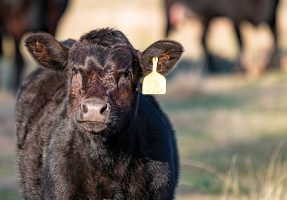
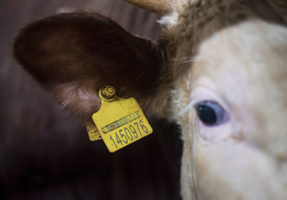
Sometime within the next year, regulations will require more than just an approved ear tag. Premises will have to be registered and movements of animals reported to the Canadian Livestock Tracking System (CLTS) if producers expect to purchase or sell livestock.

“Producers tell me that we’ve been talking about changes in traceability regulations for a long time and many are at the point where they just want to know what the regulations are going to be and what their obligations are,” says Canadian Sheep Federation executive director and Canadian Cattle Identification Agency (CCIA) board member Corlena Patterson.

“We have a general understanding of the changes that are coming,” says Lisa Levesque, traceability and premises identification team lead for the BC Ministry of Agriculture. “The proposed regulations are federal so we are looking forward to seeing the details when they’re published.”

Patterson and Levesque are both members of the industry-government Regulatory Implementation Committee (RIC) formed to identify and prioritize actions to help prepare for a smooth implementation of the amendments to the federal health of animals regulations.

Regulations coming

Draft regulations should be released later this year, and a 75-day comment period will follow. The final regulations will likely be published and take effect sometime in 2019.

Traceability is the ability to trace an item – animal, plant or product – through the supply chain, from farm to  fork, backwards or forwards. The purpose is to provide accurate and timely information to reduce the impacts of a natural disaster, disease outbreak or a food recall.

In the case of a serious situation, such as a reportable disease like BSE (bovine spongiform encephalopathy, or ‘mad cow’ disease) or scrapie, animals would be traced back to the home farm and sites in between. Stock that came in contact with infected animals would also be identified through the tracing system.

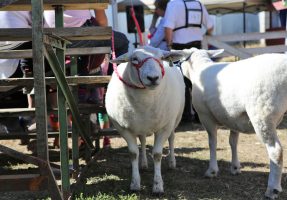
The system depends on the traceability of animals, the premises where they’re located and movements between premises to be identifiable and tracked. Animal movements will have to be reported to the responsible administrator (with only a few exemptions), and a manifest (paper or electronic) that details the movement will need to accompany animals in transit. Subject premises include farms, auctions, assembly yards, fairgrounds, abattoirs and rendering plants.

These three parts to traceability – identification, premises, movements – allow the tracing of an animal through the supply chain.

If the system works well, the impact of an event on the livestock industry can be minimized and market access can be maintained.

BSE cost livestock producers across Canada upwards of $6 billion in 2003. Current estimates peg the cost of cross-species outbreak of a disease like Foot and Mouth at up to $45 billion.

The new regulations will address gaps in the current livestock identification and traceability system. Proposed regulatory amendments include identification requirements for goats, farmed deer and farmed elk, which increases the number of animals subject to traceability requirements. Regulations have already been in place for identification of bison, cattle, sheep and pigs.

The pork industry in BC and the rest of Canada is ahead of the pack with Pig Trace, a mandatory traceability system in place since 2014. The rest of the livestock industry currently has a broken system, however.

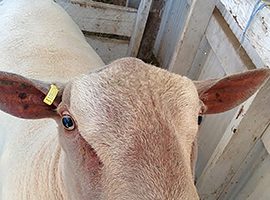
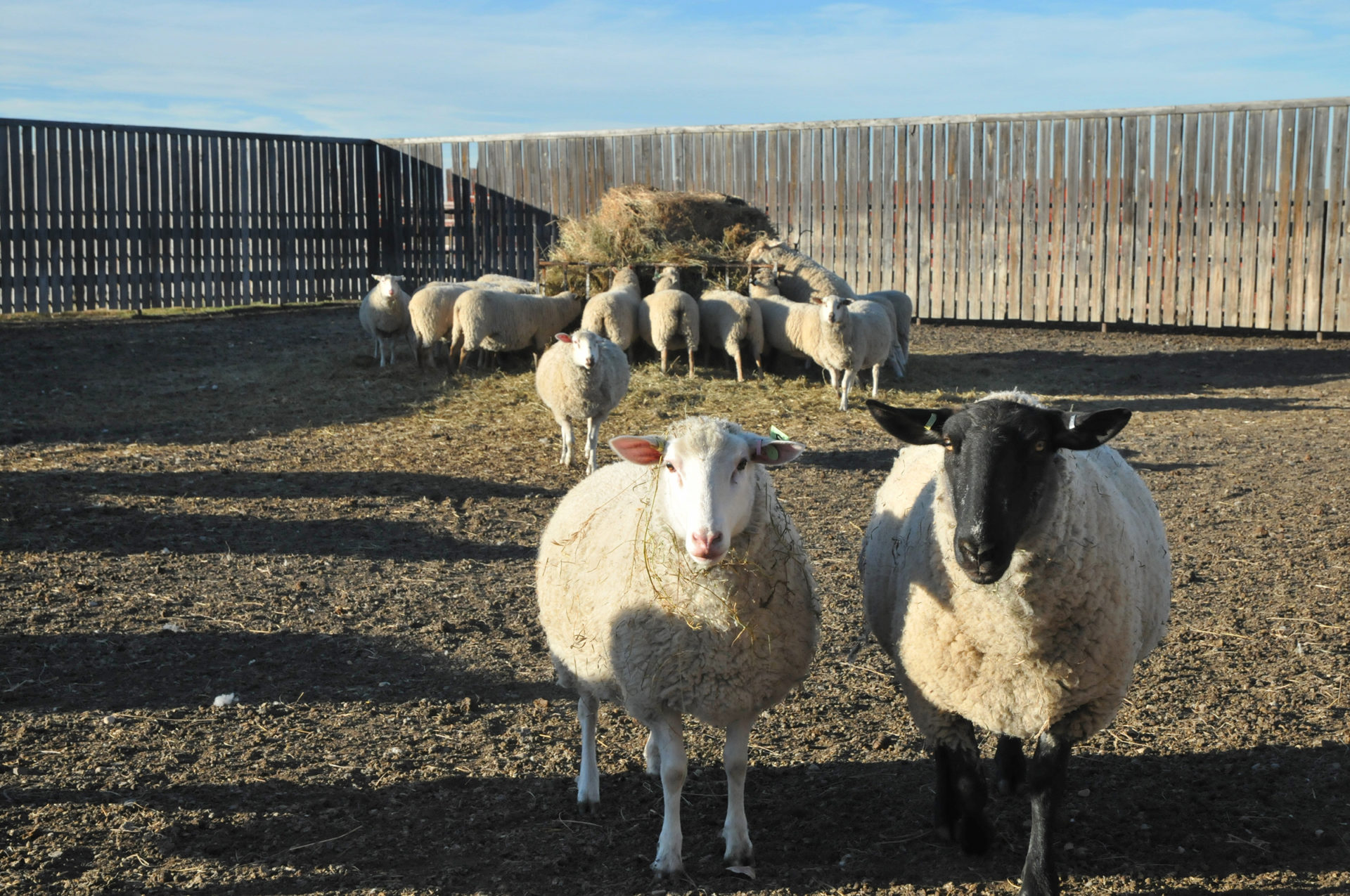
Sheep producers, for example, purchase approved RFID tags and the tag information is stored in the CLTS. Although producers are required to keep records of movements, they aren’t required to report to CLTS.

Moreover, livestock species that share diseases are not currently all subject to traceability requirements; the time to report an event is too long to support an effective response; information about the precise location of livestock is limited; and information on domestic animal movements is lacking.

The new regulations also promise to reduce the maximum time to report a tag replacement, movement or animal death to the responsible administrator from 30 days to seven.

In Canada, premises ID falls to the provinces. BC has made it voluntary but producers will need to register their farms and provide a premises ID number if they want to move livestock to other locations. Registration of the premises can be done by mail or online in a simple 10-minute process that provides producers with unique identifiers for their locations.

Premises ID proved its worth during last year’s natural disasters. According to the BC Cattlemen’s Association, the Cariboo wildfires resulted in almost full registration of its members within days last summer.

To report animal movements or purchases of new animals, producers and other livestock facilities will need to report to the CLTS system online or by telephone. The new Canada Agricultural Partnership (CAP) is expected to have cost-share funding available to assist individuals and organizations purchase equipment and management software to help make the reporting process as easy and accurate as possible.
Related Posts

You may be interested in these posts from the same category.

New round of traceability funding available

Small farmers raise concerns about CanadaGAP

BC considers making premises ID mandatory

Sheep

New year, new funding

Traceability regulations expected next year

Previous Post: « New meat producer association launched
Next Post: Province urged to regulate farmhouse size »

Copyright © 2025 Country Life in BC · All Rights Reserved