• Menu
  • Skip to primary navigation
  • Skip to main content
  • Skip to primary sidebar

Country Life In BC Logo

The agricultural news source in British Columbia since 1915

  • Headlines
  • Calendar
  • Subscribe
  • Advertise
  • About
  • Archives
  • Contact
  • Search
  • Headlines
  • Calendar
  • Subscribe
  • Advertise
  • About
  • Archives
  • Contact
  • Search

Primary Sidebar

Originally published:

NOVEMBER 2020
Vol. 106 Issue 11

Subscribe Now!

Sign up for free weekly FARM NEWS UPDATES

Loading form…

Your information will not be
shared or sold ever

Stories In This Edition

Apple returns raise alarm

Ottawa urged to fulfil promises

Snow job

New government faces old issues in next term

Caught in the act

Editorial: Time for action

Back 40: Finding the perks in a pandemic world

Viewpoint: Changing times require a flexible vision

Invasive hornet nest destroyed south of Langley

Country Life in BC wins a record eight national awards

US launches investigation into blueberries

Hog producers face changes to code of practice

Growers, wineries welcome sustainability launch

Sustainability program delivers value to industry

Ag Briefs: Ag sector claims $8.5 billion economic impact

Ag Briefs: Farm worker protection funded

Ag Briefs: Autumn calf prices down

Grant programs encourage Indigenous ag projects

Range issues dominate NOLA meeting

Sidebar: BCV Cattlemen critique water intentions

BC Beef plant in Falkland ready to process this month

Winter warning

Corn trial results help make better planting decisions

Sidebar: Sweet results

New barn promises better egg production

ALR co-founder, defender embraces retirement

Seed sppliers seeing sustained demand as 2021 orders begin

Research: Breeding crops for the future means looking backwards

Straight ahead

Potatoes head for record-breaking harvest

Weather posed challenges for garlic growers

Garlic groewrs employ mixed marketing strategies

Association aims to foster collaboration

Demand boosts interest in older cider apples

Evans Farms marks a century of ranching

Farm Story: Nominees announced for seasonal awards

Bursary winner plants roots in Cawston

Provincial Winter Fair hosts live 4-H events

Woodshed: Janice Newberry bids farewell to love-sick Henderson

Where there’s a will, there’s gotta be a way

Jude’s Kitchen: Autumn Eats

More Headlines

Follow us on Facebook

Comments Box SVG iconsUsed for the like, share, comment, and reaction icons

3 hours ago

The Township of Langley Farm and Ranch Exhibition Society is hosting a public open house this evening to gather input on plans to transform the historic Belmont Farm into an agricultural exhibition, education and heritage hub. Farmers, ranchers, and community members are invited to share their feedback. The open house is at the George Preston Rec Centre, 6-8 pm.

Township of Langley Farm and Ranch Exhibition Society
#BCAg
... See MoreSee Less

The Township of Langley Farm and Ranch Exhibition Society is hosting a public open house this evening to gather input on plans to transform the historic Belmont Farm into an agricultural exhibition, education and heritage hub. Farmers, ranchers, and community members are invited to share their feedback. The open house is at the George Preston Rec Centre, 6-8 pm. 

Township of Langley Farm and Ranch Exhibition Society 
#BCAg
View Comments
  • Likes: 2
  • Shares: 0
  • Comments: 0

Comment on Facebook

6 hours ago

The sold-out Southern Interior Horticulture show continues today. Education sessions range from rodent control to new tree fruit varieties, with the afternoon devoted to improving spraying techniques for orchardists and vineyard managers. When not listening to speakers, producers are checking the trade show.

#BCAg
... See MoreSee Less

The sold-out Southern Interior Horticulture show continues today. Education sessions range from rodent control to new tree fruit varieties, with the afternoon devoted to improving spraying techniques for orchardists and vineyard managers. When not listening to speakers, producers are checking the trade show.

#BCAg
View Comments
  • Likes: 5
  • Shares: 0
  • Comments: 0

Comment on Facebook

8 hours ago

The BC Poultry Association has lowered its avian flu biosecurity threat level from red to yellow, citing declining HPAI risk factors and fewer wild bird infections. Strong biosecurity practices helped BC limit cases this winter to 38 premises, down from 81 last year. For more, see today's Farm News Update from Country Life in #BCAg#BCAg ... See MoreSee Less

Link thumbnail

Poultry biosecurity notches down

www.countrylifeinbc.com

Declining risk factors for highly pathogenic avian influenza (HPAI) have prompted the BC Poultry Association to lower the industry’s biosecurity threat level from red to yellow. The decision…
View Comments
  • Likes: 11
  • Shares: 2
  • Comments: 1

Comment on Facebook

🐥💛

24 hours ago

The application deadline for cost-shared funding through the Buy BC program is coming up on February 20. Up to $2 million through the Buy BC Partnership Program is available annually to BC producers and processors to support local marketing activities that increase consumer awareness of BC agriculture and BC food and beverages. For more information, visit buybcpartnershipprogram.ca/.

Buy BC

#BCAg
... See MoreSee Less

Link thumbnail

Home - Buy BC Partnership Program

buybcpartnershipprogram.ca

Buy BC Partnership Program Increase your visibility with Buy BC The Buy BC Partnership Program is a fundamental component of Buy BC that provides up to $2 million in cost-shared funding annually to lo...
View Comments
  • Likes: 3
  • Shares: 0
  • Comments: 0

Comment on Facebook

1 day ago

The Sik-E-Dakh (Glen Vowell) First Nation's Skeena Fresh hydroponic operation has doubled production capacity thanks to a $130,632 Northern Development Infrastructure Trust grant. Growing lettuce, kale, herbs and more in shipping containers, the operation uses 90% less water than traditional farming while providing 1,200 people with year-round access to fresh, locally grown greens. Their story is in the February edition of Country Life in BC, the agricultural news source for BC’s farmers and ranchers.

Northern Development Initiative Trust
#BCAg
... See MoreSee Less

The Sik-E-Dakh (Glen Vowell) First Nations Skeena Fresh hydroponic operation has doubled production capacity thanks to a $130,632 Northern Development Infrastructure Trust grant. Growing lettuce, kale, herbs and more in shipping containers, the operation uses 90% less water than traditional farming while providing 1,200 people with year-round access to fresh, locally grown greens. Their story is in the February edition of Country Life in BC, the agricultural news source for BC’s farmers and ranchers. 

Northern Development Initiative Trust 
#BCAg
View Comments
  • Likes: 14
  • Shares: 1
  • Comments: 0

Comment on Facebook

Subscribe | Advertise

The agricultural news source in British Columbia since 1915
  • Email
  • Facebook

Apple returns raise alarm

Growers threaten to quit

November 1, 2020 bySarbmeet Singh & Peter Mitham

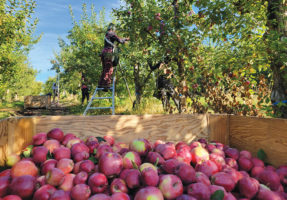
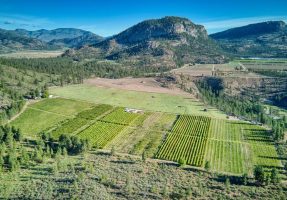
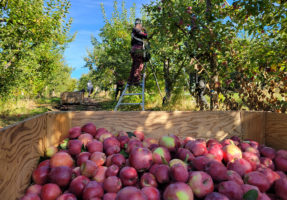
KELOWNA – Okanagan apple growers say ongoing low returns and rising input costs have pushed them to the verge of quitting the industry.

“The financial returns of apple growers have been steadily declining for the past three years,” says Pinder Dhaliwal, an apple grower in Oliver and president of the BC Fruit Growers Association. “On average, apple growers are getting 12 cents per pound for their produce. However, it cost growers 30 cents per pound. Under such a scenario, it is very difficult for the farmers to survive.”

The data shows that Ambrosia apples have been hit hardest. Returns dropped from 34 cents a pound in 2016 to only 13 cents a pound in 2019. Similarly, Spartans returned 15 cents a pound in 2016 but farmers received just 2 cents a pound in 2019.

Growers say the main reasons for declining returns are competition from Washington growers and a lack of support from retailers.

“The common practice of retailers buying apples from other countries is a major reason for the drop in prices in BC,” said Amarjit Singh Lalli, a Kelowna grower with 20 acres.

Lalli backed a late resolution at the BCFGA annual convention last winter seeking immediate, short-term financial support from the province for losses in 2019, and urging anti-dumping duties against US apples among other measures.

Competition from Washington, the largest producer of apples in North America, remains an ongoing issue.

“Apple production in British Columbia reduced to 70,300 tons in 2019 from 155,000 tons in 1964. In contrast, apple production in Washington increased to 2,746,000 [tons] in comparison to 465,000 in 1964,” says BCFGA general manager Glen Lucas

He says the Columbia River Treaty, ratified in 1964 and now being renegotiated by Canada and the US, delivered a stable supply of irrigation water to Washington State, allowing production there to expand significantly at the expense of BC growers.

Growers would like to see a renegotiated treaty compensate them for benefits that Washington growers have received under the treaty. BCFGA has asked government to consider an annual allocation in the range of $9.25 million.

Apple dumping

Dumping of apples is also a concern. Growers won an anti-dumping case against Red Delicious apples in 1995. The decision resulted in five years of duties, but those ended in 2000. However, some would like to see ongoing monitoring of imports.

“There should be proper checking at the border to avoid any dumping of apples,” says Lalli.

The low cost of imports has helped boost retailers’ margins on apples, which have increased more than 75% since 2016 to $1.48 a pound.

“It is only the producers that are facing the heat. If we look at the figures, retail returns continuously increased while growers continue to face the losses,” says Lucas.

Packing houses also have a role to play, says Lalli, one of the more than 350 growers who ship to the BC Tree Fruits Co-operative.

“Another reason behind the low returns are the expenses of packing,” he says.

BC Tree Fruits has been working to cut packing costs this year. A governance report the co-op received in February urged it to improve fruit quality, setting minimum standards rather than accepting whatever growers delivered. By accepting better fruit, it could cut handling and disposal costs, improving its margins and the returns growers receive.

This year, an incentive program reduced the volume of low-value fruit the co-op received, benefitting growers.

Better returns will improve farmers’ livelihoods, but also make farming more rewarding. This hasn’t been the case for apple growers in recent years.

Nirmal Singh, who has 14 acres of apples, says persistent low returns over the past several years have been frustrating.

“Survival is very difficult. Leave aside the profit – we are not even getting the input costs,” he says.

To raise awareness of the issue, growers have taken several steps to make their concerns heard. They’ve met with the province’s agriculture minister, most recently this past February, and on October 10 the BCFGA sold apples at 12 cents a pound at the Kelowna Farmers and Crafters Market to raise public awareness. The association called it the “BC Apples Farewell Tour,” indicating that apple growers are being forced to quit apple growing.

Apple growers believe the BC government’s contribution to agricultural support programs is the lowest in Canada, and Canada’s support level is below any other developed nation.

Talwinder Singh Bassi, a grower in Oliver, says it’s high time government made policies that put food security first.

“As farmers are facing losses, they will be forced to quit agriculture. Emphasis should be laid on selling of local food first,” he says.

A statement from the BCFGA says that producers are squeezing every penny they can to increase efficiency, and the packing industry is also seeking to improve returns to growers, but government also has a role to play. While the province has devoted significant effort to strengthening farmland protection, it also needs to protect farmers.

“On one hand, efforts and announcements are being made to save the Agriculture Land Reserve, but on the other hand, nothing substantial has been done for the growers,” says Dhaliwal. “A cash subsidy of seven cents per pound was given to [Washington] apple growers during August this year. This kind of support should also be provided to BC apple growers.”

While some growers will give up growing altogether as a result of low returns, others are looking at new crops.

“Many farmers have shifted from apples to cherries in the Okanagan Valley,” says Lalli, who is sticking with apples but replacing Red Delicious with Honeycrisp. “I am working on changing the varieties to survive and get better returns.”
Related Posts

You may be interested in these posts from the same category.

Cherry growers focus on labour

Federal budget kills Living Labs

BC Tree Fruits relaunch

Cherry bonanza no jubilee

Algoma comes to BC

Arts leads BCFGA forward

Tesche leaving BCFGA

United front for fruit growers

Apple growers discuss marketing commission

Growers Supply property sold

BC Fruit Growers list test orchard

New fruit co-op discussed

Previous Post: « Cold snap hits Okanagan fruit growers
Next Post: Hog producers face changes to code of practice »

Copyright © 2026 Country Life in BC · All Rights Reserved