• Menu
  • Skip to primary navigation
  • Skip to main content
  • Skip to primary sidebar

Country Life In BC Logo

The agricultural news source in British Columbia since 1915

  • Headlines
  • Calendar
  • Subscribe
  • Advertise
  • About
  • Archives
  • Contact
  • Search
  • Headlines
  • Calendar
  • Subscribe
  • Advertise
  • About
  • Archives
  • Contact
  • Search

Primary Sidebar

Originally published:

MARCH 2021
Vol. 107 Issue 3

Subscribe Now!

Sign up for free weekly FARM NEWS UPDATES

Loading form…

Your information will not be
shared or sold ever

Stories In This Edition

Province to make Premises ID law

A wee bit of green

No extension for groundwater

Pandemic trends a moving target as spring comes

Editorial: Safe and secure

Back 40: Making the most of a simple pleasure

Viewpoint: Regenerative agriculture is the way of the future

SlaughterRight training launched by ministry

Ottawa to bankroll foreign worker quarantine

Ag advocates honoured at virtual gala

Coping with adversity requires an open mind

Blueberry growers dodge US trade complaint

Open for business

Codling moth control strategy shows promise for SWD

Cherry growers continue to focus on export markets

Ministry prepares to lend support to tree fruit co-op

Delta farm entrepreneur built strong relationships

Dairy picks new entrant short list

Early advocate for farmworkers’ rights remembered

Markets consider allowing Alberta vendors

Ranchers plead with province to address elk issue

Sidebar: Fencing program protects hay

Falkland beef plant finetuning operations

District A sets ambitious agenda

Don’t underestimate scope of farmers institutes

Everlasting

Strict pandemic plan keeps workers safe

Growers face up to labour challenges

Time to tap

Sidebar: Housing key for SAWP workers

Tulip festival to bloom again in Spallumcheen

Hazelnut growers face increased disease, pest threats

Resources go online

Hope prevails as hazelnuts target expansion

Research: Wildfires influence pollinator offspring

Raspberry growers see improved IQF pricing

Raspberry researchers select for hardiness

Direct farm marketers prepared for new season

Sudden dieback now showing up in cherries

Viewpoint: Consumers need more than a Buy Local campaign

New framework to measure AITC outcomes

Farm News: Wishful thinkign for the winter that wasn’t

Ewe know it’s spring

Juiced up over local produce options

Peer groups help foster innovation, support

Sidebar: How to start

Sisters create website to help small producers

Woodshed: Divorce proceedings take off with a dog fight

Gardener pens book about mason bees

Jude’s Kitchen: Spring is coming

More Headlines

Follow us on Facebook

Comments Box SVG iconsUsed for the like, share, comment, and reaction icons

9 hours ago

The Agricultural Land Commission is laying off staff after years of flat funding under the BC NDP. ALC chair Jennifer Dyson warns that application volumes, enforcement activity and legal obligations have all risen while its operating budget has stayed effectively flat — meaning longer wait times ahead for some services.

#BCAg
... See MoreSee Less

Link thumbnail

Land Commission lays off staff

www.countrylifeinbc.com

With no budget increase this year, the Agricultural Land Commission (ALC) is laying off six staff to make ends meet. “Ongoing financial constraints and the requirement to operate within the approved...
View Comments
  • Likes: 0
  • Shares: 3
  • Comments: 0

Comment on Facebook

7 days ago

A BC Forest Practices Board investigation has found overgrazing has damaged grasslands in the Coutlee Range Unit near Merritt — and the range-use plan meant to prevent it was unenforceable. With complaints about overgrazing on the rise and grasslands covering just 1% of BC's land mass, the findings raise fresh questions about how the province manages one of its most vulnerable — and valuable — food-producing ecosyste#BCAg#BCAg ... See MoreSee Less

Link thumbnail

Board finds overgrazing rules unenforceable unmeasurable

www.countrylifeinbc.com

MERRITT – A BC Forest Practices Board investigation has found instances of non-compliance related to overgrazing have damaged open grasslands in the Mine pasture, part of the Coutlee Range Unit near...
View Comments
  • Likes: 6
  • Shares: 6
  • Comments: 6

Comment on Facebook

Several ranchers in recent years have gone into temporary non use on that range , so that means the grass should grow. But drought conditions/lack of rain and snow don’t allow that to happen . Dried up springs , creeks waterholes in various pastures add to over grazing where there is water , as livestock and everything else stay close to the water source . So even though less cattle are on it , over grazing appears. There is a large volume of horses on it 365 days/year which is wrong ! They pull grass right out of the ground when it’s just trying to grow ,, opens the door for weeds to grow in. That don’t help it. Aging infrastructure ( fences) laying on the ground, pipe line building , ( lack of commitment to fence maintenance) amongst all users contributes also to over grazing. Recreational atv users leaving gates open between pastures allows livestock to go back or ahead in pastures also expidites over grazing. Logging ( bcts) has no problem laying out cut locks on both sides of a fence , then it gets smashed down during logging and they don’t take responsibility to stand it back up or clean the cattle gaurds out when they are done , that happened 4 years ago on pasture 5 up there . I bet it is still not fixed . There are lots of contributing factors to the problem.

Tragedy of the commons.

I looked through the report. I saw nothing about the effects of noxious weeds on productive grasslands. This particular area is vulnerable because of the Ministry’a efforts to diversify the use of the Grasslands.

This pasture is under tremendous pressure not only from cattle but from irresponsible local residents who treat it as a landfill dumping all manner of household debris here. And don't even get me started on the mud bogging and camping in sensitive riparian areas. The feral horses are in this pasture 365 days a year just hammering it. Would sure be nice to see some enforcement action on people who are intentionally ripping up the grasslands and riparian areas. Cattle could be a valuable resource for rebuilding soils and native grasses in this area with the help of electric fencing and/or e-collars. The humans will be harder to manage.

The Forest and Range Practices Act was written by lawyers for global forest licencee shareholders. Results-based = unenforceable.

Also, can we talk about the impact of a pipeline being built through the middle of this field for multiple years?

View more comments

1 week ago

East Kootenay rancher Randy Reay is digging a new well after two natural water sources dried up on his Crown tenures. A new Living Lakes Canada assessment found 15% of mapped aquifers in the region are high-priority for monitoring, yet 80% of those go unmonitored. With over 48% of BC's provincial observation wells reporting below-normal groundwater levels, ranchers and researchers are sounding the alarm on water security. The story is in our March edition, and we've posted it to our website thi#BCAgk.

#BCAg
... See MoreSee Less

Link thumbnail

Water woes: groundwater under pressure across BC

www.countrylifeinbc.com

JAFFRAY – As a young boy growing up in the Kootenay-Boundary region, Randy Reay never expected to run out of water. But this year, in mid-February, his fields are bare. There is no snow halfway up t...
View Comments
  • Likes: 8
  • Shares: 7
  • Comments: 1

Comment on Facebook

Jaffrey is in the east Kootenays not kooteney boundary

2 weeks ago

BC farmers are bracing for prolonged higher input costs as war in the Middle East drives up fuel and fertilizer prices. Nitrogen fertilizer costs were already climbing before the Iran conflict began, with prices still roughly 60% above pre-pandemic levels. Farm Credit Canada warns that unlike 2022, strong commodity prices may not offset rising costs this time. Local suppliers expect supply challenges and further price increases ahead.

#BCAg
... See MoreSee Less

Link thumbnail

Fertilizer prices on the rise

www.countrylifeinbc.com

War in the Middle East has delivered a generational shock to energy prices, meaning BC farmers can expect a prolonged period of higher costs not just for fuel but also for fertilizer.
View Comments
  • Likes: 2
  • Shares: 1
  • Comments: 0

Comment on Facebook

2 weeks ago

... See MoreSee Less

View Comments
  • Likes: 1
  • Shares: 0
  • Comments: 0

Comment on Facebook

Subscribe | Advertise

The agricultural news source in British Columbia since 1915
  • Email
  • Facebook

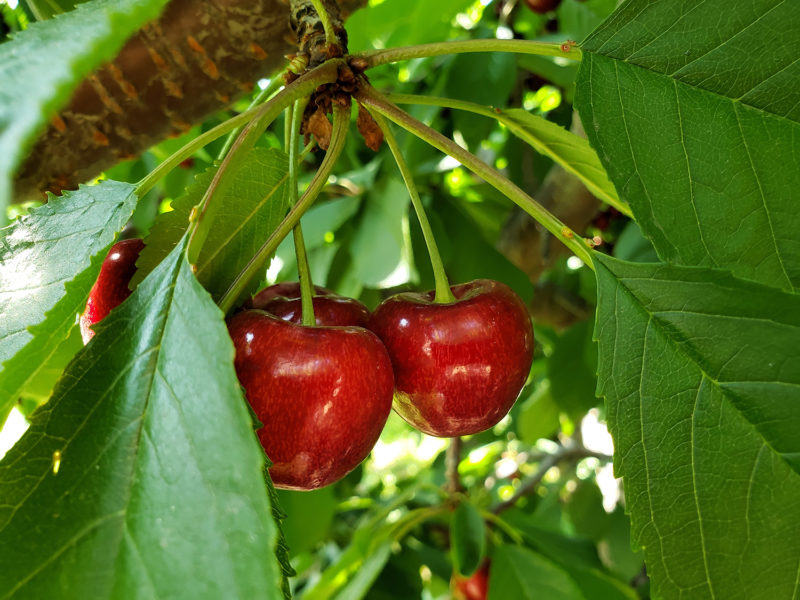
Cherry growers continue to focus on export markets

Building awareness domestically is also important for sales

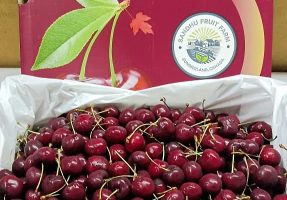
The BC Cherry Association is developing a radio and online advertising campaign to promote BC-grown cherries in Ontario this summer. MYRNA STARK LEADER

March 1, 2021 byMyrna Stark Leader

KELOWNA – Export markets for BC cherries remain a priority for the BC Cherry Association, which held its annual general meeting February 18-19 via videoconference.

During the two morning sessions, association president Sukhpaul Bal highlighted the trade mission to India early last year which helped drive a 1,200% increase in the value of BC cherry exports to that country in 2020. Growth is expected to continue this year.

Bal praised the leadership and hard work of the board in finding solutions to pandemic-related labour challenges, praising the province for stepping up to cover the accommodation, meal and laundry costs of foreign workers during their mandatory 14-day quarantine.

“We were frankly shocked, but it was such an important step,” Bal said.

The marketing committee is now led by Richard Isaacs, the commercial director at Global Fruit, based in Creston. Issacs moved to BC two years ago from the United Kingdom where he was previously supply chain director with Chaucer Foods Ltd.

“I’ve looked at and bought cherries from 19 countries,” he told growers, “and I moved here because BC cherries are the best.”

Isaacs noted the success of sales in Japan last year, which he expects to continue in 2021. But he also cautioned growers to pay attention to documentation, pallet configuration and labelling so that their fruit is compliant with Japan’s import regulations.

The association is also working with the Canadian Food Inspection Agency to open South Korea to BC cherries. There’s been steady progress, and CFIA was able to confirm the day before the annual meeting that the latest process document had been sent to South Korea. Included was  a request for a pilot program with two packing houses this summer. The association hopes to keep up the momentum, noting that if foreign inspectors can’t come to Canada, virtual inspections may be an option.

“CFIA were happy to pass that request on. It would also save us a lot of money if we can do that electronically,” says Isaacs.

Trade and Invest BC offices in Seoul and Vancouver have helped connect potential buyers with interested exporters in anticipation of the market opening to BC cherries.

Growers were cautioned to stay up-to-date on the cherry treatment products foreign countries will accept.

At the end of 2019, the European Union surprised Canada by halting imports of cherries. Fortunately, new insect trapping protocols were agreed to and implemented in 2020, helping to keep that market open. The association has subscribed to the Bryant Christie pesticide database to provide growers with the most current maximum residue limits (MRLs) requirements. The database will be available to growers via the association’s website.

BC cherry growers send 90% of their exports to the US, China and Hong Kong. While future marketing efforts may target Mexico, Brazil, Israel and Australia, nothing can come close to the top three markets.

The association is in a healthy financial position, although revenues are expected to fall this year because it is waiving membership dues for 2020 members. Treasurer Erin Carlson forecasts revenues of about $301,000 in 2021, compared to about $420,000 in 2020.

However, cost savings are also on the radar. The bulk purchase of insect traps in 2020, required for crop monitoring as part of export requirements, mean none are required this year. Of the $50,000 earmarked for 2021 research, only $37,900 is allocated, leaving cash for any additional projects that come forward. The federal and provincial governments were recognized for their commitment to funding programs.

Carlson stressed that the association needs to establish a better grasp of cherry production in the province. She raised the possibility of a producer survey to determine the extent of new plantings and potential future production.

The association focused its marketing efforts within Canada last year, thanks to concerns around foreign demand as well as a short crop. The domestic focus is set to continue this year. “We’ve planned this before but the foreign markets have taken time to develop, and now we have time to work on domestic marketing,” Bal said.
Related Posts

You may be interested in these posts from the same category.

Poultry biosecurity notches down

Cherry growers focus on labour

Traceability reprieve for livestock

CFIA reports low honey adulteration

BC distanced from TB concerns

Staccato cherry rights defended

Cherries replant funding opens

CFIA nabs Enderby abattoir

BC Cherry holds AGM

BC control zones revoked

Cherry growers weigh trade complaint

Avian influenza grows

Previous Post: « Ranchers plead with province to address elk issue
Next Post: SlaughterRight training launched by ag ministry »

Copyright © 2026 Country Life in BC · All Rights Reserved