• Menu
  • Skip to primary navigation
  • Skip to main content
  • Skip to primary sidebar

Country Life In BC Logo

The agricultural news source in British Columbia since 1915

  • Headlines
  • Calendar
  • Subscribe
  • Advertise
  • About
  • Archives
  • Contact
  • Search
  • Headlines
  • Calendar
  • Subscribe
  • Advertise
  • About
  • Archives
  • Contact
  • Search

Primary Sidebar

Originally published:

September 2017
Vol. 103 Issue 9

Subscribe Now!

Sign up for free weekly FARM NEWS UPDATES

Loading form…

Your information will not be
shared or sold ever

Stories In This Edition

Bleak

Rising from the ashes

Foreign ownership on radar

Local knowledge & premise ID earn creditibility

Political overhaul targets major issues

Back to the future

Back Forty: Support can’t come soon enough

Viewpoint: Smartphones dial up new green revolution

Govt orders review of contaminated acquifer

Ag waste regs coming

Perfect attendance

BC-Washington collaborate on water mgmt

BC leads in organic consumption

Bracing for second flight of armyworm

Budget funding starts flowoing for genomics work

The “S” Team

Ag ministers sign new funding framework

Supply management takes hit

Delta land swap yields benefits

Consolidation strengthens ALR exclusion bid

Salt Spring facility gets big boost from local donor

Corn rootworm infesting FV crops

Kelowna farmers’ market gives new location a try

Compensetion sought for Clinton backburn

Fall promises volatility in cattle markets

Cattle feeders face certain uncertainties

Shave Shower Shampoo

Strong showing for Hereford Bonanza

Grain research helps address shifting conditions

FV, N OK dairies win at Chilliwack

Research: Breeding cows to beat the heat

Kootenay program aims to revive extension expertise

Beet trials target “seed sovereignty”

New hop debuts

Washington lab holds opportunities for grain growers

Sheep dog trials make comeback

Bear kills cause grief for Island sheep producers

Get it in writing

Celebrating 100 years: Eaglet FI

Managing risks, seizing opportunities

Naturally rich soil, low inputs support Kelowna garden

In celebration of thse who buy local

Woodshed: Ashley exercises power of persuasion

Jude’s Kitchen: Back-to-it Bites

More Headlines

Follow us on Facebook

Comments Box SVG iconsUsed for the like, share, comment, and reaction icons

5 hours ago

The Agricultural Land Commission is laying off staff after years of flat funding under the BC NDP. ALC chair Jennifer Dyson warns that application volumes, enforcement activity and legal obligations have all risen while its operating budget has stayed effectively flat — meaning longer wait times ahead for some services.

#BCAg
... See MoreSee Less

Link thumbnail

Land Commission lays off staff

www.countrylifeinbc.com

With no budget increase this year, the Agricultural Land Commission (ALC) is laying off six staff to make ends meet. “Ongoing financial constraints and the requirement to operate within the approved...
View Comments
  • Likes: 0
  • Shares: 3
  • Comments: 0

Comment on Facebook

6 days ago

A BC Forest Practices Board investigation has found overgrazing has damaged grasslands in the Coutlee Range Unit near Merritt — and the range-use plan meant to prevent it was unenforceable. With complaints about overgrazing on the rise and grasslands covering just 1% of BC's land mass, the findings raise fresh questions about how the province manages one of its most vulnerable — and valuable — food-producing ecosyste#BCAg#BCAg ... See MoreSee Less

Link thumbnail

Board finds overgrazing rules unenforceable unmeasurable

www.countrylifeinbc.com

MERRITT – A BC Forest Practices Board investigation has found instances of non-compliance related to overgrazing have damaged open grasslands in the Mine pasture, part of the Coutlee Range Unit near...
View Comments
  • Likes: 6
  • Shares: 6
  • Comments: 6

Comment on Facebook

Several ranchers in recent years have gone into temporary non use on that range , so that means the grass should grow. But drought conditions/lack of rain and snow don’t allow that to happen . Dried up springs , creeks waterholes in various pastures add to over grazing where there is water , as livestock and everything else stay close to the water source . So even though less cattle are on it , over grazing appears. There is a large volume of horses on it 365 days/year which is wrong ! They pull grass right out of the ground when it’s just trying to grow ,, opens the door for weeds to grow in. That don’t help it. Aging infrastructure ( fences) laying on the ground, pipe line building , ( lack of commitment to fence maintenance) amongst all users contributes also to over grazing. Recreational atv users leaving gates open between pastures allows livestock to go back or ahead in pastures also expidites over grazing. Logging ( bcts) has no problem laying out cut locks on both sides of a fence , then it gets smashed down during logging and they don’t take responsibility to stand it back up or clean the cattle gaurds out when they are done , that happened 4 years ago on pasture 5 up there . I bet it is still not fixed . There are lots of contributing factors to the problem.

Tragedy of the commons.

I looked through the report. I saw nothing about the effects of noxious weeds on productive grasslands. This particular area is vulnerable because of the Ministry’a efforts to diversify the use of the Grasslands.

This pasture is under tremendous pressure not only from cattle but from irresponsible local residents who treat it as a landfill dumping all manner of household debris here. And don't even get me started on the mud bogging and camping in sensitive riparian areas. The feral horses are in this pasture 365 days a year just hammering it. Would sure be nice to see some enforcement action on people who are intentionally ripping up the grasslands and riparian areas. Cattle could be a valuable resource for rebuilding soils and native grasses in this area with the help of electric fencing and/or e-collars. The humans will be harder to manage.

The Forest and Range Practices Act was written by lawyers for global forest licencee shareholders. Results-based = unenforceable.

Also, can we talk about the impact of a pipeline being built through the middle of this field for multiple years?

View more comments

1 week ago

East Kootenay rancher Randy Reay is digging a new well after two natural water sources dried up on his Crown tenures. A new Living Lakes Canada assessment found 15% of mapped aquifers in the region are high-priority for monitoring, yet 80% of those go unmonitored. With over 48% of BC's provincial observation wells reporting below-normal groundwater levels, ranchers and researchers are sounding the alarm on water security. The story is in our March edition, and we've posted it to our website thi#BCAgk.

#BCAg
... See MoreSee Less

Link thumbnail

Water woes: groundwater under pressure across BC

www.countrylifeinbc.com

JAFFRAY – As a young boy growing up in the Kootenay-Boundary region, Randy Reay never expected to run out of water. But this year, in mid-February, his fields are bare. There is no snow halfway up t...
View Comments
  • Likes: 8
  • Shares: 7
  • Comments: 1

Comment on Facebook

Jaffrey is in the east Kootenays not kooteney boundary

2 weeks ago

BC farmers are bracing for prolonged higher input costs as war in the Middle East drives up fuel and fertilizer prices. Nitrogen fertilizer costs were already climbing before the Iran conflict began, with prices still roughly 60% above pre-pandemic levels. Farm Credit Canada warns that unlike 2022, strong commodity prices may not offset rising costs this time. Local suppliers expect supply challenges and further price increases ahead.

#BCAg
... See MoreSee Less

Link thumbnail

Fertilizer prices on the rise

www.countrylifeinbc.com

War in the Middle East has delivered a generational shock to energy prices, meaning BC farmers can expect a prolonged period of higher costs not just for fuel but also for fertilizer.
View Comments
  • Likes: 2
  • Shares: 1
  • Comments: 0

Comment on Facebook

2 weeks ago

... See MoreSee Less

View Comments
  • Likes: 1
  • Shares: 0
  • Comments: 0

Comment on Facebook

Subscribe | Advertise

The agricultural news source in British Columbia since 1915
  • Email
  • Facebook

Compensation sought for Clinton backburn debacle

September 1, 2017 byTamara Leigh

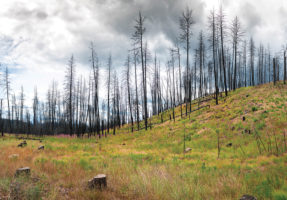
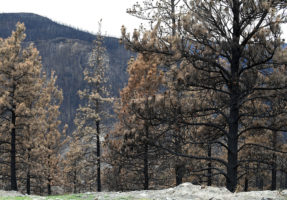
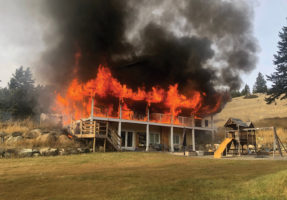
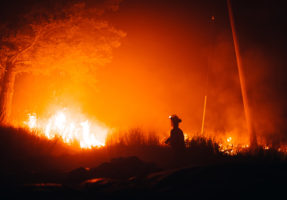
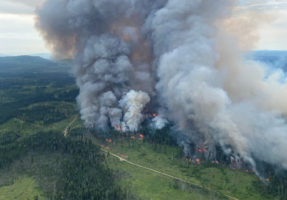
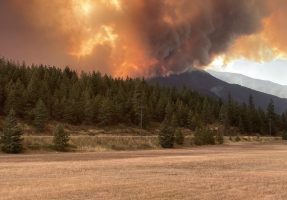
CLINTON – A group of producers is seeking compensation and an apology for damages caused when the BC Wildfire Service lost control of a prescribed burn on Hart Ridge Mountain, south of Clinton. The blaze quickly escalated and jumped Highway 97, threatening nearby ranches and homes and triggering evacuations and highway closures.

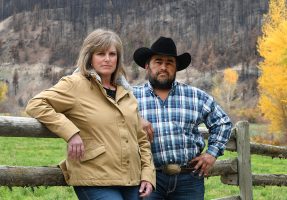
Greg Nyman speaks on behalf of the Cariboo & Thompson-Nicola Ranchers and Rural Property Owners group. He was on Hart Ridge Mountain with his cows when the fire started. After hearing that the wildfire centre was planning controlled burns on August 1, he got a permit to enter his range lease to try to move his cattle to safety.

“I was liaising with an agrologist from 100 Mile, and they gave me a four-hour window. I went up at about 8 and was supposed to be off the mountain at noon,” he says.

The prescribed burns were started while he was on the mountain, cutting off his planned exit and putting him and over 100 head of cattle in harm’s way. Nyman got off the mountain safely but had to leave his cattle behind. In the end, the fire completely burned his 7,000-hectare range unit.

“I haven’t found 30 head and I don’t know where they are. I am pretty sure they are gone,” says Nyman. “I don’t know what my losses are until I get my cows home. I don’t even know if our range unit will be viable or not. Might not have anywhere to turn out our cows, and then what? I’m not the only one.”

Nyman’s family has ranched south of Clinton since the 1960s. He took over in 1987 and has fought fires in the area off and on for close to 45 years. He is critical of the management approach they have taken.

“They’ve relied too much on backburns and too many of them have gone wrong,” he says. “It’s ineffective fire management. The way they use their resources and tools is not as effective as it used to be. Every year that the Liberals were in power, they cut funding, closed offices, cut staff. I don’t think we’re making progress; I think it’s getting worse.”

He’s quick to say that this is not a criticism of the frontline firefighters; it’s the management side that is ineffective.

“Communities need to be involved in fire management. There’s a total disconnect between the wildfire service and the communities, and they ignore our concerns,” says Nyman.

The group of ranchers and rural property owners started in the Clinton area and has expanded as they have been contacted by producers in other areas who are struggling with losses due to backburns.

“I spoke with a fellow out by Williams Lake who lost $1.5 million in timber that he was protecting on a backburn. There are so many stories like this,” says Nyman. “… Houses can be insured and rebuilt, but you can’t regrow a mature fir forest.”

The group would like an apology from government officials for the way Hart Ridge controlled burns were handled and for a general lack of consultation with local residents. They are also calling for compensation for livestock which are lost due to wildfires, as well as rural structures, woodlots, private timber, fields, grazing and fencing.

BC Wildfire Service says producers may qualify for compensation. According to a spokesperson, under the Wildfire Act, “people can be compensated for damage on private land for avoidable damage caused by fire control by government.”
Related Posts

You may be interested in these posts from the same category.

Wildfires rip through Southern Interior

Wildfire threat remains high

Ranchers facing rangeland losses

Ranchers face rangeland losses

Wildfire 2021: ‘They keep locals in the dark. That is really problematic.’

Don’t blame the wildfires

Wildfire state of emergency ends

Province announces wildfire recovery funds

Province pledges emergency funding

Record temps kill poultry

Wildfires spark emergency declaration

Livestock producers count losses

Previous Post: « Corn rootworm infesting Fraser Valley crops
Next Post: Beet trials target “seed sovereignty” »

Copyright © 2026 Country Life in BC · All Rights Reserved