• Menu
  • Skip to primary navigation
  • Skip to main content
  • Skip to primary sidebar

Country Life In BC Logo

The agricultural news source in British Columbia since 1915

  • Headlines
  • Calendar
  • Subscribe
  • Advertise
  • About
  • Archives
  • Contact
  • Search
  • Headlines
  • Calendar
  • Subscribe
  • Advertise
  • About
  • Archives
  • Contact
  • Search

Primary Sidebar

Originally published:

DECEMBER 2022
Vol. 108 Issue 12

Subscribe Now!

Sign up for free weekly FARM NEWS UPDATES

Select list(s) to subscribe to


By submitting this form, you are consenting to receive marketing emails from: Country Life in BC. You can revoke your consent to receive emails at any time by using the SafeUnsubscribe® link, found at the bottom of every email. Emails are serviced by Constant Contact
Your information will not be
shared or sold ever

Stories In This Edition

Ottawa dishes trade funds

I spy

New money for fruit growers

Regenerative ag tops Ag Days successes

Editorial: A winter’s tale

Back 40: Regenesis: the end of farming as we know it

Viewpoint: The challenges of BC ag industry advocacy

Senate report highlights the need for flood plans

More farms test postive for avian influenza

Ag Briefs: BC Turkey names executive director

Ag Briefs: Province rebrands short course

Ag Briefs: Growers Supply expands

Ag Briefs: Cattleliner accident

Economic outlook challenges farm margins

Farmer markets launch economic impact study

WALI delivers labour update to grapegrowers

Beekeepers abuzz about tech transfer program

New apple varieties may improve profits

UFV grows its berry research capacity

Bayer opens new canola seed production site

Island farmers identify challenges at summit

Consumer demand key to local food production

Comox Valley ag plan undergoes overhaul

Salt Spring Abattoir marks 10th anniversary

Ranchers undertake living lab project

Copper deficiency challenges BC bison productivity

Bison ranchers briefed on emergency protocols

SWBC hires a new program manager

Sidebar: How does certification benefit producers?

Better communcation markted wildfire season

Sidebar: Government extends extreme weather support

Retail partnerships add value to small farms’ production

Research: Researchers barcode bacteria to fight farting cattle

Young butchers make their mark

Farm Story: Shot nerves are the price of success this year

Reduced water use doesn’t hurt cherries

Woodshed: Kenneth explores the old Corbett farm

Family farm finds new markets by diversification

Jude’s Kitchen: Festive flatbreads, dips & spreads

More Headlines

Follow us on Facebook

Comments Box SVG iconsUsed for the like, share, comment, and reaction icons

6 days ago

... See MoreSee Less

View Comments
  • Likes: 4
  • Shares: 0
  • Comments: 0

Comment on Facebook

7 days ago

On the last day of the BC Organic Conference, Thursday, Molly Thurston of Pearl Agricultural Consulting helped growers learn how to manage bugs such as codling moth, wireworm, and rootworm in organic growing systems. Her talk alongside Renee Prasad included hands-on activities in which participants checked out various traps and examined pests under microscopes. Be sure to look for more upcoming ag events on our online calendar at www.countrylifeinbc.com/calendar/

#BCAg
... See MoreSee Less

On the last day of the BC Organic Conference, Thursday, Molly Thurston of Pearl Agricultural Consulting helped growers learn how to manage bugs such as codling moth, wireworm, and rootworm in organic growing systems. Her talk alongside Renee Prasad included hands-on activities in which participants checked out various traps and examined pests under microscopes. Be sure to look for more upcoming ag events on our online calendar at www.countrylifeinbc.com/calendar/

#BCAg
View Comments
  • Likes: 15
  • Shares: 0
  • Comments: 0

Comment on Facebook

1 week ago

Well-known organic farmer and podcaster Jordan Marr gets interviewed by Country Life in BC’s own columnist and potato mavin Anna Helmer during the opening session of the BC Organic Conference at Harrison Hot Springs yesterday. Sessions run today (Wednesday) and Thursday and include organic and regenerative growing practices and expanding and advocating for the organic sector, all under the background of the newly launched Organic BC banner.

#BCAg
... See MoreSee Less

Well-known organic farmer and podcaster Jordan Marr gets interviewed by Country Life in BC’s own columnist and potato mavin Anna Helmer during the opening session of the BC Organic Conference at Harrison Hot Springs yesterday. Sessions run today (Wednesday) and Thursday and include organic and regenerative growing practices and expanding and advocating for the organic sector, all under the background of the newly launched Organic BC banner.

#BCAg
View Comments
  • Likes: 37
  • Shares: 2
  • Comments: 1

Comment on Facebook

Interested in finding out more about this

3 weeks ago

Today, we remember those who sacrificed their lives or their well-being for our freedom. Lest we forget. ... See MoreSee Less

Today, we remember those who sacrificed their lives or their well-being for our freedom. Lest we forget.
View Comments
  • Likes: 8
  • Shares: 0
  • Comments: 0

Comment on Facebook

1 month ago

FarmFolk CItyFolk is hosting its biennial BC Seed Gathering in Harrison Hot Springs November 27 and 28. Farmers, gardeners and seed advocates are invited to learn more about seed through topics like growing perennial vegetables for seed, advances in seed breeding for crop resilience, seed production as a whole and much more. David Catzel, BC Seed Security program manager with FF/CF will talk about how the Citizen Seed Trail program is helping advance seed development in BC. Expect newcomers, experts and seed-curious individuals to talk about how seed saving is a necessity for food security. ... See MoreSee Less

Link thumbnail

BC Seed Gathering - FarmFolk CityFolk

farmfolkcityfolk.ca

Save the date for our upcoming 2023 BC Seed Gathering happening this November 3rd and 4th at the Richmond Kwantlen Polytechnic University campus.
View Comments
  • Likes: 1
  • Shares: 0
  • Comments: 0

Comment on Facebook

Subscribe | Advertise

The agricultural news source in British Columbia since 1915
  • Email
  • Facebook

Economic outlook challenges farm margins

Cost pressures remain in play for producers

Producers are being urged to have business risk management plans in place – whether to weather the latest storm or the possibility of an economic downturn. MYRNA STARK LEADER

December 1, 2022 byKate Ayers

CHILLIWACK – The Bank of Canada’s attempts to curb inflation with aggressive interest rate hikes has raised the potential for an economic downturn next year.

On November 4, the federal government published its fall economic statement, which pointed to several risks to the economic outlook. In the report’s “downside scenario,” Canada would enter a “mild recession” in the first quarter of 2023 and the real gross domestic product for the year would drop 0.9%.

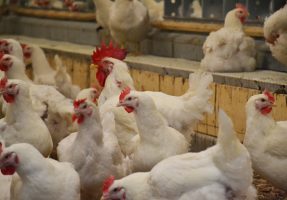
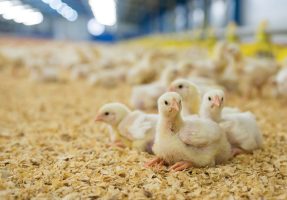
“It would be good to have a government that actually had a plan to get out of the recession and we do not have a government that is in any way coming up with a plan,” says Chilliwack chicken grower Dennis Flokstra, Lower Mainland director with the BC Chicken Marketing Board.

He plans to sharpen his pencil even further next year to try to pay off as much debt as possible and cut costs, no small feat this winter given the high cost of energy needed to heat his barns.

“We run a pretty tight ship; I’m not even sure where we would give a little bit,” he says. “We still have to supply heat to the birds, and we still have to treat them as good as we can.”

The higher costs eventually get passed on to consumers, which will be affected “big time” as producers’ costs get passed along. He hopes the province will move ahead with changes to how it collects the carbon tax from growers, giving them a break up front rather than requiring them to apply for a rebate.

While Flokstra is wary of the impact interest rates may have on the industry, he’s confident farmers can ride out a potential recession.

Indeed, the outlook is positive for agriculture’s ability to handle and recover from an economic slowdown.

“Our expectation is that most farm families would weather a recessionary environment, perhaps better than some industries or people working in consumer goods or other retail-based business that are less immune to recessionary pressures,” says Royal Bank of Canada’s national director of agriculture Ryan Riese.

“The demand for farmers’ products may change, to some degree. But we are working largely with fairly inelastic products where consumers do need to eat.’

But a recession isn’t a sure thing. Farm Credit Canada vice-president and chief economist JP Gervais notes that a recession is typically defined as two consecutive quarters of negative growth in GDP.

Canada could simply see zero economic growth in back-to-back quarters, for example, not negative growth. This means the situation wouldn’t be labeled a recession.

“I don’t think it’s an automatic outcome or an assured outcome that we will get a recession,” Gervais says.

If there is a recession, Gervais says “a very, very strong labour market” means consumer spending may be a minor consideration.

While higher interest rates are expected to slow down consumer purchases, wages increased 5.4% over the last year and Gervais says that could help offset the impacts of a slowing economy.

For producers, the impact of an economic downturn will depend on whether the recession happens solely in the Canadian economy or is widespread in the global economy.

“If it was just a recession in Canada, I don’t think the impacts would be significant for farmers,” Gervais says. But a global economic recession could mean lower profitability for producers who buy and sell commodities on the global market.

“If we look at most of the commodities grown on Canadian farms, a lot of those commodities are tied to some extent, and in a lot of cases, to a really large extent, to world demand,” Gervais says.

Poultry and dairy are influenced by domestic factors because of supply management, but beef, pork, grains and oilseeds, and fruits and vegetables are all tied to the global market.

“So, if the world economy slows, demand for these commodities is going to weaken. Weaker demand means lower prices,” Gervais says.

In addition to an uncertain economic climate, producers continue to face unpredictability in terms of fertilizer price and availability due to the war in Ukraine.

Wages will continue to climb, too, Gervais predicts. BC’s minimum wage increased to $15.65 per hour on June 1, and the province’s average annual inflation rate will guide any increase announced in 2023.

To help weather the storm of uncertainty, producers should have business risk management plans.

These plans consider how interest rates, inflation and commodity and input prices, for example, impact bottom line and financial risk, Gervais says.

But producers do not need to navigate these waters alone.

“Anytime something like this happens, it’s a good reminder to put the pen to paper and sit down with those other people who are integral to your operation and map out where you want to go with your future,” says Riese.

Related Posts

You may be interested in these posts from the same category.

BC farmland values flat

CUSMA consultations begin

Province funds avian flu upgrades

BC growers look beyond tariff turbulence

Okanagan drives increase in land values

Beef herd drops

BC farmland values see strong growth

Farmland lease rates

BC farmland values fall

Producers struggle to talk about mental health

BC FIRB gets a good egg

BC farmland values flat

Previous Post: « AI outbreak rivals 2004
Next Post: Ministers discuss avian influenza »

Copyright © 2025 Country Life in BC · All Rights Reserved