• Menu
  • Skip to primary navigation
  • Skip to main content
  • Skip to primary sidebar

Country Life In BC Logo

The agricultural news source in British Columbia since 1915

  • Headlines
  • Calendar
  • Subscribe
  • Advertise
  • About
  • Archives
  • Contact
  • Search
  • Headlines
  • Calendar
  • Subscribe
  • Advertise
  • About
  • Archives
  • Contact
  • Search

Primary Sidebar

Originally published:

July 2017
Vol. 103 Issue 7

Subscribe Now!

Sign up for free weekly FARM NEWS UPDATES

Select list(s) to subscribe to


By submitting this form, you are consenting to receive marketing emails from: Country Life in BC. You can revoke your consent to receive emails at any time by using the SafeUnsubscribe® link, found at the bottom of every email. Emails are serviced by Constant Contact
Your information will not be
shared or sold ever

Stories In This Edition

4-H Gator draw

Poultry Abuse underscores need to measure up

Political uncertainty creates angst

Water tops list of ranchers’ concerns at AGM

Editorial: Trust is an active verb

Back Forty: Time to celebrate our home and rural land

Greenhouse growers propose infrastructure project

Letter: Seat belts must be worn at all times

Ag Brief: Blueberry growers pack meeting

Ag Brief: Blueberry growers pack meeting

Barn fires spark focus on prevention

Emergency plan critical for livestock owners

BCAC hires new communications director

Abbotsford seeks exclusion to boost industrial land base

Otter Co-op posts another record-breaking year

Food report card gives BC passing grade

Agriculture’s success testifies to investment funding

Ag Brief: Hullcar abatement order shut down

Mission investigation inconclusive

Abbotsford tickets thousands

Price set as growers eye ambitious growth target

High prices, change coming for nurseries

BC tree fruit outlooks is a bowl of cherries

BC greenhouses are family-friendly operations

Sidebar: Why greenhouses aren’t organic

Greenhouse showcases production systems

BC agricultual history depicted in museum murals

BC agriculture vital part of Canada’s 150 years

Research: Grazing time for cows

Deep roots give Shannon Farm bright future

Fraser Lake ranchers honoured for excellence

Cattlemen invest in research to boost productivity

New livestock industry co-ordinator embraces dream job

Researchers study sheep diseases to understand potential risks

Blueberry processors focus on fruit quality

Sidebar: SWD can make timing harvest tricky

Urban growing, libations and greenhouses

Municipalities committing to urban farming

Young farmers hear production, packing trips

Pencil Patch offers hands-on experience

Summer camps foster farm focus for kids

New group of 4-H Ambassadors engage BC

Woodshed:

Just when you thought it couldn’t get worse

Jude’s Kitchen: Summertime

More Headlines

Follow us on Facebook

Comments Box SVG iconsUsed for the like, share, comment, and reaction icons

7 days ago

... See MoreSee Less

View Comments
  • Likes: 4
  • Shares: 0
  • Comments: 0

Comment on Facebook

7 days ago

On the last day of the BC Organic Conference, Thursday, Molly Thurston of Pearl Agricultural Consulting helped growers learn how to manage bugs such as codling moth, wireworm, and rootworm in organic growing systems. Her talk alongside Renee Prasad included hands-on activities in which participants checked out various traps and examined pests under microscopes. Be sure to look for more upcoming ag events on our online calendar at www.countrylifeinbc.com/calendar/

#BCAg
... See MoreSee Less

On the last day of the BC Organic Conference, Thursday, Molly Thurston of Pearl Agricultural Consulting helped growers learn how to manage bugs such as codling moth, wireworm, and rootworm in organic growing systems. Her talk alongside Renee Prasad included hands-on activities in which participants checked out various traps and examined pests under microscopes. Be sure to look for more upcoming ag events on our online calendar at www.countrylifeinbc.com/calendar/

#BCAg
View Comments
  • Likes: 15
  • Shares: 0
  • Comments: 0

Comment on Facebook

1 week ago

Well-known organic farmer and podcaster Jordan Marr gets interviewed by Country Life in BC’s own columnist and potato mavin Anna Helmer during the opening session of the BC Organic Conference at Harrison Hot Springs yesterday. Sessions run today (Wednesday) and Thursday and include organic and regenerative growing practices and expanding and advocating for the organic sector, all under the background of the newly launched Organic BC banner.

#BCAg
... See MoreSee Less

Well-known organic farmer and podcaster Jordan Marr gets interviewed by Country Life in BC’s own columnist and potato mavin Anna Helmer during the opening session of the BC Organic Conference at Harrison Hot Springs yesterday. Sessions run today (Wednesday) and Thursday and include organic and regenerative growing practices and expanding and advocating for the organic sector, all under the background of the newly launched Organic BC banner.

#BCAg
View Comments
  • Likes: 37
  • Shares: 2
  • Comments: 1

Comment on Facebook

Interested in finding out more about this

3 weeks ago

Today, we remember those who sacrificed their lives or their well-being for our freedom. Lest we forget. ... See MoreSee Less

Today, we remember those who sacrificed their lives or their well-being for our freedom. Lest we forget.
View Comments
  • Likes: 8
  • Shares: 0
  • Comments: 0

Comment on Facebook

1 month ago

FarmFolk CItyFolk is hosting its biennial BC Seed Gathering in Harrison Hot Springs November 27 and 28. Farmers, gardeners and seed advocates are invited to learn more about seed through topics like growing perennial vegetables for seed, advances in seed breeding for crop resilience, seed production as a whole and much more. David Catzel, BC Seed Security program manager with FF/CF will talk about how the Citizen Seed Trail program is helping advance seed development in BC. Expect newcomers, experts and seed-curious individuals to talk about how seed saving is a necessity for food security. ... See MoreSee Less

Link thumbnail

BC Seed Gathering - FarmFolk CityFolk

farmfolkcityfolk.ca

Save the date for our upcoming 2023 BC Seed Gathering happening this November 3rd and 4th at the Richmond Kwantlen Polytechnic University campus.
View Comments
  • Likes: 1
  • Shares: 0
  • Comments: 0

Comment on Facebook

Subscribe | Advertise

The agricultural news source in British Columbia since 1915
  • Email
  • Facebook

Emergency plan critical for livestock owners

July 1, 2017 byTamara Leigh

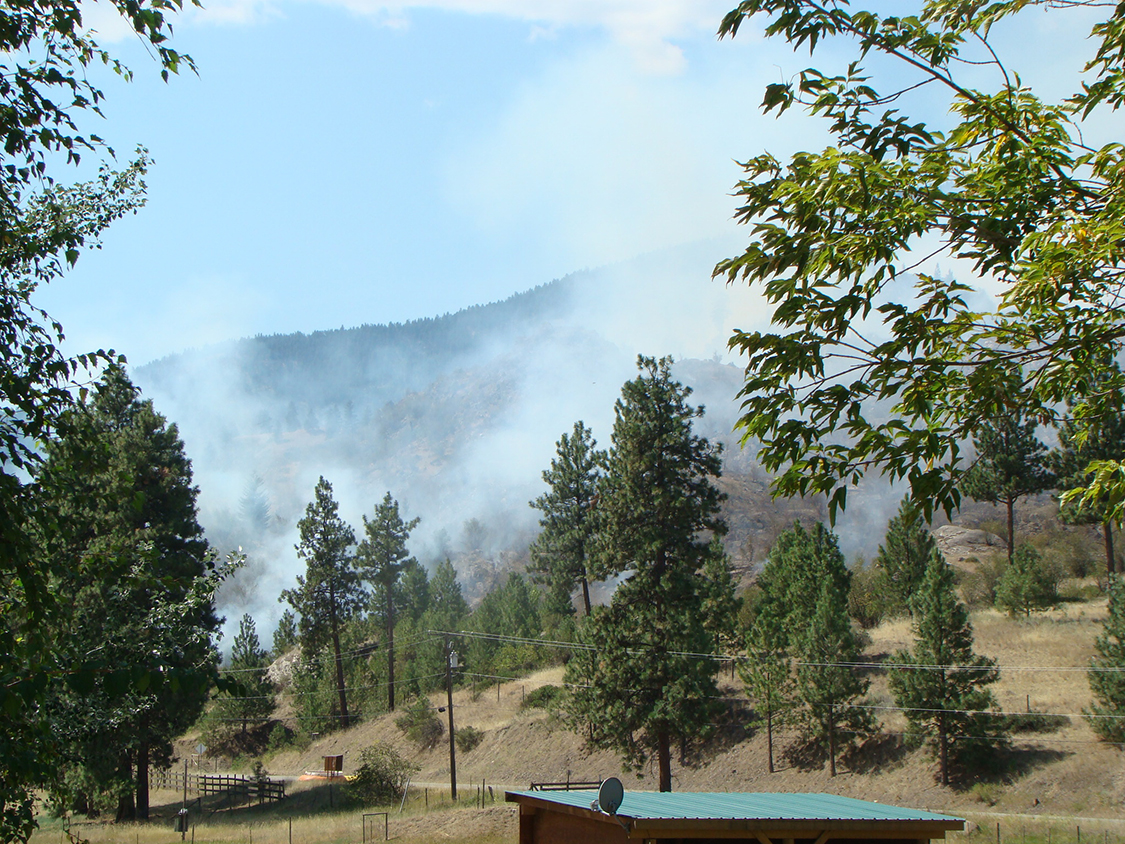
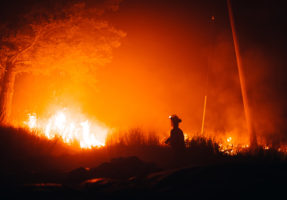
OLIVER – When wildfires get out of control, the consequences for people, livestock and property can be devastating. Having a livestock evacuation plan is critical to saving time and possibly lives.

The Animal Lifeline Emergency Response Team (ALERT) Society is a volunteer organization based in the South Okanagan that’s ready to respond and animals need to be evacuated in an emergency. Formerly known as C-DART Central, the group provides emergency training and works with emergency response agencies to evacuate or care for animals that get left behind.Fire

“It started with the Oliver Riding Club after 2003. We live in a high fire area here, and a bunch of us saw the need to set up a system for evacuating animals,” says Theresa Tompkins, a volunteer with ALERT. “We prepared a pamphlet and gave it out to anybody who had horses. A couple of the people went on and formed C-DART (now ALERT); it was a real evolution of the idea.”

Two years ago, when fire swept through Rock Creek, Tompkins’ husband Jim was called in as a C-DART volunteer to help evacuate pets and horses. A few hours after he left, a fire started behind Tompkins’ property near Oliver and she was ordered to evacuate.

“There was a bit of panic because Jim had the truck and trailer. We had four neighbours come in with a truck and trailer, and within an hour and a half, it was done,” she says.

By the time Jim returned, fire had flared up near Osoyoos and he went to pick up horses and llamas. That fire season, they faced mandatory evacuation twice and voluntarily left a third time.

Tompkins is the first to say that having a plan in place is what made it possible to get out in time, even under duress. She says without ALERT and the training they provided, the whole process would have been much less efficient and effective.

Shari McDowell is president of ALERT. She is proud of the service her group provides but says livestock and pet owners need to be as self-sufficient as possible because an emergency response can take time.

“There can be quite a delay between when a fire starts and when we get the call,” says McDowell. “If you’re in an area that is being evacuated and it’s a fast-moving fire, we’re not going to be able to go into get you until the Emergency Operations Centre gives permission.”

Once in the evacuation zone, ALERT volunteers can only respond to specific requests for assistance. They cannot seize an animal or enter private property without an owner’s permission. Requests can be made by contacting ALERT or completing the request form on their website at [www.alertcanada.org].

In order to work in evacuation zones, ALERT volunteers complete a half-day training session that covers emergency response protocols as well as how to stay safe, keep the animals safe, and stay within the limits of what ALERT is allowed to do. The organization has about 80 trained volunteers and is looking for new recruits.

“Realistically, if we have multiple fires, we don’t have enough people. We need to grow our membership to 200 or 300 people to be comfortable,” says McDowell. “We have active teams in Oliver, Penticton, Kelowna, West Kelowna, Lumby and Shuswap. We may respond to any community between the US border, Shuswap and Kamloops, but only if we have the resources.”

ALERT will be running a volunteer training session in July.

Commercial livestock

While ALERT responds to the needs of domesticated animals from cats and guinea pigs to horses and llamas, it doesn’t typically handle commercial livestock.

Duncan Barnett, a director with the BC Cattlemen’s Association and chairs the Livestock Industry Protection Committee, which is responsible for emergency planning whether it’s fire, floods, transportation or animal diseases.

“In the past, ranchers often dealt with fire on their own and were unofficial first responders,” says Barnett. “The firefighting game has changed a lot. Now, you have to be trained, have your equipment insured, and work within the ministry command structure.”

Regional cattle groups like the Cariboo Cattlemen’s Association work with local governments and fire response groups to make sure that farmers and ranchers are part of regional fire response plans. If ranchers plan to stay behind to protect property and livestock, Barnett recommends they take the two-day S-100 Basic Fire Suppression and Safety training.

“If our members have taken that course, it provides some assurance to emergency officials that the person has an understanding of what they are doing,” he says.

Barnett encourages ranchers to have their own plans in place, particularly for dealing with evacuating cattle, or bringing them in off the range. Mapping the ranch and pastures and thinking through what would be needed to gather, load and transport cattle will pay off with faster, safer, more efficient response times.
Related Posts

You may be interested in these posts from the same category.

Disaster preparedness lacking

Province pledges emergency funding

Farmers struggle to get insurance coverage Insurance

Insolvency concerns grow

Hurry up and wait

Don’t stress, plan

“Big number” tough to get

Cattle industry seeks cash

Federal assistance falls short

Going solo

Flood mitigation funding available

Apple growers fight low prices

Previous Post: « Greenhouse growers propose infrastructure project
Next Post: Abbotsford seeks exclusion to boost industrial land »

Copyright © 2025 Country Life in BC · All Rights Reserved