• Menu
  • Skip to primary navigation
  • Skip to main content
  • Skip to primary sidebar

Country Life In BC Logo

The agricultural news source in British Columbia since 1915

  • Headlines
  • Calendar
  • Subscribe
  • Advertise
  • About
  • Archives
  • Contact
  • Search
  • Headlines
  • Calendar
  • Subscribe
  • Advertise
  • About
  • Archives
  • Contact
  • Search

Primary Sidebar

Originally published:

December 2018
Vol. 104 Issue 12

Subscribe Now!

Sign up for free weekly FARM NEWS UPDATES

Loading form…

Your information will not be
shared or sold ever

Stories In This Edition

Province tightens rules in ALR

Farming isn’t what it used to be

Ag waste reg “nearly” ready

Sidebar: New commissioners

Proposed foreign worker registry raises concerns

Fall harvest

Editorial: ‘Tis the season

Back Forty: Time to address climate change head-on

Viewpoint: Ottawa needs to stop milking dairy sector

Sweet times for BC honey producers

Public trust key as grade designation clarified

Apiarists wary as new prescription rules kick in

Pipeline explosion creates uncertainty

Farmers, chefs cook up deals at networking event

Ag Briefs: Safe Food regs require producer registration

Ag Briefs: Reus receives recognition

Keeping the end in mind

Heppell’s Potato Corp

US milk offered for sale in Canada

Volatile blend price hitting home for dairy sector

Landowners see development as only solution

Good soil makes good drinks even better

DNA analysis opens doors in hop renaissance

Tour builds trust between foodies, farmers

New entrant egg producer has long-term goals

Farmers, ranchers grapple with climate change

Drought results in record low water flows

BC ranchers face mounting regulations

Seaweed finds a home on the range

Co-op model recommended for beef plant

Farm market banks on relationship-building

Tour showcases local farm entrepreneurs

Young farmers share experiences at Farm Fest

Research: The complexity of colours

Nutsedge demands strong, decisive response

Wool classifying can add value to sheep flocks

Print remains top media choice for producers

Sidebar: Canadians read more

Communication key to four-way success

Cannabis shows mainstream retail potential

Nurseries change up offerings to stay relevant

Irrigation protocols critical for greenhouses

Producers need to think like retailers

Organic farmer values food education

Wannabe: The greatest gift is friendship

Ag in the Classroom

Woodshed: A present for Deborah sparks inquisition

Jude’s Kitchen: Celebration food

More Headlines

Follow us on Facebook

Comments Box SVG iconsUsed for the like, share, comment, and reaction icons

6 hours ago

The Township of Langley Farm and Ranch Exhibition Society is hosting a public open house this evening to gather input on plans to transform the historic Belmont Farm into an agricultural exhibition, education and heritage hub. Farmers, ranchers, and community members are invited to share their feedback. The open house is at the George Preston Rec Centre, 6-8 pm.

Township of Langley Farm and Ranch Exhibition Society
#BCAg
... See MoreSee Less

The Township of Langley Farm and Ranch Exhibition Society is hosting a public open house this evening to gather input on plans to transform the historic Belmont Farm into an agricultural exhibition, education and heritage hub. Farmers, ranchers, and community members are invited to share their feedback. The open house is at the George Preston Rec Centre, 6-8 pm. 

Township of Langley Farm and Ranch Exhibition Society 
#BCAg
View Comments
  • Likes: 6
  • Shares: 0
  • Comments: 0

Comment on Facebook

9 hours ago

The sold-out Southern Interior Horticulture show continues today. Education sessions range from rodent control to new tree fruit varieties, with the afternoon devoted to improving spraying techniques for orchardists and vineyard managers. When not listening to speakers, producers are checking the trade show.

#BCAg
... See MoreSee Less

The sold-out Southern Interior Horticulture show continues today. Education sessions range from rodent control to new tree fruit varieties, with the afternoon devoted to improving spraying techniques for orchardists and vineyard managers. When not listening to speakers, producers are checking the trade show.

#BCAg
View Comments
  • Likes: 6
  • Shares: 0
  • Comments: 0

Comment on Facebook

11 hours ago

The BC Poultry Association has lowered its avian flu biosecurity threat level from red to yellow, citing declining HPAI risk factors and fewer wild bird infections. Strong biosecurity practices helped BC limit cases this winter to 38 premises, down from 81 last year. For more, see today's Farm News Update from Country Life in #BCAg#BCAg ... See MoreSee Less

Link thumbnail

Poultry biosecurity notches down

www.countrylifeinbc.com

Declining risk factors for highly pathogenic avian influenza (HPAI) have prompted the BC Poultry Association to lower the industry’s biosecurity threat level from red to yellow. The decision…
View Comments
  • Likes: 11
  • Shares: 2
  • Comments: 1

Comment on Facebook

🐥💛

1 day ago

The application deadline for cost-shared funding through the Buy BC program is coming up on February 20. Up to $2 million through the Buy BC Partnership Program is available annually to BC producers and processors to support local marketing activities that increase consumer awareness of BC agriculture and BC food and beverages. For more information, visit buybcpartnershipprogram.ca/.

Buy BC

#BCAg
... See MoreSee Less

Link thumbnail

Home - Buy BC Partnership Program

buybcpartnershipprogram.ca

Buy BC Partnership Program Increase your visibility with Buy BC The Buy BC Partnership Program is a fundamental component of Buy BC that provides up to $2 million in cost-shared funding annually to lo...
View Comments
  • Likes: 3
  • Shares: 0
  • Comments: 0

Comment on Facebook

1 day ago

The Sik-E-Dakh (Glen Vowell) First Nation's Skeena Fresh hydroponic operation has doubled production capacity thanks to a $130,632 Northern Development Infrastructure Trust grant. Growing lettuce, kale, herbs and more in shipping containers, the operation uses 90% less water than traditional farming while providing 1,200 people with year-round access to fresh, locally grown greens. Their story is in the February edition of Country Life in BC, the agricultural news source for BC’s farmers and ranchers.

Northern Development Initiative Trust
#BCAg
... See MoreSee Less

The Sik-E-Dakh (Glen Vowell) First Nations Skeena Fresh hydroponic operation has doubled production capacity thanks to a $130,632 Northern Development Infrastructure Trust grant. Growing lettuce, kale, herbs and more in shipping containers, the operation uses 90% less water than traditional farming while providing 1,200 people with year-round access to fresh, locally grown greens. Their story is in the February edition of Country Life in BC, the agricultural news source for BC’s farmers and ranchers. 

Northern Development Initiative Trust 
#BCAg
View Comments
  • Likes: 15
  • Shares: 1
  • Comments: 0

Comment on Facebook

Subscribe | Advertise

The agricultural news source in British Columbia since 1915
  • Email
  • Facebook

Farm market banks on relationship-building

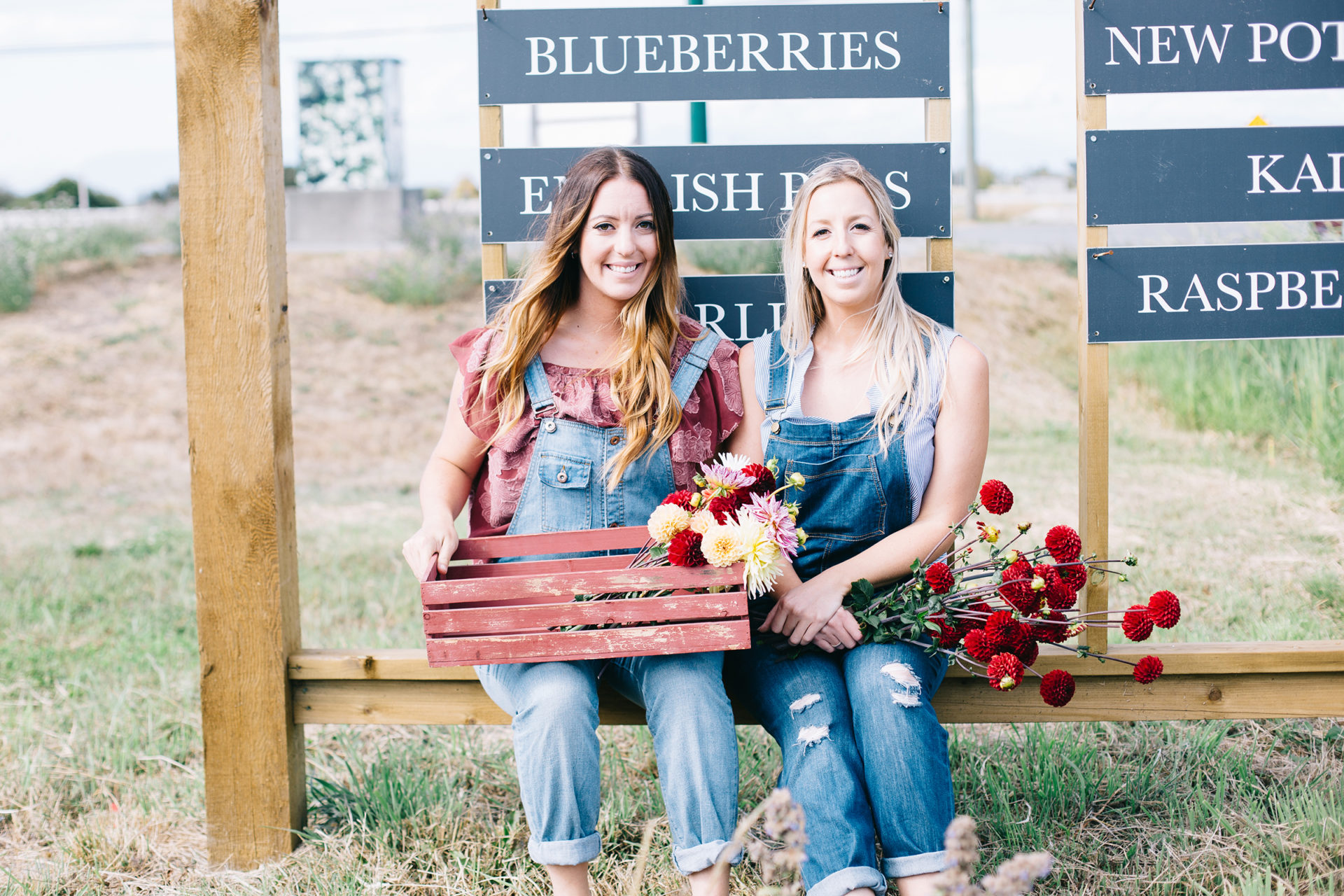
Guichon sisters expanded business by selective sourcing and customer service

November 28, 2018 bySean Hitrec | Photo By Jenelle Laila

LADNER – In Delta’s recent civic election, newcomer Alicia Guichon won her council seat by a landslide. In second place for votes was veteran Lois Jackson, who ran for council after 19 years as mayor. Jackson trailed Alicia by over 1,000 votes.

Guichon was unique among council candidates, and not just because at 30 years old she was one of the youngest candidates on the ballot. She’s also a fifth-generation farmer who has been building bridges between local farms and residents for the greater part of her life.

Guichon owns Backroads Family Farm Market, a farmstand at the corner of 52 Street and 28 Avenue, with her business partner, best friend and sister Danielle. The two have been connecting farm goods to the suburban population of Delta for over half their lives; now Guichon’s council seat allows her to take the connection even further.

“[Being a Delta councillor] wouldn’t work if I didn’t have the support of my family or my business partner as well,” she says.

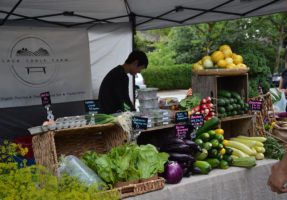
Two rescued farm dogs from Manitoba are also friendly companions, helping welcome visitors. In the summer, there’s a thriving acre of sunflowers, vegetables, a small greenhouse and a chicken coop behind the store. All the produce is sold in the market, alongside other locally farmed fresh produce. Even the non-perishable shelves are sourced as locally as possible.

Instead of dealing with the usual distribution systems, Alicia and Danielle pick up produce the day it’s harvested. After their morning meeting, they immediately begin calling around to local farmers, in search of what’s just come off the fields to provide the best products for their customers.

“It’s the quality that we focus on. It’s the extra effort,” Alicia says. “We want the most-fresh produce, so we’ll pick up right from the field and we’ll pick up every day or every other day.”

They work with 25 farmers in Delta and the Fraser Valley, a group they’ve been cultivating since their teens.

One is Kevin Husband, owner of Emma Lea Farms on Westham Island. Emma Lea Farms has its own market, but focuses on u-pick in the summer. Husband sells his fresh berries to Alicia and Danielle and buys potatoes from their family’s farm, Felix Farms.

“They started out grassroots, selling corn, and built a relationship with their customers. It’s all about relationship building,” he says. “They built a loyal clientele just being there day in and day out.”

Early start

Starting when they were 11 and 13 years old, the sisters sold their family’s corn on the side of Arthur Drive in Delta and local produce at the farmers’ market – something they still do.

“We have to credit our parents because they put us into that Ladner Village Market in 2001 when we had one tent. We had a chair and we’d sit and read a book – that’s how slow it was,” Alicia says. “Now, we have a double booth, we’ve got extra staff and we can’t keep stuff on the table.”

The biggest challenge the two have faced so far was making the jump to a permanent location five years ago. Before making the decision to open their business, Danielle had just finished school at Blanche Macdonald Centre for fashion merchandising and Alicia was accepted into the teaching program at UBC. Their hearts were back in Delta though.

“We’d get different jobs from September to June and then every summer we kept coming back to the farms,” Alicia says.

“We’d just sit on the roadside [selling produce] and be like, how can we do this every day? How can we make this our job? Why do we have to leave it in the summer and then go find another thing? What can we do?” Danielle adds. “It was a stressful time trying to figure out which direction you’re going to go.”

When the opportunity came to sign a 25-year lease for 300 acres from the Tsawwassen First Nation in 2014, Danielle and Alicia pitched the idea of a permanent market to their family.

They chose to resurrect a derelict building that sat underneath 20 years worth of brambles at the corner of a field on a backroad, not far from where the Tsawwassen Mills mall is now.

“Our family built this stand and ran it in the 80s and the 90s and then they got too busy on the farm, so they leased it out to somebody else as a produce store,” Alicia says.

A hand-painted sign signalled it was once again open for business. Danielle has since redesigned the signs and the logo now adorns carry bags and clothing sold at the store.

As the business grew, so did the ideas. The back acre features many of the standard vegetables as well as items that aren’t easy to find at the supermarket, like coloured cauliflower.

“We like to try the things that you can’t get even at the wholesaler,” Danielle says. “These are niche things that we’ve had a lot of fun trying out. … Next year, I want to try to grow our own ginger.”

Growth has also meant that the sisters have less time to connect with customers, however.

They’re hoping to strike a new balance next year with the addition of a driver and general manager, which will give them more time to engage and build the business – and, for Alicia, serve residents on council.

Alicia definitely has her work cut out for her. The balance between rural and city life is delicate and with new projects always on the horizon, a farmer’s voice is needed.

The communication between the City of Delta and its farmers hasn’t always been good. In a pre-election meeting with the Delta Farmers’ Institute, mayoral candidate George Harvie (now mayor) described the past relationship between the two as “toxic.” He touted Alicia as his connection to the farming community.

For Alicia, everything revolves around farming so, with that lens, she says she’s able to give city the input it needs to keep things growing. Building the relationships between the city and farmers could be as simple as making sure roadwork meshes harvest times.

“It’s the connection with the city to our farmers, which I think needs to be strengthened,” she says. “[Providing] information of things that are happening or impacts that will affect farmers.”
Related Posts

You may be interested in these posts from the same category.

Farmers market returns

Farmers Market

Market restrictions lifted

BC farmers markets go online

Farmers partner with chefs

Farmers’ markets focus on cultivating trust

Farmers’ markets aiming for greater share

Previous Post: « Drought results in record low water flows
Next Post: Sweet times for BC honey producers »

Copyright © 2026 Country Life in BC · All Rights Reserved