• Menu
  • Skip to primary navigation
  • Skip to main content
  • Skip to primary sidebar

Country Life In BC Logo

The agricultural news source in British Columbia since 1915

  • Headlines
  • Calendar
  • Subscribe
  • Advertise
  • About
  • Archives
  • Contact
  • Search
  • Headlines
  • Calendar
  • Subscribe
  • Advertise
  • About
  • Archives
  • Contact
  • Search

Primary Sidebar

Originally published:

MARCH 2020
Vol. 106 Issue 3

Subscribe Now!

Sign up for free weekly FARM NEWS UPDATES

Select list(s) to subscribe to


By submitting this form, you are consenting to receive marketing emails from: Country Life in BC. You can revoke your consent to receive emails at any time by using the SafeUnsubscribe® link, found at the bottom of every email. Emails are serviced by Constant Contact
Your information will not be
shared or sold ever

Stories In This Edition

Going solo

Perfect sleeper

Province pares ag budget

Government slow to act on trespass legislation

Seeing is bee-lieving

Editorial – The old normal

Back Forty – Biosecurity no stranger to Canadian farmers

Viewpoint – Food trends challenge farmers to keep pace

Fruit growers grapple with third year of losses

Sidebar: Ambrosia and the future

Provincial task force charts a path forward

Cutting edge

Second health authority signs on to FeedBC

Sold-out gala honours the best of agriculture

Island farm takes long view on climate change

Broader mandate boosts hort memberships

Islands show puts emphasis on small-lot farming

Ag initiatives lack support across regions

Got her goat

Strong dairy demand underpins bright future

Farm groups weigh in on climate change

Wine grape council charts R&D priorities

Institute forms action plan

New round of traceability funding available

Island farmers briefed on new ag waste regs

Robotic milkers make life easier for dairy farmers

Selective grazing provides options to fertilizers

Cariboo cattlemen take steps with 20-year plan

Wildfire risk increases need for preparation

Small-lot ranchers can benefit from certification

Celebration

New toolkit aids with farm flood preparation

Hazelnut research focuses on water use

Sheep at risk next to popular island trail

Good nutrition makes for a good future

Cater to chefs

Sidebar: Sage advice

Research: Bumblees prefer low-fat, low-sugar diet

Agroforestry entrepreneurs need to plan ahead

Where milk really comes from

Value-added marketing critical to success

Growing degree days not just for tree fruits

Farm Story: Duck antics provide late winter amusement

Good ditches are critical for good drainage

Accounting, entrepreneurship for small farms

Land to Table forum focuses on food access

New location for Langley’s spring break Farm Camp

You are the farm’s most important asset

Woodshed: The jig is up for Junkyard Frank’s love scheme

Jude’s Kitchen: Spring for greens

More Headlines

Follow us on Facebook

Comments Box SVG iconsUsed for the like, share, comment, and reaction icons

6 days ago

... See MoreSee Less

View Comments
  • Likes: 4
  • Shares: 0
  • Comments: 0

Comment on Facebook

7 days ago

On the last day of the BC Organic Conference, Thursday, Molly Thurston of Pearl Agricultural Consulting helped growers learn how to manage bugs such as codling moth, wireworm, and rootworm in organic growing systems. Her talk alongside Renee Prasad included hands-on activities in which participants checked out various traps and examined pests under microscopes. Be sure to look for more upcoming ag events on our online calendar at www.countrylifeinbc.com/calendar/

#BCAg
... See MoreSee Less

On the last day of the BC Organic Conference, Thursday, Molly Thurston of Pearl Agricultural Consulting helped growers learn how to manage bugs such as codling moth, wireworm, and rootworm in organic growing systems. Her talk alongside Renee Prasad included hands-on activities in which participants checked out various traps and examined pests under microscopes. Be sure to look for more upcoming ag events on our online calendar at www.countrylifeinbc.com/calendar/

#BCAg
View Comments
  • Likes: 15
  • Shares: 0
  • Comments: 0

Comment on Facebook

1 week ago

Well-known organic farmer and podcaster Jordan Marr gets interviewed by Country Life in BC’s own columnist and potato mavin Anna Helmer during the opening session of the BC Organic Conference at Harrison Hot Springs yesterday. Sessions run today (Wednesday) and Thursday and include organic and regenerative growing practices and expanding and advocating for the organic sector, all under the background of the newly launched Organic BC banner.

#BCAg
... See MoreSee Less

Well-known organic farmer and podcaster Jordan Marr gets interviewed by Country Life in BC’s own columnist and potato mavin Anna Helmer during the opening session of the BC Organic Conference at Harrison Hot Springs yesterday. Sessions run today (Wednesday) and Thursday and include organic and regenerative growing practices and expanding and advocating for the organic sector, all under the background of the newly launched Organic BC banner.

#BCAg
View Comments
  • Likes: 37
  • Shares: 2
  • Comments: 1

Comment on Facebook

Interested in finding out more about this

3 weeks ago

Today, we remember those who sacrificed their lives or their well-being for our freedom. Lest we forget. ... See MoreSee Less

Today, we remember those who sacrificed their lives or their well-being for our freedom. Lest we forget.
View Comments
  • Likes: 8
  • Shares: 0
  • Comments: 0

Comment on Facebook

1 month ago

FarmFolk CItyFolk is hosting its biennial BC Seed Gathering in Harrison Hot Springs November 27 and 28. Farmers, gardeners and seed advocates are invited to learn more about seed through topics like growing perennial vegetables for seed, advances in seed breeding for crop resilience, seed production as a whole and much more. David Catzel, BC Seed Security program manager with FF/CF will talk about how the Citizen Seed Trail program is helping advance seed development in BC. Expect newcomers, experts and seed-curious individuals to talk about how seed saving is a necessity for food security. ... See MoreSee Less

Link thumbnail

BC Seed Gathering - FarmFolk CityFolk

farmfolkcityfolk.ca

Save the date for our upcoming 2023 BC Seed Gathering happening this November 3rd and 4th at the Richmond Kwantlen Polytechnic University campus.
View Comments
  • Likes: 1
  • Shares: 0
  • Comments: 0

Comment on Facebook

Subscribe | Advertise

The agricultural news source in British Columbia since 1915
  • Email
  • Facebook

Going solo

Province gives $9 million boost to farm insurance

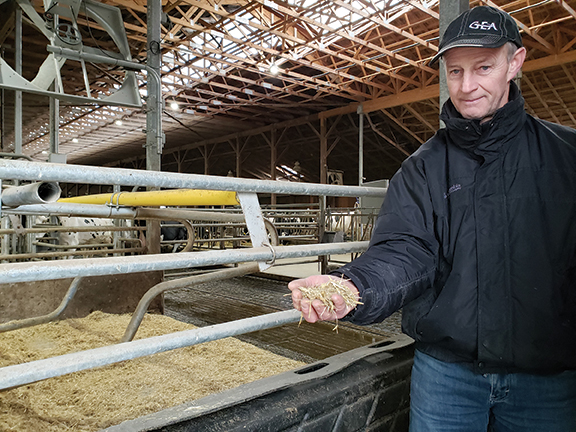
Tony Neels of Mountain Shadow Acres in Rosedale hopes using chopped straw instead of sawdust will improve the health and comfort of his dairy herd. Neels made the switch while renovating his barn for robotic milking. Mountain Shadow Acres was one of six farms on the annual BC Dairy Expo Farm Tour, January. 29. MYRNA STARK LEADER PHOTO

March 4, 2020 byPeter Mitham

ABBOTSFORD – The province has stepped in to backstop farmers facing hard times thanks to a growing number of weather-related and market challenges.

During comments at the BC Agriculture Council’s annual gala in Abbotsford on January 29, BC agriculture minister Lana Popham announced changes to the province’s AgriStability program that she said would make $9 million available to producers.

“We will eliminate the reference margin limits, and we are going to increase the compensation rate from 70% to 80%,” she said. “All farms participating in the program will benefit from the higher compensation rates. Every payment that will come from AgriStability in these two years will be 14.3% higher.”

AgriStability typically provides assistance to producers when farm margins are more than 30% below the average of the previous five years. But the paperwork required to demonstrate reference margins and support a claim means upwards of half the province’s 7,500 commercial producers don’t enroll. The elimination of reference margins removes a major hurdle to participation.

Failed efforts

The announcement followed the ongoing failure of efforts by the federal government in partnership with provincial and territorial ministers of agriculture to reform federal business risk management programs, the costs of which are shared with the provinces.

The Canadian Federation of Agriculture, the umbrella group that represents provincial farm organizations, including the BC Agriculture Council, expressed disappointment following the federal-provincial-territorial agriculture ministers’ meeting in Ottawa in December.

It issued a statement noting its belief that “enhanced AgriStability coverage is needed to ensure farmers have the help they need moving forward to help manage the increasing risks they face beyond their control.”

“The fact that ministers were unable to commit to truly meaningful program reforms, while pushing this issue further down the road through further program reviews, suggests a lack of urgency and a continued disconnect between FPT governments and the realities facing farmers,” CFA president Mary Robinson said at the time. “Farmers continue to see increased trade and policy-related risks exacerbate already challenging weather conditions, threatening the viability of many farms and undermining the primary agriculture sector’s capacity for economic growth.”

Ideally, farm organizations would like to see AgriStability coverage boosted to 85% without a reference margin limit. This is where it was at prior to changes under the Conservative government of Stephen Harper in 2013. The move would be a simple, interim solution with immediate benefits to farmers while ministers reach an agreement on long-term programming changes.

Flawed

AgriStability grew out of the Whole Farm Insurance Program pioneered in BC, and Popham positioned the province as a continued champion of a program that has assisted farmers across the country.

“I’ve felt for a long time that the design of AgriStability has some flaws and it’s not working for farmers in our province. It’s not working for some farmers right across the country,” she said. “I’ve been working very hard to negotiate improvements to that program nationally, but it’s been very challenging to get all of the other provinces and territories on board. At the latest national meeting in December, I signalled that our province might have to go it alone and address what our farmers need.”

This is exactly what it’s done. The announcement also follows on past moves to make assistance more responsive to the immediate circumstances of BC farmers – even those who haven’t viewed it as essential.

A year ago, for example, losses in BC associated with flooding, drought and wildfires in 2018 saw Ottawa and the province open the AgriStability program to those who hadn’t originally enrolled.

The late participation element of the AgriStability program can be triggered when there is a significant income decline in the farm sector and a gap in program participation. By opening it up for late participation, producers who have suffered significant losses can access the help they need.

A precedent for the latest announcement occurred in December 2017, as farmers and ranchers took stock of that year’s devastating wildfires. Once again acting unilaterally, the province provided enhanced AgriStability coverage to producers even if they hadn’t previously enrolled in the program. Reference margins were eliminated, and compensation was boosted to 80%. The initiative was valued at upwards of $10 million in addition to the $10 million available through the joint federal-provincial program.

Tax deferral

The province’s changes to AgriStability were joined by a federal announcement in February expanding regions eligible for the livestock tax deferral provision. Regions eligible in BC include southern Vancouver Island, Haida Gwaii and much of the central Interior from the coast to the Alberta border.

“[The] provision allows livestock producers in prescribed drought, flood or excess moisture regions to defer a portion of their 2019 sale proceeds of breeding livestock until 2020 to help replenish the herd,” explains a statement announcing the eligible regions. “The cost of replacing the animals in 2020 will offset the deferred income, thereby reducing the tax burden associated with the original sale.”

Regions eligible for coverage under the provision must experience forage shortfalls of 50% or more caused by drought or excess moisture.

Producers in many regions in BC have been eligible for tax deferrals for several consecutive years, underscoring the persistent nature of the challenges facing them.

Popham told the agriculture gala in January that she wants to see a more robust risk management program developed to provide the support they need, and wanted BC to set an example of what was possible.

“We want government laws, regulations, policies and programs to contribute to the success of BC agriculture,” she said. “I’m hopeful that by 2021, BC will be successful at negotiating enhancements for all farmers across Canada, but we thought it was important that we showed leadership to make sure that we’re standing up for our farmers.”
 

Related Posts

You may be interested in these posts from the same category.

AgriStability program boosted

BC Tree gets credit protection

Cattle

Province files AgriRecovery request

Rodenticides banned

Disaster preparedness lacking

Province pledges emergency funding

Farmers struggle to get insurance coverage Insurance

Insolvency concerns grow

Cherries face the pits

Hurry up and wait

Don’t stress, plan

“Big number” tough to get

Previous Post: « Fruit growers grapple with third year of losses
Next Post: Most farmers support Daylight Savings Time »

Copyright © 2025 Country Life in BC · All Rights Reserved