
VICTORIA – Provincial efforts to promote Indigenous food sovereignty face growing questions over how Indigenous production will fit within existing structures to protect farmland and ensure orderly marketing.
In July 2023, the province announced $30 million in funding to enhance Indigenous food sovereignty. The Indigenous Food Security and Sovereignty (IFS) Fund has been disbursed through grants administered by the New Relationship Trust (NRT) non-profit.
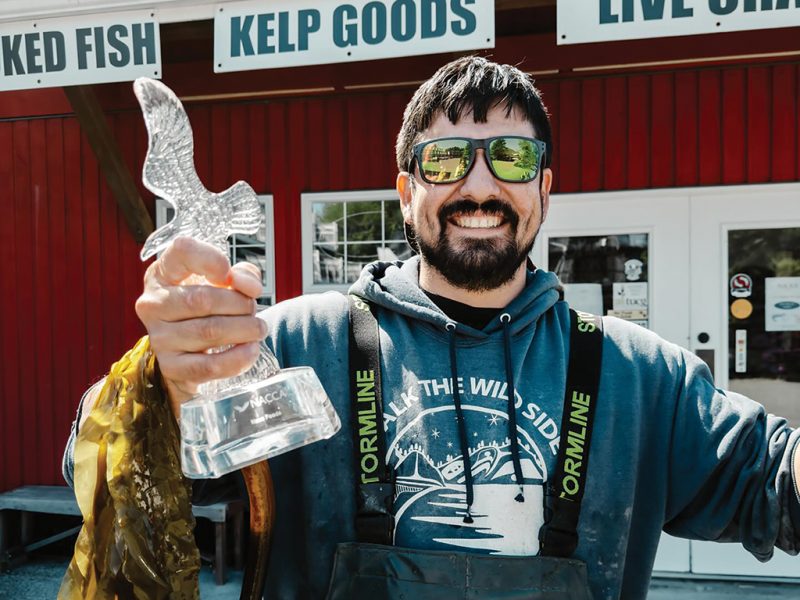
Naas Foods – owned by Stevie Dennis, who is a member of the Vancouver Island Ahousaht Nation – received funding through the IFS to support installation of a kelp farm in Clayoquot Sound that is intended to become the largest single-tenure operation of its kind in BC. Naas sells products like kelp flakes and seasoning online, as well as through a storefront in Tofino.
While some IFS funding has gone towards ventures like Naas Foods that build the market capacity of Indigenous agriculture and integrate the sector into the BC economy, maintaining self-reliance by growing a local food supply for community members has been the main focus.
The Chawathil First Nation in the Fraser Valley is using IFS funds to set up a commercial kitchen with industrial equipment to serve members and provide for community events, as well as a greenhouse to grow produce locally and decrease “reliance on external food systems”.
The Tsawwassen First Nation in the Lower Mainland is also investing in a greenhouse it hopes will safeguard community food sovereignty. Food grown in the greenhouse is distributed to Tsawwassen members, including to elders and youth centres.
BC Agriculture Minister Lana Popham says IFS funding has gone towards over 200 Indigenous projects, “including smokehouse construction, food processing, crop production and community greenhouses.”
“The program has helped revitalize traditional food systems, strengthen local food security and create economic opportunities, particularly in rural and remote communities,” she says.
Some Indigenous food sovereignty efforts are mired in controversy, however.
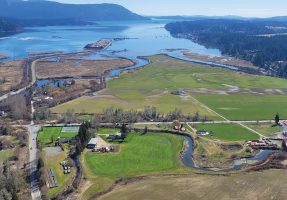
Popham has voiced support for an initiative that will see farmland at the mouth of the Koksilah River on Vancouver Island flooded as part of the Cowichan Estuary Restoration Project.
In addition to citing concerns about future sea level rise fuelled by climate change, proponents say the plan to restore salt marsh habitat by removing dikes will help “revitalize Indigenous food systems.”
Delta South MLA Ian Paton, BC Conservative agriculture critic, has been a staunch opponent of the project.
“There’s 150 acres of prime farmland that was being farmed by local dairy farmers for feed for cattle, and for whatever reason Nature Trust and Ducks Unlimited want to breach the dike and flood the entire 150 acres with ocean water,” he says.
Paton says he’s a strong proponent of Indigenous agriculture projects, but questions how flooding a large stretch of productive farmland would help First Nations.
“If the Cowichan Band wants to do some farming there, great – but they probably only need five acres or 10 acres. Great, get going and have your agricultural program, but why do you want to flood the rest of it?” he asks.
Paton argues that we already know what the results of flooding this stretch of land will be, because a similar project was tried before.
“They did an experiment with part of that farmland years ago; there’s 40 acres that they already exposed to the ocean. There’s nothing growing there, there’s no life … wildlife such as ducks, geese, swans and raptors, they survive off of what farmers are growing – not a piece of restored estuary of dead seagrass,” he says.
While not commenting on the Cowichan Estuary Project specifically, Joan Sawicki, a former BC politician who worked with the Agricultural Land Reserve in its formative years in the 1970s, believes the ALR can both protect farmland and accommodate Indigenous food systems.
She has expressed support for including Indigenous food production in the ALR.
“In our culture, we tend to think of agriculture as crops that we plant,” she told Country Life in BC in March 2023 on the occasion of the ALR’s 50th anniversary. “But if part of our concept of meeting the challenge of reconciliation is ourselves expanding the concept of food … to embrace the other ways that the land produces food for humans, I think that’s a good thing.”
Questions also surround how Indigenous agriculture will be regulated in the context of BC’s government-to-government framework for Indigenous relations.
A key issue is whether Indigenous agricultural operations will fall under the purview of BC’s marketing boards and commissions.
One such example is the Glen Vowell Band in northwestern BC, which has doubled vegetable production after receiving a $130,632 Economic Infrastructure grant from the Northern Development Initiative Trust for an expanded hydroponic operation.
With the BC Vegetable Marketing Commission set to expand its mandate to the entire province on January 1, it is unclear whether Glen Vowell and similar operations will be included in the commission’s scope.
Asked whether Indigenous agricultural operations will fall under the purview of marketing boards, the BC Farm Industry Review Board (BCFIRB), which supervises BC’s eight agricultural regulatory boards and commissions, referred Country Life in BC to its 2024-27 strategic plan.
The Indigenous Reconciliation section of the plan pledges to “continue to expand our understanding of Indigenous economic interests in BC’s regulated agriculture commodities” and to “consider how BCFIRB‘s supervisory role in regulated marketing can assist in addressing those interests.”
What the broad goals outlined in this plan mean for BC’s Indigenous agricultural sector is unclear.
BCFIRB referred questions to the province’s marketing boards and commissions for further comment.
BC Milk Marketing Board general manager Robert Delage says his board has not received any guidance from the BC government on whether a hypothetical Indigenous dairy operation would fall under his board’s purview.
“I’m not aware of any information provided by the BC government on this matter to BC Milk. Certainly nothing within the past eight years that I’ve been in this role,” he says.
A statement from the BC Ministry of Agriculture and Food suggested Indigenous agricultural operations should work with BC’s marketing boards and commissions, but provided no further detail.
“Indigenous farming operations and First Nations planning on producing and selling regulated commodities should work with the respective marketing boards and commissions regarding regulations and requirements,” the ministry states.
Paton promotes Indigenous agricultural operations and wants to see them grow but says they should be subject to the marketing boards and commissions once they reach the relevant production thresholds.
“Everybody needs to be on an equal playing field. I’d be happy to see First Nations get into growing huge conventional crops of potatoes, vegetables or even dairy farming, but they should have to live by the rules that everybody else lives by as well. You have to be regulated, and you have to own quota,” he says.
All content on this website is copyrighted, and cannot be republished or reproduced without permission.


 Southern Interior irrigators shut down