• Menu
  • Skip to primary navigation
  • Skip to main content
  • Skip to primary sidebar

Country Life In BC Logo

The agricultural news source in British Columbia since 1915

  • Headlines
  • Calendar
  • Subscribe
  • Advertise
  • About
  • Archives
  • Contact
  • Search
  • Headlines
  • Calendar
  • Subscribe
  • Advertise
  • About
  • Archives
  • Contact
  • Search

Primary Sidebar

Originally published:

OCTOBER 2019
Vol. 105 Issue 10

Subscribe Now!

Sign up for free weekly FARM NEWS UPDATES

Loading form…

Your information will not be
shared or sold ever

Stories In This Edition

ALC cracks down

Pat Jasper …

Bill will rein in activists

BC considers making premises ID mandatory

Bin there, done that

Unsung heroes

The Back Forty: It’s time government changed its narrative

Viewpoint: Banning plastic bags ignores reality

New round of changes coming to land reserve

Hullcar farmers file first NMP plans under new code

Classy champion

Most farmers support Daylight Savings Time

South Vancouver food hub to connect farmers

Egg-splaining

Dunn leaps to dairy sector

UBCO study looks at context for climate change

City Beet harvests profits from urban gardens

Forage trial presents options for producers

Growers step up to continue corn silage trials

Density key to efficient, healthy silage storage

Weather affecting corn trials

Bumper crop pushes down blueberry prices

Valley has protential to be an agritech hub

Ministry working on land use inventory

Join initiatives a priority for feeders

Best of the best

Canadian beef herd sinks to 30-year low

Familiar challenges face fourth-generation rancher

No-till seeding showcased at field day

Market Musings: Grass-fed cattle come to market with big gains

Blight-resistant trees focus of hazelnut field day

Replant, pest support for hazelnut growers

Bright berries

New packing line can handle BC’s pear crop

Mission Hilll aims to be fully organic by 2021

Research: Clean cud promotes dental health in ruminants

Remote market supports growth of local growers

Farm groups exploring food hub opportunities

Zoom! Zoom!

Chilliwack farms hopping with insects

Livestock still a main attraction at annual fair

PNE agriculture auction keeps on giving

4-H skills still key despite changes in farming

Thousands converge on Westham Island

Woodshed: Vacation time invites all kinds of cover-ups

Kootenay grower shoots forward with microgreens

Jude’s Kitchen: Harvest local

More Headlines

Follow us on Facebook

Comments Box SVG iconsUsed for the like, share, comment, and reaction icons

4 hours ago

The Township of Langley Farm and Ranch Exhibition Society is hosting a public open house this evening to gather input on plans to transform the historic Belmont Farm into an agricultural exhibition, education and heritage hub. Farmers, ranchers, and community members are invited to share their feedback. The open house is at the George Preston Rec Centre, 6-8 pm.

Township of Langley Farm and Ranch Exhibition Society
#BCAg
... See MoreSee Less

The Township of Langley Farm and Ranch Exhibition Society is hosting a public open house this evening to gather input on plans to transform the historic Belmont Farm into an agricultural exhibition, education and heritage hub. Farmers, ranchers, and community members are invited to share their feedback. The open house is at the George Preston Rec Centre, 6-8 pm. 

Township of Langley Farm and Ranch Exhibition Society 
#BCAg
View Comments
  • Likes: 4
  • Shares: 0
  • Comments: 0

Comment on Facebook

7 hours ago

The sold-out Southern Interior Horticulture show continues today. Education sessions range from rodent control to new tree fruit varieties, with the afternoon devoted to improving spraying techniques for orchardists and vineyard managers. When not listening to speakers, producers are checking the trade show.

#BCAg
... See MoreSee Less

The sold-out Southern Interior Horticulture show continues today. Education sessions range from rodent control to new tree fruit varieties, with the afternoon devoted to improving spraying techniques for orchardists and vineyard managers. When not listening to speakers, producers are checking the trade show.

#BCAg
View Comments
  • Likes: 6
  • Shares: 0
  • Comments: 0

Comment on Facebook

9 hours ago

The BC Poultry Association has lowered its avian flu biosecurity threat level from red to yellow, citing declining HPAI risk factors and fewer wild bird infections. Strong biosecurity practices helped BC limit cases this winter to 38 premises, down from 81 last year. For more, see today's Farm News Update from Country Life in #BCAg#BCAg ... See MoreSee Less

Link thumbnail

Poultry biosecurity notches down

www.countrylifeinbc.com

Declining risk factors for highly pathogenic avian influenza (HPAI) have prompted the BC Poultry Association to lower the industry’s biosecurity threat level from red to yellow. The decision…
View Comments
  • Likes: 11
  • Shares: 2
  • Comments: 1

Comment on Facebook

🐥💛

1 day ago

The application deadline for cost-shared funding through the Buy BC program is coming up on February 20. Up to $2 million through the Buy BC Partnership Program is available annually to BC producers and processors to support local marketing activities that increase consumer awareness of BC agriculture and BC food and beverages. For more information, visit buybcpartnershipprogram.ca/.

Buy BC

#BCAg
... See MoreSee Less

Link thumbnail

Home - Buy BC Partnership Program

buybcpartnershipprogram.ca

Buy BC Partnership Program Increase your visibility with Buy BC The Buy BC Partnership Program is a fundamental component of Buy BC that provides up to $2 million in cost-shared funding annually to lo...
View Comments
  • Likes: 3
  • Shares: 0
  • Comments: 0

Comment on Facebook

1 day ago

The Sik-E-Dakh (Glen Vowell) First Nation's Skeena Fresh hydroponic operation has doubled production capacity thanks to a $130,632 Northern Development Infrastructure Trust grant. Growing lettuce, kale, herbs and more in shipping containers, the operation uses 90% less water than traditional farming while providing 1,200 people with year-round access to fresh, locally grown greens. Their story is in the February edition of Country Life in BC, the agricultural news source for BC’s farmers and ranchers.

Northern Development Initiative Trust
#BCAg
... See MoreSee Less

The Sik-E-Dakh (Glen Vowell) First Nations Skeena Fresh hydroponic operation has doubled production capacity thanks to a $130,632 Northern Development Infrastructure Trust grant. Growing lettuce, kale, herbs and more in shipping containers, the operation uses 90% less water than traditional farming while providing 1,200 people with year-round access to fresh, locally grown greens. Their story is in the February edition of Country Life in BC, the agricultural news source for BC’s farmers and ranchers. 

Northern Development Initiative Trust 
#BCAg
View Comments
  • Likes: 15
  • Shares: 1
  • Comments: 0

Comment on Facebook

Subscribe | Advertise

The agricultural news source in British Columbia since 1915
  • Email
  • Facebook

New round of changes coming to land reserve

New rules follow Bill 15 even as anger over Bill 52 continues

October 2, 2019 byPeter Mitham

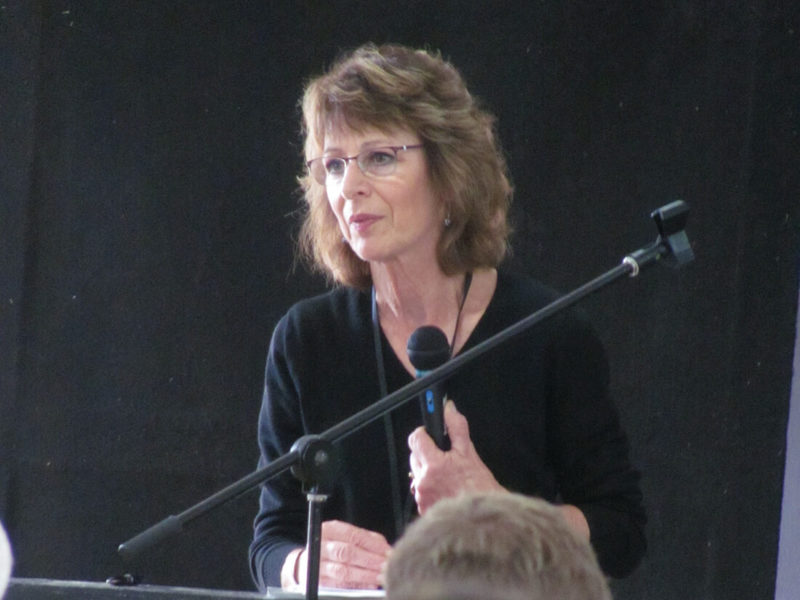
MERVILLE—The next round of changes coming to the Agricultural Land Reserve was announced September 19 as representatives from the BC Ministry of Agriculture and the Agricultural Land Commission met with farmers in the first of six consultation sessions about how the province could support farmers.

Many of the more than 125 farmers, landowners and agriculture advocates who arrived at the community hall in Merville were angry with changes made under Bill 52, but Agricultural Land Commission CEO Kim Grout told the group even more changes are coming through regulations that will implement Bill 15. That bill provoked widespread criticism for moves to centralize decision-making and take away landowners’ right to deal with the commission directly.

“Bill 15 doesn’t have force and effect yet,” Grout told the meeting. “It requires regulations to bring it into force and effect, and we haven’t seen those yet.”

Those regulations will strengthen the commission’s mandate, remove the right of landowners to apply directly to the commission to exclude land from the Agricultural Land Reserve and require reconsideration requests be made within 90 days of a decision.

“The commissioners are going to be asked to give priority to protecting and enhancing the size, integrity and continuity of the ALR, and the use of that land for farming,” said Grout, providing an overview of what each change will entail.

With respect to shutting out landowners from the exclusion process, she said applications have always gone through local government first. Any application landowners filed via the commission’s website automatically went to the local government concerned before the ALC even saw it.

“Our part of the process isn’t triggered until local government sends it to us,” she said. “In the new order of how things will work, a private property owner won’t be able to go into the portal and initiate an application. It would go to local government for them to consider sending it to us. … [It’s] more of a broader, collaborative, community planning focus.”

The shorter timeline for reconsideration requests will bring ALC protocols in line with those of other government tribunals, which entertain reconsideration applications for 60 to 90 days after an initial decision. Also, the decisions must have had no previous request made regarding them, giving commission decisions a greater force and permanence.

“Reconsideration is part of the current process. The only change is the timeframe,” said Grout, soothingly.

Frustrated

But the angry and frustrated tone of the meeting underscored discontent with recent legislative changes. During a question-and-answer session that lasted nearly 90 minutes past the official end of the meeting, farmers voiced concerns that bills 52 and 15 had created uncertainty and confusion. Ham-handed government communication outreach to local government and farmers themselves hasn’t helped.

Many found out about the meeting in Merville at the last minute, even though it was supposed to launch a public consultation – recommended by last year’s committee report on revitalizing the ALR – on how government could improve its support of farmers. The information page, [http://engage.gov.bc.ca/supportingfarmers], was advertised on a flyer posted to social media by local MLA and meeting host Ronna-Rae Leonard but it didn’t go live until the consultation officially kicked off.

With slim, often negative margins, and a lot of wealth tied up in land their children will never be able to afford, many attendees said greater protection for farmland has limited their options and priced out new farmers.

“You failed,” one landowner bluntly told ALC chair Jennifer Dyson early in the meeting as she spoke about the need to make farmland available and affordable not just today but for future generations.

Another, Gene Ambrose of End of the Road Ranch near Qualicum Beach, cited statistics pointing to the tide of red ink facing farmers, and those looking to get into the business.

“If they get into farming, they’re going to lose money, most likely,” he said. “They’ll pull money from other sources; they’ll pull it from savings, and they’ll lose it. So why are we fighting to keep land prices down so they can do that? Why are we wanting to punish the next generation?”

Succession planning was an issue many speakers highlighted, noting that if farming doesn’t pay then they should be allowed to engage in other activities on their land to keep agriculture – at any scale – alive. Many wanted the right to a second home that could either generate rental income or accommodate multiple generations who might not work the farm directly but provide important supports in the form of expertise, childcare and similar assistance.

Options

James Mack, who represented the agriculture ministry at the meeting, said the new consultation process was a chance for government to consider such options.

“We felt we had to do something to stop what I call the run on the bank that was happening,” he said of the regulations implemented under Bill 52, which nixed second homes for family members. While a grandfathering period was subsequently announced that gives landowners until February 22, 2020 to secure approvals for a second home, Mack acknowledged that government could have done better.

“We realize that people got caught out in that decision,” he said. “We want to figure out what comes next.”

Many participants simply wanted the ability to make a living from their land, by farming if possible.

“If you want people to continue farming, please find ways to let people make money off the farm other than by farming,” said Ambrose.

Others said a more restrictive regime at the land commission would prompt them to take their activities underground and let the land commission come after them rather than let the commission disallow them up front. (Grout had earlier told the meeting that “the land commission is not out there looking for non-compliance,” noting that investigations are the result of complaints.)

Mack noted that the commission’s relationship with farmers was not healthy, and he pledged on behalf of the ministry to work for improvement.

“I know we’ve done a bunch of things wrong in the organization,” he said at the end of the meeting. “We are listening.”

The listening will continue at five meetings scheduled for October, including Delta (October 1), Dawson Creek (October 2), Prince George

(October 3), Kelowna (October 10) and Castlegar (October 30).

Comments gathered during the meeting will form the basis of a final report. A timeline for publication of the report has not been given.
Related Posts

You may be interested in these posts from the same category.

Reclassification sparks farm definition debate

Islands Trust sidelines ag in policy statement

ALC rejects Cowichan dike removal

Council calls for review of farm classification rules

Regulatory hurdles threaten farm income solutions

Landowners push back against rail trail plans

ALC members appointed

Islands Trust turns 50

Illegal dumping surges on Fraser Valley farmland

Premier boosts fill enforcement

Kelowna fallow farmland returns

ALR policy review shows room for improvement

Previous Post: « BC considers making premises ID mandatory
Next Post: Potato hopes mashed »

Copyright © 2026 Country Life in BC · All Rights Reserved