• Menu
  • Skip to primary navigation
  • Skip to main content
  • Skip to primary sidebar

Country Life In BC Logo

The agricultural news source in British Columbia since 1915

  • Headlines
  • Calendar
  • Subscribe
  • Advertise
  • About
  • Archives
  • Contact
  • Search
  • Headlines
  • Calendar
  • Subscribe
  • Advertise
  • About
  • Archives
  • Contact
  • Search

Primary Sidebar

Originally published:

NOVEMBER 2024
Vol. 110 Issue 11

Subscribe Now!

Sign up for free weekly FARM NEWS UPDATES

Select list(s) to subscribe to


By submitting this form, you are consenting to receive marketing emails from: Country Life in BC. You can revoke your consent to receive emails at any time by using the SafeUnsubscribe® link, found at the bottom of every email. Emails are serviced by Constant Contact
Your information will not be
shared or sold ever

Stories In This Edition

Beef herd drops

Dairy faces trade threats

Passing the test

Sidebar: Ranch sales remain steady

Chicken board considers quota exchange

Editorial: Minority opinion

Back 40: Remember what makes it all worthwhile

Viewpoint: Gold dust in your fibre optic cable

Apple harvest faces headwinds from co-op’s closure

Sidebar: Growers Supply locations sold

National award to honour David Schmidt’s legacy

Ag Briefs: UBC agriculture deal heads to Alberta

Ag Briefs: Wine Growers head to retire

Ag Briefs: BC seeks crop reporters

Investment Ag reports banner year

Island winery closes amid “perfect storm”

Cranberry crop trending below five-year average

New standards close loop on greenhuse pesticide leaks

BCLNA budget deficits continue

Famers hamstrung by lack of compost

Sidebar: Study shows Island producers face steep fertilizer costs

Native knowledge, good practices lead range tour

Field days give farmers the dirt on soil management

Farm Story: Politics and weather make for a mucky fall

Fall weather, fall threats

On-farm innovation fuels turnaround

Rye grass gets boost from Living Lab project

Woodshed: Kenneth is all dressed up and ready to ride

Vet student grateful for bursary support

Jude’s Kitchen: Warm up with new, exotic flavours

More Headlines

Follow us on Facebook

Comments Box SVG iconsUsed for the like, share, comment, and reaction icons

1 week ago

FarmFolk CItyFolk is hosting its biennial BC Seed Gathering in Harrison Hot Springs November 27 and 28. Farmers, gardeners and seed advocates are invited to learn more about seed through topics like growing perennial vegetables for seed, advances in seed breeding for crop resilience, seed production as a whole and much more. David Catzel, BC Seed Security program manager with FF/CF will talk about how the Citizen Seed Trail program is helping advance seed development in BC. Expect newcomers, experts and seed-curious individuals to talk about how seed saving is a necessity for food security. ... See MoreSee Less

Link thumbnail

BC Seed Gathering - FarmFolk CityFolk

farmfolkcityfolk.ca

Save the date for our upcoming 2023 BC Seed Gathering happening this November 3rd and 4th at the Richmond Kwantlen Polytechnic University campus.
View Comments
  • Likes: 1
  • Shares: 0
  • Comments: 0

Comment on Facebook

3 weeks ago

BC has reported its first case of highly pathogenic avian influenza (HPAI) in the eighth wave of the disease since 2021. Canadian Food Inspection Agency officials confirmed October 13 that a premises in Abbotsford tested positive for the disease, the first infected premise in BC during this fall's migration. The farm is the 240th premises infected in BC since the current national outbreak began four years ago with a detection in Newfoundla#BCAg#BCAg ... See MoreSee Less

BC has reported its first case of highly pathogenic avian influenza (HPAI) in the eighth wave of the disease since 2021. Canadian Food Inspection Agency officials confirmed October 13 that a premises in Abbotsford tested positive for the disease, the first infected premise in BC during this falls migration. The farm is the 240th premises infected in BC since the current national outbreak began four years ago with a detection in Newfoundland.

#BCAg
View Comments
  • Likes: 50
  • Shares: 195
  • Comments: 444

Comment on Facebook

But the ostrich’s have the cure ….

I don't believe anything the CfIA says, like saying ostriches are chickens so that's why everything has to get culled.

Who in BC has reported this, not a word in the news. Why are you spreading fear propaganda? If you cannot add a source do not post this crap! It appears your page knows absolutely nothing about COUNTRY LIFE IN BC OR ELSEWHERE!

Just put one-way arrows on the floor of the chicken coop, keep them 6ft apart from each other and stock up on toiletpaper for them. 😉

Source? I can't find anything to corroborate this story.

Perhaps if they had allowed the ostrich to be tested and discovered how they developed antibodies we could quit culling our food supplies. Yes I know ostrich are not chickens

This only made the news to confuse those interested in the ostrich farm, relax, has nothing to do with the ostriches

How convenient that carney has a pocket in this 🤔

The ostriches eggs can save your flock

Weird how it only affects birds we eat. Kinda like how no homeless people got convid.

How convenient. Now it's off to the ostrich farm, right?

Have you went chicken catching for 8 hours all night 36000 birds

My advice take your chickens and run!

Have none of you guys ever seen the hundreds of birds falling from the sky? Ya me nether

Brainwashing if you ask me

just like on people- that mask looks like its doing a lot of nothing on that rooster!

Is it as deadly as monkey pox?? 🐵

Quick kill all the food! Perhaps we should study the ostriches...

Ostriches not chicken and not reproduced for human consumption

The condom is too small for the CO?K

I don't know how you do it, but invest in egg futures RIGHT NOW. The price will be skyrocketing.

So is it the first or the 240th?

240th. So how many birds culled is that now? The stamping out policy is working so well, isn’t it? Maybe cramming millions of stressed birds, receiving no sunlight, into facilities, all within a few kilometres apart (talk about having all your eggs in one basket) is not the brightest idea. Maybe we should scrap the Quito system, allow regular folks to have more than 100 birds and supply their neighbourhoods with meat and eggs. Maybe we should raise more robust birds with better immune systems. Maybe we shouldn’t give birds sunlight, less crowded conditions, and give them a full 24 hours to lay an egg, instead of artificially giving them shorter days, trying to squeeze more eggs out of them. Maybe, without the quota system, instead of a few mega farms, egg producers would again dot the entire province.

Lol are they going to blaim the ostriches

You mean to tell us all, THE CULL isn’t working, maybe, just maybe we should try something just a bit more humanly and have maybe a slight hint of scientific evidence!!!

View more comments

1 month ago

Here we go again!

With no immediate end in sight for the Canada Post strike, we have uploaded the October edition of Country Life in BC to our website. While it's not the preferred way to view the paper for most of our subscribers, we're grateful to have a digital option to share with them during the strike. The October paper is printed and will be mailed soon as CP gets back to work! In the meantime, enjoy!

... See MoreSee Less

Link thumbnail

CLBC October 2025

news.countrylifeinbc.com

CLBC October 2025
View Comments
  • Likes: 7
  • Shares: 4
  • Comments: 2

Comment on Facebook

The 1 person in Canada who contracted avian flu speaks to Rebel.news

STOP SPREADING LIES ABOUT AVIAN FLU NO BIRD GETS THIS

1 month ago

... See MoreSee Less

View Comments
  • Likes: 8
  • Shares: 0
  • Comments: 0

Comment on Facebook

1 month ago

... See MoreSee Less

View Comments
  • Likes: 6
  • Shares: 0
  • Comments: 0

Comment on Facebook

Subscribe | Advertise

The agricultural news source in British Columbia since 1915
  • Email
  • Facebook

On-farm innovation fuels turnaround

Reducing emissions boosts a sustainable vision

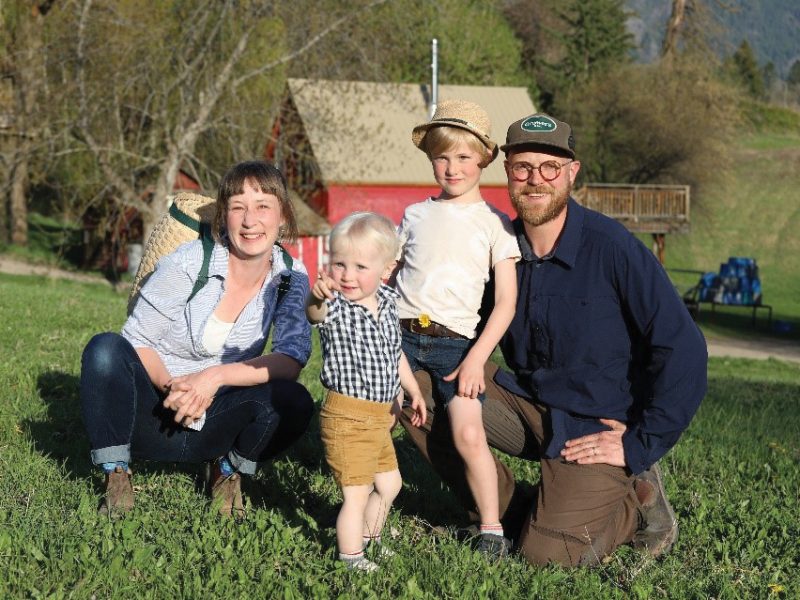
Laura and Nigel Francis had ambitious goals when they left Vancouver Island to start farming in the Kootenays – and they’re reaching them. SUBMITTED

November 1, 2024 byTracey Fredrickson

CRESTON – After eight years of careful, steady growth, Nigel and Laura Francis of Cartwheel Farm near Creston were ready to take their market garden to the next level.

Since 2022, they have invested significantly in state-of-the-art equipment and technology in their quest to operate fossil fuel-free and grow more food throughout the year.

At a farm tour organized by Young Agrarians in September, the Francises described how they got into farming in the first place and the benefits they are realizing by investing in innovation.

The couple was living on Vancouver Island where Nigel was about to attend university to pursue law and Laura was building her career in community and economic development.

“The path before us just didn’t seem right,” Laura says. “We really wanted to make a difference in the world.”

While attending an online course in food sustainability through the University of California, Berkeley they realized that farming was an option that would feed their souls, their family and their community. During a vacation in the Kootenays, they fell in love with the Creston area and in 2014 purchased a two-acre property that had been farmed organically for two decades.

“Even though we didn’t have any farming background, it felt like the idea we had been waiting for,” Nigel says.

A year later, they started weekly produce deliveries to about 30 families in the Creston area. Today, Cartwheel’s CSA program helps feed 150 families a week with over 140 varieties of vegetables, herbs and fruits. It also supplies restaurants and grocery stores throughout the Creston Valley. The community connection is reinforced by a weekly blog and recipe sheet Laura prepares.

“We take the responsibility of providing quality food for our customers very seriously,” Laura says. “Creston is experiencing renewed vitality as the community becomes more concerned about food security. By supporting our business, our customers are also helping to build the area’s food culture and ecological renewal in some way.”

Solar panels

An energy assessment showed that 97% of the farm’s greenhouse gas emissions was from heating its original greenhouse with natural gas. To address this, the couple invested in a 96-panel solar array which supplies energy to two new greenhouses.

By the time the solar panels were installed in 2023, the farm was already in peak heat and other tasks took priority over starting a new garden around the panels. New beds will be created next spring with the hope that leafy greens will do well in the microclimate created by the panels’ shade.

“Since the panels came online in July, we’ve produced all our own energy plus energy stores for the future,” Nigel says. He estimates the farm has reduced its greenhouse gas emissions by half this year compared to 2023. An assessment will be done at the end of the season.

New greenhouses

In the meantime, the solar array is used to heat two new greenhouses brought in from China.  The structures provide year-round crop protection from the elements and will help extend the farm’s growing season with minimal energy use.

The 39 by 114-foot greenhouses have louvres at the top that can be opened, and the sides rolled up for ventilation. Each greenhouse is equipped with a curtain; when the sun sets, motors roll them down over the whole structure, trapping the day’s heat and insulating against the cold. The curtains are expected to reduce if not eliminate the need for active supplemental heating. If heating is required, it will be provided by electric heaters, powered by the farm’s solar array.

The Francises first learned about this technology through workshops provided by the Rural Routes to Climate Solutions project. The learning events showcased year-round growing solutions being used successfully by Dong Jianyi at Freshpal Farms in Olds, Alberta.

Dong, a former geologist, was shocked to find no passive solar or insulated growing structures in Canada; they’re commonplace in parts of China. He took the leap to develop his own four-season farm and became passionate about educating Canadian growers about the value of the technology.

Dong became a friend and mentor to the Cartwheel team. He supported them in purchasing and importing the greenhouses and provided additional help during construction.

“It was quite a feat putting them up without an English parts list or manual of any kind,” Laura says. “Dong’s guidance has been invaluable.”

Cartwheel Farm is one the first farms in Canada to use this style of insulated greenhouse. The Francises hope that by showcasing this style of greenhouse they will inspire others to use the technology.

In-vessel composter

Once the solar array and high-tunnel greenhouses were installed, the couple purchased a BIOvator

in-vessel composter originally designed for the livestock processing industry. The

22-foot all-steel unit is fed about 1,000 pounds of waste each week. Stainless steel paddles mix waste material such as culled fruit or exhausted plants with wood chips – or in the case of Cartwheel Farm, spent grains from a local brewery.

“Like many other farms our size and scale, we used to have open piles of compost where the temperature was checked regularly and they were protected from the rain, a process that took months to produce usable compost. With the new composter, it’s a six-day process from start to finish. We get a large square tote of compost every week at huge cost savings,” Nigel says.

“Some of our ginger is used by the same brewery we get the grains from to produce their own products,” adds Laura. “It’s been a great relationship for our farm, the brewery and the community.”

Cartwheel’s environmental footprint is being further reduced by a new electric delivery van that replaced a well-used diesel van. One of only a few in use in BC, the new vehicle has a greater capacity, sliding doors for easy access and a lower centre of gravity. All-wheel drive and autonomous braking also help make deliveries in the mountainous Kootenays safer. When the day’s deliveries are done, it charges up overnight and is ready to go the next day.

Good investments

While the Francises invested significant funds of their own into their farm infrastructure, they also benefitted from funding opportunities through the BC On-Farm Technology Adoption Program, Columbia Basin Trust, the Investment Agriculture Foundation of BC, BC’s Beneficial Management Practices Program, and the BC Extreme Weather Program.

They have also invested in the health of their family.

“Because we’re in a small community and have close relationships with our customers, our sons Caleb and Edwin are growing up knowing the value of good food and sharing it with the community. They take produce to their doctors, teachers and friends – ensuring the people who matter to them are well fed,” says Laura.

“We don’t want to be much bigger, just more efficient while reaching our goal of being fossil free,” Nigel adds. “We’ve seen many farms start up only to fold under the pressure of attempting too much, too soon. But this has been a turnaround year for us. We’re confident we’re making good investments.”

Related Posts

You may be interested in these posts from the same category.

Co-ops’ importance highlighted

Nelson farm builds soil and local community

Leasing farmland a vital strategy for farmers

Province rethinks land matching pitch

Land matching pays off

Reeve leads BC Young Farmers

City Beet harvests profits from urban gardens

Soda Creek social highlights land-matching

Young Agrarians land funding

Previous Post: « Staccato cherry rights defended
Next Post: David Schmidt endowment planned »

Copyright © 2025 Country Life in BC · All Rights Reserved