• Menu
  • Skip to primary navigation
  • Skip to main content
  • Skip to primary sidebar

Country Life In BC Logo

The agricultural news source in British Columbia since 1915

  • Headlines
  • Calendar
  • Subscribe
  • Advertise
  • About
  • Archives
  • Contact
  • Search
  • Headlines
  • Calendar
  • Subscribe
  • Advertise
  • About
  • Archives
  • Contact
  • Search

Primary Sidebar

Originally published:

APRIL 2021
Vol. 107 Issue 4

Subscribe Now!

Sign up for free weekly FARM NEWS UPDATES

Loading form…

Your information will not be
shared or sold ever

Stories In This Edition

No right to roam

Making a difference

Big leap for farmland values

Province plans to overhaul meat licensing

Ready. Set. Grow!

Down to earth

Back 40: Right to farm takes on right to roam

Viewpoint: Salmon farm closures should raise alarm

Pandemic triggers massive cut to turkey quota

This one’s for you

Chicken growers wait for compensation details

Fruit growers demand a level playing field

BC Tree Fruits turns over a new leaf

Potato plantings reflect pandemic purchasing shifts

Ag Briefs: Surveillance continues for giant hornets

Ag Briefs: Framers market restrictions lifted

Ag Briefs: Top marks for food safety

Ag Briefs: Bee tech team

Richmond’s ag community mourns a leader

New round of funding available for Shuswap farms

New chair appointed to cranberry commission

Farmers cry foul over bird pressure in Delta

Viewpoint: Are soil organic carbon promises overstated?

Organic sector calls for greater extension services

Study sets baseline for soil organic carbon

Producers beef up support for Island cattle

Canada eyes negligible-risk BSE stats

Online dam safety workshops enjoy high attendance

Babysitter

Blueberry pruning should aim for balance

Research: Study casts new shadow on glyphosate use

BC adds seven food hubs to provincial network

College assignment sparks salsa business

Bev Whitta shares her passion for poultry farming

Farm Story: Mud: what separates winter from summer

Finding a better way to cool hot potatoes

Weed control in cranberries takes planning

Sidebar: Weed fighters

Six years of cranberry data goes online

Woodshed: Battlelines drawn when the bulldog bites back

Education centre showcases maple syrup production

Sidebar: Good food for kids

Catering to rising demand for local food

Jude’s Kitchen: High off the hog

More Headlines

Follow us on Facebook

Comments Box SVG iconsUsed for the like, share, comment, and reaction icons

8 hours ago

The Agricultural Land Commission is laying off staff after years of flat funding under the BC NDP. ALC chair Jennifer Dyson warns that application volumes, enforcement activity and legal obligations have all risen while its operating budget has stayed effectively flat — meaning longer wait times ahead for some services.

#BCAg
... See MoreSee Less

Link thumbnail

Land Commission lays off staff

www.countrylifeinbc.com

With no budget increase this year, the Agricultural Land Commission (ALC) is laying off six staff to make ends meet. “Ongoing financial constraints and the requirement to operate within the approved...
View Comments
  • Likes: 0
  • Shares: 3
  • Comments: 0

Comment on Facebook

6 days ago

A BC Forest Practices Board investigation has found overgrazing has damaged grasslands in the Coutlee Range Unit near Merritt — and the range-use plan meant to prevent it was unenforceable. With complaints about overgrazing on the rise and grasslands covering just 1% of BC's land mass, the findings raise fresh questions about how the province manages one of its most vulnerable — and valuable — food-producing ecosyste#BCAg#BCAg ... See MoreSee Less

Link thumbnail

Board finds overgrazing rules unenforceable unmeasurable

www.countrylifeinbc.com

MERRITT – A BC Forest Practices Board investigation has found instances of non-compliance related to overgrazing have damaged open grasslands in the Mine pasture, part of the Coutlee Range Unit near...
View Comments
  • Likes: 6
  • Shares: 6
  • Comments: 6

Comment on Facebook

Several ranchers in recent years have gone into temporary non use on that range , so that means the grass should grow. But drought conditions/lack of rain and snow don’t allow that to happen . Dried up springs , creeks waterholes in various pastures add to over grazing where there is water , as livestock and everything else stay close to the water source . So even though less cattle are on it , over grazing appears. There is a large volume of horses on it 365 days/year which is wrong ! They pull grass right out of the ground when it’s just trying to grow ,, opens the door for weeds to grow in. That don’t help it. Aging infrastructure ( fences) laying on the ground, pipe line building , ( lack of commitment to fence maintenance) amongst all users contributes also to over grazing. Recreational atv users leaving gates open between pastures allows livestock to go back or ahead in pastures also expidites over grazing. Logging ( bcts) has no problem laying out cut locks on both sides of a fence , then it gets smashed down during logging and they don’t take responsibility to stand it back up or clean the cattle gaurds out when they are done , that happened 4 years ago on pasture 5 up there . I bet it is still not fixed . There are lots of contributing factors to the problem.

Tragedy of the commons.

I looked through the report. I saw nothing about the effects of noxious weeds on productive grasslands. This particular area is vulnerable because of the Ministry’a efforts to diversify the use of the Grasslands.

This pasture is under tremendous pressure not only from cattle but from irresponsible local residents who treat it as a landfill dumping all manner of household debris here. And don't even get me started on the mud bogging and camping in sensitive riparian areas. The feral horses are in this pasture 365 days a year just hammering it. Would sure be nice to see some enforcement action on people who are intentionally ripping up the grasslands and riparian areas. Cattle could be a valuable resource for rebuilding soils and native grasses in this area with the help of electric fencing and/or e-collars. The humans will be harder to manage.

The Forest and Range Practices Act was written by lawyers for global forest licencee shareholders. Results-based = unenforceable.

Also, can we talk about the impact of a pipeline being built through the middle of this field for multiple years?

View more comments

1 week ago

East Kootenay rancher Randy Reay is digging a new well after two natural water sources dried up on his Crown tenures. A new Living Lakes Canada assessment found 15% of mapped aquifers in the region are high-priority for monitoring, yet 80% of those go unmonitored. With over 48% of BC's provincial observation wells reporting below-normal groundwater levels, ranchers and researchers are sounding the alarm on water security. The story is in our March edition, and we've posted it to our website thi#BCAgk.

#BCAg
... See MoreSee Less

Link thumbnail

Water woes: groundwater under pressure across BC

www.countrylifeinbc.com

JAFFRAY – As a young boy growing up in the Kootenay-Boundary region, Randy Reay never expected to run out of water. But this year, in mid-February, his fields are bare. There is no snow halfway up t...
View Comments
  • Likes: 8
  • Shares: 7
  • Comments: 1

Comment on Facebook

Jaffrey is in the east Kootenays not kooteney boundary

2 weeks ago

BC farmers are bracing for prolonged higher input costs as war in the Middle East drives up fuel and fertilizer prices. Nitrogen fertilizer costs were already climbing before the Iran conflict began, with prices still roughly 60% above pre-pandemic levels. Farm Credit Canada warns that unlike 2022, strong commodity prices may not offset rising costs this time. Local suppliers expect supply challenges and further price increases ahead.

#BCAg
... See MoreSee Less

Link thumbnail

Fertilizer prices on the rise

www.countrylifeinbc.com

War in the Middle East has delivered a generational shock to energy prices, meaning BC farmers can expect a prolonged period of higher costs not just for fuel but also for fertilizer.
View Comments
  • Likes: 2
  • Shares: 1
  • Comments: 0

Comment on Facebook

2 weeks ago

... See MoreSee Less

View Comments
  • Likes: 1
  • Shares: 0
  • Comments: 0

Comment on Facebook

Subscribe | Advertise

The agricultural news source in British Columbia since 1915
  • Email
  • Facebook

Producers beef up support for Island cattle

New cattlemen’s association gains traction on the Island

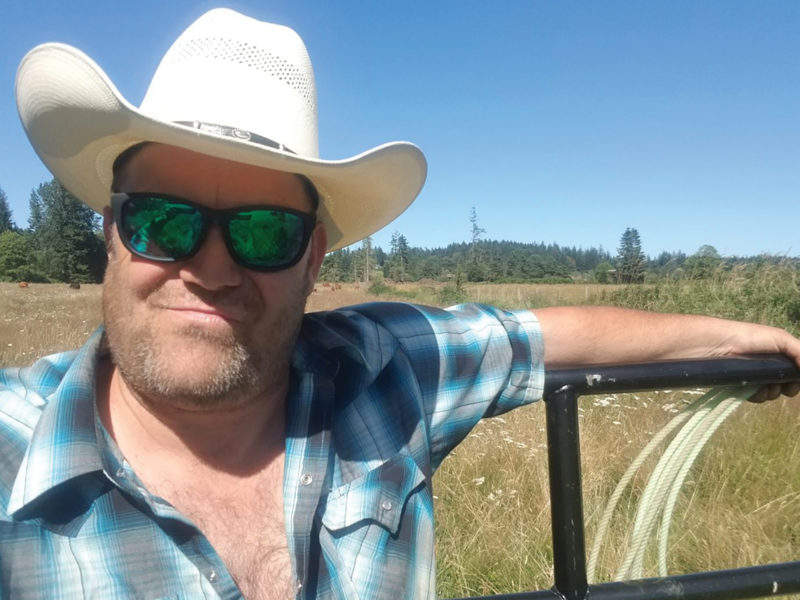
Brad Chappell is the founding president of the Vancouver Island Cattlemen’s Association. SUBMITTED

April 1, 2021 byKate Ayers

COURTENAY – Vancouver Island beef producers have banded together to establish a regional affiliate of the BC Cattlemen’s Association.

Vancouver Island producers have been able to join the association in the past as individual members, but the new Vancouver Island Cattlemen’s Association will give the local industry official standing alongside 17 other regional organizations.

“We do have about 12 direct members, but it is difficult for them to have that same input or seat at the board table [as VICA will],” says BCCA general manager Kevin Boon.

Island producers had a cattlemen’s association in the 70s but beef cattle numbers dwindled to the point that members decided to dissolve the group. But the Vancouver Island herd is increasing and producers want a united voice when discussing the impact of government regulations on their businesses.

In December, a core group of 30 ranchers led by Brad Chappell of Heart of the Valley Farms in Courtenay met virtually to discuss the potential and logistics of forming a BCCA affiliate. Chappell serves as the association’s founding president until the association’s first election in the fall. The inaugural board has 11 members. Ken Ellison of Dellison Farms in the Cowichan Valley is vice-president while Graeme Fowler of G&C Farms in Comox is secretary and treasurer.

The lack of formal representation from Vancouver Island to the BCCA was what encouraged Ellison to support the new association.

“I realized I had no voice, so went to find out what I could do,” he says.

Ellison is concerned about government roadblocks and insufficient programs that affect his 140-head beef ranch.

“Wildlife damage has been a big issue on the Island. When you have a herd of between 50 and 90 elk on your property year-round, they tend to do some damage,” he says.

He is also concerned about access to groundwater.

“The Ministry of Forests, Lands, and Natural Resource Operations took away our water sources a few years back and my permits have still not been approved from 2017,” he says.

The lack of processing capacity, especially in the southern section of Vancouver Island, and farm-retail restrictions are other issues Ellison would like to see addressed at the provincial level.

“A lot of beef producers are doing great things here and there is more power in numbers,” he says.

While it has similarities to other regions within BC, “the Island is quite a bit different,” he says. “We need a voice and representation.”

VICA is in its initial stages, but the group plans to boost Island beef production and address barriers to entry for young producers.

“It’s important that we have access to programs that are run locally and managed provincially,” Chappell says.

The top item on VICA’s agenda is a BC Ferries livestock and agriculture action plan, says Chappell.

“BC Ferries has categorically changed and digressed the ability of Island agriculture to operate here with integration with the mainland. The corporation has driven up the cost of food here and lowered the amount of ag on the Island,” he says.

VICA also wants to work with the province to address water capacity and storage during the fall and winter months, improving water capacity for livestock, irrigation and forage production.

VICA offers three key benefits, says Chappell.

First, the organization will provide opportunities for ranchers to find cost savings within a producer association. Second, the organization will be able to advocate for producers, and advance causes provincially through the BCCA. Most important, VICA will be able to develop programs that meet local producers’ needs.

“Most ag programs (on Vancouver Island) are very broad,” says Chappell. “But if you have programs developed by ranchers for ranchers, you are far more likely to successfully distribute programs to people who need them. That would definitely encourage beef production.”

By early March, more than 130 ranchers expressed interest in joining VICA. For a $150 fee, VICA members gain representation on BCCA’s five committees: public affairs, Indigenous relations and affairs, land stewardship, environment and livestock industry protection.

“The time is right to come together and work as an industry that includes the whole province, so that we don’t have the Island separated,” says Boon. “There are some very unique things about production on the Island that we need to be aware of and advocate for those producers.”
 

Related Posts

You may be interested in these posts from the same category.

Traceability reprieve for livestock

Lawsuits drive ranchers’ call for DRIPA’s repeal

Breathing new life into historic ranches

Province lacks reconciliation roadmap: ranchers

Cowichan title decision creates uncertainty

Crown land conflicts reveal policy gaps

Beef herd drops

Feed available but stocks low

Spring freshet risk low

BC Cherry holds AGM

Land Act changes deferred

Land Act firestorm

Previous Post: « Beekeepers suffer colony losses
Next Post: College assignment sparks salsa business Tyler Chartrand»

Copyright © 2026 Country Life in BC · All Rights Reserved