• Menu
  • Skip to primary navigation
  • Skip to main content
  • Skip to primary sidebar

Country Life In BC Logo

The agricultural news source in British Columbia since 1915

  • Headlines
  • Calendar
  • Subscribe
  • Advertise
  • About
  • Archives
  • Contact
  • Search
  • Headlines
  • Calendar
  • Subscribe
  • Advertise
  • About
  • Archives
  • Contact
  • Search

Primary Sidebar

Originally published:

NOVEMBER 2021
Vol. 107 Issue 11

Subscribe Now!

Sign up for free weekly FARM NEWS UPDATES

Select list(s) to subscribe to


By submitting this form, you are consenting to receive marketing emails from: Country Life in BC. You can revoke your consent to receive emails at any time by using the SafeUnsubscribe® link, found at the bottom of every email. Emails are serviced by Constant Contact
Your information will not be
shared or sold ever

Stories In This Edition

Down to the crunch

Producer prices on the rise

Feeling burned

Groundwater users could lose rights next year

The right thing

Editorial: Freedom worth having

Back 40: The battle continues long after the war is over

Viewpoint: Stories bridge the gap between producers, consumers

Growers wrestle with irrigation upgrades

Wildfire 2021

Abbotsford updates farmland policies

Stormy skies

Ag Briefs: Douglas Lake “right to roam” challenge dismissed

Ag Briefs: Creston food hub opens

Ag Briefs: Food processors receive funding

Ag Briefs: Vanderspek appointed

Summerland grape specialists retire

Grapevine virus spread threatens BC industry

Caught in the act

Abbotsford sheep grower honoured

Tag readers help with livestock recordkeeping

RegenBC kicks off agritech network

Producers silent on Columbia River Treaty impacts

Cranberry fields forever

Manitoba farmers make dreams a reality

Enderby dairy is anything but conventional

Improvement to classification services explored

Up close and personal

Partnering with farmers to reduce food loss

Sidebar: Upcycled food

Slow and steady wins the day for irrigation

Research: Study takes soil health to the next level

Nelson farm builds soil and local community

Cash flow analysis is key to resilience

New app zeroes in on reducing lost produce

Sidebar: Food hub offers room to grow

Farm Story: To hoard or not to hoard: that is the question

Bursary benefits rising farm professionals

Woodshed: So much for a little peace and quiet

Saanichton Farm receives Century Farm award

Jude’s Kitchen: Fall Flavours

More Headlines

Follow us on Facebook

Comments Box SVG iconsUsed for the like, share, comment, and reaction icons

6 days ago

... See MoreSee Less

View Comments
  • Likes: 4
  • Shares: 0
  • Comments: 0

Comment on Facebook

7 days ago

On the last day of the BC Organic Conference, Thursday, Molly Thurston of Pearl Agricultural Consulting helped growers learn how to manage bugs such as codling moth, wireworm, and rootworm in organic growing systems. Her talk alongside Renee Prasad included hands-on activities in which participants checked out various traps and examined pests under microscopes. Be sure to look for more upcoming ag events on our online calendar at www.countrylifeinbc.com/calendar/

#BCAg
... See MoreSee Less

On the last day of the BC Organic Conference, Thursday, Molly Thurston of Pearl Agricultural Consulting helped growers learn how to manage bugs such as codling moth, wireworm, and rootworm in organic growing systems. Her talk alongside Renee Prasad included hands-on activities in which participants checked out various traps and examined pests under microscopes. Be sure to look for more upcoming ag events on our online calendar at www.countrylifeinbc.com/calendar/

#BCAg
View Comments
  • Likes: 15
  • Shares: 0
  • Comments: 0

Comment on Facebook

1 week ago

Well-known organic farmer and podcaster Jordan Marr gets interviewed by Country Life in BC’s own columnist and potato mavin Anna Helmer during the opening session of the BC Organic Conference at Harrison Hot Springs yesterday. Sessions run today (Wednesday) and Thursday and include organic and regenerative growing practices and expanding and advocating for the organic sector, all under the background of the newly launched Organic BC banner.

#BCAg
... See MoreSee Less

Well-known organic farmer and podcaster Jordan Marr gets interviewed by Country Life in BC’s own columnist and potato mavin Anna Helmer during the opening session of the BC Organic Conference at Harrison Hot Springs yesterday. Sessions run today (Wednesday) and Thursday and include organic and regenerative growing practices and expanding and advocating for the organic sector, all under the background of the newly launched Organic BC banner.

#BCAg
View Comments
  • Likes: 37
  • Shares: 2
  • Comments: 1

Comment on Facebook

Interested in finding out more about this

3 weeks ago

Today, we remember those who sacrificed their lives or their well-being for our freedom. Lest we forget. ... See MoreSee Less

Today, we remember those who sacrificed their lives or their well-being for our freedom. Lest we forget.
View Comments
  • Likes: 8
  • Shares: 0
  • Comments: 0

Comment on Facebook

1 month ago

FarmFolk CItyFolk is hosting its biennial BC Seed Gathering in Harrison Hot Springs November 27 and 28. Farmers, gardeners and seed advocates are invited to learn more about seed through topics like growing perennial vegetables for seed, advances in seed breeding for crop resilience, seed production as a whole and much more. David Catzel, BC Seed Security program manager with FF/CF will talk about how the Citizen Seed Trail program is helping advance seed development in BC. Expect newcomers, experts and seed-curious individuals to talk about how seed saving is a necessity for food security. ... See MoreSee Less

Link thumbnail

BC Seed Gathering - FarmFolk CityFolk

farmfolkcityfolk.ca

Save the date for our upcoming 2023 BC Seed Gathering happening this November 3rd and 4th at the Richmond Kwantlen Polytechnic University campus.
View Comments
  • Likes: 1
  • Shares: 0
  • Comments: 0

Comment on Facebook

Subscribe | Advertise

The agricultural news source in British Columbia since 1915
  • Email
  • Facebook

Producers silent on Columbia River Treaty impacts

Ranchers say agriculture remains overlooked as the 2024 deadline looms

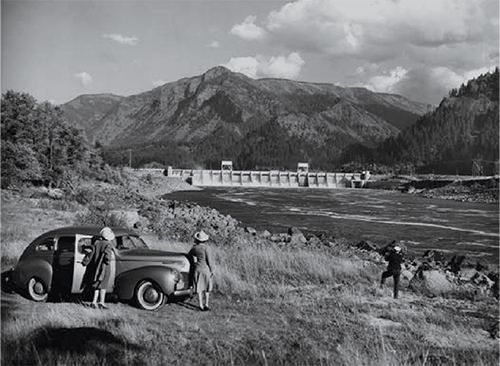
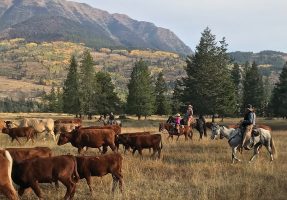
[Columbia Basin Trust]

November 1, 2021 byTom Walker

VICTORIA – The recently completed public consultation on the Columbia River Treaty’s impacts on BC agriculture has come up short.

“We are extremely disappointed that we only received four submissions to our request for feedback,” says Kathy Eichenberger, who is leading the Columbia River Treaty review on behalf of the province.

Eichenberger acknowledges that it has been an extremely difficult summer for agricultural producers.

“Drought, heat, smoke and fires have all impacted farmers this year,” she says. “But we would have hoped that, in particular, the commodity groups that we reached out to who have staff would have been able to respond.”

How to proceed next is the question.

“We did receive feedback that our initial document was short on actionable items and we will consider more of an intentions paper based on what we have learned thus far,” says Eichenberger.

The review team is still interested in submissions from groups that were unable to meet the September 15 deadline for feedback.

“It is our hope that when producers shift into fall, they will find more time to give us feedback,” says Eichenberger. “If you have some ideas, send them along.”

Part of Eichenberger’s task is to understand the needs of farmers and develop some specific strategies for supporting their interests that negotiators can weave into the on-going renegotiation of the 60-year-old treaty. Given the diversity among BC farms within the area covered by the treaty, it’s no easy task. The strategies must include everyone from small-scale farms to large ranches and orchards with multiple employees.

The current treaty lacks a key element that affects the ability of BC farmers to grow their business or compete with Washington state growers in the portion of the basin that lies south of the 49th parallel. The perceived advantage that Washington growers have when they access Columbia River water to irrigate is not in fact true, says Eichenberger.

Yet the treaty was responsible for the loss of 2,000 acres of fertile farmland, flooded when dams were built along the length of the river to manage floods and generate power. Communities, farms and families were uprooted with little discussion and even less compensation. There was no program to mitigate those losses over time.

“What we are looking for are ideas to support and grow BC agriculture given these historical impacts,” explains Eichenberger.

Ranching impacts shared

The Kootenay Livestock Association was among the four respondents to the discussion paper. Its detailed submission, as well as a 2018 report on agricultural impacts from development of the Libby Dam in 1972, gives a full picture of the impacts and specific recommendations on how to address them from the point of view of ranchers.

“There were very direct impacts to the ranching community, particularly with the flooding from the Libby dam,” says Fort Steele rancher Lonnie Jones. “We lost bottom farmland but we also lost grazing licences and leases.”

He notes that the area’s grazing allotment was reduced by almost 40,000 animal unit months.

While owners of expropriated land were compensated, they were also promised support to purchase replacement lands but the province never made good on that pledge.

“The land that was flooded was a key to ranching in our area,” maintains Jones. “I believe that fertile land was a foundation to support some 10,000 cattle. We’ve lost much of that business now and there is not much critical mass remaining to sustain agriculture.”

This includes a loss of farm services. Jones says a neighbour had to pay $1,500 in travel time recently to have a mechanic come from southern Alberta to service a tractor.

“There has never been any specific program to mitigate the agriculture losses in the Columbia basin,” says Jones. “There is a fish and wildlife compensation program but not one for farmers.”

The Fish and Wildlife Compensation Program is a partnership between BC Hydro, the province, Fisheries and Oceans Canada, First Nations and public stakeholders to conserve and enhance fish and wildlife impacted by construction of BC Hydro dams.

Jones is not hopeful for the future.

“I am worried that we are at the start of a demise here,” he says. “I see less than 40% of the ranches we had 30 years ago and the province is not taking the interests of farmers very seriously.”

While environmental considerations are enjoying a higher profile in today’s discussions than they did in the 1960s, Jones says agriculture remains overlooked.

“We are relegated to the back benches in any discussions around the Columbia River Treaty and how any monies are distributed,” he says. “Farming businesses are a key to a sustainable Kootenay economy. We need a bigger representation from the province.”

Renegotiation of the treaty must complete in time for 2024, when the current treaty expires.
 

Related Posts

You may be interested in these posts from the same category.

Creston food hub opens

Apple returns raise alarm

Previous Post: « The battle continues long after the war is over
Next Post: Groundwater users could lose rights next year »

Copyright © 2025 Country Life in BC · All Rights Reserved