• Menu
  • Skip to primary navigation
  • Skip to main content
  • Skip to primary sidebar

Country Life In BC Logo

The agricultural news source in British Columbia since 1915

  • Headlines
  • Calendar
  • Subscribe
  • Advertise
  • About
  • Archives
  • Contact
  • Search
  • Headlines
  • Calendar
  • Subscribe
  • Advertise
  • About
  • Archives
  • Contact
  • Search

Primary Sidebar

Originally published:

FEBRUARY 2020
Vol. 106 Issue 2

Subscribe Now!

Sign up for free weekly FARM NEWS UPDATES

Loading form…

Your information will not be
shared or sold ever

Stories In This Edition

Perfect pruning

Open ears

Tough talk on animal activists

Peace, Cariboo top 2019 farm and ranch sales

Duckin’ a snow storm

Editorial: Change of heart

Back 40: Retirement is inevitable but less so for farmers

Viewpoint: Leading a decade of growth in organics

Banding together to attract domestic workers

Ag council helps avert seasonal worker delays

Dairy producers urged to polish public image

Snow day

New certification program launched for plant exporters

New executive director for COABC appointed

Ag Briefs: BC dairies push back on Class 7 proposal

Ag Briefs: Agri Innovation projects announced

Ag Briefs: Province selects Ruckle managers

Partnerships facilitate Langley learning farm

Feed BC program good in theory but has limitations

Opportunities and challenges

Halal demand rising in Western Canada

Trespass incident boosts public awareness

Sheep killings raise concerns in Lower Mainland

Pruning priorities different for FV grapegrowers

Farm plans offer new opportunities for rnachers

Number crunchers

Ranchers, foresters learn to share the road

Raise your claves so buyers play with a full deck

Boosting calf health starts before birth

Reseeding part of range restoration

Capacity crowd at Interior soils conference

Global blueberry growers look at substrate potential

Saving the peatlands

Blueberry breeding focuses on quality, exports

Research promises to help control SWD

Novel cherry trellising system saves money

Research: The effects of separating cows and calves

Farm News: Buckling down for winter conference season

Black walnuts are an option for water-logged land

Researcher provides deworming tips for sheep

Wasabi a hot option for wellness products

Technology key to tree fruit industry’s future

New broiler barn boosts comfort for birds

Woodshed Chronicles: Junkyard Frank’s plan is played to perfection

Give your marriage a relationship check-up

Bursary fund welcomes applications

Apple of your eye

More Headlines

Follow us on Facebook

Comments Box SVG iconsUsed for the like, share, comment, and reaction icons

5 days ago

A BC Forest Practices Board investigation has found overgrazing has damaged grasslands in the Coutlee Range Unit near Merritt — and the range-use plan meant to prevent it was unenforceable. With complaints about overgrazing on the rise and grasslands covering just 1% of BC's land mass, the findings raise fresh questions about how the province manages one of its most vulnerable — and valuable — food-producing ecosyste#BCAg#BCAg ... See MoreSee Less

Link thumbnail

Board finds overgrazing rules unenforceable unmeasurable

www.countrylifeinbc.com

MERRITT – A BC Forest Practices Board investigation has found instances of non-compliance related to overgrazing have damaged open grasslands in the Mine pasture, part of the Coutlee Range Unit near...
View Comments
  • Likes: 6
  • Shares: 6
  • Comments: 6

Comment on Facebook

Several ranchers in recent years have gone into temporary non use on that range , so that means the grass should grow. But drought conditions/lack of rain and snow don’t allow that to happen . Dried up springs , creeks waterholes in various pastures add to over grazing where there is water , as livestock and everything else stay close to the water source . So even though less cattle are on it , over grazing appears. There is a large volume of horses on it 365 days/year which is wrong ! They pull grass right out of the ground when it’s just trying to grow ,, opens the door for weeds to grow in. That don’t help it. Aging infrastructure ( fences) laying on the ground, pipe line building , ( lack of commitment to fence maintenance) amongst all users contributes also to over grazing. Recreational atv users leaving gates open between pastures allows livestock to go back or ahead in pastures also expidites over grazing. Logging ( bcts) has no problem laying out cut locks on both sides of a fence , then it gets smashed down during logging and they don’t take responsibility to stand it back up or clean the cattle gaurds out when they are done , that happened 4 years ago on pasture 5 up there . I bet it is still not fixed . There are lots of contributing factors to the problem.

Tragedy of the commons.

I looked through the report. I saw nothing about the effects of noxious weeds on productive grasslands. This particular area is vulnerable because of the Ministry’a efforts to diversify the use of the Grasslands.

This pasture is under tremendous pressure not only from cattle but from irresponsible local residents who treat it as a landfill dumping all manner of household debris here. And don't even get me started on the mud bogging and camping in sensitive riparian areas. The feral horses are in this pasture 365 days a year just hammering it. Would sure be nice to see some enforcement action on people who are intentionally ripping up the grasslands and riparian areas. Cattle could be a valuable resource for rebuilding soils and native grasses in this area with the help of electric fencing and/or e-collars. The humans will be harder to manage.

The Forest and Range Practices Act was written by lawyers for global forest licencee shareholders. Results-based = unenforceable.

Also, can we talk about the impact of a pipeline being built through the middle of this field for multiple years?

View more comments

1 week ago

East Kootenay rancher Randy Reay is digging a new well after two natural water sources dried up on his Crown tenures. A new Living Lakes Canada assessment found 15% of mapped aquifers in the region are high-priority for monitoring, yet 80% of those go unmonitored. With over 48% of BC's provincial observation wells reporting below-normal groundwater levels, ranchers and researchers are sounding the alarm on water security. The story is in our March edition, and we've posted it to our website thi#BCAgk.

#BCAg
... See MoreSee Less

Link thumbnail

Water woes: groundwater under pressure across BC

www.countrylifeinbc.com

JAFFRAY – As a young boy growing up in the Kootenay-Boundary region, Randy Reay never expected to run out of water. But this year, in mid-February, his fields are bare. There is no snow halfway up t...
View Comments
  • Likes: 8
  • Shares: 7
  • Comments: 1

Comment on Facebook

Jaffrey is in the east Kootenays not kooteney boundary

2 weeks ago

BC farmers are bracing for prolonged higher input costs as war in the Middle East drives up fuel and fertilizer prices. Nitrogen fertilizer costs were already climbing before the Iran conflict began, with prices still roughly 60% above pre-pandemic levels. Farm Credit Canada warns that unlike 2022, strong commodity prices may not offset rising costs this time. Local suppliers expect supply challenges and further price increases ahead.

#BCAg
... See MoreSee Less

Link thumbnail

Fertilizer prices on the rise

www.countrylifeinbc.com

War in the Middle East has delivered a generational shock to energy prices, meaning BC farmers can expect a prolonged period of higher costs not just for fuel but also for fertilizer.
View Comments
  • Likes: 2
  • Shares: 1
  • Comments: 0

Comment on Facebook

2 weeks ago

... See MoreSee Less

View Comments
  • Likes: 1
  • Shares: 0
  • Comments: 0

Comment on Facebook

2 weeks ago

Cameron Stockdale is the new executive director of provincial farm safety organization AgSafeBC. Find out more in this week's Farm News Update from Country Life in B#BCAg#BCAg ... See MoreSee Less

Link thumbnail

New leadership at AgSafe BC

www.countrylifeinbc.com

Cameron Stockdale is the new executive director of provincial farm safety organization AgSafeBC, succeeding Wendy Bennett. Bennett left AgSafeBC in September 2025, following 12 years with the…
View Comments
  • Likes: 5
  • Shares: 1
  • Comments: 0

Comment on Facebook

Subscribe | Advertise

The agricultural news source in British Columbia since 1915
  • Email
  • Facebook

Pruning priorities different for FV grapegrowers

BC Grapegrowers’ Association hosts its first workshop outside the Okanagan

February 4, 2020 byRonda Payne

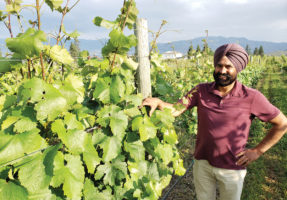
LANGLEY – Close to 30 grape growers in the Lower Mainland attended the BC Grapegrowers’ Association’s first workshop outside the Okanagan on January 21.

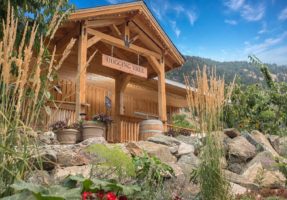
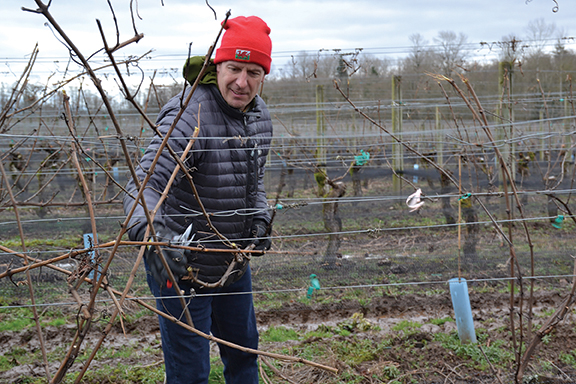
The session, held at Chaberton Estate Winery in Langley, included a safety discussion and hands-on pruning workshop.

Township 7 winemaker Mary McDermott notes events like this are needed in Langley because of the region’s growing winemaking industry.

“There’s a lot of new people entering the business here in Langley, so it’s good to have as much education as possible,” she says. “It’s good to have the community come together with the Okanagan.”

She adds that the experience of local growers provides an opportunity for newcomers and established players in the industry to learn from each other.

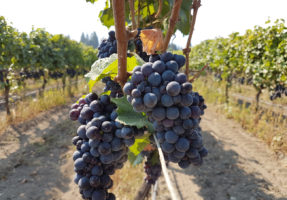
“The Fraser Valley is going to be the next up and coming wine region,” says Chaberton’s assistant vineyard manager Maddi Pantlin. She says climate change is helping the industry. “We’re already seeing some red grapes starting to ripen here.”

As the largest and oldest winery in the Fraser Valley, Chaberton was a natural host for the event.

“We have an actual estate licence,” she says. “We are primarily white [grapes] here; we have nine varietals.”

In his pruning presentation, Graham O’Rourke, viticulturist and co-owner of Tightrope Winery in Penticton, explained that everything done in the vineyard should be done with the future wine in mind – even pruning.

“Ask your winery what they want,” he told growers.

O’Rourke said that in the Okanagan, pruning sessions are primarily concerned with winter injury, bud damage and pruning at -9° Celsius. These aren’t the concerns of Lower Mainland growers.

“Down here, there’s more hybrids. Very winter-hardy, but there’s no winter,” he says. “There’s more powdery mildew, so cane pruning would help.”

He added that there are fewer and different insect pressures in the Lower Mainland and more water leaching. Pruning can help with both of these issues as well.

Doing one job at a time was another recommendation meaning that pruning should be done in one pass of the vines and tying in another.

In a presentation about the prevention of musculoskeletal injuries, AgSafe safety advisor Barb Friesen says everything in the vineyard is a risk factor due to the equipment used, repetitive motions and awkward positions required to get the work done.

“We all have the same goal; to go home safe at the end of the day,” she says. “We have to always look at the job and the person. Everybody is different.”

She advises vineyard owners and managers to look at the potential cost of injuries (paid time off, medical expenses, WorkSafeBC fee increases) when considering a tool or device to reduce risks. When the potential costs are weighed, the replacement item may become much more affordable.

“Do your warm up exercises and stretches,” she advises. “Take micro-breaks.”
Related Posts

You may be interested in these posts from the same category.

Vintage replacement renewed

Industry champion named BC’s best grape grower

Moon shines among BC grape growers

Grape growers assess damage

Merlot, Pinot Gris tops in BC

Inaugural viticulturist of the year chosen

Wineries reopen amid COVID-19

Top grape grower recognized

Agriculture first for support

Farming trumps tourism

Icewine harvest begins

Autumn showers dampen harvest

Previous Post: « BC potato growers optimistic
Next Post: New round of traceability funding available »

Copyright © 2026 Country Life in BC · All Rights Reserved