• Menu
  • Skip to primary navigation
  • Skip to main content
  • Skip to primary sidebar

Country Life In BC Logo

The agricultural news source in British Columbia since 1915

  • Headlines
  • Calendar
  • Subscribe
  • Advertise
  • About
  • Archives
  • Contact
  • Search
  • Headlines
  • Calendar
  • Subscribe
  • Advertise
  • About
  • Archives
  • Contact
  • Search

Primary Sidebar

Originally published:

JULY 2020
Vol. 106 Issue 7

Subscribe Now!

Sign up for free weekly FARM NEWS UPDATES

Loading form…

Your information will not be
shared or sold ever

Stories In This Edition

Province expands slaughter licences
Mexico launches SAWP review
Blue streak
Ranchers troubled by inconsistencies in well licencing
Editorial: All together
Back 40: Canada Day is a time to celebrate diversity
Viewpoint: BC producers keep our local food system strong
Farmland advocates pan agritech plans
Follow the arrow
Letters: Biosolids project misguided
Small on-farm dairy processors raise concerns
Zoning bylaw limits urban farmers
Kelowna readies exclusion bid
Global market puts emphasis on top-quality fruit
Sidebar: Time to renew
Leaming confident fruit industry can rejuvenate
Book Club
Review of vegetable commission forges ahead
Ag Briefs: Record funding pledged for coupon program
Ag Brief: Province boosts online grants
Ag Brief: Organic matter regulation delayed
Kelowna couple sprouts successful business
Greens growers see need for support
Cattlemen host virtual annual meeting
Sidebar: Cattlemen change gears
Pandemic less challenging for small farms
Rainy day thoughts for pesticide applications
Drones hone in on crop water requirements
BC farms adapt chicken tractors to local conditions
Breeders pin a value on traits
Prototype is a Roomba for weed control
Research: Exploring the complexities of soil structure
Viewpoint: Isolation brings the world closer
Buds
Farm Story: Weeds make perfection an impossible dream
Cidermakers give fresh purpose to island orchards
Woodshed: Frank makes Susan’s deliberation easy
Veggie Days adapts to event restrictions
Jude’s Kitchen: Summer food in colour

More Headlines

Follow us on Facebook

Comments Box SVG iconsUsed for the like, share, comment, and reaction icons

6 days ago

A BC Forest Practices Board investigation has found overgrazing has damaged grasslands in the Coutlee Range Unit near Merritt — and the range-use plan meant to prevent it was unenforceable. With complaints about overgrazing on the rise and grasslands covering just 1% of BC's land mass, the findings raise fresh questions about how the province manages one of its most vulnerable — and valuable — food-producing ecosyste#BCAg#BCAg ... See MoreSee Less

Link thumbnail

Board finds overgrazing rules unenforceable unmeasurable

www.countrylifeinbc.com

MERRITT – A BC Forest Practices Board investigation has found instances of non-compliance related to overgrazing have damaged open grasslands in the Mine pasture, part of the Coutlee Range Unit near...
View Comments
  • Likes: 6
  • Shares: 6
  • Comments: 6

Comment on Facebook

Several ranchers in recent years have gone into temporary non use on that range , so that means the grass should grow. But drought conditions/lack of rain and snow don’t allow that to happen . Dried up springs , creeks waterholes in various pastures add to over grazing where there is water , as livestock and everything else stay close to the water source . So even though less cattle are on it , over grazing appears. There is a large volume of horses on it 365 days/year which is wrong ! They pull grass right out of the ground when it’s just trying to grow ,, opens the door for weeds to grow in. That don’t help it. Aging infrastructure ( fences) laying on the ground, pipe line building , ( lack of commitment to fence maintenance) amongst all users contributes also to over grazing. Recreational atv users leaving gates open between pastures allows livestock to go back or ahead in pastures also expidites over grazing. Logging ( bcts) has no problem laying out cut locks on both sides of a fence , then it gets smashed down during logging and they don’t take responsibility to stand it back up or clean the cattle gaurds out when they are done , that happened 4 years ago on pasture 5 up there . I bet it is still not fixed . There are lots of contributing factors to the problem.

Tragedy of the commons.

I looked through the report. I saw nothing about the effects of noxious weeds on productive grasslands. This particular area is vulnerable because of the Ministry’a efforts to diversify the use of the Grasslands.

This pasture is under tremendous pressure not only from cattle but from irresponsible local residents who treat it as a landfill dumping all manner of household debris here. And don't even get me started on the mud bogging and camping in sensitive riparian areas. The feral horses are in this pasture 365 days a year just hammering it. Would sure be nice to see some enforcement action on people who are intentionally ripping up the grasslands and riparian areas. Cattle could be a valuable resource for rebuilding soils and native grasses in this area with the help of electric fencing and/or e-collars. The humans will be harder to manage.

The Forest and Range Practices Act was written by lawyers for global forest licencee shareholders. Results-based = unenforceable.

Also, can we talk about the impact of a pipeline being built through the middle of this field for multiple years?

View more comments

1 week ago

East Kootenay rancher Randy Reay is digging a new well after two natural water sources dried up on his Crown tenures. A new Living Lakes Canada assessment found 15% of mapped aquifers in the region are high-priority for monitoring, yet 80% of those go unmonitored. With over 48% of BC's provincial observation wells reporting below-normal groundwater levels, ranchers and researchers are sounding the alarm on water security. The story is in our March edition, and we've posted it to our website thi#BCAgk.

#BCAg
... See MoreSee Less

Link thumbnail

Water woes: groundwater under pressure across BC

www.countrylifeinbc.com

JAFFRAY – As a young boy growing up in the Kootenay-Boundary region, Randy Reay never expected to run out of water. But this year, in mid-February, his fields are bare. There is no snow halfway up t...
View Comments
  • Likes: 8
  • Shares: 7
  • Comments: 1

Comment on Facebook

Jaffrey is in the east Kootenays not kooteney boundary

2 weeks ago

BC farmers are bracing for prolonged higher input costs as war in the Middle East drives up fuel and fertilizer prices. Nitrogen fertilizer costs were already climbing before the Iran conflict began, with prices still roughly 60% above pre-pandemic levels. Farm Credit Canada warns that unlike 2022, strong commodity prices may not offset rising costs this time. Local suppliers expect supply challenges and further price increases ahead.

#BCAg
... See MoreSee Less

Link thumbnail

Fertilizer prices on the rise

www.countrylifeinbc.com

War in the Middle East has delivered a generational shock to energy prices, meaning BC farmers can expect a prolonged period of higher costs not just for fuel but also for fertilizer.
View Comments
  • Likes: 2
  • Shares: 1
  • Comments: 0

Comment on Facebook

2 weeks ago

... See MoreSee Less

View Comments
  • Likes: 1
  • Shares: 0
  • Comments: 0

Comment on Facebook

2 weeks ago

Cameron Stockdale is the new executive director of provincial farm safety organization AgSafeBC. Find out more in this week's Farm News Update from Country Life in B#BCAg#BCAg ... See MoreSee Less

Link thumbnail

New leadership at AgSafe BC

www.countrylifeinbc.com

Cameron Stockdale is the new executive director of provincial farm safety organization AgSafeBC, succeeding Wendy Bennett. Bennett left AgSafeBC in September 2025, following 12 years with the…
View Comments
  • Likes: 5
  • Shares: 1
  • Comments: 0

Comment on Facebook

Subscribe | Advertise

The agricultural news source in British Columbia since 1915
  • Email
  • Facebook

Small on-farm dairy processors raise concerns about systemic inequities

Producers want break for fluid milk that doesn’t leave the farm

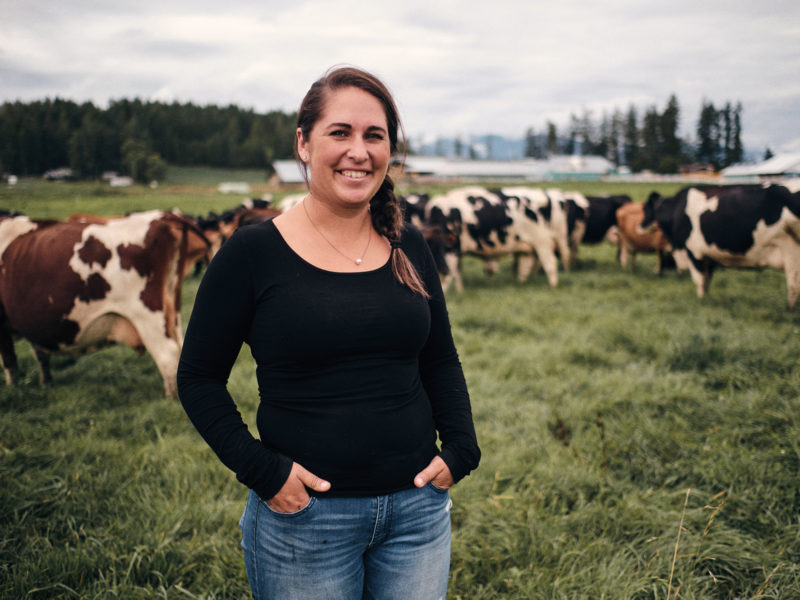
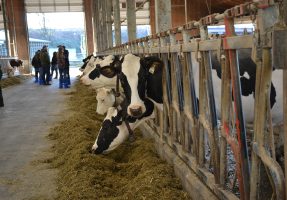
Erin Harris of Kootenay Meadows Farm in Creston is lobbying the BC Dairy Association and milk marketing board for a more equitable approach for small on-farm milk processors. PHOTO / Thomas Nowaczynski

July 7, 2020 byJackie Pearase

KAMLOOPS – Two small dairies are hoping there’s room in supply management for an alternative way of doing business that will keep on-farm processors viable into the future.

Laura Hunter of Blackwell Dairy in Kamloops and Erin Harris of Kootenay Meadows Farm in the Creston Valley reached out on Facebook recently seeking support for ideas to make supply management more equitable for small on-farm processors. They also presented their proposal to the BC Dairy Association and BC Milk Marketing Board.

Each of the farms produce and process 12,000 to 15,000 litres of milk each week, with the bulk of it going into fluid product.

Blackwell Dairy has processed its own milk since 1983 and Kootenay Meadows started about 15 years ago.

As part of the supply management system, they are required to sell their milk to the BCMMB, then purchase it back for processing.

“The supply management system works really well for producers but being a small processor, when we’re buying our milk back, it’s costing a significant amount. It’s about a 35.5% mark-up on milk from our tank to our processing facility,” says Harris. “On milk that doesn’t ever leave the farm; nobody touches it but ourselves.”

The farms also incur producer fees on one end, processing costs on the other plus farming costs faced by all farmers, leaving a slim profit margin.

“I think why we’re affected the most and why this hits us pretty hard is both of our plants produce 75% fluid milk product and fluid milk is priced the highest. So, we’re putting the most money back into the pool but we’re getting it as a farm at the pooled price,” notes Hunter. “It wasn’t always like this. When we first opened the plant here, the margins weren’t that far apart. If those margins get further apart, it just puts us in a position where we’ve got to make financial business decisions.”

The farms appreciate and understand the importance of supply management but think there are other ways for small on-farm processors to fit into the system.

One idea is to create an on-farm processing class with different pricing.

“Our proposal would be that any milk that’s end use is processing on-farm, regardless of what you’re making with it, should be priced at the same price as the farmer gets paid. So that, basically, we’re producing within our quota and we’re accounting for where our milk is and where it’s going, but we’re not paying to buy our milk back,” explains Hunter. “That way it doesn’t harm the pooled milk price at all but it means that we as small businesses can keep going.”

The other idea is to increase the volume cap on milk processing under a cottage industry licence and include these processors in the supply management system.

Unique issues

BCMMB director David Janssens says the board understands small on-farm processors face unique issues that require unique solutions.

“It’s in our strategic planning agenda and we’re certainly aware of the challenges they face. It’s a question of working through what can we do,” Janssens says. “The problem is that the proposed ideas are contrary to the board’s founding principle of fairness for all producers and processors.”

Harris says a recent BC Dairy Industry Development Council plebiscite prompted them to explore their options. She says the plebiscite is effectively asking them to subsidize large processors – their competition.

BCDA general manager Jeremy Dunn says the plebiscite was held to approve a new plan for the DIDC, which includes enabling the DIDC directors to consider investing in processing initiatives on behalf of BC producers.

“Investments would be made according to a set of strict criteria and all processing-related projects, large or small, would have an opportunity to be considered,” he explains. “Eighty-nine per cent of dairy producers who participated in the plebiscite voted yes.

Important role

Harris wants to see more support for small on-farm processors because they have a key role to play, too.

“We’re an important part in a resilient food system if and when we have another situation like COVID,” she says. “It is easier for a small plant to pivot quicker than it is for some of the large processors so we really filled in a gap when they could not service the market.”

The farms were able to continuing supplying their customers, including large grocery stores and boutique stores, throughout the COVID-19 outbreak and even provided product to areas running short.

“With the system right now, it doesn’t encourage or support the fluid milk. In a time like this, especially, we can see how small processors such as ourselves are super important to the industry because there is a need for fluid milk,” adds Hunter.

Harris says they are committed to lobbying for change because their future, and the future of small on-farm processing in BC, depends on ensuring their bottom line doesn’t get smaller.

“Right now, it’s sort of just our two farms working together but it would impact anyone that wants to start on-farm processing. It really disincentivizes local, on-farm processing of milk,” she says.

Tough gig

Janssens says BCMMB’s cottage industry program is designed to give a start to small on-farm processors but admits there has been little interest.

“There hasn’t been a lot of uptake on it, to be perfectly honest, because it’s a lot of work milking cows all day and then processing it and trying to sell it,” he says. “The fluid milk racket is a tough gig.”

Morningstar Farm completed its 15-year run in the cottage industry program in 2016.

Co-owner Ray Gourlay says the 20-year-old farm is now part of the supply management system, producing and processing 1,500-1,800 litres of milk on farm per day. Gourlay says the BCDA and BCMMB provide invaluable contributions to the industry that he is happy to help fund.

But he also sees the need for the organizations to be creative about diversifying the industry by encouraging more on-farm processors and agri-tourism.

“It’s fantastic marketing and education for customers and consumers. It helps make our whole processing infrastructure, our whole processing systems, more resilient, particularly when we have massive disruptions in our supply chain,” Gourlay adds.

Agriculture minister Lana Popham says dairy producers and processors of every size are key to vibrant local food systems.

“I look forward to continuing to work with dairies and dairy producers of all sizes and scales to ensure that the industry continues to grow, thrive and provide food security for all British Columbians,” she says.

The ideas presented by the two farms were on the agenda for discussion at the BCDA’s June 17 meeting.

The farms stress that they are not seeking a hand-out.

“We don’t want anyone supporting or putting money into our plant. We just want the pricing and licensing structure to be equitable enough that we can compete on our own,” says Harris. “We want to not have a system that’s creating this massive financial burden that could ruin our businesses.”
Related Posts

You may be interested in these posts from the same category.

Greater interest in dairy

Vet urges dairies to be vigilant against HPAI

Westgen looks beyond challenges

Western dairy groups streamline

New Zealand follows US challenge

Dairy compensation fund opens

Fraser Valley flooding continues

Catastrophic flooding hits Fraser Valley

Cedar Valley footage released

Promotions help secure markets

Quick action on allegations

Cheesemakers felt the heat this summer

Previous Post: « Cidermakers give fresh purpose to island orchards
Next Post: Province expands slaughter licences »

Copyright © 2026 Country Life in BC · All Rights Reserved