• Menu
  • Skip to primary navigation
  • Skip to main content
  • Skip to primary sidebar

Country Life In BC Logo

The agricultural news source in British Columbia since 1915

  • Headlines
  • Calendar
  • Subscribe
  • Advertise
  • About
  • Archives
  • Contact
  • Search
  • Headlines
  • Calendar
  • Subscribe
  • Advertise
  • About
  • Archives
  • Contact
  • Search

Primary Sidebar

Originally published:

December 2018
Vol. 104 Issue 12

Subscribe Now!

Sign up for free weekly FARM NEWS UPDATES

Loading form…

Your information will not be
shared or sold ever

Stories In This Edition

Province tightens rules in ALR

Farming isn’t what it used to be

Ag waste reg “nearly” ready

Sidebar: New commissioners

Proposed foreign worker registry raises concerns

Fall harvest

Editorial: ‘Tis the season

Back Forty: Time to address climate change head-on

Viewpoint: Ottawa needs to stop milking dairy sector

Sweet times for BC honey producers

Public trust key as grade designation clarified

Apiarists wary as new prescription rules kick in

Pipeline explosion creates uncertainty

Farmers, chefs cook up deals at networking event

Ag Briefs: Safe Food regs require producer registration

Ag Briefs: Reus receives recognition

Keeping the end in mind

Heppell’s Potato Corp

US milk offered for sale in Canada

Volatile blend price hitting home for dairy sector

Landowners see development as only solution

Good soil makes good drinks even better

DNA analysis opens doors in hop renaissance

Tour builds trust between foodies, farmers

New entrant egg producer has long-term goals

Farmers, ranchers grapple with climate change

Drought results in record low water flows

BC ranchers face mounting regulations

Seaweed finds a home on the range

Co-op model recommended for beef plant

Farm market banks on relationship-building

Tour showcases local farm entrepreneurs

Young farmers share experiences at Farm Fest

Research: The complexity of colours

Nutsedge demands strong, decisive response

Wool classifying can add value to sheep flocks

Print remains top media choice for producers

Sidebar: Canadians read more

Communication key to four-way success

Cannabis shows mainstream retail potential

Nurseries change up offerings to stay relevant

Irrigation protocols critical for greenhouses

Producers need to think like retailers

Organic farmer values food education

Wannabe: The greatest gift is friendship

Ag in the Classroom

Woodshed: A present for Deborah sparks inquisition

Jude’s Kitchen: Celebration food

More Headlines

Follow us on Facebook

Comments Box SVG iconsUsed for the like, share, comment, and reaction icons

6 days ago

A BC Forest Practices Board investigation has found overgrazing has damaged grasslands in the Coutlee Range Unit near Merritt — and the range-use plan meant to prevent it was unenforceable. With complaints about overgrazing on the rise and grasslands covering just 1% of BC's land mass, the findings raise fresh questions about how the province manages one of its most vulnerable — and valuable — food-producing ecosyste#BCAg#BCAg ... See MoreSee Less

Link thumbnail

Board finds overgrazing rules unenforceable unmeasurable

www.countrylifeinbc.com

MERRITT – A BC Forest Practices Board investigation has found instances of non-compliance related to overgrazing have damaged open grasslands in the Mine pasture, part of the Coutlee Range Unit near...
View Comments
  • Likes: 6
  • Shares: 6
  • Comments: 6

Comment on Facebook

Several ranchers in recent years have gone into temporary non use on that range , so that means the grass should grow. But drought conditions/lack of rain and snow don’t allow that to happen . Dried up springs , creeks waterholes in various pastures add to over grazing where there is water , as livestock and everything else stay close to the water source . So even though less cattle are on it , over grazing appears. There is a large volume of horses on it 365 days/year which is wrong ! They pull grass right out of the ground when it’s just trying to grow ,, opens the door for weeds to grow in. That don’t help it. Aging infrastructure ( fences) laying on the ground, pipe line building , ( lack of commitment to fence maintenance) amongst all users contributes also to over grazing. Recreational atv users leaving gates open between pastures allows livestock to go back or ahead in pastures also expidites over grazing. Logging ( bcts) has no problem laying out cut locks on both sides of a fence , then it gets smashed down during logging and they don’t take responsibility to stand it back up or clean the cattle gaurds out when they are done , that happened 4 years ago on pasture 5 up there . I bet it is still not fixed . There are lots of contributing factors to the problem.

Tragedy of the commons.

I looked through the report. I saw nothing about the effects of noxious weeds on productive grasslands. This particular area is vulnerable because of the Ministry’a efforts to diversify the use of the Grasslands.

This pasture is under tremendous pressure not only from cattle but from irresponsible local residents who treat it as a landfill dumping all manner of household debris here. And don't even get me started on the mud bogging and camping in sensitive riparian areas. The feral horses are in this pasture 365 days a year just hammering it. Would sure be nice to see some enforcement action on people who are intentionally ripping up the grasslands and riparian areas. Cattle could be a valuable resource for rebuilding soils and native grasses in this area with the help of electric fencing and/or e-collars. The humans will be harder to manage.

The Forest and Range Practices Act was written by lawyers for global forest licencee shareholders. Results-based = unenforceable.

Also, can we talk about the impact of a pipeline being built through the middle of this field for multiple years?

View more comments

1 week ago

East Kootenay rancher Randy Reay is digging a new well after two natural water sources dried up on his Crown tenures. A new Living Lakes Canada assessment found 15% of mapped aquifers in the region are high-priority for monitoring, yet 80% of those go unmonitored. With over 48% of BC's provincial observation wells reporting below-normal groundwater levels, ranchers and researchers are sounding the alarm on water security. The story is in our March edition, and we've posted it to our website thi#BCAgk.

#BCAg
... See MoreSee Less

Link thumbnail

Water woes: groundwater under pressure across BC

www.countrylifeinbc.com

JAFFRAY – As a young boy growing up in the Kootenay-Boundary region, Randy Reay never expected to run out of water. But this year, in mid-February, his fields are bare. There is no snow halfway up t...
View Comments
  • Likes: 8
  • Shares: 7
  • Comments: 1

Comment on Facebook

Jaffrey is in the east Kootenays not kooteney boundary

2 weeks ago

BC farmers are bracing for prolonged higher input costs as war in the Middle East drives up fuel and fertilizer prices. Nitrogen fertilizer costs were already climbing before the Iran conflict began, with prices still roughly 60% above pre-pandemic levels. Farm Credit Canada warns that unlike 2022, strong commodity prices may not offset rising costs this time. Local suppliers expect supply challenges and further price increases ahead.

#BCAg
... See MoreSee Less

Link thumbnail

Fertilizer prices on the rise

www.countrylifeinbc.com

War in the Middle East has delivered a generational shock to energy prices, meaning BC farmers can expect a prolonged period of higher costs not just for fuel but also for fertilizer.
View Comments
  • Likes: 2
  • Shares: 1
  • Comments: 0

Comment on Facebook

2 weeks ago

... See MoreSee Less

View Comments
  • Likes: 1
  • Shares: 0
  • Comments: 0

Comment on Facebook

2 weeks ago

Cameron Stockdale is the new executive director of provincial farm safety organization AgSafeBC. Find out more in this week's Farm News Update from Country Life in B#BCAg#BCAg ... See MoreSee Less

Link thumbnail

New leadership at AgSafe BC

www.countrylifeinbc.com

Cameron Stockdale is the new executive director of provincial farm safety organization AgSafeBC, succeeding Wendy Bennett. Bennett left AgSafeBC in September 2025, following 12 years with the…
View Comments
  • Likes: 5
  • Shares: 1
  • Comments: 0

Comment on Facebook

Subscribe | Advertise

The agricultural news source in British Columbia since 1915
  • Email
  • Facebook

Tour builds trust between foodies, farmers

Okanagan farms give a fresh perspective on agriculture

November 28, 2018 byJackie Pearase

GRINDROD – A farm tour aimed at food influencers did more than open eyes, it changed minds.

A group including chefs, food bloggers, nutritionists and dietitians toured three North Okanagan farms October 23 with agriculture industry representatives for a behind-the-scenes look at the farms. The tour was a chance to taste local products and ask questions about food production and farm practices.

We Heart Local, an initiative of the BC Agriculture Council launched in 2014, hosted the tour in partnership with Buy BC: Eat Drink Local, the province’s two-year-old initiative with the BC Restaurant and Food Services Association. The tour aimed to create connections between consumers and BC’s agriculture community.

“We are working to build consumers’ confidence that the food purchased from local producers is safe and very high quality,” explains BCAC community trust manager Becky Parker. “We conducted pre- and post-surveys with the participants and found that 89% found the tour to be an effective way to learn more about farming and the food system.”

The surveys showed that participants’ level of trust in agricultural practices increased after the tour. For example, tour participants all agreed that farmers produce safe, high-quality food and that they care about the animals they raise versus 70% before the tour. All participants also agreed that farmers are transparent about production practices, versus just 10% before the tour.

There was also greater agreement that farmers are environmentally conscious, with 78% of tour participants believing this compared to 10% before.

The tour started at Okanagan Riverbend Poultry in Grindrod, a free range and soon-to-be organic and SPCA-certified chicken layer barn.

The quality of the eggs produced and the health of the 3,300 chickens were topmost concerns for tour participants.

Owner Jared de Dood explained his three-tier aviary system that gives the birds space to run, fly, roost and eat with access to the outdoors, a system that has resulted in daily production of about 3,100 eggs since he started his first flock in May.

“When I came here, the very first day, I packed six eggs out of 3,300 birds that were placed in there,” de Dood says.

He opened his books detailing his daily, weekly and monthly reporting requirements; showed the barn’s computer systems that help monitor bird health, lights, feeding and more; and explained how eggs are collected and packed for grading.

“What you’re seeing is eggs coming from the farm to the grocery store within four to seven days. That’s how fresh our products are,” he notes.

A look inside the aviary revealed quiet, content birds which quickly adapted to the visitors.

A delicious lunch next door at Farmer John’s Market, operated by Jared’s parents, John and June de Dood, featured a starter, entree and dessert created with ingredients sourced from Okanagan farms that wowed the group and sparked a deeper interest in local products.

Lunch was also an opportunity for everyone to see the de Dood’s state-of-the-art robotic dairy, Sunninghill Holsteins.

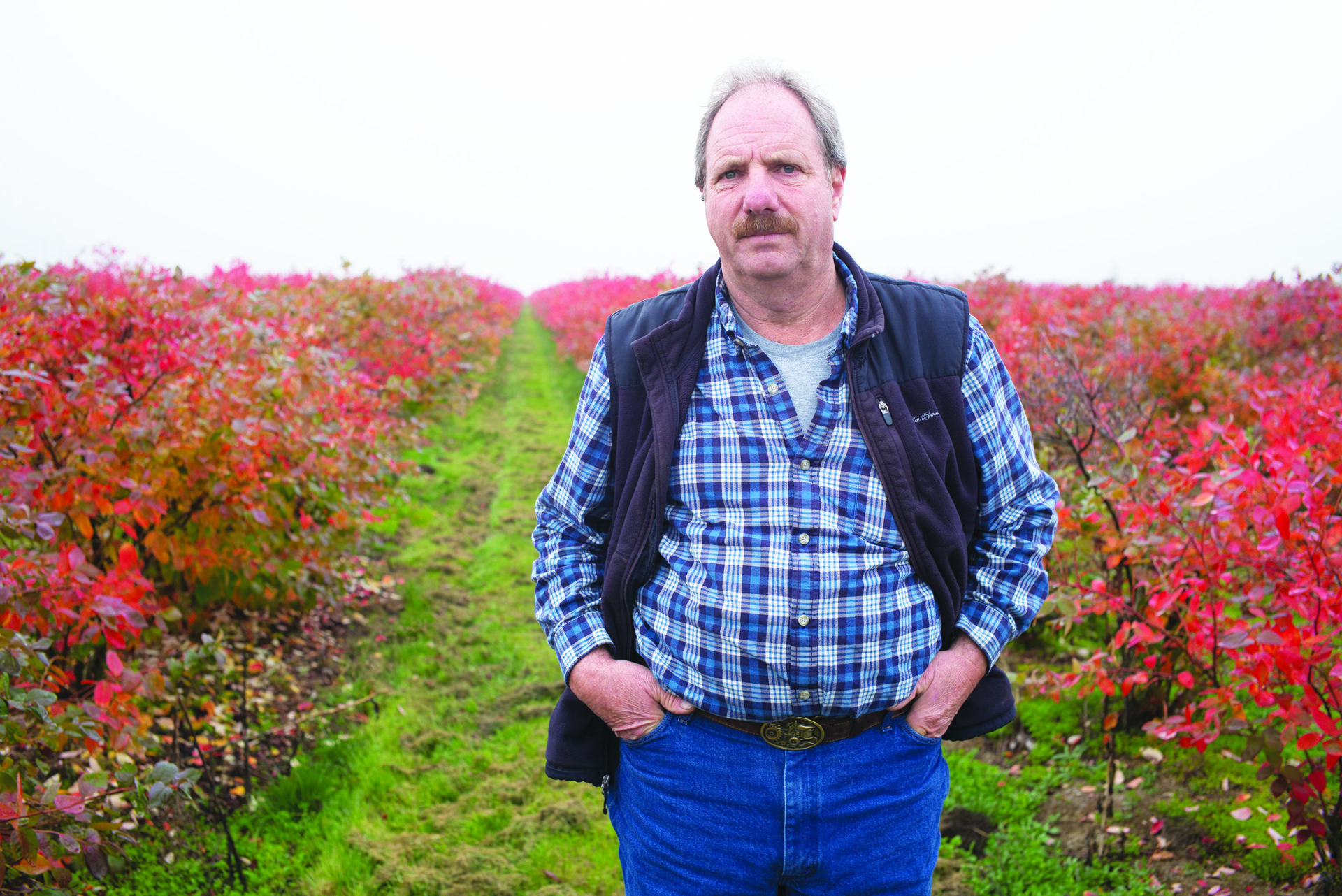
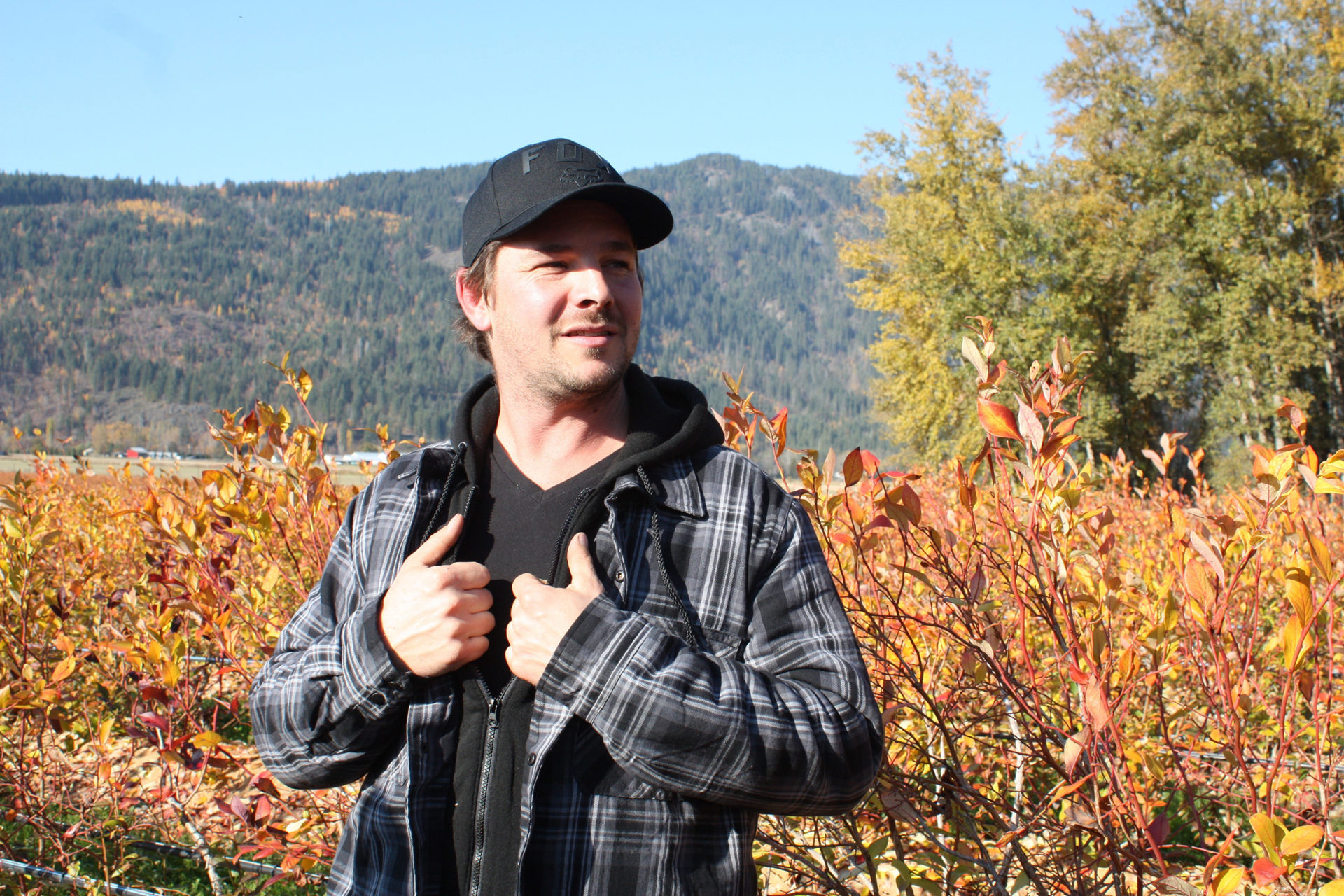
A short drive to Mara brought the group to 60 acres of blueberries at Madalea Farms, where owner AJ Stobbe explained how the fruit helped diversify his family’s dairy farm and filled a need for local berries in the North Okanagan.

“I have pretty good success going into a store with Okanagan blueberries and they’re pretty excited about the merchandise,” Stobbe says. “It’s been so fun because a lot of the stores are saying, ‘There’s local blueberries? How come we didn’t know about you? Yes, bring some.’”

He explained the need to use foreign workers to meet labour requirements, blueberries’ growth cycle and answered questions about the use of chemicals in plant health.

“This year we didn’t spray a single insecticide. We spray some fungicide and we spray a fair amount of fertilizer to keep the plants healthy and we give the plants enough nutrients to fend off insects themselves,” Stobbe explains. “In our school of thought, we can’t go organic because we need to feed the plant.”

A stop at Serene Lea Farms, the Stobbe family’s 200-head dairy, followed.

Stobbe outlined the milking process, described the geothermal system that uses heat from the milk for heating and cooling the farm and stressed the importance of nutritionally balanced rations for his herd.

“We’re a little bit different here. We have a grain mill so we make our own calf grain. I balance it with my nutritionist; I’m always tweaking it a little bit,” he says.

The birth of a calf aided by Stobbe and his father Abe highlighted this part of the tour and gave everyone a first-hand example of the care provided by farmers to their animals.

A cheese tasting, courtesy of cheesemaker Sandra Proulx, wrapped up the afternoon.

Proulx, long-time cheesemaker at Terroir Cheese in Armstrong, purchased the business six months ago. She brought along her two Brie-style cheeses: Goaty Cow and Mt. Ida, and provided lots of delicious recipe ideas.

Proulx plans to open a new facility in Kaleden next summer where she can produce a full line of cheeses and do retail sales.

Sysco Kelowna corporate chef Brent Durec says Sysco organizes a Vancouver tour each year featuring many large producers but local connections are just as important.

“We want to support local farmers and offer a wider product to the customer,” he says. “It’s always interesting finding the different farms and products.”

Kelowna Yacht Club executive sous chef Jeff Burns said Sysco’s ability to pick up fresh product from farmers and deliver it to other customers along the route creates more food possibilities for restaurants.

“We use Sysco a lot so the more local product they can get, the more we can highlight that,” says Burns. “It’s a good way to understand the local side of food. … I’m very interested to see the diversification being used by local farmers.”

October’s tour was the second We Heart Local organized this year. The first tour in May included a visit to a greenhouse and a dairy farm in Delta.

Plans are taking shape for additional tours in 2019.
Related Posts

You may be interested in these posts from the same category.

Ranchers get the backstory on public perception

BC farmers have public trust

Canada recognizes agriculture

Where’s the beef?

Farmers must take lead in building public trust

Previous Post: « ALC crippled while province mulls revitalization

Next Post: Drought results in record low water flows »

Copyright © 2026 Country Life in BC · All Rights Reserved