• Menu
  • Skip to primary navigation
  • Skip to main content
  • Skip to primary sidebar

Country Life In BC Logo

The agricultural news source in British Columbia since 1915

  • Headlines
  • Calendar
  • Subscribe
  • Advertise
  • About
  • Archives
  • Contact
  • Search
  • Headlines
  • Calendar
  • Subscribe
  • Advertise
  • About
  • Archives
  • Contact
  • Search

Primary Sidebar

Originally published:

SEPTEMBER 2021
Vol. 107 Issue 9

Subscribe Now!

Sign up for free weekly FARM NEWS UPDATES

Select list(s) to subscribe to


By submitting this form, you are consenting to receive marketing emails from: Country Life in BC. You can revoke your consent to receive emails at any time by using the SafeUnsubscribe® link, found at the bottom of every email. Emails are serviced by Constant Contact
Your information will not be
shared or sold ever

Stories In This Edition

Wildfire response improves

Bad timing for election call

Hay there!

Food sales still reeling from the pandemic

Editorial: Restart, regenerate

Back 40: Anti-vax rhetoric is far worse than the cure

Viewpoint: Organic practices key to our collective well-being

Producers face unannounced welfare checks

Livestock feel the heat as forage dries up

Farmers take issue with water restrictions

Ag Briefs: Grape growers optimistic as harvest approaches

Ag Briefs: Greenhouse nursery specialist named

Feed BC connects producers with opportunities

Sidebar: Nutrition program continues

Growers welcome grocer code of conduct

Chicken growers address heat stress

Greenhouse growers undertake strategic plan

Turning manure into renewable energy

Sidebar: Biogas gets a boost with changes to regulations

Blueberry growers welcome higher berry prices

Ranchers, farmers on the wildfire frontlines

Sidebar: Water and fans keep cattle cool

Province halts livestock watering reg update

BC farm sales sets new monthly record

Mental wellness resources meet a growing need

Sidebar: Mental health resources

Saving the farm business hinges on planning

Hot potatoes

Farmers produce crops, and loads of plastic

Barnston Island farmers face uncertain future

Market garden rises from battle of the weeds

Sidebar: Oostenbrink’s tips for no-till vegetables

Research: Bumblebee declines not as dire as study states

A non-family succession plan that worked

Living plants are revolutionizing herb sales

Food hub readies for fall opening

Farm Story: Good help at the right time

Small-scale abattoir in the works for Island

Breeding better tasting beets

Woodshed Chronicles: Plans unfold for the ride of a lifetime

Young entrepreneur weaves new use for twine

Jude’s Kitchen: Simpler eats for a new, normal September

More Headlines

Follow us on Facebook

Comments Box SVG iconsUsed for the like, share, comment, and reaction icons

6 days ago

... See MoreSee Less

View Comments
  • Likes: 4
  • Shares: 0
  • Comments: 0

Comment on Facebook

6 days ago

On the last day of the BC Organic Conference, Thursday, Molly Thurston of Pearl Agricultural Consulting helped growers learn how to manage bugs such as codling moth, wireworm, and rootworm in organic growing systems. Her talk alongside Renee Prasad included hands-on activities in which participants checked out various traps and examined pests under microscopes. Be sure to look for more upcoming ag events on our online calendar at www.countrylifeinbc.com/calendar/

#BCAg
... See MoreSee Less

On the last day of the BC Organic Conference, Thursday, Molly Thurston of Pearl Agricultural Consulting helped growers learn how to manage bugs such as codling moth, wireworm, and rootworm in organic growing systems. Her talk alongside Renee Prasad included hands-on activities in which participants checked out various traps and examined pests under microscopes. Be sure to look for more upcoming ag events on our online calendar at www.countrylifeinbc.com/calendar/

#BCAg
View Comments
  • Likes: 15
  • Shares: 0
  • Comments: 0

Comment on Facebook

1 week ago

Well-known organic farmer and podcaster Jordan Marr gets interviewed by Country Life in BC’s own columnist and potato mavin Anna Helmer during the opening session of the BC Organic Conference at Harrison Hot Springs yesterday. Sessions run today (Wednesday) and Thursday and include organic and regenerative growing practices and expanding and advocating for the organic sector, all under the background of the newly launched Organic BC banner.

#BCAg
... See MoreSee Less

Well-known organic farmer and podcaster Jordan Marr gets interviewed by Country Life in BC’s own columnist and potato mavin Anna Helmer during the opening session of the BC Organic Conference at Harrison Hot Springs yesterday. Sessions run today (Wednesday) and Thursday and include organic and regenerative growing practices and expanding and advocating for the organic sector, all under the background of the newly launched Organic BC banner.

#BCAg
View Comments
  • Likes: 37
  • Shares: 2
  • Comments: 1

Comment on Facebook

Interested in finding out more about this

3 weeks ago

Today, we remember those who sacrificed their lives or their well-being for our freedom. Lest we forget. ... See MoreSee Less

Today, we remember those who sacrificed their lives or their well-being for our freedom. Lest we forget.
View Comments
  • Likes: 8
  • Shares: 0
  • Comments: 0

Comment on Facebook

1 month ago

FarmFolk CItyFolk is hosting its biennial BC Seed Gathering in Harrison Hot Springs November 27 and 28. Farmers, gardeners and seed advocates are invited to learn more about seed through topics like growing perennial vegetables for seed, advances in seed breeding for crop resilience, seed production as a whole and much more. David Catzel, BC Seed Security program manager with FF/CF will talk about how the Citizen Seed Trail program is helping advance seed development in BC. Expect newcomers, experts and seed-curious individuals to talk about how seed saving is a necessity for food security. ... See MoreSee Less

Link thumbnail

BC Seed Gathering - FarmFolk CityFolk

farmfolkcityfolk.ca

Save the date for our upcoming 2023 BC Seed Gathering happening this November 3rd and 4th at the Richmond Kwantlen Polytechnic University campus.
View Comments
  • Likes: 1
  • Shares: 0
  • Comments: 0

Comment on Facebook

Subscribe | Advertise

The agricultural news source in British Columbia since 1915
  • Email
  • Facebook

Turning manure into renewable energy

Capturing biogas good for the planet and the bottom line

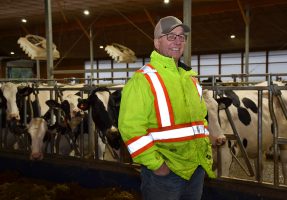
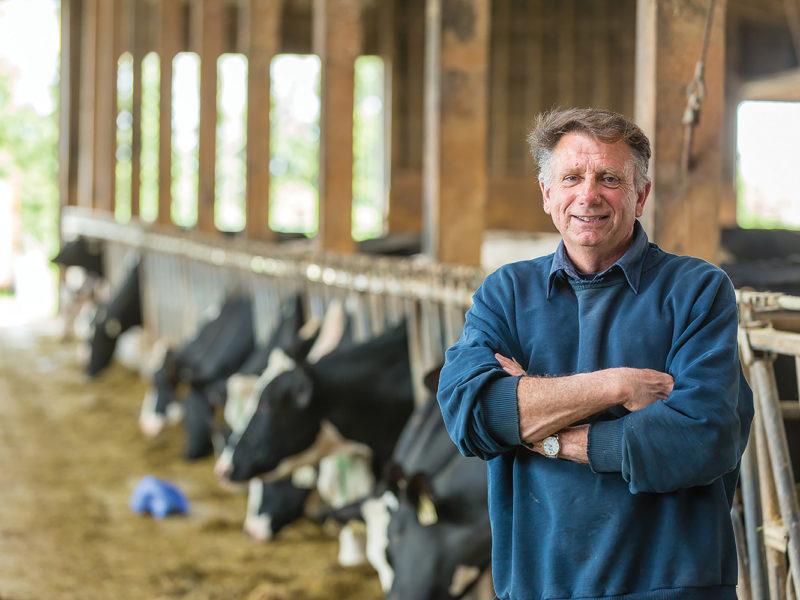
Six years in, Delta dairy farmer Jerry Keulen says diversifying his dairy operation to produce renewable natural gas was a good move. FORTISBC

September 1, 2021 byKate Ayers

DELTA – With BC working to reduce its use of fossil fuels, some farmers see renewable natural gas (RNG) as an opportunity to add a new income stream to their operations.

Seabreeze Farm owner and dairy farmer Jerry Keulen is among them. He was intrigued by the possibility of reducing his farm’s greenhouse gas emissions while upcycling the manure his cattle produce.

Unlike conventional natural gas, RNG is derived from biogas, which is the product of decomposing organic waste from landfills, agricultural waste and wastewater. Biogas is collected and cleaned to create RNG.

When ARDCorp put out a call for producers interested in RNG technology, Keulen agreed to participate in a feasibility study in 2010. The farm’s proximity to the energy grid and consumers made it an ideal spot to test out a new biogas project. Keulen decided to continue developing the project following the study and the complete waste management facility became operational in 2015.

“We were interested in RNG because the buzzword at the time was diversification, so we wanted to diversify with another income stream,” says Keulen.

The farm’s biogas is purified to pipeline quality natural gas and is then sold to FortisBC as RNG.

This renewable energy is different from the previous biogas options available to producers because it can feed into the existing natural gas distribution network, says FortisBC’s RNG supply manager Scott Gramm.

“You have the option to put it into the existing natural gas system,” he says. He notes that the price is often better than electricity. “Options of the past were to directly use raw biogas to burn for heat or potentially generate electricity. In our program, we offer a fairly high price for this source of energy that we can use to displace conventional gas.”

Keulen feeds his anaerobic digester with the manure from his 400-head milking herd and organics from off-farm sources, including oils and grease from restaurants across Metro Vancouver.

In total, Seabreeze Farms produces 45,000 gigajoules of RNG – enough energy to heat 500 homes for a year.

In addition to Seabreeze Farms Ltd. in Delta, FortisBC works with local suppliers including the Surrey Biofuel Facility as well as landfills in Kelowna and Salmon Arm. FortisBC has also signed a

20-year contract with EverGen, a publicly listed RNG infrastructure platform headquartered in Vancouver. As one of its largest customers, FortisBC will buy up to 173,000 gigajules of RNG annually from EverGen.

FortisBC does not have a minimum production threshold for farms supplying it with RNG, but Gramm says the economics have to make sense.

“My experience tells me that you want to be in the range of at least 200 milking cows plus some other organics to make the economics go round,” he says.

A farm that isn’t producing enough waste on its own can partner with neighbouring farms to produce the tens of thousands of tonnes of waste needed to feed the RNG system each year.

Farmers are responsible for installing the required RNG infrastructure on their properties and then FortisBC offers long-term contracts to farmers.

“You don’t need to go season-to-season but rather you can sign 10-to-20-year agreements,” he says.

At Seabreeze Farms, the byproducts from the RNG process include hygienic bedding for the cattle and a nutrient-rich digestate that can be used as fertilizer.

“Because we’re bringing in more nutrients and off-farm products onto ag land, the ministry of ag was concerned about how we were going to handle more nutrients on land that already has a lot of phosphorus,” says Keulen. “So, we now do a whole nutrient extraction. We collect all those nutrients, put them into a tight package and that allows us to move them off farm in a practical way to other land bases that need nutrients and spread those nutrients over a larger area.”

Those with RNG facilities on their farms need an approved nutrient management plan.

The project does not come without potential challenges, though.

Challenges

“There is a fair amount of work involved. We tried to run it alongside the farm the first five and half years,” says Keulen. “But we recently realized it’s a much bigger task, so we have a plant manager now who has taken over the daily operations. You can’t just turn on a switch and away you go.”

In addition, location is a determining factor in project viability.

“If you want to put renewable natural gas into the existing natural gas system, you have to have natural gas close to your farm,” says Gramm. “Sometimes that is a challenge for producers who have large properties and the gas line is far away. It can make the economics a little more challenging.”

Through all the lessons learned since they started the project in 2010, Seabreeze is excited about the technology’s contributions to a decarbonized economy.

“Collecting methane, the RNG program and putting nutrients into a tight package – there are a lot of really good aspects to it. I think they can work together perfectly and there have been a lot of new developments and technologies,” Keulen says.

After six years in operation, “we are no less excited about the potential of how RNG can work for us as dairy farmers and what the future holds.”

Producers who are interested in RNG projects on their farms can visit FortisBC’s online supplier guide and the Canadian Biogas Association’s website, which has a farm-to-fuel guide on biogas projects.
 

Related Posts

You may be interested in these posts from the same category.

Vet urges dairies to be vigilant against HPAI

Westgen looks beyond challenges

Western dairy groups streamline

New Zealand follows US challenge

Dairy compensation fund opens

Fraser Valley flooding continues

Catastrophic flooding hits Fraser Valley

Cedar Valley footage released

Promotions help secure markets

Quick action on allegations

Cheesemakers felt the heat this summer

COVID influences food demand

Previous Post: « Farmers take issue with water restrictions
Next Post: Mental wellness resources meet a growing need »

Copyright © 2025 Country Life in BC · All Rights Reserved