• Menu
  • Skip to primary navigation
  • Skip to main content
  • Skip to primary sidebar

Country Life In BC Logo

The agricultural news source in British Columbia since 1915

  • Headlines
  • Calendar
  • Subscribe
  • Advertise
  • About
  • Archives
  • Contact
  • Search
  • Headlines
  • Calendar
  • Subscribe
  • Advertise
  • About
  • Archives
  • Contact
  • Search

Primary Sidebar

Originally published:

June 2018
Vol. 104 Issue 6

Subscribe Now!

Sign up for free weekly FARM NEWS UPDATES

Select list(s) to subscribe to


By submitting this form, you are consenting to receive marketing emails from: Country Life in BC. You can revoke your consent to receive emails at any time by using the SafeUnsubscribe® link, found at the bottom of every email. Emails are serviced by Constant Contact
Your information will not be
shared or sold ever

Stories In This Edition

A Taste of Spring

Flooding wallops southern interior

Ottawa wires CAP cash

Minimum wage hike squeezes farm margins

Editorial: The new democracy

Back Forty: Horgan on receiving end of pipeline challenge

Viewpoint: BC has led country in national check-off support

New chair appointed to land commission

Richmond expands farmhouse provisions

Demand for land drives farmland values higher

Biosolids raise a stink with neighbours

Rising wine sales boost demand for red grapes

Game-changer on dividend splitting

Mushroom merger

Wildfire, flood review has First Nations focus

Sidebar: Snapshot of recommendations

Labour tops issues as hothouse growers meet

Growers on look-out for activists

Antimicrobial lockdown

Ag briefs: Island farmers on lookout for armyworm

Ag briefs: AgSafe elects new chair

Ag briefs: No flood of licences

Ag briefs: Direct delivery

Hops revival gains traction with feds

Wildfire top concern of grape growers

Sidebar: Preparing for fires in the Okanagan

Nuffield scholars

Two studies promise to ensure slaughter capacity

Sidebar: Consultation schedule

Oversight sought

Bumper crop of invasive weeds after wildfires

Elk sights have producers concerned

Guichon heads back to life on the ranch

Research: Grazing cattle the sustainable way

Farmers markets focus on cultivating trust

Veggie days open house

Co-ops offer values-based alternatives

Region focuses on boosting local food usage

Bonus coupon

Growing opportunity

Garden City project breaks sustainable ground

Weevils pose challenges

Protecting pollinators key for crop yields

Wannabe: Keeping up with the times

Young farmers turn on, tune in and download

Woodshed: Kenneth has another go at the Massey

4-H BC thanks partners for their support

Jude’s Kitchen: Co-op food


More Headlines

Follow us on Facebook

Comments Box SVG iconsUsed for the like, share, comment, and reaction icons

7 days ago

... See MoreSee Less

View Comments
  • Likes: 4
  • Shares: 0
  • Comments: 0

Comment on Facebook

7 days ago

On the last day of the BC Organic Conference, Thursday, Molly Thurston of Pearl Agricultural Consulting helped growers learn how to manage bugs such as codling moth, wireworm, and rootworm in organic growing systems. Her talk alongside Renee Prasad included hands-on activities in which participants checked out various traps and examined pests under microscopes. Be sure to look for more upcoming ag events on our online calendar at www.countrylifeinbc.com/calendar/

#BCAg
... See MoreSee Less

On the last day of the BC Organic Conference, Thursday, Molly Thurston of Pearl Agricultural Consulting helped growers learn how to manage bugs such as codling moth, wireworm, and rootworm in organic growing systems. Her talk alongside Renee Prasad included hands-on activities in which participants checked out various traps and examined pests under microscopes. Be sure to look for more upcoming ag events on our online calendar at www.countrylifeinbc.com/calendar/

#BCAg
View Comments
  • Likes: 15
  • Shares: 0
  • Comments: 0

Comment on Facebook

1 week ago

Well-known organic farmer and podcaster Jordan Marr gets interviewed by Country Life in BC’s own columnist and potato mavin Anna Helmer during the opening session of the BC Organic Conference at Harrison Hot Springs yesterday. Sessions run today (Wednesday) and Thursday and include organic and regenerative growing practices and expanding and advocating for the organic sector, all under the background of the newly launched Organic BC banner.

#BCAg
... See MoreSee Less

Well-known organic farmer and podcaster Jordan Marr gets interviewed by Country Life in BC’s own columnist and potato mavin Anna Helmer during the opening session of the BC Organic Conference at Harrison Hot Springs yesterday. Sessions run today (Wednesday) and Thursday and include organic and regenerative growing practices and expanding and advocating for the organic sector, all under the background of the newly launched Organic BC banner.

#BCAg
View Comments
  • Likes: 37
  • Shares: 2
  • Comments: 1

Comment on Facebook

Interested in finding out more about this

3 weeks ago

Today, we remember those who sacrificed their lives or their well-being for our freedom. Lest we forget. ... See MoreSee Less

Today, we remember those who sacrificed their lives or their well-being for our freedom. Lest we forget.
View Comments
  • Likes: 8
  • Shares: 0
  • Comments: 0

Comment on Facebook

1 month ago

FarmFolk CItyFolk is hosting its biennial BC Seed Gathering in Harrison Hot Springs November 27 and 28. Farmers, gardeners and seed advocates are invited to learn more about seed through topics like growing perennial vegetables for seed, advances in seed breeding for crop resilience, seed production as a whole and much more. David Catzel, BC Seed Security program manager with FF/CF will talk about how the Citizen Seed Trail program is helping advance seed development in BC. Expect newcomers, experts and seed-curious individuals to talk about how seed saving is a necessity for food security. ... See MoreSee Less

Link thumbnail

BC Seed Gathering - FarmFolk CityFolk

farmfolkcityfolk.ca

Save the date for our upcoming 2023 BC Seed Gathering happening this November 3rd and 4th at the Richmond Kwantlen Polytechnic University campus.
View Comments
  • Likes: 1
  • Shares: 0
  • Comments: 0

Comment on Facebook

Subscribe | Advertise

The agricultural news source in British Columbia since 1915
  • Email
  • Facebook

Wildfire, flood review has First Nations focus

Report with 108 recommendations draws heavily on BC Cattlemen’s submission

June 1, 2018 byPeter Mitham

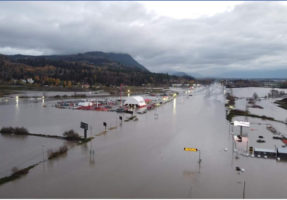
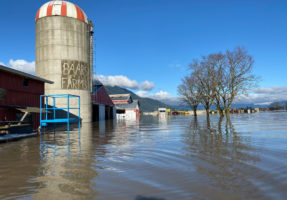
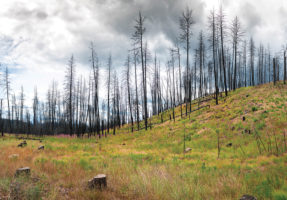
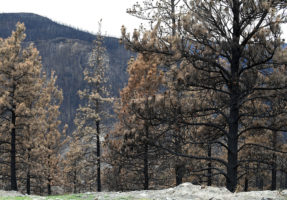
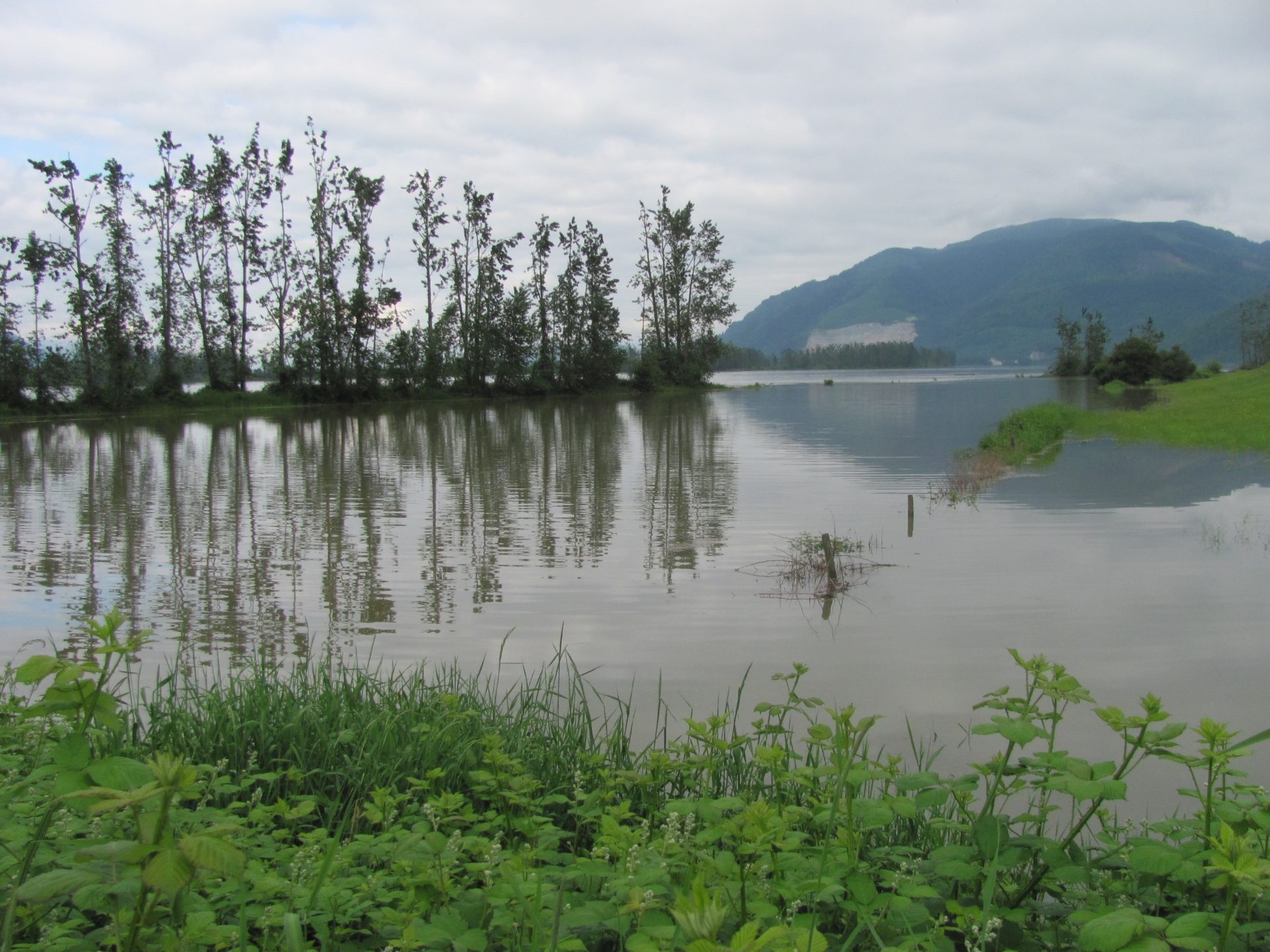
KAMLOOPS – A report on the BC government’s response to the natural disasters that roiled the province in 2017 says those who know the land should have a greater role in future preparations for what it calls “the new normal.”

Those people are first and foremost the province’s First Nations, who figure in almost all of the report’s 108 recommendations, as well as the ranchers, outfitters and others working the land on a daily basis.

“Tapping into Indigenous and local knowledge of roads, watercourses, weather patterns and other criteria, is a must if government hopes to be more effective in responding to extreme weather events going forward,” states the final report of the review chaired by former provincial cabinet minister George Abbott and Maureen Chapman, hereditary chief of the Skawahlook First Nation in Agassiz.

The number of recommendations mentioning agriculture can be counted on one hand, but BC Cattlemen’s Association general manager Kevin Boon says a discussion paper ranchers submitted played an influential role in the report’s development.

“We were the first stakeholder group to meet with Abbott and Chapman on this,” says Boon. “I can go through this report and pull out portions that we put in that discussion paper that were taken, basically, word-for-word out of that discussion paper.”

A key area where ranchers played a role was in urging the need for clearer communications between all sides.

“We heard that citizens – First Nations, ranchers, farmers, logging contractors and others – responded spontaneously, without official direction, to limit the spread of wildfires threatening their communities until BCWS [BC Wildfire Service] teams could assist,” the report states. “In numerous cases, this intervention prevented small wildfires from becoming very large fires. Local citizens brought not only energy and resources, but also an intimate knowledge of their lands.”

“A lot of those co-ordination things were really what we focused on because we felt a lot of co-ordination hadn’t been done properly,” Boon said.

While the rapid pace of lightning strikes that sparked more than 160 fires on July 7 created a situation that no one could have anticipated, clearer communication to facilitate co-ordination of resources among government, landowners and rural residents could have been better.

“A lot of those people on the land – ranchers, some of the loggers and some of the First Nations – chose to stay and fight,” explains Boon. “The wildfire service didn’t know how to handle it; they didn’t know what to do with them other than bring in enforcement.”

However, once there was a co-ordination system in the form of premises ID and permits, there was a framework for managing the situation and valuing the contributions locals were bringing to the fire suppression efforts.

The report highlights the need to do more in this regard, and Boon welcomes it.

“This is the big strategic shift in what these recommendations are,” he says. “Using those people on the land as an asset rather than a liability.”

Boon says he’s aware of changes that have already been taking place in advance of the 2018 wildfire season. The province has said 19 of the report’s recommendations are now implemented, with the remainder to be addressed in a comprehensive forest and flood action plan by October 31.

Meanwhile, local governments such as Surrey are taking steps to acquire properties deemed no longer viable in view of natural disasters, reflecting recommendation 105 in the report.

Snapshot of recommendations

Key recommendations of interest to agriculture in the review of the province’s handling of flooding and wildfire in 2017 include:

  • Review and assess the decision-making process related to evacuation alerts and orders. The process should consider exempting highway corridors and include provisions to recognize ranching or farming operations located in evacuation areas.
  • BC should enhance integration across government and among governments to foster better collaboration among land-based decision-makers and promote joint forest/grassland management and wildfire preparedness.
  • Provide prescribed fire training and extend the provincial certification program to non-agency personnel, including all support positions within agencies, and evaluate the applicability of the Parks Canada burn planning course and US RX-310 Fire Effects course.
  • Increase the number of basic firefighters by providing open access to S-100 training for all natural resource sector staff, industry, First Nations, communities, ranchers and other tenure holders.
  • Establish fire as a management objective in the Forest and Range Practices Act and other applicable legislation and regulation to encourage fire as a part of land management.
  • Create mechanisms to encourage fire prevention activities such as thinning, bio-mass utilization, targeted grazing and alternate species and densities.
  • BC should expeditiously determine the condition, vulnerability and effectiveness of the province’s 500 km of dikes with the assistance of leading-edge technology and expertise.
  • Create a bridging program to aid people during recovery in meeting their needs from the land, such as traditional food gathering, haying and grazing for livestock, and access to guiding areas while restoration is underway.
Related Posts

You may be interested in these posts from the same category.

Wildfires rip through Southern Interior

Wildfire threat remains high

Abbotsford approves flood mitigation option

Recovery fund deadline extended

Ranchers facing rangeland losses

Ranchers face rangeland losses

Sumas Prairie farmers sue government

CanadaGAP participation drops

Interior ranchers feel forgotten

Insurance under scrutiny

Flood recovery will take time

Fraser Valley flooding continues

Previous Post: « Hops revival gains traction with feds
Next Post: Minimum wage hike squeezes farm margins »

Copyright © 2025 Country Life in BC · All Rights Reserved