• Menu
  • Skip to primary navigation
  • Skip to main content
  • Skip to primary sidebar

Country Life In BC Logo

The agricultural news source in British Columbia since 1915

  • Headlines
  • Calendar
  • Subscribe
  • Advertise
  • About
  • Archives
  • Contact
  • Search
  • Headlines
  • Calendar
  • Subscribe
  • Advertise
  • About
  • Archives
  • Contact
  • Search

Primary Sidebar

Originally published:

June 2019
Vol. 105 Issue 6

Subscribe Now!

Sign up for free weekly FARM NEWS UPDATES

Select list(s) to subscribe to


By submitting this form, you are consenting to receive marketing emails from: Country Life in BC. You can revoke your consent to receive emails at any time by using the SafeUnsubscribe® link, found at the bottom of every email. Emails are serviced by Constant Contact
Your information will not be
shared or sold ever

Stories In This Edition

First Cut

Hog farm won’t face charges

Okanagan drives land values

Where’s the beef?

Minister defends Bill 15 changes

Back Forty: Farmers, not just farmland, need revitalization

Editorial: No peace, no order

ALR restrictions make commuting a fact of life

Johnston’s Packers targeted by activists

Child labour

Sidebar: When is a crime not a crime?

Berry growers get long-awaited funding boost

Proteobiotics reduce poultry, swine infections

Greenhouse growth stymied by gas prices

Bloom

Increase farm productivity with cover crops

Ag Briefs: Water fees not evenly distributed among users

Ag Briefs: BC Tree Fruits prepares to relocate

Farmland trust explored for Island

New owner, same faces

Fruitful experience

Fruit growers cautiously optimistic on bloom set

Honeycrisp key to success for Golden Apple winners

Changes to slaughter rules taking too long

Going! Going! Gone

Local meat deamnd creating opportunities

Sidebar: Compost in 14 days

Ranch takes pasture to plate at face value

Market Musings: Technology has its challenges

Oliver veggie grower prefers wholesale

Grocer offers tips to get a foot in the door

Greenhouse veggie days a hit with school

Haskap research may help berry go mainstream

Grow up!

Research: Bee sensitivity linked to neonic pesticides

Fraser Valley orchardist calling it a day

Rally cry

Worming his way to the top of the heap

Mushrooms a viable crop for small growers

Island 4-H beef show celebrates 25 years

Woodshed: Deborah starts her vacation a golf widow

Brewery’s food program spawns farm project

Jude’s Kitchen: Celebrate dads!

More Headlines

Follow us on Facebook

Comments Box SVG iconsUsed for the like, share, comment, and reaction icons

2 weeks ago

The Canadian Food Inspection Agency is preparing to implement changes to its livestock traceability rules that will include mandatory computer reporting within seven days on movement of animals for veterinary appointments, community pastures, exhibitions, carcass and on-farm disposal and the births and deaths of every animal on your farm. Writer Tom Walker first brought these changes to the attention of our readers back in June 2023. We've posted his story to our website:

www.countrylifeinbc.com/cfia-proposes-traceability-updat#BCAg#BCag
... See MoreSee Less

The Canadian Food Inspection Agency is preparing to implement changes to its livestock traceability rules that will include mandatory computer reporting within seven days on movement of animals for veterinary appointments, community pastures, exhibitions, carcass and on-farm disposal and the births and deaths of every animal on your farm. Writer Tom Walker first brought these changes to the attention of our readers back in June 2023. Weve posted his story to our website: 

https://www.countrylifeinbc.com/cfia-proposes-traceability-updates/

#BCag
View Comments
  • Likes: 11
  • Shares: 21
  • Comments: 15

Comment on Facebook

I love hpw the cow in the picture hasn't even got a RFID tag in it but I digress. We can not read the link, it says "we are not permitted to read drafts". Please post again with the correct link.

Dairy farmers having been doing this several years. The app we use has become quite simple to use

Including equine?

Premise ID was slowly rolled through the country, voluntary then mandatory. Transparency and 'Consultation' has been light. Those who tried to bring this for discussion a couple years ago, because of forseen overreach, were quite often labeled conspiracy theorists and that it wasnt meant to be so heavily regulated and controlled. Gardens and seeds will be next. "Invasive species" reporting, check out the plants medicinal properties. Read the BC intentions papers. The premise ID that already heavy regulated commodities have claims to be treated different in the intentions papers on page 8. www2.gov.bc.ca/assets/gov/farming-natural-resources-and-industry/agriculture-and-seafood/food-saf...

Says i am "not allowed to preview draft".

Also concerning is the part on compliance...they can 'stumble onto' any farm and if you're not complying there are consequences.

When the CFIA stumbles into the wrong place compliance will be met with civil engagement

Says I can't preview draft

This is government overreach - Do Not Comply!

Do not comply

Fu

As if the price of beef isn't bad enough for consumers,,,,,be prepared to be gouged some more now

Ridiculous!!

Let's hold up on the beef exports tell we can get our own house in order... we need to deregulated, cheapen up the supply chain back into a 5 buck a pound rage so the good people canada can eat healthy food.. fuck your bean diets, that's retarded

This, along with the majority of new legislation pertaining to any type of farm, is a blatant squeeze on any sort of small, alternative agricultural venture. I am a massive believer in working together and sharing resources and costs and solutions - do not get me wrong - but this and the water registration among others, is an overreach (at most generous) and an absolute killer to smaller, local initiatives that LITERALLY save lives during extreme events. There is ONE ROAD into and out of my community. We don’t need or want some sort of backlogged government response when shit goes sideways. We want the ability AND SUPPORT to provide for our communities without penalty when things go badly. We want to produce sustainability for our communities. We live here, we work here, we want to STAY HERE. Stop making it harder.

View more comments

3 weeks ago

BC's minimum piece rates for 15 hand-harvested crops increased 2.6% on December 31. Crops include peaches, apricots, brussels sprouts, daffodils, mushrooms, apples, beans, blueberries, cherries, grapes, pears, peas, prune plums, raspberries and strawberries. Farm-worker piece rates in BC were increased by 11.5% in January 2019 and 6.9% in December 2024. BC’s current minimum wage sits at $17.85 per hour.

#BCAg
... See MoreSee Less

BCs minimum piece rates for 15 hand-harvested crops increased 2.6% on December 31. Crops include peaches, apricots, brussels sprouts, daffodils, mushrooms, apples, beans, blueberries, cherries, grapes, pears, peas, prune plums, raspberries and strawberries. Farm-worker piece rates in BC were increased by 11.5% in January 2019 and 6.9% in December 2024. BC’s current minimum wage sits at $17.85 per hour. 

#BCAg
View Comments
  • Likes: 10
  • Shares: 0
  • Comments: 2

Comment on Facebook

I'm not sure what they're telling us. Did peace rates have to increase so that Farm workers could make minimum wage?

They deserve it, but the general public will be whining about increased prices in the stores. Will need to make more information average to the g.p.

3 weeks ago

... See MoreSee Less

View Comments
  • Likes: 14
  • Shares: 0
  • Comments: 1

Comment on Facebook

105 Mile Ranch

4 weeks ago

... See MoreSee Less

View Comments
  • Likes: 7
  • Shares: 0
  • Comments: 0

Comment on Facebook

1 month ago

Water volumes from the Nooksack River are at levels similar to 1990 and 2021, but the province says flows should peak at 10pm tonight. The shorter duration, as well as conditions in other watercourses within the watershed and performance of flood protection infrastructure should avoid a catastrophe on the scale of 2021. However, several landslides mean road closures have once again effectively isolated the Lower Mainland from the rest of the province.

#BCAg
... See MoreSee Less

Water volumes from the Nooksack River are at levels similar to 1990 and 2021, but the province says flows should peak at 10pm tonight. The shorter duration, as well as conditions in other watercourses within the watershed and performance of flood protection infrastructure should avoid a catastrophe on the scale of 2021. However, several landslides mean road closures have once again effectively isolated the Lower Mainland from the rest of the province.

#BCAg
View Comments
  • Likes: 9
  • Shares: 3
  • Comments: 1

Comment on Facebook

Family living in Sumas WA say it's very much like '21. They have the same amount of water in their house as last time.

Subscribe | Advertise

The agricultural news source in British Columbia since 1915
  • Email
  • Facebook

Changes to slaughter rules taking too long

Abattoir operators frustrated by government's lack of action

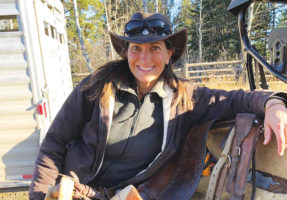
PROBLEM SOLVING Frustrated by how the lack of meat processing capacity in the province was preventing expansion of direct meat sales to their customers, the Devick family built a Class A abattoir on their ranch near Kamloops. [ANITA DEVICK PHOTO]

May 28, 2019 byTom Walker

CHASE – It’s been a year of waiting for the meat processing industry in BC, which has yet to see any movement on some of its key issues.

A year ago, optimism abounded when the BC Association of Abattoirs met for its annual general meeting.

The provincial government was wrapping up a survey of class D and E abattoir licensees and the health authorities that regulate them. The legislature’s Select Standing Committee on Agriculture, Fish and Food had just announced a study of meat processing in BC.

Both the abattoirs association and the Small-Scale Meat Producers Association expected the consultations would begin to resolve the issues of licensing, inspection, processing capacity and staffing that plague the industry.

But so far it has all been for nought. When abattoir operators held their annual general meeting at the end of April, the frustration was palpable.

“These issues have been the focus of our association’s strategic plan for four years,” says the association’s executive director, Nova Woodbury. “We have been in meetings every year. We spent all last spring on the consultations.”

With so much time spent, and so little accomplished, Woodbury says patience is wearing thin.

“There is so much to do,” she says. “There are a lot of angry people out there right now.”

Opposition agriculture critic Ian Paton delivered the meeting’s opening remarks. Paton was a member of the select standing committee, but he didn’t have any good news.

“We did this report but we haven’t heard anything,” he said.

The standing committee heard what Paton calls “some horror stories.”

“We heard from D and E operators who haven’t had a visit from their regional health authority in over a year,” he says. “That is not good enough. If a kid gets sick from some uninspected meat bought at a farmers market, that will bring down the whole industry.”

“I don’t see anything in the new budget for increased inspection,” he adds. “We will be asking the government a lot of questions about meat processing.”

Consultation recapped

Gavin Last, executive director of the food safety and inspection branch at the BC Ministry of Agriculture, recapped the consultation on D and E licences and the select standing committee’s 21 recommendations.

But he didn’t have any specific responses to either report.

“We are trying to deliver improvements that will balance local capacity with competitiveness and enhance food safety and animal welfare, but there has been no formal response from the government as yet,” he said.

Last says his branch is taking action in areas where they don’t need to wait.

“We have developed and are delivering food safety and animal welfare workshops for rural producers and regional health officers, and we are increasing food safety training for food processors,” he notes.

Rules against illegal slaughter facilities continue to be enforced.

“The emphasis has been around preventing unlawful slaughter,” he says. “We have been meeting with industry and community organizations and the BC Muslim Association to promote compliance.”

Muslim demand for halal (ritually clean) meat products is a particular concern at the end of the fasting period known as Ramadan, which ends this year on June 4.

“The halal meat supply in the Lower Mainland becomes quite an issue around the time of Eid,” says Last. “That is when a lot of the unlawful slaughter happens.”

One new E licence is certified halal which will help increase supply, Last notes.

The province is also working with local government to address illegal slaughter.

“We were able to shut down three unlawful slaughter operators as a result of bylaw enforcement,” he reported.

Agricultural oversight

Tristan Banwell of the Small-Scale Meat Producers Association asked Last if D and E licences might be brought under the agriculture ministry’s oversight, as are A and B licences.

“There has certainly been lots of discussion,” says Last. “That is definitely one of the biggest questions.”

“Where does the drive to get that done need to come from,” Banwell asked, impatient for change. “Is it the Ministry of Agriculture or does it need to be at a political level?”

“It involves coordination between Ministry of Agriculture, Ministry of Health and the regional health authorities,” Last explains. “Agriculture has the legislative authority over slaughter in the province. We delegated that to the health authorities for the class D and Es.”

Richard Yntema of Valley Wide Meats in Enderby asked who was monitoring the compliance of the animal unit allowances for D and E licences.

“It is ultimately the regional health authorities,” says Last, but noted that the process is driven by complaints rather than compliance audits.

“So no complaints, no enforcement,” said Yntema, with audible frustration.

Last said he wasn’t defending the current system, simply explaining it, and said he hoped change would be forthcoming.

“We definitely heard through the select standing committee that more resources need to be directed towards this,” he told the meeting.
 

Related Posts

You may be interested in these posts from the same category.

New licences, new inspections

BC abattoir volume up 30% in 2020

Province reveals abattoir changes

SlaughterRight training launched by ag ministry

Rural recovery funds agriculture

Meat producers frustrated by consultations

Abattoir association calls for action

Closures underscore need for licensing reform

Rethinking the concept for mobile abattoirs

Industry mourns abattoir champion

Island farmers renew request for local abattoir

Meat inspection budget tightens

Previous Post: « Asian hornet identified
Next Post: Bill 15 could be delayed »

Copyright © 2026 Country Life in BC · All Rights Reserved