• Menu
  • Skip to primary navigation
  • Skip to main content
  • Skip to primary sidebar

Country Life In BC Logo

The agricultural news source in British Columbia since 1915

  • Headlines
  • Calendar
  • Subscribe
  • Advertise
  • About
  • Archives
  • Contact
  • Search
  • Headlines
  • Calendar
  • Subscribe
  • Advertise
  • About
  • Archives
  • Contact
  • Search

Primary Sidebar

Originally published:

OCTOBER 2019
Vol. 105 Issue 10

Subscribe Now!

Sign up for free weekly FARM NEWS UPDATES

Loading form…

Your information will not be
shared or sold ever

Stories In This Edition

ALC cracks down

Pat Jasper …

Bill will rein in activists

BC considers making premises ID mandatory

Bin there, done that

Unsung heroes

The Back Forty: It’s time government changed its narrative

Viewpoint: Banning plastic bags ignores reality

New round of changes coming to land reserve

Hullcar farmers file first NMP plans under new code

Classy champion

Most farmers support Daylight Savings Time

South Vancouver food hub to connect farmers

Egg-splaining

Dunn leaps to dairy sector

UBCO study looks at context for climate change

City Beet harvests profits from urban gardens

Forage trial presents options for producers

Growers step up to continue corn silage trials

Density key to efficient, healthy silage storage

Weather affecting corn trials

Bumper crop pushes down blueberry prices

Valley has protential to be an agritech hub

Ministry working on land use inventory

Join initiatives a priority for feeders

Best of the best

Canadian beef herd sinks to 30-year low

Familiar challenges face fourth-generation rancher

No-till seeding showcased at field day

Market Musings: Grass-fed cattle come to market with big gains

Blight-resistant trees focus of hazelnut field day

Replant, pest support for hazelnut growers

Bright berries

New packing line can handle BC’s pear crop

Mission Hilll aims to be fully organic by 2021

Research: Clean cud promotes dental health in ruminants

Remote market supports growth of local growers

Farm groups exploring food hub opportunities

Zoom! Zoom!

Chilliwack farms hopping with insects

Livestock still a main attraction at annual fair

PNE agriculture auction keeps on giving

4-H skills still key despite changes in farming

Thousands converge on Westham Island

Woodshed: Vacation time invites all kinds of cover-ups

Kootenay grower shoots forward with microgreens

Jude’s Kitchen: Harvest local

More Headlines

Follow us on Facebook

Comments Box SVG iconsUsed for the like, share, comment, and reaction icons

6 days ago

A BC Forest Practices Board investigation has found overgrazing has damaged grasslands in the Coutlee Range Unit near Merritt — and the range-use plan meant to prevent it was unenforceable. With complaints about overgrazing on the rise and grasslands covering just 1% of BC's land mass, the findings raise fresh questions about how the province manages one of its most vulnerable — and valuable — food-producing ecosyste#BCAg#BCAg ... See MoreSee Less

Link thumbnail

Board finds overgrazing rules unenforceable unmeasurable

www.countrylifeinbc.com

MERRITT – A BC Forest Practices Board investigation has found instances of non-compliance related to overgrazing have damaged open grasslands in the Mine pasture, part of the Coutlee Range Unit near...
View Comments
  • Likes: 6
  • Shares: 6
  • Comments: 6

Comment on Facebook

Several ranchers in recent years have gone into temporary non use on that range , so that means the grass should grow. But drought conditions/lack of rain and snow don’t allow that to happen . Dried up springs , creeks waterholes in various pastures add to over grazing where there is water , as livestock and everything else stay close to the water source . So even though less cattle are on it , over grazing appears. There is a large volume of horses on it 365 days/year which is wrong ! They pull grass right out of the ground when it’s just trying to grow ,, opens the door for weeds to grow in. That don’t help it. Aging infrastructure ( fences) laying on the ground, pipe line building , ( lack of commitment to fence maintenance) amongst all users contributes also to over grazing. Recreational atv users leaving gates open between pastures allows livestock to go back or ahead in pastures also expidites over grazing. Logging ( bcts) has no problem laying out cut locks on both sides of a fence , then it gets smashed down during logging and they don’t take responsibility to stand it back up or clean the cattle gaurds out when they are done , that happened 4 years ago on pasture 5 up there . I bet it is still not fixed . There are lots of contributing factors to the problem.

Tragedy of the commons.

I looked through the report. I saw nothing about the effects of noxious weeds on productive grasslands. This particular area is vulnerable because of the Ministry’a efforts to diversify the use of the Grasslands.

This pasture is under tremendous pressure not only from cattle but from irresponsible local residents who treat it as a landfill dumping all manner of household debris here. And don't even get me started on the mud bogging and camping in sensitive riparian areas. The feral horses are in this pasture 365 days a year just hammering it. Would sure be nice to see some enforcement action on people who are intentionally ripping up the grasslands and riparian areas. Cattle could be a valuable resource for rebuilding soils and native grasses in this area with the help of electric fencing and/or e-collars. The humans will be harder to manage.

The Forest and Range Practices Act was written by lawyers for global forest licencee shareholders. Results-based = unenforceable.

Also, can we talk about the impact of a pipeline being built through the middle of this field for multiple years?

View more comments

1 week ago

East Kootenay rancher Randy Reay is digging a new well after two natural water sources dried up on his Crown tenures. A new Living Lakes Canada assessment found 15% of mapped aquifers in the region are high-priority for monitoring, yet 80% of those go unmonitored. With over 48% of BC's provincial observation wells reporting below-normal groundwater levels, ranchers and researchers are sounding the alarm on water security. The story is in our March edition, and we've posted it to our website thi#BCAgk.

#BCAg
... See MoreSee Less

Link thumbnail

Water woes: groundwater under pressure across BC

www.countrylifeinbc.com

JAFFRAY – As a young boy growing up in the Kootenay-Boundary region, Randy Reay never expected to run out of water. But this year, in mid-February, his fields are bare. There is no snow halfway up t...
View Comments
  • Likes: 8
  • Shares: 7
  • Comments: 1

Comment on Facebook

Jaffrey is in the east Kootenays not kooteney boundary

2 weeks ago

BC farmers are bracing for prolonged higher input costs as war in the Middle East drives up fuel and fertilizer prices. Nitrogen fertilizer costs were already climbing before the Iran conflict began, with prices still roughly 60% above pre-pandemic levels. Farm Credit Canada warns that unlike 2022, strong commodity prices may not offset rising costs this time. Local suppliers expect supply challenges and further price increases ahead.

#BCAg
... See MoreSee Less

Link thumbnail

Fertilizer prices on the rise

www.countrylifeinbc.com

War in the Middle East has delivered a generational shock to energy prices, meaning BC farmers can expect a prolonged period of higher costs not just for fuel but also for fertilizer.
View Comments
  • Likes: 2
  • Shares: 1
  • Comments: 0

Comment on Facebook

2 weeks ago

... See MoreSee Less

View Comments
  • Likes: 1
  • Shares: 0
  • Comments: 0

Comment on Facebook

2 weeks ago

Cameron Stockdale is the new executive director of provincial farm safety organization AgSafeBC. Find out more in this week's Farm News Update from Country Life in B#BCAg#BCAg ... See MoreSee Less

Link thumbnail

New leadership at AgSafe BC

www.countrylifeinbc.com

Cameron Stockdale is the new executive director of provincial farm safety organization AgSafeBC, succeeding Wendy Bennett. Bennett left AgSafeBC in September 2025, following 12 years with the…
View Comments
  • Likes: 5
  • Shares: 1
  • Comments: 0

Comment on Facebook

Subscribe | Advertise

The agricultural news source in British Columbia since 1915
  • Email
  • Facebook

City Beet harvests profits from urban gardens

Venture has doubled in size since 2016

October 2, 2019 byPeter Mitham

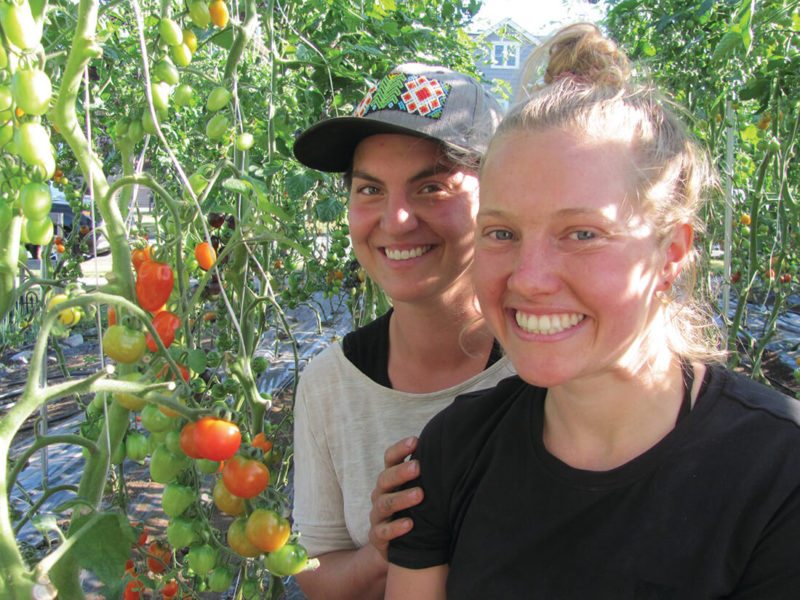
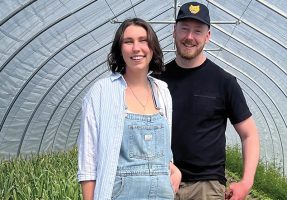
VANCOUVER—It’s a sunny afternoon in the Lower Mainland as Maddy Clerk and Elana Evans of City Beet Farm harvest tomatoes for the weekly produce boxes they’re assembling for delivery the following day. The two run a successful community-supported agriculture (CSA) program, and there’s enough produce for them to also participate in a biweekly market and supply local restaurants.

Direct marketing is big business for many small-scale farms, but City Beet is smaller than most. With just a half-acre of production spread across 15 properties, it’s taking a novel approach to farming as one of the more than a dozen urban farms in Vancouver.

Given the high cost of land in BC, the two partner with landowners in residential neighbourhoods for space, paying them with a share of production or a 50% discount on the CSA subscription (or $275).

“A big aspect is the land-access issue,” says Clerk of the approach. “A really big part of it was being able to farm and work for ourselves at such a young age and get our feet wet in farming.”

“This was a way to try our own thing, and it felt accessible to us as people with little savings and not much capital behind us,” says Evans.

Vancouver adopted an urban farming bylaw in 2016 that recognized it as a permitted activity within city limits. (Some operations had previously been forced to shut down by neighbours’ complaints.) Being within the city also gives City Beet access to a willing market as well as services such as tool rental businesses and garden supply shops geared to small-scale producers.

“We don’t necessarily need to own all our equipment,” says Clerk. “For us, that makes a lot of sense.”

The operation’s small scale also means there’s room to learn. While managing 15 separate properties brings challenges, those pale in comparison to having to manage a 60-acre property.

“You can learn the skills of a small-scale farm in a place that feels comfortable, then take those skills and potentially move them elsewhere,” says Evans.

Pest pressure is also low, something she attributes to being in a highly developed urban environment rather than in a rural setting where the risk of alternative pest hosts might be higher. Wireworm exists on some properties, and aphids can be a problem, but there hasn’t been anything significant.

“We don’t have anything I would say is detrimental,” says Evans. “Part of it may be that we’re in such an urban context where there is so much diversity and there’s not a lot of agriculture.”

The lack of farming in the city also means that when people see what they’re doing, they initially think they’re ambitious gardeners. Conversations open doors to a fresh perception of what food production could be in an urban context.

“One of the big opportunities we have is to bridge the gap,” says Evans. “There’s by no means a world in which this type of agriculture is going to feed the city, but if this kind of agriculture can make the people that live in those condos think about where their food is coming from and what goes into growing food, I think there’s a whole education piece.”

This year marks the seventh season for the business, which was started in 2013 by Katie Ralphs and Ruth Warren. The pair saw an opportunity to work with landowners to turn yards into small-scale market gardens just as the urban farming movement began to gain traction. One of the city’s first urban farms, it became a model locally and elsewhere of urban agriculture’s promise.

The pair sold it to Clerk and Evans in 2016, new graduates who were passionate about local food production and wanted to work outdoors. (Ralphs now farms on Vancouver Island.)

Both had been tree-planters in university, and Evans studied soil sciences at UBC. Clerk had a commerce degree and is now a Chartered Professional Accountant. Both in their early 20s at the time, neither had previously been involved in farming.

“We walked around the neighbourhood and loved what they did and Maddy said, ‘Let’s buy it.’ So then one thing kind of led to another and in six months we were farming,” recalls Evans. “Initially, it was like a whirlwind, and I don’t know that I had really thought that much about why I was going to do it, other than I knew I wanted to work with the land.”

Valuation of the business was based on its annual income as well as goodwill built up with homeowners and subscribers to the CSA. A small loan was taken to finance the purchase.

“We essentially bought an existing CSA program and the relationships with the homeowners, and all the work that’s gone into rebuilding the soil on the sites. Like an existing farm, essentially,” says Clerk. “I guess we could have gone to work for another farmer and gotten experience that way, but for me, I’m definitely an entrepreneurial spirit, so being able to have a small business was exciting.”

The two have non-farm jobs in the winter; Evans handles various contract roles while Clerk is a financial analyst with an adventure-wear company. The work allows them to carry the small loan secured to buy the business. It’s almost paid off, and the farm itself is profitable (“a very modest income,” Clerk emphasizes), with CSA subscriptions having increased to 82 from 50 in 2016.

But it’s also nearing capacity.

“We get emails on a weekly basis saying, ‘I have this property. I want it turned over. How can I be part of what you do?’” says Evans. “We cannot take on any more now that our labour is totally maxed out, but I think there’s room for multiple other businesses to exist, like ours or similar to ours, in this city.”

Regarding their own futures, they’re not ready to sell. In fact, they recently launched a crowdfunding campaign on Kickstarter to raise $18,000 towards a solar-powered trailer that triples as a wash station, cooler and pop-up market stall.

“We’re just really focused on doing what we’re doing well and letting things happen naturally,” says Clerk. “Maybe we don’t want to be urban farmers forever, but it’s a really excellent starting point.”

“I stay because it’s the work I really love to do,” adds Evans. “I don’t think I’ll stay in the city for 10 more years doing it, but I want to farm for 20 or 30 more years.”
 

Related Posts

You may be interested in these posts from the same category.

Restaurant connections fuel farm’s growth

On-farm innovation fuels turnaround

Land values “on solid ground”: FCC

Co-ops’ importance highlighted

Nelson farm builds soil and local community

Leasing farmland a vital strategy for farmers

Province rethinks land matching pitch

Land matching pays off

Victoria food hub gets funding

Farmland values face headwinds

Reeve leads BC Young Farmers

Abbotsford dairy tops farm sales

Previous Post: « Ministry working on land use inventory
Next Post: BC considers making premises ID mandatory »

Copyright © 2026 Country Life in BC · All Rights Reserved