• Menu
  • Skip to primary navigation
  • Skip to main content
  • Skip to primary sidebar

Country Life In BC Logo

The agricultural news source in British Columbia since 1915

  • Headlines
  • Calendar
  • Subscribe
  • Advertise
  • About
  • Archives
  • Contact
  • Search
  • Headlines
  • Calendar
  • Subscribe
  • Advertise
  • About
  • Archives
  • Contact
  • Search

Primary Sidebar

Originally published:

DECEMBER 2024
Vol. 110 Issue 12

Subscribe Now!

Sign up for free weekly FARM NEWS UPDATES

Select list(s) to subscribe to


By submitting this form, you are consenting to receive marketing emails from: Country Life in BC. You can revoke your consent to receive emails at any time by using the SafeUnsubscribe® link, found at the bottom of every email. Emails are serviced by Constant Contact
Your information will not be
shared or sold ever

Stories In This Edition

Heading home

Avian flu response keeping pace

Popham back as ag minister

Farm equipment sales down, but not out

Winter harvest

Editorial: Goodwill wanted

Back 40: The election’s over. Now what?

Viewpoint: BC orchard sector needs more than sales

Court decision a bowl of cherries for Canada

Ag Briefs: Sturko leads apple marketing commission consultations

Ag Briefs: New BC field vegetable specialist

Ag Briefs: Slash smoke challenge planned

Ag Briefs: Mushroom farm fined

Island farmers fish for water solutions

Economic summit makes case to buy local

Cow-op urges community to buy local

Demand for milk, lower input costs good for dairy

Replant program begins accepting applications

Researchers explore ways to detect Cherry X

Trade imblance baffles honey producers

Pilot addresses gap in distribution infrastructure

Rotational grzing field day tracks progress

Cool spring challenges high-heat corn

Sidebar: It’s not all about the yield

Panel celebrates waste reduction strategies

Global sales blossom from native berry

Farm Story: Why hibernate in such a friendly valley?

Timely rains support Christmas tree supply

Sidebar: BCCTA AGM opportunity for knowledge transfer

On-farm research doesn’t have to be complicated

Woodshed: Some manners would go a long way with Delta

Young rancher honoured for leadership

Jude’s Kitchen: Much to celebrate in December

More Headlines

Follow us on Facebook

Comments Box SVG iconsUsed for the like, share, comment, and reaction icons

2 weeks ago

The Canadian Food Inspection Agency is preparing to implement changes to its livestock traceability rules that will include mandatory computer reporting within seven days on movement of animals for veterinary appointments, community pastures, exhibitions, carcass and on-farm disposal and the births and deaths of every animal on your farm. Writer Tom Walker first brought these changes to the attention of our readers back in June 2023. We've posted his story to our website:

www.countrylifeinbc.com/cfia-proposes-traceability-updat#BCAg#BCag
... See MoreSee Less

The Canadian Food Inspection Agency is preparing to implement changes to its livestock traceability rules that will include mandatory computer reporting within seven days on movement of animals for veterinary appointments, community pastures, exhibitions, carcass and on-farm disposal and the births and deaths of every animal on your farm. Writer Tom Walker first brought these changes to the attention of our readers back in June 2023. Weve posted his story to our website: 

https://www.countrylifeinbc.com/cfia-proposes-traceability-updates/

#BCag
View Comments
  • Likes: 11
  • Shares: 21
  • Comments: 15

Comment on Facebook

I love hpw the cow in the picture hasn't even got a RFID tag in it but I digress. We can not read the link, it says "we are not permitted to read drafts". Please post again with the correct link.

Dairy farmers having been doing this several years. The app we use has become quite simple to use

Including equine?

Premise ID was slowly rolled through the country, voluntary then mandatory. Transparency and 'Consultation' has been light. Those who tried to bring this for discussion a couple years ago, because of forseen overreach, were quite often labeled conspiracy theorists and that it wasnt meant to be so heavily regulated and controlled. Gardens and seeds will be next. "Invasive species" reporting, check out the plants medicinal properties. Read the BC intentions papers. The premise ID that already heavy regulated commodities have claims to be treated different in the intentions papers on page 8. www2.gov.bc.ca/assets/gov/farming-natural-resources-and-industry/agriculture-and-seafood/food-saf...

Says i am "not allowed to preview draft".

Also concerning is the part on compliance...they can 'stumble onto' any farm and if you're not complying there are consequences.

When the CFIA stumbles into the wrong place compliance will be met with civil engagement

Says I can't preview draft

This is government overreach - Do Not Comply!

Do not comply

Fu

As if the price of beef isn't bad enough for consumers,,,,,be prepared to be gouged some more now

Ridiculous!!

Let's hold up on the beef exports tell we can get our own house in order... we need to deregulated, cheapen up the supply chain back into a 5 buck a pound rage so the good people canada can eat healthy food.. fuck your bean diets, that's retarded

This, along with the majority of new legislation pertaining to any type of farm, is a blatant squeeze on any sort of small, alternative agricultural venture. I am a massive believer in working together and sharing resources and costs and solutions - do not get me wrong - but this and the water registration among others, is an overreach (at most generous) and an absolute killer to smaller, local initiatives that LITERALLY save lives during extreme events. There is ONE ROAD into and out of my community. We don’t need or want some sort of backlogged government response when shit goes sideways. We want the ability AND SUPPORT to provide for our communities without penalty when things go badly. We want to produce sustainability for our communities. We live here, we work here, we want to STAY HERE. Stop making it harder.

View more comments

3 weeks ago

BC's minimum piece rates for 15 hand-harvested crops increased 2.6% on December 31. Crops include peaches, apricots, brussels sprouts, daffodils, mushrooms, apples, beans, blueberries, cherries, grapes, pears, peas, prune plums, raspberries and strawberries. Farm-worker piece rates in BC were increased by 11.5% in January 2019 and 6.9% in December 2024. BC’s current minimum wage sits at $17.85 per hour.

#BCAg
... See MoreSee Less

BCs minimum piece rates for 15 hand-harvested crops increased 2.6% on December 31. Crops include peaches, apricots, brussels sprouts, daffodils, mushrooms, apples, beans, blueberries, cherries, grapes, pears, peas, prune plums, raspberries and strawberries. Farm-worker piece rates in BC were increased by 11.5% in January 2019 and 6.9% in December 2024. BC’s current minimum wage sits at $17.85 per hour. 

#BCAg
View Comments
  • Likes: 10
  • Shares: 0
  • Comments: 2

Comment on Facebook

I'm not sure what they're telling us. Did peace rates have to increase so that Farm workers could make minimum wage?

They deserve it, but the general public will be whining about increased prices in the stores. Will need to make more information average to the g.p.

3 weeks ago

... See MoreSee Less

View Comments
  • Likes: 14
  • Shares: 0
  • Comments: 1

Comment on Facebook

105 Mile Ranch

4 weeks ago

... See MoreSee Less

View Comments
  • Likes: 7
  • Shares: 0
  • Comments: 0

Comment on Facebook

1 month ago

Water volumes from the Nooksack River are at levels similar to 1990 and 2021, but the province says flows should peak at 10pm tonight. The shorter duration, as well as conditions in other watercourses within the watershed and performance of flood protection infrastructure should avoid a catastrophe on the scale of 2021. However, several landslides mean road closures have once again effectively isolated the Lower Mainland from the rest of the province.

#BCAg
... See MoreSee Less

Water volumes from the Nooksack River are at levels similar to 1990 and 2021, but the province says flows should peak at 10pm tonight. The shorter duration, as well as conditions in other watercourses within the watershed and performance of flood protection infrastructure should avoid a catastrophe on the scale of 2021. However, several landslides mean road closures have once again effectively isolated the Lower Mainland from the rest of the province.

#BCAg
View Comments
  • Likes: 9
  • Shares: 3
  • Comments: 1

Comment on Facebook

Family living in Sumas WA say it's very much like '21. They have the same amount of water in their house as last time.

Subscribe | Advertise

The agricultural news source in British Columbia since 1915
  • Email
  • Facebook

Demand for milk, lower input costs good for dairy

Dairy quota increase coming January 1

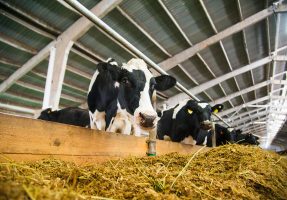
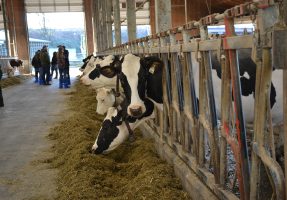
Ho! Ho! Ho! It should be a merry Christmas for dairy producers as they look forward to a quota increase in the new year, thanks to increased demand for dairy products. | FILE PHOTO

December 2, 2024 byPeter Mitham

ABBOTSFORD – A rise in demand for dairy is good news for producers, who will see margins expand in 2025 as farmgate milk prices hold steady and costs fall.

Recapping market conditions at the BC Milk Marketing Board’s fall producer meeting in Abbotsford, October 28, Kevin Mammel noted that milk utilization is up, with processors using every drop they can.

This has led to incentive days being offered to producers in BC and across the four Western Milk Pool provinces through March 2025, as farms try to boost supply to meet demand.

Moreover, the marketing boards in the four western provinces are issuing a 2% increase to continuous daily quota effective January 1 to eligible producers.

“This increase in daily quota is being issued to meet the continued strong demand in both the fluid and industrial markets that is forecasted to continue into calendar year 2025,” an announcement regarding the increase stated.

This is the third quota increase since February 2024, and comes in advance of projected demand at the new plant Vitalus Nutrition plans to begin building in spring 2025. (Supply to Vitalus will not be met solely through quota increases.)

The announcement followed the Canadian Diary Commission’s decision November 1 to leave farmgate milk prices essentially unchanged next year in view of lower production costs.

The farmgate milk price will fall by 0.02% on February 1, a marginal decrease compared to the sharp increase in the BC blend price over the past two years as fluid milk consumption has increased.

CDC reviews cost of production data annually for more than 200 farms across Canada, including 22 in BC. The data feeds into a national cost of production, weighted by province (BC’s share is 9%), working out this year to a national average of $90.36 per hectolitre (hl).

On the plus side, that’s below the current net blend price BC producers receive of $101.33 per hectolitre.

But no one wants to see a price decline.

“We were expecting this,” Mammel told producers in the run-up to the CDC’s announcement. “Your COP has gone down; it has also gone down in other parts of the country.”

The most significant drop came in the price of purchased feed, which fell $2.85 per hectolitre. This more than offset increases in labour, taxes and interest charges.

“This is an extreme year; costs have come way off from $93.09 to $90.36 this year. We would have needed a big CPI increase to see a positive increase in the blend price,” Mammel said, referencing costs from two years ago.

Sharply higher consumption of fluid milk is emerging as a good news story for producers and will help offset the impact of the national pricing announcement.

“When you put more milk into Class 1A, in fluid, you create more revenue per litre, and that puts your blend price up,” he explained.

New approach

BC Dairy Association general manager Jeremy Dunn discussed the new approach to transforming the Western Milk Pool into a truly regional body.

Rather than adopting a new governance structure, an initiative challenged by regulators in several provinces, the four western provinces are now seeking a collaborative relationship.

Recent announcements regarding incentive days and quota increases illustrate the new approach, emphasizing the role of the provincial marketing boards in the decision.

This is in keeping with a concern of the supervisory bodies in each province that the marketing boards retain decision-making authority within their respective jurisdictions.

Questions regarding the cost of the transformation initiative, now abandoned, were not answered.
Related Posts

You may be interested in these posts from the same category.

Comeau reappointed to milk board

Milk board undertakes review

Milk price holds the course

Dairy quota rules change

Dairy quota increases

BC Milk caught out

BC FIRB challenges WMP plans

Dairy demand prompts quota increase

Province funds Vitalus plant expansion

Non-foaming milk continues

Ben Janzen recognized for service

Marketing board chooses new entrant finalists

Previous Post: « BC orchard sector needs more than sales
Next Post: Pilot addresses gap in distribution infrastructure »

Copyright © 2026 Country Life in BC · All Rights Reserved