• Menu
  • Skip to primary navigation
  • Skip to main content
  • Skip to primary sidebar

Country Life In BC Logo

The agricultural news source in British Columbia since 1915

  • Headlines
  • Calendar
  • Subscribe
  • Advertise
  • About
  • Archives
  • Contact
  • Search
  • Headlines
  • Calendar
  • Subscribe
  • Advertise
  • About
  • Archives
  • Contact
  • Search

Primary Sidebar

Originally published:

JULY 2021
Vol. 107 Issue 7

Subscribe Now!

Sign up for free weekly FARM NEWS UPDATES

Select list(s) to subscribe to


By submitting this form, you are consenting to receive marketing emails from: Country Life in BC. You can revoke your consent to receive emails at any time by using the SafeUnsubscribe® link, found at the bottom of every email. Emails are serviced by Constant Contact
Your information will not be
shared or sold ever

Stories In This Edition

BCAC shifts to advocacy

Farms keep tax status

Hot stuff

Too much red tape leaves farmers frustrated

Editorial O’Canada

Back 40: High land prices limit farming opportunities

Viewpoint: Agriculture should be more than seasonal work

Farmers struggle to get insurance coverage

New milk board chair

$12 million allocated to fight invasive species

Ag Briefs: Pitt Meadows mitigation proposal by CP Rail

Ag Briefs: Agassiz land exlclusion refused

Ag Briefs: BC Ag Expo resumes

Letters: No place for farmed salmon

Farmers say new policy statement devalues ag

Farm status elusive for regenerative agriculture

Maple Ridge farmers feel unsupported

Water, land issues remain a priority for BC ranchers

A moo-ving experience

Water licensing process needs streamlining

Canada ‘negligible risk’ for BSE

Grizzly bear encounters on the increase

Cherry crop coming on strong across BC

BC Tree Fruits relaunches field service

GHG emissions twice as high as estimates

Group EFPs protect sensitive ecological areas

Flower growers see sky-high demand

Tulips in bloom

Grant helps local project establish provincial targets

Programs add value to Kootenay agriculture

Growers hit hard by blueberry scorch virus

Research: Genetic research may help manage pig virus

Squaring off against the carrot rust fly

Farm Story: Bike-riding sightseers are hitting the road again

Written plans set the tone for farm families, workers

Woodshed Chronicles: Eunice plans a graduation to remember

Kettle Valley farmers get more time to grow

Jude’s Kitchen: Mid-summer barbecues make cooking easy


More Headlines

Follow us on Facebook

Comments Box SVG iconsUsed for the like, share, comment, and reaction icons

6 days ago

... See MoreSee Less

View Comments
  • Likes: 4
  • Shares: 0
  • Comments: 0

Comment on Facebook

6 days ago

On the last day of the BC Organic Conference, Thursday, Molly Thurston of Pearl Agricultural Consulting helped growers learn how to manage bugs such as codling moth, wireworm, and rootworm in organic growing systems. Her talk alongside Renee Prasad included hands-on activities in which participants checked out various traps and examined pests under microscopes. Be sure to look for more upcoming ag events on our online calendar at www.countrylifeinbc.com/calendar/

#BCAg
... See MoreSee Less

On the last day of the BC Organic Conference, Thursday, Molly Thurston of Pearl Agricultural Consulting helped growers learn how to manage bugs such as codling moth, wireworm, and rootworm in organic growing systems. Her talk alongside Renee Prasad included hands-on activities in which participants checked out various traps and examined pests under microscopes. Be sure to look for more upcoming ag events on our online calendar at www.countrylifeinbc.com/calendar/

#BCAg
View Comments
  • Likes: 15
  • Shares: 0
  • Comments: 0

Comment on Facebook

1 week ago

Well-known organic farmer and podcaster Jordan Marr gets interviewed by Country Life in BC’s own columnist and potato mavin Anna Helmer during the opening session of the BC Organic Conference at Harrison Hot Springs yesterday. Sessions run today (Wednesday) and Thursday and include organic and regenerative growing practices and expanding and advocating for the organic sector, all under the background of the newly launched Organic BC banner.

#BCAg
... See MoreSee Less

Well-known organic farmer and podcaster Jordan Marr gets interviewed by Country Life in BC’s own columnist and potato mavin Anna Helmer during the opening session of the BC Organic Conference at Harrison Hot Springs yesterday. Sessions run today (Wednesday) and Thursday and include organic and regenerative growing practices and expanding and advocating for the organic sector, all under the background of the newly launched Organic BC banner.

#BCAg
View Comments
  • Likes: 37
  • Shares: 2
  • Comments: 1

Comment on Facebook

Interested in finding out more about this

3 weeks ago

Today, we remember those who sacrificed their lives or their well-being for our freedom. Lest we forget. ... See MoreSee Less

Today, we remember those who sacrificed their lives or their well-being for our freedom. Lest we forget.
View Comments
  • Likes: 8
  • Shares: 0
  • Comments: 0

Comment on Facebook

1 month ago

FarmFolk CItyFolk is hosting its biennial BC Seed Gathering in Harrison Hot Springs November 27 and 28. Farmers, gardeners and seed advocates are invited to learn more about seed through topics like growing perennial vegetables for seed, advances in seed breeding for crop resilience, seed production as a whole and much more. David Catzel, BC Seed Security program manager with FF/CF will talk about how the Citizen Seed Trail program is helping advance seed development in BC. Expect newcomers, experts and seed-curious individuals to talk about how seed saving is a necessity for food security. ... See MoreSee Less

Link thumbnail

BC Seed Gathering - FarmFolk CityFolk

farmfolkcityfolk.ca

Save the date for our upcoming 2023 BC Seed Gathering happening this November 3rd and 4th at the Richmond Kwantlen Polytechnic University campus.
View Comments
  • Likes: 1
  • Shares: 0
  • Comments: 0

Comment on Facebook

Subscribe | Advertise

The agricultural news source in British Columbia since 1915
  • Email
  • Facebook

Farmers struggle to get insurance coverage Insurance

Climate events, low rates have triggered hard market

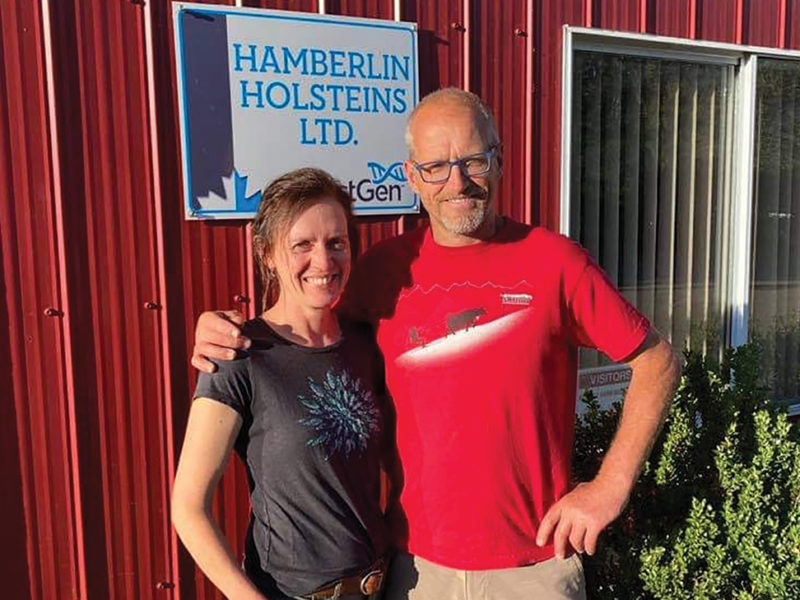
Daniela and Quentin Bruns spent four months trying to insure their Mara dairy farm, Hamberlin Holsteins Ltd. SUBMITTED

July 1, 2021 byJackie Pearase

SALMON ARM – A hard market cycle for the insurance industry is making it harder for some farmers to get insurance coverage.

It took four months for Mara dairy farmers Quentin and Daniela Bruns to secure insurance for their 180-acre certified organic operation with about 65 cows.

Their struggle to find an insurance company willing to cover their farm, Hamberlin Holsteins Ltd., was exacerbated by claims for a burned tractor in 2019 and a new barn roof lost in a wind storm in 2020.

Typically, such clients remain with their insurer until the claims are off their history but the insurance company covering the Bruns pulled out of the industry.

“I know we have two claims; I don’t want to be the bleeding heart and say, ‘Oh, poor me.’ But that’s what insurance is for. And at the time, they didn’t say don’t claim it because you’ll never get insurance again,” notes Daniela Bruns. “But, you know, when you start thinking about the fact that you have no insurance, fire insurance, I go to bed pretty nervous sometimes. I think, ‘Holy sh*t, that’s scary.’”

Commercial risk advisor Rosy Mounce of broker CapriCMW in Salmon Arm initially contacted 20 insurance companies to find coverage for the farm. Not one said yes.

“We went back to the insurance companies we thought were the best candidates and we pushed harder,” Mounce says. “We said, ‘You not offering them any options is going to be the difference between this farm operating and not.’ There’s the social responsibility here. These are farmers; we need to support them.”

Bruns says initial quotes came in at $35,000 but they brought the cost down by splitting their insurance between two companies, undergoing a credit check, and only insuring the house, dairy barn and shop/hay shed.

The trailer used by an employee and another being rented are only covered for liability.

“You’ve got to insure what makes you money, what brings in your income at least,” she adds. “Everything else we would just have to accept as a loss, which is pretty nuts.”

They are relieved to have coverage but even with less insured, the price increased to $21,000 from $18,000 last year.

Bruns initially contacted the BC Dairy Association to find help securing coverage.

BCDA producer and public affairs director Christine Terpsma said just the one producer has contacted them about insurance challenges.

Bruns did eventually get The Co-operators to have a look at their file but Mounce had a tentative plan worked out by then.

The BC Ministry of Agriculture, Food and Fisheries has fielded about six inquires about the high cost of commercial insurance for individual farm businesses and farmers institutes.

“We understand the impacts of rising insurance costs on farmers seeking to re-insure their properties,” states the ministry. “It’s important to note that government does not set insurance rates or regulate pricing. The factors that are contributing to higher insurance prices are occurring all over the world.”

Mounce has 18 years of experience in the insurance industry, 16 of them in farm insurance.

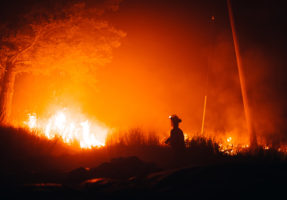
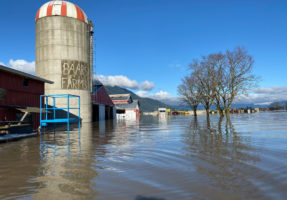
She says the current hard market was triggered after a 10-year soft cycle of constant insurance rates was followed by several years with catastrophic climate events – fires in Kelowna and Fort McMurray, flooding in Calgary – resulting in billions of dollars in losses. Insurance companies were paying out more than they were bringing in.

As a result, some pulled out of the industry, others stopped providing certain classes of insurance, such as farm, and many changed qualification criteria and upped their rates.

“That’s all it took to completely disrupt the whole industry,” says Mounce.

She estimates a quarter of her farm clients are having significant problems acquiring insurance.

“Like they genuinely are questioning if they will be able to get coverage and if they can, if they will be able to afford it.”

Mounce says it is important that producers understand the factors that can result in higher rates. This includes houses with old wiring and plumbing, the age or condition of a home or agricultural operation, and claims history.

“The insurance companies that are out there, they’re benefitting from 100 years of claims experience. They have the numbers on how much they pay out for every dollar of insurance they bring in.”

She has proactive conversations with her farm clients to ensure they are not being complacent about how much coverage they have, what is being covered, when to make a claim, or what they can do to bring down their rates.

“Do I invest in my property to make it more attractive to an insurance company? I always think that’s a better solution than spending more money on insurance,” she notes. “It’s a lot more fun to deliver good news than it is bad but these last two years has taught us that I would rather deliver bad news up front than put people through what some of our farms have gone through.”

No easy solution

CapriCMW worked with consultants to explore the captive insurance market as a possible solution for agricultural producers but found several drawbacks.

“When you look at a captive, you only want to make sure you’re only taking on farms in excellent, best of class condition because it’s literally your money out of your wallet that’s going to pay for your neighbour’s barn that burned up,” explains Mounce. “When we talked with these consultants, they all ultimately came back and said if you don’t have $5-10 million in premiums being spent on insurance, it won’t work. So $5 million in premiums with an average farm paying $10,000. How many farms is that? That’s a lot of farms and they have to be the best quality.”

Mounce says group insurance can work for some types of agriculture but the farms often have to fit into a specific box for it to work, something often not achievable.

Mounce suggests the government could have a role in aiding farmers by providing a rebate program or grants.

Making insurance more attainable will attract more and new companies into the market.

She says the hard market cycle with rising rates will continue until insurance companies are once again earning healthy profits.

“It’s not good news for farmers to hear that rates are going to continue to go up but we can’t leave it where there’s only a handful of insurance companies offering coverage and then a bunch of people don’t get coverage,” she says. “It’s not enough just to acknowledge that this was bad. Let’s not be in this situation again in the next 10 years. Let’s find a way to make this more sustainable, to make the pricing sustainable.”

Bruns sleeps better now that they have coverage but she says solutions are needed to prevent farms from collapsing under the cost and stress of obtaining and retaining insurance.

“We’re a small farm and when you start to have to pay those kinds of amounts, it’s just not sustainable. We can’t do that every year,” notes Bruns.
 

Related Posts

You may be interested in these posts from the same category.

Disaster preparedness lacking

Insurance under scrutiny

Province pledges emergency funding

Fruit growers face hard choices

Insolvency concerns grow

Cherries face the pits

Hurry up and wait

Don’t stress, plan

“Big number” tough to get

Cattle industry seeks cash

Federal assistance falls short

Going solo

Previous Post: « BCAC shifts to advocacy
Next Post: Water licensing process needs streamlining »

Copyright © 2025 Country Life in BC · All Rights Reserved