• Menu
  • Skip to primary navigation
  • Skip to main content
  • Skip to primary sidebar

Country Life In BC Logo

The agricultural news source in British Columbia since 1915

  • Headlines
  • Calendar
  • Subscribe
  • Advertise
  • About
  • Archives
  • Contact
  • Search
  • Headlines
  • Calendar
  • Subscribe
  • Advertise
  • About
  • Archives
  • Contact
  • Search

Primary Sidebar

Originally published:

MAY 2019
Vol. 105 Issue 5

Subscribe Now!

Sign up for free weekly FARM NEWS UPDATES

Loading form…

Your information will not be
shared or sold ever

Stories In This Edition

Caribou recovery plan has ranchers worried

What on earth?

Opposition slams ALC bill

Sidebar: Protection & pushback

Global rhubarb glut hits home for BC growers

Editorial: Truth in labelling

Back Forty: So you don’t believe in climate change

Viewpoint: Don’t blame the cows for global warming

Ag council’s lobbying efforts produce results

Learning a new skill

Foundation’s nest egg for funding projects increases

Greenhouse growers see rebound in acreage

Province will hold the line on piece rates

New CEO aims to kindle team spirit at co-op

Shrinking hog industry faces disease threats

FIRB decision prompts rethink of pricing scheme

Beekeepers see potential in technology transfer

AgSafe markes quarter century

Raspberries hit hard by harsh February

Good deal

Blueberry growers anxious for new varieties

Biological controls for pests in demand

Sidebar: Pesticides in play

Growers urged to focus on fresh

Westgen celebrates 75 years of excellence

Top seller was no-show at Holstein sale

Spring show attracts exhibitors from Quebec

Cheesemakers unite to grow niche market

Range use permits under greater scrutiny

Sidebar: Range use plans go digital

Market Musings: Top bulls sell for top dollar at spring sales

Grapegrowers share sustainability objectives

Grape specialist honoured for dedication

Hazelnut production expands across BC

Sidebar: Pest pressures

Supporters take to AITC’s Sips & Sprouts

Research: Cultured meat fails to impress researchers

UAVs undergo testing for pesticide delivery

Sustainability goes beyond saving farmland

Father and daughter roll with the last of the steel wheels

Woodshed: Susan Henderson is warming to country life

Farm initiative puts heart back in agriculture

Wannabe: Farming is more than just a job

Surplus, cull fruit finds new purpose as tasty snacks

Jude’s Kitchen: Special food for special moms

More Headlines

Follow us on Facebook

Comments Box SVG iconsUsed for the like, share, comment, and reaction icons

3 hours ago

The Agricultural Land Commission is laying off staff after years of flat funding under the BC NDP. ALC chair Jennifer Dyson warns that application volumes, enforcement activity and legal obligations have all risen while its operating budget has stayed effectively flat — meaning longer wait times ahead for some services.

#BCAg
... See MoreSee Less

Link thumbnail

Land Commission lays off staff

www.countrylifeinbc.com

With no budget increase this year, the Agricultural Land Commission (ALC) is laying off six staff to make ends meet. “Ongoing financial constraints and the requirement to operate within the approved...
View Comments
  • Likes: 0
  • Shares: 1
  • Comments: 0

Comment on Facebook

6 days ago

A BC Forest Practices Board investigation has found overgrazing has damaged grasslands in the Coutlee Range Unit near Merritt — and the range-use plan meant to prevent it was unenforceable. With complaints about overgrazing on the rise and grasslands covering just 1% of BC's land mass, the findings raise fresh questions about how the province manages one of its most vulnerable — and valuable — food-producing ecosyste#BCAg#BCAg ... See MoreSee Less

Link thumbnail

Board finds overgrazing rules unenforceable unmeasurable

www.countrylifeinbc.com

MERRITT – A BC Forest Practices Board investigation has found instances of non-compliance related to overgrazing have damaged open grasslands in the Mine pasture, part of the Coutlee Range Unit near...
View Comments
  • Likes: 6
  • Shares: 6
  • Comments: 6

Comment on Facebook

Several ranchers in recent years have gone into temporary non use on that range , so that means the grass should grow. But drought conditions/lack of rain and snow don’t allow that to happen . Dried up springs , creeks waterholes in various pastures add to over grazing where there is water , as livestock and everything else stay close to the water source . So even though less cattle are on it , over grazing appears. There is a large volume of horses on it 365 days/year which is wrong ! They pull grass right out of the ground when it’s just trying to grow ,, opens the door for weeds to grow in. That don’t help it. Aging infrastructure ( fences) laying on the ground, pipe line building , ( lack of commitment to fence maintenance) amongst all users contributes also to over grazing. Recreational atv users leaving gates open between pastures allows livestock to go back or ahead in pastures also expidites over grazing. Logging ( bcts) has no problem laying out cut locks on both sides of a fence , then it gets smashed down during logging and they don’t take responsibility to stand it back up or clean the cattle gaurds out when they are done , that happened 4 years ago on pasture 5 up there . I bet it is still not fixed . There are lots of contributing factors to the problem.

Tragedy of the commons.

I looked through the report. I saw nothing about the effects of noxious weeds on productive grasslands. This particular area is vulnerable because of the Ministry’a efforts to diversify the use of the Grasslands.

This pasture is under tremendous pressure not only from cattle but from irresponsible local residents who treat it as a landfill dumping all manner of household debris here. And don't even get me started on the mud bogging and camping in sensitive riparian areas. The feral horses are in this pasture 365 days a year just hammering it. Would sure be nice to see some enforcement action on people who are intentionally ripping up the grasslands and riparian areas. Cattle could be a valuable resource for rebuilding soils and native grasses in this area with the help of electric fencing and/or e-collars. The humans will be harder to manage.

The Forest and Range Practices Act was written by lawyers for global forest licencee shareholders. Results-based = unenforceable.

Also, can we talk about the impact of a pipeline being built through the middle of this field for multiple years?

View more comments

1 week ago

East Kootenay rancher Randy Reay is digging a new well after two natural water sources dried up on his Crown tenures. A new Living Lakes Canada assessment found 15% of mapped aquifers in the region are high-priority for monitoring, yet 80% of those go unmonitored. With over 48% of BC's provincial observation wells reporting below-normal groundwater levels, ranchers and researchers are sounding the alarm on water security. The story is in our March edition, and we've posted it to our website thi#BCAgk.

#BCAg
... See MoreSee Less

Link thumbnail

Water woes: groundwater under pressure across BC

www.countrylifeinbc.com

JAFFRAY – As a young boy growing up in the Kootenay-Boundary region, Randy Reay never expected to run out of water. But this year, in mid-February, his fields are bare. There is no snow halfway up t...
View Comments
  • Likes: 8
  • Shares: 7
  • Comments: 1

Comment on Facebook

Jaffrey is in the east Kootenays not kooteney boundary

2 weeks ago

BC farmers are bracing for prolonged higher input costs as war in the Middle East drives up fuel and fertilizer prices. Nitrogen fertilizer costs were already climbing before the Iran conflict began, with prices still roughly 60% above pre-pandemic levels. Farm Credit Canada warns that unlike 2022, strong commodity prices may not offset rising costs this time. Local suppliers expect supply challenges and further price increases ahead.

#BCAg
... See MoreSee Less

Link thumbnail

Fertilizer prices on the rise

www.countrylifeinbc.com

War in the Middle East has delivered a generational shock to energy prices, meaning BC farmers can expect a prolonged period of higher costs not just for fuel but also for fertilizer.
View Comments
  • Likes: 2
  • Shares: 1
  • Comments: 0

Comment on Facebook

2 weeks ago

... See MoreSee Less

View Comments
  • Likes: 1
  • Shares: 0
  • Comments: 0

Comment on Facebook

Subscribe | Advertise

The agricultural news source in British Columbia since 1915
  • Email
  • Facebook

Grape specialist honoured for dedication

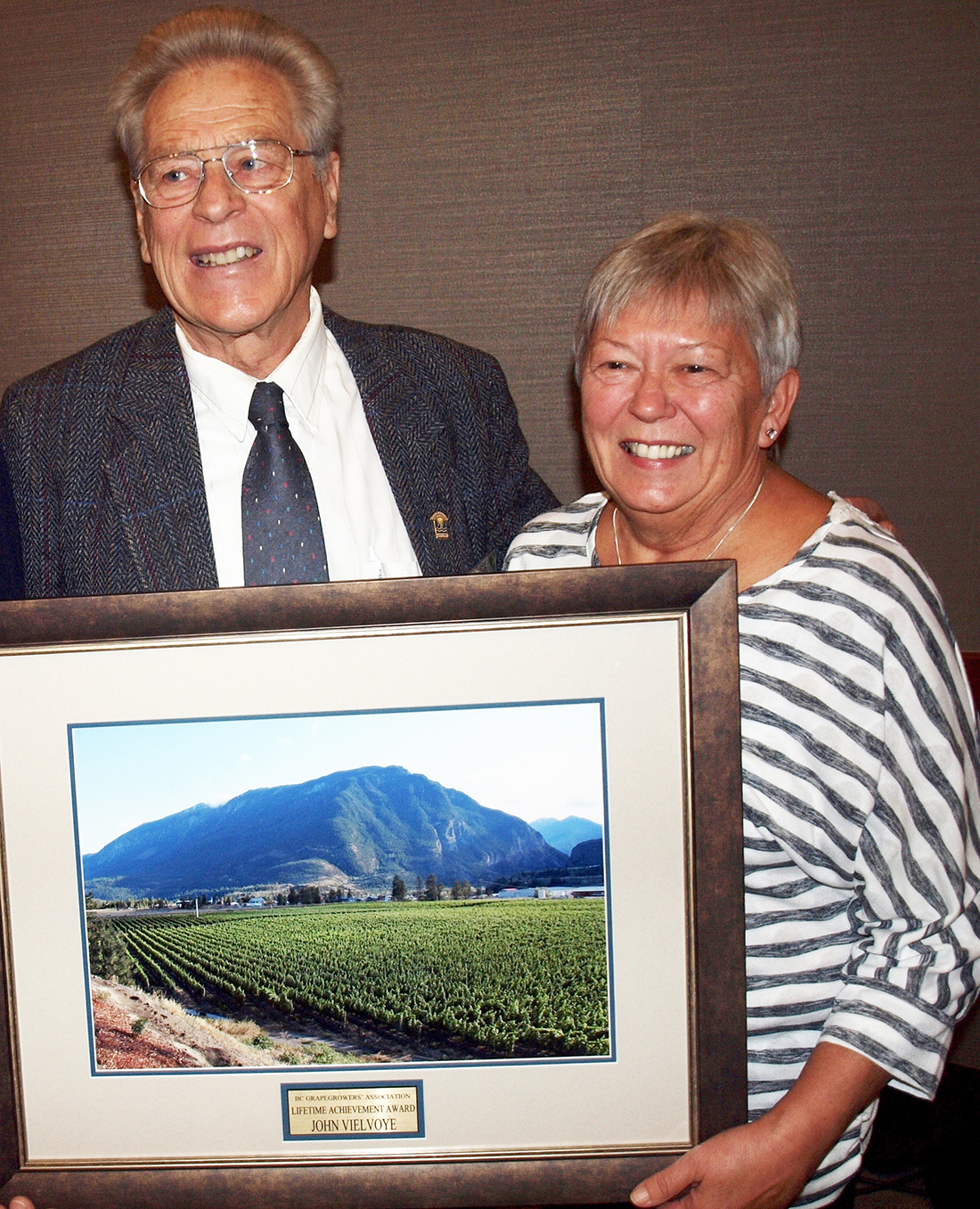
John Vielvoye receives lifetime achievement award
April 30, 2019 byJudie Steeves

KELOWNA – With more than 50 years’ of service to BC’s grape industry, John Vielvoye was critical in helping the BC grape industry navigate key changes while playing a critical role in the development of BC’s modern wine industry as the province’s grape specialist.
Now retired, Vielvoye was honoured in April with the first lifetime achievement award from the BC Grapegrowers’ Association.
Although he’s been retired from the ministry for 20 years or so, Vielvoye continued his industry work as a consultant following retirement.
He was instrumental in helping growers push the boundaries of where wine grapes can be grown in BC from the Okanagan Valley to the Fraser Valley and Vancouver Island and, most recently, Lillooet, the Thompson Valley and the Kootenays.
Vielvoye joined the BC Ministry of Agriculture in 1966 when there were only 1,000 acres of grapes in the province – mostly old table grape varieties such as White Diamond, Campbell Early and Sheridan. These were the varieties the early wineries used to make wine.
The first French hybrids began to appear in BC in the late 1960s, he recalls. Then, from 1977 to 1985, the Becker project experimented with plantings of Vitis vinifera varieties in the Okanagan Valley, trying different growing practices to improve the winter hardiness of the tender vines.
When wineries rather than a grower marketing board began dictating grape prices, growers began paying closer attention to cropping levels and vines began receiving less water, explains Vielvoye. This meant hardier vines that were better able to withstand cold winters.
“Cropping produces different vines,” he said.
Today, growers would be embarrassed to say they produce 10 tons an acre, a yield common back then. Even five is considered high because heavier cropping isn’t conducive to the development of the complex flavours prized in premium wines. Water and fertilizer are used sparingly as well, in order to stress the vines to produce grapes with the concentrated flavour components winemakers seek.
In the 1980s, a new table grape variety bred at the Summerland Research and Development Centre, called Sovereign Coronation, came on the scene. This transformed the table grape sector.
In 1989, with the signing of the Canada-US free trade agreement, a federal wine grape pullout program paid for the removal of lower-quality labrusca varieties and replanting with vinifera.
This was intended to support production of premium domestic wines instead of letting the industry drown rapidly as a flood of high-quality imported wines flowed into the country thanks to free trade.
At the time, there were just 13 wineries in BC. Today, there are 275 grape wineries in the province.
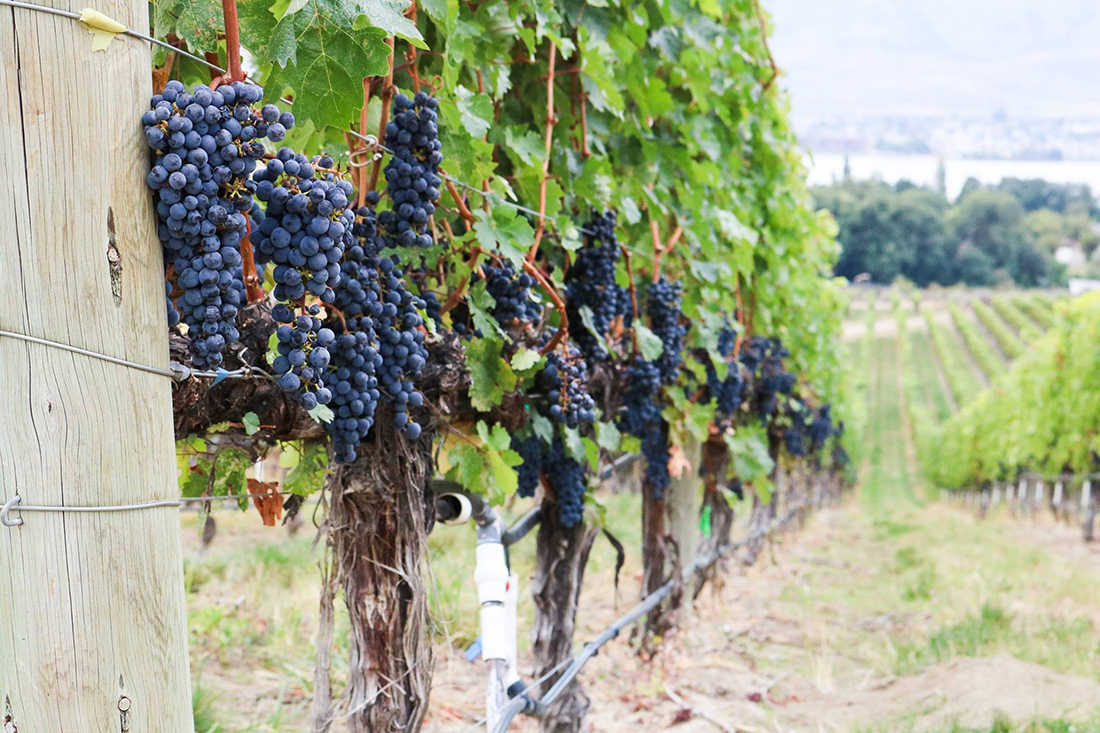
In the years following the subsidized pullout program, grape acreage surged and a number of new varieties began being grown. BC is now home to more than 10,000 acres of vineyards and a premium wine industry that is finding its place on the world stage.
Retrospective
Looking back, Vielvoye admits it’s been satisfying to be part of the industry during those turbulent times, but he says it’s still tough for the small vineyards and wineries.
“Many different skills are required to grow the grapes, make wine and market it; the competition is stiff and the tax structure is complex,” he says.
It’s also difficult for growers trying to make it in parts of the province where winters are more severe than in the Okanagan and South Coast. It doesn’t help that the Vintners’ Quality Alliance program limits the varieties acceptable for certification. Only a couple of hybrid grapes, such as Marechal Foch, are part of that list, but Vielvoye’s opinion is that some hybrids accepted elsewhere produce good wine, too.
Vielvoye’s entry into agriculture was natural. He worked with his family in the ornamental nursery business in Vancouver as a child, and he says he knew early on that he wanted to go into extension work. He graduated from UBC in 1965 and worked with Agriculture Canada for a year before applying to the provincial ministry.
His wife Evelyn was from Kelowna, and they both liked the Okanagan, so when the opportunity to return came up, they didn’t hesitate, never realizing the changes they would be part of.
Overall, he says it gives him a good feeling to look back on the changes in the industry and the many people he’s worked with over the years who were involved in its success.
And, he was especially pleased with his recognition by the industry. While it isn’t often he gets too emotional to speak, he did as he accepted his award at the annual general meeting of the grapegrowers’ association, where members also gave him a standing ovation.
“It was overwhelming to be recognized by growers; I really appreciate it,” he says.

Related Posts

You may be interested in these posts from the same category.

Vineyards enter new year with recovery in sight

Warm winter stalls icewine

Phylloxera found on Vancouver Island

Growers, wineries welcome sustainability launch

Cold snap hits Okanagan fruit growers

Wineries reopen amid COVID-19

Top grape grower recognized

Icewine harvest begins

Autumn showers dampen harvest

Grape diversification in play

Clean plants build confidence

Grape growers honoured

Previous Post: «Nk'Mip grapes Grapegrowers share sustainability objectives
Next Post: The (summer) heat is on »

Copyright © 2026 Country Life in BC · All Rights Reserved