• Menu
  • Skip to primary navigation
  • Skip to main content
  • Skip to primary sidebar

Country Life In BC Logo

The agricultural news source in British Columbia since 1915

  • Headlines
  • Calendar
  • Subscribe
  • Advertise
  • About
  • Archives
  • Contact
  • Search
  • Headlines
  • Calendar
  • Subscribe
  • Advertise
  • About
  • Archives
  • Contact
  • Search

Primary Sidebar

Originally published:

March 2019
Vol. 105 Issue 3

Subscribe Now!

Sign up for free weekly FARM NEWS UPDATES

Loading form…

Your information will not be
shared or sold ever

Stories In This Edition

Ten-year plan

Simon Answerth

Province boosts ag spending

It’s a draw!

Well registrations lag in advance of final deadline

Editorial: Vice grip

Back Forty: Snow days make good days for seed selection

Viewpoint: Farmers need to prepare for annual snow melt

Smooth start to season as foreign workers arrive

Sidebar: Province mulls piece rates

Late winter has some Okanagan growers on edge

Ag show attracts near-record attendance

Ag Briefs: Traceability funding available for producers

Ag Briefs: Cattlemen’s launches webinar series

Ag Briefs: Grant winner announced

Labour remains a priority for fruit growers

Dairy, aquaculture take home awards at gala

Farmers need to prepare for uncertainty

Ag critic listens to concerns at farmers’ institute

Growers are responsible for workers’ safety

Robotic milkers sized up during dairy tour

Safe, high-quality silage depends on preparation

Young farmers crack open new vending concept

Diversification makes orchard a landmark

Going green boosts ranch’s credibility

Ranchers need to match forage with herd needs

Tru-Grit

Reducing waste will save money on winter feed

Producers question new Indigenous rights law

Hosting TRU students a way to give back

Livestock co-op provides selling, buying options

Sidebar: Market set to stay steady

Research: Bluetongue outbreaks expected to increase

Filling a niche for gourmet mushrooms

Regulations, housing key issues in Langley

Sheep producers seeing value in genetic program

Above and beyond

Vegetation fundamental to farms, landscape

Studies continue on forage, corn crop pests

4-H BC leader singled out

Growers go with the grain of beer revival

Agri-tourism has plenty of room for growth

Rose stem girdler poses threat to cranberries

Site prep critical for healthy hazelnut orchards

Sidebar: BC renewal program opens up

Wannabe: Renewal comes with a new generation of farmers

Mentorship gives Kelowna grower a headstart

Woodshed: Deborah and Doug McLeod turn up the heat

A good place to meet up

Jude’s Kitchen: Celebrate spring by eating outside

More Headlines

Follow us on Facebook

Comments Box SVG iconsUsed for the like, share, comment, and reaction icons

6 days ago

A BC Forest Practices Board investigation has found overgrazing has damaged grasslands in the Coutlee Range Unit near Merritt — and the range-use plan meant to prevent it was unenforceable. With complaints about overgrazing on the rise and grasslands covering just 1% of BC's land mass, the findings raise fresh questions about how the province manages one of its most vulnerable — and valuable — food-producing ecosyste#BCAg#BCAg ... See MoreSee Less

Link thumbnail

Board finds overgrazing rules unenforceable unmeasurable

www.countrylifeinbc.com

MERRITT – A BC Forest Practices Board investigation has found instances of non-compliance related to overgrazing have damaged open grasslands in the Mine pasture, part of the Coutlee Range Unit near...
View Comments
  • Likes: 6
  • Shares: 6
  • Comments: 6

Comment on Facebook

Several ranchers in recent years have gone into temporary non use on that range , so that means the grass should grow. But drought conditions/lack of rain and snow don’t allow that to happen . Dried up springs , creeks waterholes in various pastures add to over grazing where there is water , as livestock and everything else stay close to the water source . So even though less cattle are on it , over grazing appears. There is a large volume of horses on it 365 days/year which is wrong ! They pull grass right out of the ground when it’s just trying to grow ,, opens the door for weeds to grow in. That don’t help it. Aging infrastructure ( fences) laying on the ground, pipe line building , ( lack of commitment to fence maintenance) amongst all users contributes also to over grazing. Recreational atv users leaving gates open between pastures allows livestock to go back or ahead in pastures also expidites over grazing. Logging ( bcts) has no problem laying out cut locks on both sides of a fence , then it gets smashed down during logging and they don’t take responsibility to stand it back up or clean the cattle gaurds out when they are done , that happened 4 years ago on pasture 5 up there . I bet it is still not fixed . There are lots of contributing factors to the problem.

Tragedy of the commons.

I looked through the report. I saw nothing about the effects of noxious weeds on productive grasslands. This particular area is vulnerable because of the Ministry’a efforts to diversify the use of the Grasslands.

This pasture is under tremendous pressure not only from cattle but from irresponsible local residents who treat it as a landfill dumping all manner of household debris here. And don't even get me started on the mud bogging and camping in sensitive riparian areas. The feral horses are in this pasture 365 days a year just hammering it. Would sure be nice to see some enforcement action on people who are intentionally ripping up the grasslands and riparian areas. Cattle could be a valuable resource for rebuilding soils and native grasses in this area with the help of electric fencing and/or e-collars. The humans will be harder to manage.

The Forest and Range Practices Act was written by lawyers for global forest licencee shareholders. Results-based = unenforceable.

Also, can we talk about the impact of a pipeline being built through the middle of this field for multiple years?

View more comments

1 week ago

East Kootenay rancher Randy Reay is digging a new well after two natural water sources dried up on his Crown tenures. A new Living Lakes Canada assessment found 15% of mapped aquifers in the region are high-priority for monitoring, yet 80% of those go unmonitored. With over 48% of BC's provincial observation wells reporting below-normal groundwater levels, ranchers and researchers are sounding the alarm on water security. The story is in our March edition, and we've posted it to our website thi#BCAgk.

#BCAg
... See MoreSee Less

Link thumbnail

Water woes: groundwater under pressure across BC

www.countrylifeinbc.com

JAFFRAY – As a young boy growing up in the Kootenay-Boundary region, Randy Reay never expected to run out of water. But this year, in mid-February, his fields are bare. There is no snow halfway up t...
View Comments
  • Likes: 8
  • Shares: 7
  • Comments: 1

Comment on Facebook

Jaffrey is in the east Kootenays not kooteney boundary

2 weeks ago

BC farmers are bracing for prolonged higher input costs as war in the Middle East drives up fuel and fertilizer prices. Nitrogen fertilizer costs were already climbing before the Iran conflict began, with prices still roughly 60% above pre-pandemic levels. Farm Credit Canada warns that unlike 2022, strong commodity prices may not offset rising costs this time. Local suppliers expect supply challenges and further price increases ahead.

#BCAg
... See MoreSee Less

Link thumbnail

Fertilizer prices on the rise

www.countrylifeinbc.com

War in the Middle East has delivered a generational shock to energy prices, meaning BC farmers can expect a prolonged period of higher costs not just for fuel but also for fertilizer.
View Comments
  • Likes: 2
  • Shares: 1
  • Comments: 0

Comment on Facebook

2 weeks ago

... See MoreSee Less

View Comments
  • Likes: 1
  • Shares: 0
  • Comments: 0

Comment on Facebook

2 weeks ago

Cameron Stockdale is the new executive director of provincial farm safety organization AgSafeBC. Find out more in this week's Farm News Update from Country Life in B#BCAg#BCAg ... See MoreSee Less

Link thumbnail

New leadership at AgSafe BC

www.countrylifeinbc.com

Cameron Stockdale is the new executive director of provincial farm safety organization AgSafeBC, succeeding Wendy Bennett. Bennett left AgSafeBC in September 2025, following 12 years with the…
View Comments
  • Likes: 5
  • Shares: 1
  • Comments: 0

Comment on Facebook

Subscribe | Advertise

The agricultural news source in British Columbia since 1915
  • Email
  • Facebook

Mentorship gives Kelowna grower a headstart

Hands-on experience critical for non-farmers to learn the ropes

Simon Answerth

February 26, 2019 byMyrna Stark Leader

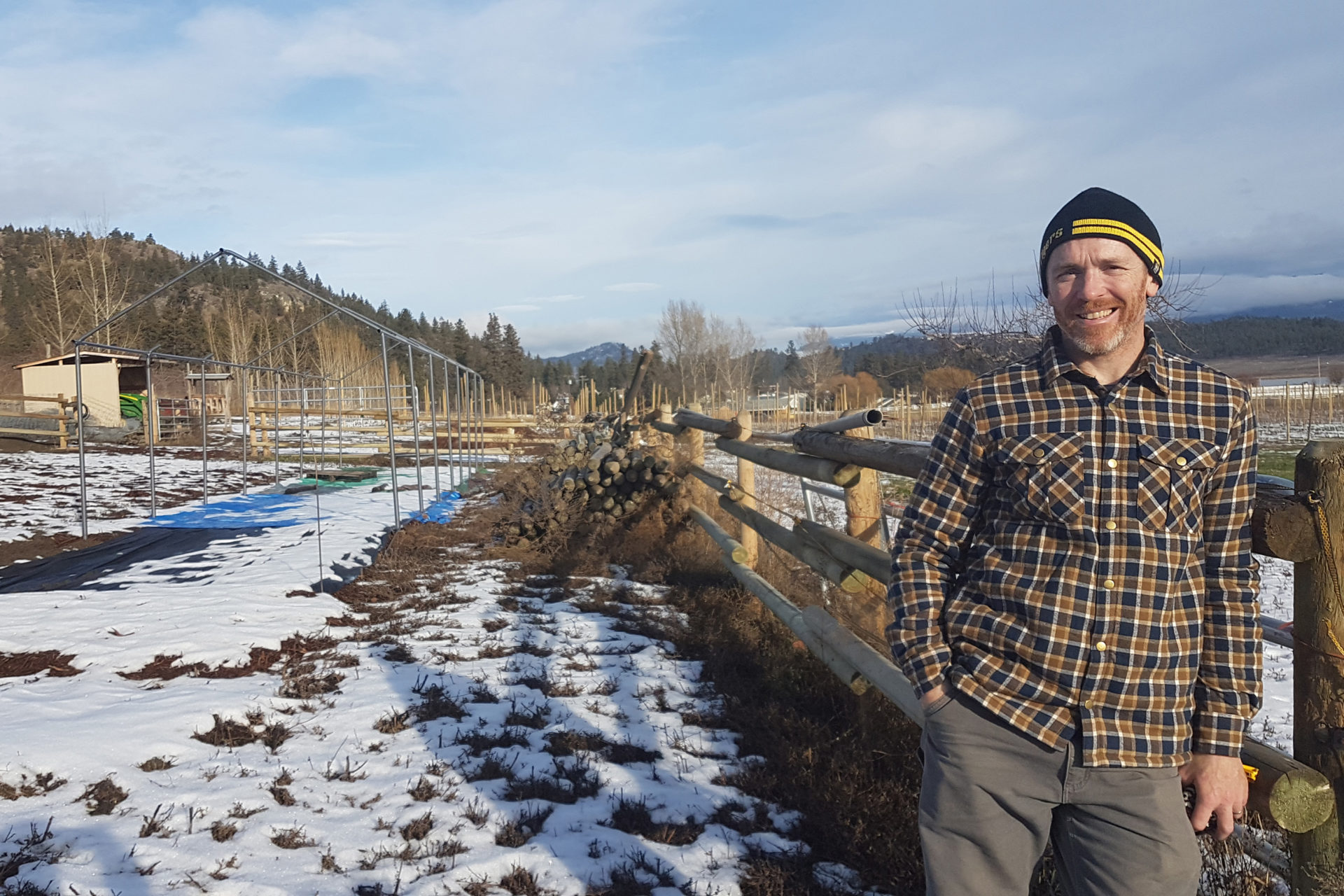
KELOWNA – Lightfoot Farm owner Simon Answerth is the sole graduate of a three-year farm incubator program spearheaded by the Central Okanagan Community Farm Society and run in conjunction with Trinity Baptist Church in Kelowna.

Two years into the incubator program, he also completed a one-year business mentorship program organized by the Young Agrarians.

Together, the projects enabled him to learn to grow market garden vegetables

“It gave me the leg up I needed,” says Answerth who adds that the real-life experience, plus watching YouTube videos of people like Curtis Stone, taught him how to farm.

The former electrician is digging into one of two acres of irrigated land in the Glenmore neighbourhood of Kelowna that he’s leasing for $500 a year from a professor at UBC Okanagan. The owner used to have horses but was looking for someone to farm his property, which is already home to a mature cherry orchard and a newly planted high-density apple orchard.

Backed by 15 years’ experience in the construction sector, Answerth, who grew up in Australia, has divided the acreage into 45×45-foot sections. Part of the land will house two 100-foot-long hoop houses.

“I’ve ordered about 60 to 70 seed varieties,” he says, showing off new digs that include a frame greenhouse for a nursery. He’s in the midst of running power to it from the house and hand-digging the trench, a reality for penny-pinching producers keeping costs in check.

While he knows he’s ordered too many varieties, this is an experimental year to determine what grows best on unfamiliar ground. Last fall, he seeded garlic plus a cover crop of fall rye, peas and oats to prepare the soil for spring seeding. He’ll grow root veggies and lots of salad greens, keeping track of everything in a spreadsheet to determine the best growers and sellers. Lightfoot Farms isn’t certified organic, but Answerth will do what he can to be a low-input grower.

He’s converted a small, former tack room into a heated production area for microgreens such as pea, radish and sunflower shoots. Past experience has proven them to be good sellers in 10×20-inch flats.

“They’re a bit finicky to grow but this will be easier than growing them at home. I can grow them all year long here and the restaurants love ’em. During the summer, it’s a seven-day turnaround and you get $20 a flat,” he explains.

His market includes local restaurants and farmers’ markets in Lake Country, with Peachland and Kelowna possible this year. He loves the markets, but breaking in as new vendor when there are large, long-time sellers, is challenging. Shoppers have habitual stops so he thinks small markets where there is less competition for ongoing vegetable sales might be better venues.

He continues to pursue restaurants, including craft breweries that want unique foods to pair with their specialty beers. These businesses typically take larger bulk orders, which makes economic sense. He’s also sold wholesale to grocery stores. Diversifying his market is smart, and required.

“It’s easy enough to grow it; the issue is marketing,” claims Answerth who was initially surprised that cold calls didn’t result in more business. Despite strong interest in buying local, his CSA program didn’t take off. He believes it’s because people were weary of putting down money up front.

He’s also contemplating direct sales from the farm gate but he fears having to have staff on hand to service customers will be costly. He knows the operation needs to run lean to maximize profit.

“A lot of good farmers talk $100,000 an acre income,” he says. “If we can double what we made last year, seeing we’re on double the space we had last year, I think that’s quite achievable.”

Since the pilot program required him to have his own hand tools, he was able to bank some money. That, plus a bit of a nest egg, has enabled him to carry on farming. Yet without owning land, traditional financing, even for smaller purchases like a walk-behind tractor, is tough to secure.

Answerth is disappointed that more people didn’t graduate from the incubator program, which originally had nine people. Without such opportunities, it will be tougher for non-farmers like himself to enter agriculture.

“We’re lucky we could make the jump, but a lot of people can’t,” he says.
Related Posts

You may be interested in these posts from the same category.

Young Agrarians goes solo

Previous Post: «Tristan & Aubyn Banwell Going green boosts ranch’s credibility
Next Post: Ten-year plan Manure spreading»

Copyright © 2026 Country Life in BC · All Rights Reserved