
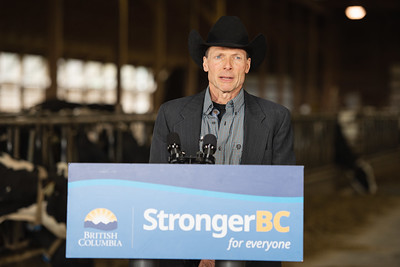
The lack of a clear roadmap to reconciliation with the province’s Indigenous peoples jeopardize a number of key issues for agriculture and the province as a whole, say ranchers.
“They don’t have a clue where they are going,” says BC Cattlemen’s Association president Werner Stump, who sent a letter to Premier David Eby at the end of October expressing concern over the province’s approach. “I was told by one government official something along the line of ‘reconciliation has never been done before so we are sort of muddling our way through it, figuring it out as we go along’. And that‘s no good.”
The recent response to the BC Supreme Court’s decision in August recognizing Aboriginal title to 800 acres in Richmond is a case in point. The decision effectively cast doubt on fee-simple title granted by the Crown, though the Cowichan Tribes say this was never the intent.
But how the two co-exist has yet to work.
Of further issue for BC agriculture is the lack of transparency surrounding the province’s watershed security strategy, launched in March 2023 backed by a $100 million endowment fund and intentions paper.
Responses to the intentions paper – which attracted 212 submissions – and the final strategy paper have never been made public, despite receiving cabinet approval in early 2024.
Stump says the paper was part of the BC NDP’s piecemeal reconciliation push, and too controversial to release following pushback over proposed changes to the Land Act, which many said would give Indigenous groups veto over the use of Crown land.
“When you look at the draft, it wasn’t a watershed security strategy,” says Stump. “It had nothing to do with the environmental perspective, the biology, the hydrology, how do we protect. … It was part of the reconciliation initiative and if the government wants to [enhance reconciliation] go ahead and publish it but don’t disguise it as something that it’s not. … Don’t disguise it as a way of shortening permitting times.”
The intentions paper was released shortly before the government signed an agreement with the Cowichan Tribes in May 2023 to develop a watershed plan for the Koksilah River. Completion is required by May 2026.
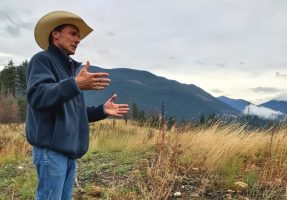
Invermere rancher Dave Zehnder has been part of the Koksilah process and questions its effectiveness.
“I am hoping that it won’t create just another plan that will be put on a shelf,” he says.
Stump says a coordinated approach is needed rather than multiple small initiatives that leave people wondering where things are heading.
“You know they are doing these one-offs, thinking of them as a template rather than starting with the big picture in mind and planning how all the components fit together,” he says. “They are not playing with something small; this is the future of all of British Columbia.”
All content on this website is copyrighted, and cannot be republished or reproduced without permission.


 Food hub tips to support farmers