• Menu
  • Skip to primary navigation
  • Skip to main content
  • Skip to primary sidebar

Country Life In BC Logo

The agricultural news source in British Columbia since 1915

  • Headlines
  • Calendar
  • Subscribe
  • Advertise
  • About
  • Archives
  • Contact
  • Search
  • Headlines
  • Calendar
  • Subscribe
  • Advertise
  • About
  • Archives
  • Contact
  • Search

Primary Sidebar

Current Issue:

FEBRUARY 2026
Vol. 112 Issue 2

Subscribe Now!

Sign up for free weekly FARM NEWS UPDATES

Loading form…

Your information will not be
shared or sold ever

Follow us on Facebook

Comments Box SVG iconsUsed for the like, share, comment, and reaction icons

6 hours ago

The Township of Langley Farm and Ranch Exhibition Society is hosting a public open house this evening to gather input on plans to transform the historic Belmont Farm into an agricultural exhibition, education and heritage hub. Farmers, ranchers, and community members are invited to share their feedback. The open house is at the George Preston Rec Centre, 6-8 pm.

Township of Langley Farm and Ranch Exhibition Society
#BCAg
... See MoreSee Less

The Township of Langley Farm and Ranch Exhibition Society is hosting a public open house this evening to gather input on plans to transform the historic Belmont Farm into an agricultural exhibition, education and heritage hub. Farmers, ranchers, and community members are invited to share their feedback. The open house is at the George Preston Rec Centre, 6-8 pm. 

Township of Langley Farm and Ranch Exhibition Society 
#BCAg
View Comments
  • Likes: 6
  • Shares: 0
  • Comments: 0

Comment on Facebook

9 hours ago

The sold-out Southern Interior Horticulture show continues today. Education sessions range from rodent control to new tree fruit varieties, with the afternoon devoted to improving spraying techniques for orchardists and vineyard managers. When not listening to speakers, producers are checking the trade show.

#BCAg
... See MoreSee Less

The sold-out Southern Interior Horticulture show continues today. Education sessions range from rodent control to new tree fruit varieties, with the afternoon devoted to improving spraying techniques for orchardists and vineyard managers. When not listening to speakers, producers are checking the trade show.

#BCAg
View Comments
  • Likes: 6
  • Shares: 0
  • Comments: 0

Comment on Facebook

11 hours ago

The BC Poultry Association has lowered its avian flu biosecurity threat level from red to yellow, citing declining HPAI risk factors and fewer wild bird infections. Strong biosecurity practices helped BC limit cases this winter to 38 premises, down from 81 last year. For more, see today's Farm News Update from Country Life in #BCAg#BCAg ... See MoreSee Less

Link thumbnail

Poultry biosecurity notches down

www.countrylifeinbc.com

Declining risk factors for highly pathogenic avian influenza (HPAI) have prompted the BC Poultry Association to lower the industry’s biosecurity threat level from red to yellow. The decision…
View Comments
  • Likes: 11
  • Shares: 2
  • Comments: 1

Comment on Facebook

🐥💛

1 day ago

The application deadline for cost-shared funding through the Buy BC program is coming up on February 20. Up to $2 million through the Buy BC Partnership Program is available annually to BC producers and processors to support local marketing activities that increase consumer awareness of BC agriculture and BC food and beverages. For more information, visit buybcpartnershipprogram.ca/.

Buy BC

#BCAg
... See MoreSee Less

Link thumbnail

Home - Buy BC Partnership Program

buybcpartnershipprogram.ca

Buy BC Partnership Program Increase your visibility with Buy BC The Buy BC Partnership Program is a fundamental component of Buy BC that provides up to $2 million in cost-shared funding annually to lo...
View Comments
  • Likes: 3
  • Shares: 0
  • Comments: 0

Comment on Facebook

1 day ago

The Sik-E-Dakh (Glen Vowell) First Nation's Skeena Fresh hydroponic operation has doubled production capacity thanks to a $130,632 Northern Development Infrastructure Trust grant. Growing lettuce, kale, herbs and more in shipping containers, the operation uses 90% less water than traditional farming while providing 1,200 people with year-round access to fresh, locally grown greens. Their story is in the February edition of Country Life in BC, the agricultural news source for BC’s farmers and ranchers.

Northern Development Initiative Trust
#BCAg
... See MoreSee Less

The Sik-E-Dakh (Glen Vowell) First Nations Skeena Fresh hydroponic operation has doubled production capacity thanks to a $130,632 Northern Development Infrastructure Trust grant. Growing lettuce, kale, herbs and more in shipping containers, the operation uses 90% less water than traditional farming while providing 1,200 people with year-round access to fresh, locally grown greens. Their story is in the February edition of Country Life in BC, the agricultural news source for BC’s farmers and ranchers. 

Northern Development Initiative Trust 
#BCAg
View Comments
  • Likes: 15
  • Shares: 1
  • Comments: 0

Comment on Facebook

Subscribe | Advertise

The agricultural news source in British Columbia since 1915
  • Email
  • Facebook

Provincial meat licensing overhaul effective October

Small-scale producer survey will support future advocacy

August 1, 2021 byTom Walker

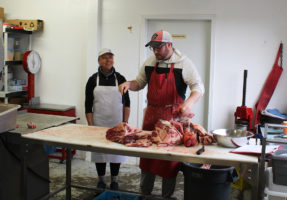
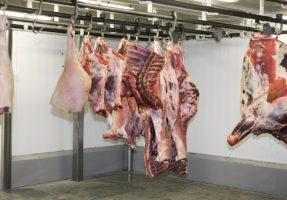
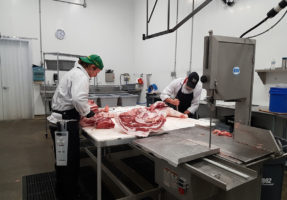
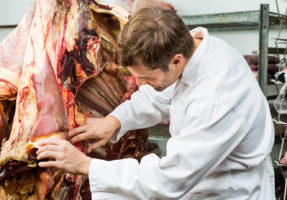
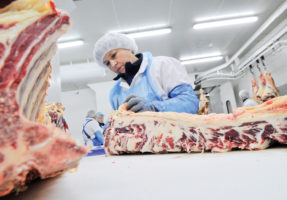
MERRITT – The province has formally announced details of the new three-tier licensing structure for meat processors promised earlier this year.

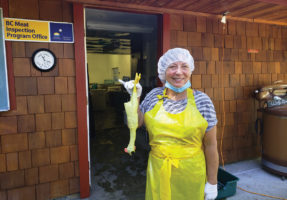
The four existing classes of licences will be streamlined, with on-farm slaughter allowed across the province.

Provincially inspected A and B licensees will be consolidated in a new Abattoir class, with no restrictions on slaughter volumes or sales.

Two on-farm slaughter categories will exist: Farmgate Plus, allowing slaughter of up to 25 animal units (25,000 pounds) and off-farm sales anywhere in the province, and a Farmgate licence allowing slaughter of up to five animal units (5,000 pounds) and sales within 50 km of the licensee as well as within the licensee’s regional district.

The changes take effect October 1. New licences will be valid for five years. All licensees must take the SlaughterRight training course, launched in February as one of the first key changes following consolidation of meat inspection under the BC Ministry of Agriculture, Food and Fisheries. All facilities will be inspected at least once a year, with more frequent inspections according to assessed risk.

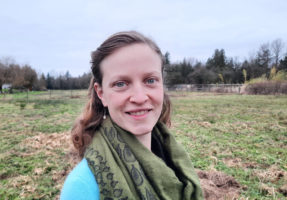
“We’ve been so pleased to see this announcement,” says Ava Reeve, executive director of the Small-Scale Meat Producers Association, which was first briefed on the changes at the end of March. “We appreciated being included in the process, and we’re happy to see many of our recommendations reflected in these new regulations.”

SSMPA hopes the new system will reduce processing bottlenecks and increase producer revenues.

“We look forward to seeing many farmers and ranchers take this opportunity to grow and diversify their businesses,” says Reeve.

Survey launched

SSMPA launched a survey in early July to get a better understanding of the sector and the impact of the licensing changes.

“There is no hard data available right now,” she explains. “Nobody is counting the small livestock producers. We need to know numbers and we need to know their concerns, so we can serve those producers.”

SSMPA board members are all producers and developed the survey, says Reeve.

“We also have regional representatives who are a new addition to the SSMPA team and they reviewed the survey as well,” she says. “The goal was to capture the really important questions for our sector.”

A small group of producers formed SSMPA in 2017 but membership is hard to pin down. However, Reeve says there are up to 3,000 small-scale meat producers across the province.

She wants to hear from both current and past meat producers to know the issues they face and, if they’re former producers, why they left the sector. This will help SSMPA develop proposals for solutions.

The survey is comprehensive and asks for producer details and concerns, including unlicensed slaughter.

“We know illegal slaughter is happening across the province and we would like to hear what the needs of those producers are, why they are choosing to do something that is so risky and whether there is anything we could change about the regulatory system to bring them into the fold,” says Reeve. “I don’t think there are many people who prefer to be doing their slaughter illegally, but there is some reason they are choosing to do that. We would like to know what those reasons are.”

The survey will also help assess the anticipated impact of the new regulations, adds Reeve, as well as any barriers small-scale producers perceive.

“In anticipation of the announcement, we made sure that our survey will help us study the impact and success of these regulatory changes,” says Reeve, noting that insurance coverage, restrictions on use of Agricultural Land Reserve properties and low profitability remain concerns.

All responses will be anonymous, giving many producers the first opportunity they’ve ever had to detail their practices and their reasoning honestly without fear of repercussions.

“Honest responses are absolutely essential to the value of the results,” says Reeve. “We are not a government organization. … We will not share raw data. All responses will be aggregated into a report.”

Despite the challenges of summer work, weather and wildfires, Reeve hopes for a good response. The survey takes just 15 minutes to complete.

The survey is open until August 20 and can be completed online at [smallscalemeat.ca/survey] or by calling 250-999-0296.
Related Posts

You may be interested in these posts from the same category.

Challenges linger for meat plants

BC abattoir volume up 30% in 2020

Province reveals abattoir changes

New executive director for Small-Scale Meat Producers

Meat producers frustrated by consultations

Abattoir association calls for action

Under one roof

Closures underscore need for licensing reform

Province expands slaughter licences

Province to consider value-added options

Meat inspection budget tightens

Previous Post: « Record temps kill poultry
Next Post: Flower farm meets growing demand »

Copyright © 2026 Country Life in BC · All Rights Reserved