• Menu
  • Skip to primary navigation
  • Skip to main content
  • Skip to primary sidebar

Country Life In BC Logo

The agricultural news source in British Columbia since 1915

  • Headlines
  • Calendar
  • Subscribe
  • Advertise
  • About
  • Archives
  • Contact
  • Search
  • Headlines
  • Calendar
  • Subscribe
  • Advertise
  • About
  • Archives
  • Contact
  • Search

Primary Sidebar

Originally published:

June 2019
Vol. 105 Issue 6

Subscribe Now!

Sign up for free weekly FARM NEWS UPDATES

Loading form…

Your information will not be
shared or sold ever

Stories In This Edition

First Cut

Hog farm won’t face charges

Okanagan drives land values

Where’s the beef?

Minister defends Bill 15 changes

Back Forty: Farmers, not just farmland, need revitalization

Editorial: No peace, no order

ALR restrictions make commuting a fact of life

Johnston’s Packers targeted by activists

Child labour

Sidebar: When is a crime not a crime?

Berry growers get long-awaited funding boost

Proteobiotics reduce poultry, swine infections

Greenhouse growth stymied by gas prices

Bloom

Increase farm productivity with cover crops

Ag Briefs: Water fees not evenly distributed among users

Ag Briefs: BC Tree Fruits prepares to relocate

Farmland trust explored for Island

New owner, same faces

Fruitful experience

Fruit growers cautiously optimistic on bloom set

Honeycrisp key to success for Golden Apple winners

Changes to slaughter rules taking too long

Going! Going! Gone

Local meat deamnd creating opportunities

Sidebar: Compost in 14 days

Ranch takes pasture to plate at face value

Market Musings: Technology has its challenges

Oliver veggie grower prefers wholesale

Grocer offers tips to get a foot in the door

Greenhouse veggie days a hit with school

Haskap research may help berry go mainstream

Grow up!

Research: Bee sensitivity linked to neonic pesticides

Fraser Valley orchardist calling it a day

Rally cry

Worming his way to the top of the heap

Mushrooms a viable crop for small growers

Island 4-H beef show celebrates 25 years

Woodshed: Deborah starts her vacation a golf widow

Brewery’s food program spawns farm project

Jude’s Kitchen: Celebrate dads!

More Headlines

Follow us on Facebook

Comments Box SVG iconsUsed for the like, share, comment, and reaction icons

8 hours ago

There is SOME good news among all the otherwise dire economic outlooks being floated this year. An annual survey of capital expenditures in agriculture by StatsCan says projected investments in construction and machinery will trend upwards this year. We've crunched some numbers in this week's Farm News Update from Country Life#BCAgC.

#BCAg
... See MoreSee Less

Link thumbnail

Capital spending to rise

www.countrylifeinbc.com

BC livestock producers are poised for record capital spending this year, according to Statistics Canada. Results of Statscan’s annual survey of capital expenditures, released February 25…
View Comments
  • Likes: 0
  • Shares: 0
  • Comments: 0

Comment on Facebook

1 day ago

A family farm on Seabird Island is proving grain can thrive in the Fraser Valley — if you choose the right varieties. Cedar Isle Farm grows three heritage and locally adapted winter wheats, rotating them with organic forages to manage weeds and weather. Three generations in, they're still evolving. Read how diversification keeps this mixed organic operation resilien#BCAg#BCAg ... See MoreSee Less

Link thumbnail

Farm finds resilience going with the grain

www.countrylifeinbc.com

AGASSIZ – A family-run mixed organic farm on Seabird Island highlights the potential for grain and other crops in the Fraser Valley, and the importance of diversification to long-term resilience.
View Comments
  • Likes: 5
  • Shares: 0
  • Comments: 0

Comment on Facebook

1 day ago

At the 137th annual BC Fruit Growers Association AGM yesterday in Kelowna, sitting vice president Deep Brar was elected president, defeating his only competitor for the role, Kelly Wander. Avi Gill became VP. He was the only candidate. Long-time president Peter Simonsen looked on from the podium as the 2026 board of directors offered congratulations to one another prior to having a group picture taken.

#BCAg
... See MoreSee Less

At the 137th annual BC Fruit Growers Association AGM yesterday in Kelowna, sitting vice president Deep Brar was elected president, defeating his only competitor for the role, Kelly Wander. Avi Gill became VP. He was the only candidate. Long-time president Peter Simonsen looked on from the podium as the 2026 board of directors offered congratulations to one another prior to having a group picture taken.

#BCAg
View Comments
  • Likes: 6
  • Shares: 1
  • Comments: 0

Comment on Facebook

2 days ago

Today is a busy day in BC agriculture. The BC Egg conference is underway in Vancouver. Fruit growers are meeting in Kelowna for the BC Fruit Growers AGM. Grain producers up in the Peace are meeting for Below Ground 2026, billed as a "farmer-first" look at soil health. BC Blueberry Council, the Raspberry Industry Development Council and BC Strawberry Growers Association are hosting the 8th annual BC Berries Research Review online today and tomorrow, and ... the University of the Fraser Valley in Chilliwack is hosting an open house for students considering post-secondary studies in agriculture. All this and more is on our online calendar.

#BCAg
... See MoreSee Less

Link thumbnail

Calendar

www.countrylifeinbc.com

View Comments
  • Likes: 4
  • Shares: 0
  • Comments: 0

Comment on Facebook

3 days ago

Berryhill Foods Inc. is expanding into fresh berries by acquiring Driediger Farms' main Langley processing plant and 78-acre property for $23.3 million. The frozen berry processor will operate the farm and build on the Driediger legacy. Rhonda Driediger, whose family has farmed the property since 1959, will support the new owners during the first year before pursuing other ventur#BCAg#BCAg ... See MoreSee Less

Berryhill Foods Inc. is expanding into fresh berries by acquiring Driediger Farms main Langley processing plant and 78-acre property for $23.3 million. The frozen berry processor will operate the farm and build on the Driediger legacy. Rhonda Driediger, whose family has farmed the property since 1959, will support the new owners during the first year before pursuing other ventures.

#BCAg
View Comments
  • Likes: 139
  • Shares: 8
  • Comments: 14

Comment on Facebook

Congratulations Berryhill Foods!!!

Good to hear👏

Awesome business move!

Congratulations!

Will it be Canadian owned?

Great job Berryhill Foods!

Good job

Does that mean fresh strawberries this year? Dredigers are the best.

Oh thank goodness. They are the absolute BEST berries!

I sure hope they do.

Congratulations !

Congratulations to all parties involved! It was pleasure brokering the deal with Greg Walton & BC Farm & Ranch Realty Corp.

No more strawberries ?

Congratulations Tom and sons🥰

View more comments

Subscribe | Advertise

The agricultural news source in British Columbia since 1915
  • Email
  • Facebook

Ranch takes pasture to plate at face value

Devick Ranch builds Class A abattoir to meet consumer demand

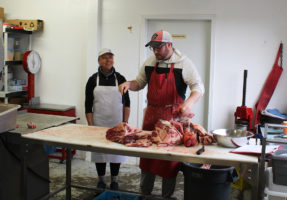
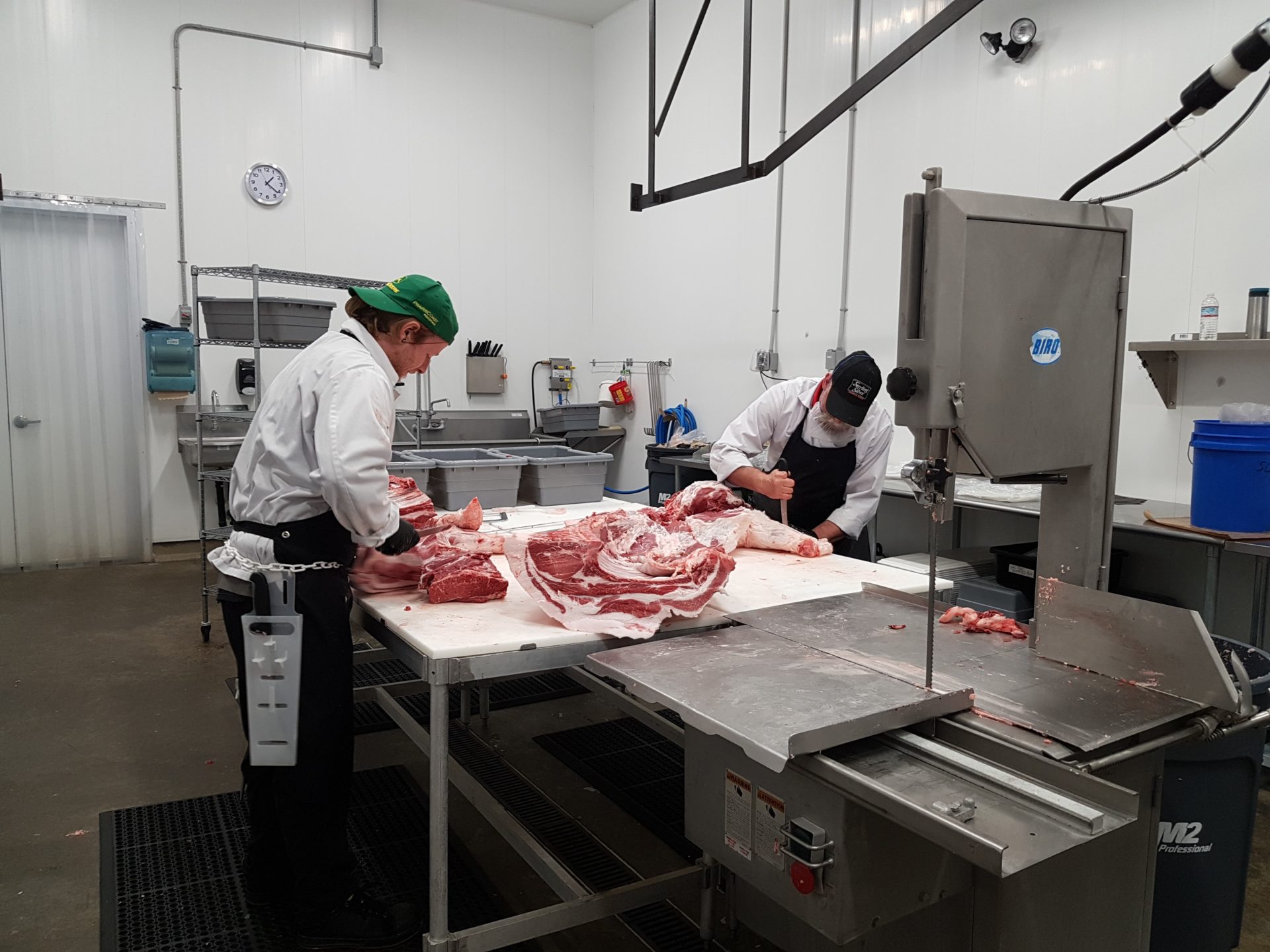
PROBLEM SOLVING Frustrated by how the lack of meat processing capacity in the province was preventing expansion of direct meat sales to their customers, the Devick family built a Class A abattoir on their ranch near Kamloops. [ANITA DEVICK PHOTO]

May 28, 2019 byTom Walker

by TOM WALKER

HEFFLEY CREEK – Taking the bull by the horns is something the Devick family has been doing since 1906. That’s when it first built a ranch and began running cattle in the Heffley-Louis Creek area north of Kamloops.

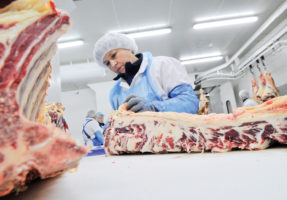
It often takes an independent business person to step up and fill a need in the market. While the lack of meat processing capacity has been a topic of concern in BC for a number of years, the Devick brothers and five of their sons have quietly gone ahead and built a Class A abattoir at their ranch.

“We have been doing beef sales for the last 15 to 20 years,” says Paul Devick, who gave a presentation on building a Class A abattoir at the annual general meeting of the BC Association of Abattoirs in April. “We run about 850 cow-calf pairs a year and we also have a feedlot and have been fattening our own cattle.”

A family meeting in February 2017 calved the idea for the slaughterhouse.

“The meat business has been pretty good for us selling to neighbours and friends,” notes Devick. “With our own plant, we would have everything in-house from gate to plate, eliminate the middleman and improve our bottom line along the way. We decided to move forward with the abattoir.”

Although the family wasn’t experienced in abattoir construction, it contracted Dave Charchuck and Sandra Vanderbyl to guide them and talked a lot with veteran Kamloops butcher Ron Keeley.

The first step was to work with BC Ministry of Agriculture staff and develop strategies related to marketing, business development, risk management and labour management.

“This was a very helpful exercise to see if we should carry forward,” says Devick. “We spent a lot of time talking and considering the ups and downs, and it still looked positive.”

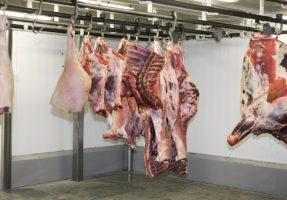
They determined that half the plant would be for their own cattle. It would need to process about 12 to 15 animals daily for an annual capacity of 1,500 to 1,600 animals. The coolers would be able to hold about 70 whole beef carcasses, or 140 sides.

“We made a floor plan,” says Devick. “We had a limit of 6,000 square feet and it took probably 10 different plans before we got the [processing] flows right.”

He says they also developed HACCP (Hazard Analysis and Critical Control Points) and standard operating procedures.

Deciding what type of building to construct was where the fun began, continues Devick.

“We looked at a stick-frame and we looked at concrete,” he recalls. “In the end we went with SIP [structural insulated panels].”

Permits and licences were required before a shovel could be put in the ground.

“This is a very important step to be taken care of first,” he emphasizes.

The licences included one for water extractions, a water treatment permit, zoning and building permits, an abattoir licence, a licence to construct a compost system for waste disposal, a sewage disposal permit and, of course, a business licence.

The family acted as their own general contractor and picked trades they could work alongside, which saved money.

“Challenging but worth it,” says Devick. “But check out your contractors. We had a range from very good to one guy who was smoking a joint on his lunch break.”

Ranch equipment was used to move earth and prep the site.

“Make sure you get a geotech survey for your site,” cautions Devick, who said the one he got flagged the need to remove truckloads of clay before construction began.

Other challenges included starting construction in September 2017 and having to work through the winter, something he doesn’t advise. A mix of old and new equipment means that not everything works with the same ease.

On the plus side, labour has not been an issue.

“We feel we are quite lucky with the Kamloops labour base; we have been able to find good help,” he says. “We have one worker who has completed the Thompson Rivers University meat-cutting program and we have another one coming from the program next month.”

Devick says the ranch is now able to manage animals all the way from breeding to the butcher’s block, making them better able to satisfy customers. This hasn’t stopped them from buying animals to meet demand, however.

“It is a challenge having animals available all year round and we do buy some in the summer months,” he says.

A 900-pound calf going into their feedlot takes about three months to reach a 1,200 to 1,300 lb. slaughter weight. The animals are usually spoken for when they enter the yard, part of the ranch’s marketing program.

After their first kill in August last year, they were right into the fall run.

“It’s been a big learning curve but I think it is working well,” Devick says. “For the future, we are planning to move towards more value-added when we get the smoker and the sausage kitchen up and running. We have also looked at the possibility of doing a pet food line to try to reduce our waste and improve our bottom line.”

Devick says one of the keys to the successful start was being able to talk to other plant operators in the province about how to make things work.

“It’s great to have the support of your business associates and this association. They sure helped us a lot,” he said, gratefully.
 

Related Posts

You may be interested in these posts from the same category.

New licences, new inspections

BC abattoir volume up 30% in 2020

Province reveals abattoir changes

SlaughterRight training launched by ag ministry

Rural recovery funds agriculture

Meat producers frustrated by consultations

Abattoir association calls for action

Closures underscore need for licensing reform

Rethinking the concept for mobile abattoirs

Industry mourns abattoir champion

Island farmers renew request for local abattoir

Meat inspection budget tightens

Previous Post: « Bill 15 could be delayed
Next Post: June boosts costs »

Copyright © 2026 Country Life in BC · All Rights Reserved