
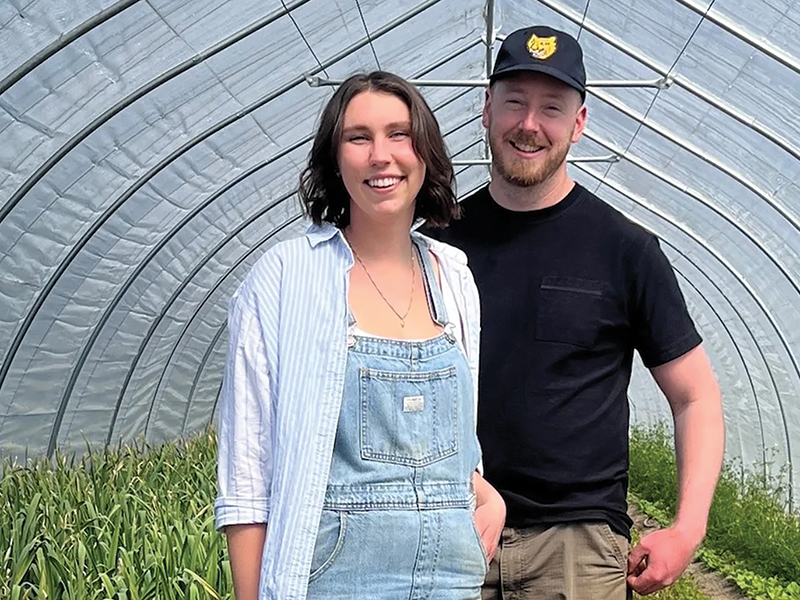
LADNER – Growth is on the agenda for Ladner’s Vive le Veg Farm, where owners TJ and Olivia McWilliam have a new baby and have nearly doubled the size of their market garden to two acres.
Since starting the farm in 2021 on a quarter acre leased from the Malenstyn family, the McWilliams have grown to two acres thanks to a loyal clientele among Vancouver restaurants. The venture is now becoming financially viable.
The couple don’t come from a farming background. TJ worked in the restaurant industry before leaving to become a farmer in 2021, while Olivia continues to work full-time as a project manager.
While enrolled in the UBC Farm practicum program, TJ reached out to the BC Land Matching Program operated by Young Agrarians and signed a five-year lease that allowed the fledgling operation to expand as needed.
“We experimented with salad, greens, tomatoes, turnips, radishes and more without a real plan. It was more about meeting the people whose land we were farming on and figuring out how we work together,” says TJ of their first growing season.
By carefully tracking input costs and sales the past three years, they’ve refined their sales sheet. Their top value crop in 2025 was salad mix, but the farm also produces a host of field and root vegetables, herbs and edible flowers.
They source potatoes from their neighbours, Fraserland Organics, and fruit from Parsons Market Farm in Cawston to round out their offerings.
“[Fraserland] doesn’t sell directly to restaurants, so we are another small sales channel for them, and we got connected with the fruit through making our own cider one year,” says TJ.
Restaurant sales were a natural follow-up to TJ’s previous career. He also made valuable connections working part-time at Zaklan Heritage Farm in Surrey during its final year of production.
“I did some deliveries in their last season so, with their permission, I dropped our business cards to those customers,” TJ explains.
When he began growing his own produce, he delivered samples.
“[The chefs] jumped on board and started ordering,” he says.
“The chef community is small and connected,” adds Olivia. “Once we had a few customers like The Acorn Restaurant, Published on Main, they really helped spread the word about us, connecting us with other chefs.”
An online sales platform called Tend helps manage orders and weekly deliveries, which become more frequent during peak season. The couple delivers clean, high-quality produce that makes chefs’ work easier.
All seed is started on the farm with a makeshift germination chamber fashioned from a crockpot in an old freezer. The farm’s rich clay soils are irrigated with city water, a simple setup for drip and low-pressure overhead irrigation.
This year, they will continue to grow their staff by hiring a second full-time person, in addition to retaining two part-time positions from 2025.
“A team has allowed Olivia and I to step back a bit, and it’s been nice having the energy and the different perspectives of the team. But it also requires figuring out and balancing personalities. Olivia’s led teams before, so she’s good at it,” says TJ.
The most consistent channels for finding employees have been the online platform GoodWork.ca, Young Agrarians and the UBC Farm alumni network. They’ve also employed people from the restaurant world who desire a better understanding of farming.
Grants through the BC student employment and federal youth employment programs have helped offset farm wages. Salaries start at $20-plus an hour, depending on experience and role.
TJ paid himself a $60,000 salary in 2024 and 2025.
“We’ve been steadily increasing our yearly sales, and better record-keeping has enabled us to see where we can grow and make adjustments,” says TJ.
They also credit the Malenstyns with helping them set up initial infrastructure, splitting the upfront costs to buy the farm’s first hoop house in their second year and allowing the couple to pay them back later. The support helped them avoid carrying significant debt in those first years.
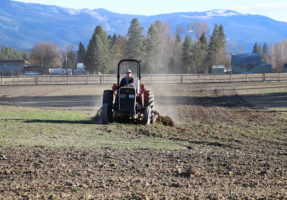
“Working with the landowners has been more collaborative. … They already had a big walk-in cooler, and they allow us to use their tractor since we don’t have one,” says TJ.
Incorporating the farm this year will help better manage future growth.
“Our accountant suggested it made sense if we wanted to leave money in the business for the next year’s start-up costs,” says TJ.
It’s also advantageous for asset purchases, like their new delivery van, an upgrade from using Modo and their personal car, which the farm has outgrown.
The process of renewing the initial lease on the property with an option for another five years is ongoing. The Malenstyns support the farm’s long-term presence, and both families desire sustainability.
Originally a dairy, the 29-acre property also grows hops for the family’s Barnside Brewing venture and is home to a small flock of sheep.
The Malenstyns initially explored the idea of vegetable production, but lacking time or expertise, co-owner Ken Malenstyn reached out to Young Agrarians.
“I wanted to be more than just a leaseholder,” he explains, adding that TJ and Olivia were the only people referred.
“It’s a reciprocal relationship,” he says. “They’ve used our buildings and tractor, and they’ve helped with our sheep. Growing up in agriculture, it’s cool to see how TJ’s former relationships helped him fast-track. We’re happy to be part of that. It’s more of an emotional investment for our family farm.”
The McWilliams say financial planning is crucial, while also considering things like water and space constraints, tips they’ve picked up from Kerry McCann at Laughing Crow Farm in Pemberton during a business mentorship provided by Young Agrarians.
Despite the success of their farm business, Olivia’s off-farm job was critical to making the farm a reality, especially at first.
“We’re still not at a place on the farm where we have health benefits, a nice thing with a new little one, and I enjoy my work,” says Olivia.
The McWilliams’ experience has given them advice for other would-be farmers.
Thankful for the mentorship they’ve received, they encourage others to work on a farm before launching their own business. It’s better to make mistakes on someone else’s operation and learn from them than have their own operation hinging on the results.
They also say it’s important to understand the unique constraints of a farm space in building a sustainable financial plan.
While there’s a goal of TJ drawing about $100,000 profit annually in the future, they’re cautious.
“If we grew another acre of vegetables, I could probably make that, but our expenses would go up. We’d have to hire more employees, get more equipment, put in new irrigation, so there are trade-offs. Since we just expanded to two acres from one in 2025, we’re probably happy with that for the next few years,” says TJ.


 Board finds overgrazing rules unenforceable, unmeasurable