• Menu
  • Skip to primary navigation
  • Skip to main content
  • Skip to primary sidebar

Country Life In BC Logo

The agricultural news source in British Columbia since 1915

  • Headlines
  • Calendar
  • Subscribe
  • Advertise
  • About
  • Archives
  • Contact
  • Search
  • Headlines
  • Calendar
  • Subscribe
  • Advertise
  • About
  • Archives
  • Contact
  • Search

Primary Sidebar

Originally published:

JULY 2021
Vol. 107 Issue 7

Subscribe Now!

Sign up for free weekly FARM NEWS UPDATES

Select list(s) to subscribe to


By submitting this form, you are consenting to receive marketing emails from: Country Life in BC. You can revoke your consent to receive emails at any time by using the SafeUnsubscribe® link, found at the bottom of every email. Emails are serviced by Constant Contact
Your information will not be
shared or sold ever

Stories In This Edition

BCAC shifts to advocacy

Farms keep tax status

Hot stuff

Too much red tape leaves farmers frustrated

Editorial O’Canada

Back 40: High land prices limit farming opportunities

Viewpoint: Agriculture should be more than seasonal work

Farmers struggle to get insurance coverage

New milk board chair

$12 million allocated to fight invasive species

Ag Briefs: Pitt Meadows mitigation proposal by CP Rail

Ag Briefs: Agassiz land exlclusion refused

Ag Briefs: BC Ag Expo resumes

Letters: No place for farmed salmon

Farmers say new policy statement devalues ag

Farm status elusive for regenerative agriculture

Maple Ridge farmers feel unsupported

Water, land issues remain a priority for BC ranchers

A moo-ving experience

Water licensing process needs streamlining

Canada ‘negligible risk’ for BSE

Grizzly bear encounters on the increase

Cherry crop coming on strong across BC

BC Tree Fruits relaunches field service

GHG emissions twice as high as estimates

Group EFPs protect sensitive ecological areas

Flower growers see sky-high demand

Tulips in bloom

Grant helps local project establish provincial targets

Programs add value to Kootenay agriculture

Growers hit hard by blueberry scorch virus

Research: Genetic research may help manage pig virus

Squaring off against the carrot rust fly

Farm Story: Bike-riding sightseers are hitting the road again

Written plans set the tone for farm families, workers

Woodshed Chronicles: Eunice plans a graduation to remember

Kettle Valley farmers get more time to grow

Jude’s Kitchen: Mid-summer barbecues make cooking easy


More Headlines

Follow us on Facebook

Comments Box SVG iconsUsed for the like, share, comment, and reaction icons

6 days ago

... See MoreSee Less

View Comments
  • Likes: 4
  • Shares: 0
  • Comments: 0

Comment on Facebook

6 days ago

On the last day of the BC Organic Conference, Thursday, Molly Thurston of Pearl Agricultural Consulting helped growers learn how to manage bugs such as codling moth, wireworm, and rootworm in organic growing systems. Her talk alongside Renee Prasad included hands-on activities in which participants checked out various traps and examined pests under microscopes. Be sure to look for more upcoming ag events on our online calendar at www.countrylifeinbc.com/calendar/

#BCAg
... See MoreSee Less

On the last day of the BC Organic Conference, Thursday, Molly Thurston of Pearl Agricultural Consulting helped growers learn how to manage bugs such as codling moth, wireworm, and rootworm in organic growing systems. Her talk alongside Renee Prasad included hands-on activities in which participants checked out various traps and examined pests under microscopes. Be sure to look for more upcoming ag events on our online calendar at www.countrylifeinbc.com/calendar/

#BCAg
View Comments
  • Likes: 15
  • Shares: 0
  • Comments: 0

Comment on Facebook

1 week ago

Well-known organic farmer and podcaster Jordan Marr gets interviewed by Country Life in BC’s own columnist and potato mavin Anna Helmer during the opening session of the BC Organic Conference at Harrison Hot Springs yesterday. Sessions run today (Wednesday) and Thursday and include organic and regenerative growing practices and expanding and advocating for the organic sector, all under the background of the newly launched Organic BC banner.

#BCAg
... See MoreSee Less

Well-known organic farmer and podcaster Jordan Marr gets interviewed by Country Life in BC’s own columnist and potato mavin Anna Helmer during the opening session of the BC Organic Conference at Harrison Hot Springs yesterday. Sessions run today (Wednesday) and Thursday and include organic and regenerative growing practices and expanding and advocating for the organic sector, all under the background of the newly launched Organic BC banner.

#BCAg
View Comments
  • Likes: 37
  • Shares: 2
  • Comments: 1

Comment on Facebook

Interested in finding out more about this

3 weeks ago

Today, we remember those who sacrificed their lives or their well-being for our freedom. Lest we forget. ... See MoreSee Less

Today, we remember those who sacrificed their lives or their well-being for our freedom. Lest we forget.
View Comments
  • Likes: 8
  • Shares: 0
  • Comments: 0

Comment on Facebook

1 month ago

FarmFolk CItyFolk is hosting its biennial BC Seed Gathering in Harrison Hot Springs November 27 and 28. Farmers, gardeners and seed advocates are invited to learn more about seed through topics like growing perennial vegetables for seed, advances in seed breeding for crop resilience, seed production as a whole and much more. David Catzel, BC Seed Security program manager with FF/CF will talk about how the Citizen Seed Trail program is helping advance seed development in BC. Expect newcomers, experts and seed-curious individuals to talk about how seed saving is a necessity for food security. ... See MoreSee Less

Link thumbnail

BC Seed Gathering - FarmFolk CityFolk

farmfolkcityfolk.ca

Save the date for our upcoming 2023 BC Seed Gathering happening this November 3rd and 4th at the Richmond Kwantlen Polytechnic University campus.
View Comments
  • Likes: 1
  • Shares: 0
  • Comments: 0

Comment on Facebook

Subscribe | Advertise

The agricultural news source in British Columbia since 1915
  • Email
  • Facebook

Water licensing process needs streamlining

Cattlemen provide six-point action plan to government

July 1, 2021 byTom Walker

KAMLOOPS – With a shocking lack of licences issued five years into BC’s groundwater licensing regime, the BC Cattlemen’s Association has sent the province a six-point action plan to forestall disaster next year.

The province says it’s not going to be giving non-domestic groundwater users any more time to apply for a groundwater licence and maintain their historical priority under the new first in time, first in right (FITFIR) groundwater management system.

This could result in thousands of existing users losing their historical priority and be treated as new users, possibly with a reduced allocation.

“The BC Cattlemen’s Association would like to see every rancher who wants a water licence be able to successfully obtain one,” BCCA president Renee Ardill writes in a May 31 letter to agriculture minister Lana Popham, natural resources minister Katrine Conroy, whose ministry oversees FrontCounter BC which processes the licence applications, and environment minister George Heyman.

The letter urges the province to simplify the application process and support producers who need it; extend the application deadline; prioritize applications from farmers and ranchers; and streamline the approval process, expediting applications for existing users.

BCCA general manager Kevin Boon says there have been few changes since the province introduced ranchers to the licensing process at their annual general meeting in Penticton in 2016.

Delegates sat through a two-hour presentation accompanied by some 80 pages of handouts.

“That 80-page handout on how to fill out an application says a lot,” he says.

There have been just over 4,000 applications since then and fewer than 1,300 licences granted.

While there have been some improvements in the process, they’re nowhere near what’s needed, says Boon. This is why the first requests on the action plan are for a simpler application and greater assistance to producers in filling them out.

“I want to be clear that it is not the fault of the FrontCounter employees,” says Boon. “But we would like someone from the Ministry of Agriculture who understands our needs to help producers with their application.”

Boon says the application requires far more detail than is necessary.

“BC Cattlemen’s has always supported the well licensing process. It’s a way for our members to secure their historic water rights, and for the province to better allocate water, but the government is being overzealous,” he says.

A rancher with two wells on two different pastures is required to calculate the details of how water from each well will be used.

“That’s impossible to predict one year to the next,” says Boon.

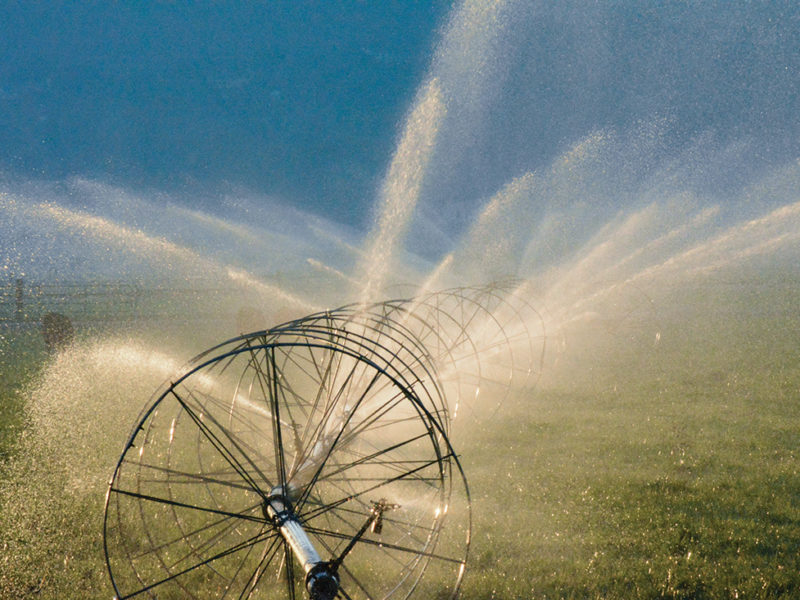
A rancher might rotate cows into a pasture for the early spring and summer and irrigate and mow for the rest of the year, but next year he might plow and reseed that pasture. The two activities require different volumes of water.

“These application requirements have the potential to really impact a rancher’s choice of management practices,” says Boon.

Boon says the applications should be as simple as “100 cows use 30 gallons of water a day,” giving the rancher a licence for 3,000 gallons a day.

“It doesn’t matter which one of those wells it comes out of, when they are both on your licence,” he says.

Hours online

Since the application process is entirely online, it can take hours for ranchers to navigate the details, especially with the speed of rural Internet. Their reality doesn’t always match the FrontCounter BC estimate that applications can be completed in less than 90 minutes.

“If a rancher can’t get their application completed after six hours, he is not going to be eager to sit down and try it again.” Boon points out.

BCCA would like to see the application deadline extended until the province has sorted out the livestock watering regulations and operators can provide an overview of their water needs.

BCCA would also like government to streamline the review and approval process to give priority to applications from existing users before approving new applications from non-farm users, such as bottling plants. Within these, food and livestock production should be top of the heap because they’re an essential services.

There is also a concern that applications for a seasonal use, such as a dugout built to capture run off water, will be subjected to the same long waiting time that groundwater licences have suffered.

“The rancher with that dugout may not get approval for four years and that severely restricts his management plans,” notes BCCA assistant general manager Elaine Stovin.

Boon says that ranchers have lost faith  after experiencing this difficult start up and trust drops even further when ranchers know the low number of licences that have actually issued. There is no communication and applicants have no idea if their paperwork has even been received for processing.

“When we phone to ask, we are told if our cheque has been cashed that means they’ve received the application,” says Boon.


Related Posts

You may be interested in these posts from the same category.

Breathing new life into historic ranches

Province lacks reconciliation roadmap: ranchers

Cowichan title decision creates uncertainty

Crown land conflicts reveal policy gaps

Beef herd drops

Feed available but stocks low

BC Cherry holds AGM

Land Act changes deferred

Land Act firestorm

Dam violations face fines

Rangeland forage allocation studied

Communication critical to solve water issues

Previous Post: « Farmers struggle to get insurance coverage Insurance
Next Post: Farmers say new policy statement devalues ag »

Copyright © 2025 Country Life in BC · All Rights Reserved