• Menu
  • Skip to primary navigation
  • Skip to main content
  • Skip to primary sidebar

Country Life In BC Logo

The agricultural news source in British Columbia since 1915

  • Headlines
  • Calendar
  • Subscribe
  • Advertise
  • About
  • Archives
  • Contact
  • Search
  • Headlines
  • Calendar
  • Subscribe
  • Advertise
  • About
  • Archives
  • Contact
  • Search

Primary Sidebar

Current Issue:

MARCH 2026
Vol. 112 Issue 3

Subscribe Now!

Sign up for free weekly FARM NEWS UPDATES

Loading form…

Your information will not be
shared or sold ever

Follow us on Facebook

Comments Box SVG iconsUsed for the like, share, comment, and reaction icons

2 days ago

Kootenay-Boundary rancher Randy Reay is digging a new well after two natural water sources dried up on his Crown tenures. A new Living Lakes Canada assessment found 15% of mapped aquifers in the region are high-priority for monitoring, yet 80% of those go unmonitored. With over 48% of BC's provincial observation wells reporting below-normal groundwater levels, ranchers and researchers are sounding the alarm on water security. The story is in our March edition, and we've posted it to our website thi#BCAgk.

#BCAg
... See MoreSee Less

Link thumbnail

Water woes: groundwater under pressure across BC

www.countrylifeinbc.com

JAFFRAY – As a young boy growing up in the Kootenay-Boundary region, Randy Reay never expected to run out of water. But this year, in mid-February, his fields are bare. There is no snow halfway up t...
View Comments
  • Likes: 5
  • Shares: 3
  • Comments: 0

Comment on Facebook

5 days ago

BC farmers are bracing for prolonged higher input costs as war in the Middle East drives up fuel and fertilizer prices. Nitrogen fertilizer costs were already climbing before the Iran conflict began, with prices still roughly 60% above pre-pandemic levels. Farm Credit Canada warns that unlike 2022, strong commodity prices may not offset rising costs this time. Local suppliers expect supply challenges and further price increases ahead.

#BCAg
... See MoreSee Less

Link thumbnail

Fertilizer prices on the rise

www.countrylifeinbc.com

War in the Middle East has delivered a generational shock to energy prices, meaning BC farmers can expect a prolonged period of higher costs not just for fuel but also for fertilizer.
View Comments
  • Likes: 2
  • Shares: 1
  • Comments: 0

Comment on Facebook

5 days ago

... See MoreSee Less

View Comments
  • Likes: 1
  • Shares: 0
  • Comments: 0

Comment on Facebook

7 days ago

Cameron Stockdale is the new executive director of provincial farm safety organization AgSafeBC. Find out more in this week's Farm News Update from Country Life in B#BCAg#BCAg ... See MoreSee Less

Link thumbnail

New leadership at AgSafe BC

www.countrylifeinbc.com

Cameron Stockdale is the new executive director of provincial farm safety organization AgSafeBC, succeeding Wendy Bennett. Bennett left AgSafeBC in September 2025, following 12 years with the…
View Comments
  • Likes: 5
  • Shares: 1
  • Comments: 0

Comment on Facebook

1 week ago

A public open house to gather feedback on the Koksilah watershed sustainability plan takes place March 11 at The Hub in Cowichan Station. Originally scheduled for last November, the province deferred it to the spring. An online survey launched last September also remains open until March 15 as the province moves forward on a government-to-government basis with the Cowichan Tribes. In May 2023, the province and the Cowichan Tribes entered an agreement to develop the plan, which will define options related to water allocation, watershed restoration priorities and land use recommendations. Recommended actions may include new regulations to address water use, protect environmental flows, and guide sustainable land and water management. Separate meetings with farmers and other industry groups have been held as part of the consultations.

#BCAg
... See MoreSee Less

A public open house to gather feedback on the Koksilah watershed sustainability plan takes place March 11 at The Hub in Cowichan Station. Originally scheduled for last November, the province deferred it to the spring. An online survey launched last September also remains open until March 15 as the province moves forward on a government-to-government basis with the Cowichan Tribes. In May 2023, the province and the Cowichan Tribes entered an agreement to develop the plan, which will define options related to water allocation, watershed restoration priorities and land use recommendations. Recommended actions may include new regulations to address water use, protect environmental flows, and guide sustainable land and water management. Separate meetings with farmers and other industry groups have been held as part of the consultations.

#BCAg
View Comments
  • Likes: 0
  • Shares: 0
  • Comments: 0

Comment on Facebook

Subscribe | Advertise

The agricultural news source in British Columbia since 1915
  • Email
  • Facebook

ALC rejects Cowichan dike removal

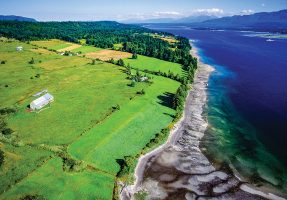
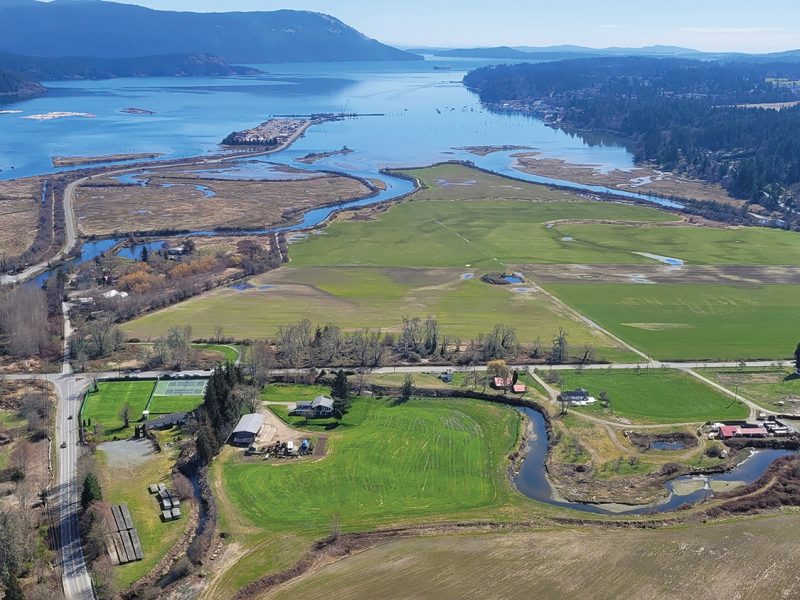
The Agricultural Land Commission has rejected an application to remove a portion of a dike to facilitate restoration of the Cowichan Estuary on Vancouver Island. File photo

September 10, 2025 byPeter Mitham

BC’s Agricultural Land Commission has rejected an application by Ducks Unlimited and the Nature Trust of BC to remove 450 metres of diking within the Agricultural Land Reserve to facilitate restoration of the Cowichan Estuary on Vancouver Island.

The unanimous decision, dated August 11, was made public August 26.

“The Properties, in their current state, are capable of agricultural use as evidenced by their BCLI [BC Land Inventory] ratings, the previous agricultural production by local dairy farmers, and the current use of a portion of the Properties by the Applicants and their partners for an Indigenous plant nursery,” the decision states.

The decision affects one segment of 1,700 metres of dike abutting the Dinsdale farm, a property of about 173 acres acquired by the Nature Trust of BC and Ducks Unlimited Canada in 1990. Approximately 100 acres were farmed until two years ago, when leases to local farmers were terminated in advance of estuary restoration.

While removal of the entire dike will result in the inundation and salinization of the land, removal of the ALR-portion of the dike is a particular concern.

“The Properties may be subject to increased inundation due to tides and other flood events, even if just the non-ALR portion of Dinsdale Dike were removed. However, that impact would be less than if the ALR portion of Dinsdale Dike were also removed,” the ALC states. “The Executive Committee finds that inundation and salinization of the soil on the Properties narrow the range of crops that can be grown on the Properties and impacts the integrity of the ALR.”

This being the case, Ducks Unlimited and the Nature Trust have been put on notice that their resolve to remove 1,250 metres of diking outside the ALR could prompt a response from ALC compliance and enforcement staff.

“The ALC did the right decision,” says Jack McLeod, president of the Land Keepers Leadership Society in Cowichan Bay, which has taken the lead in advocating for preserving the land for agriculture. “Vancouver Island has about 1% farmland; the more farmland you take away, the less we have to feed ourselves.”

The fact the decision was unanimous also sends a strong message, he adds.

“This decision reflects the whole farming community throughout British Columbia,” he says.

However, the province’s agriculture minister isn’t onside.

“While I understand the concerns of removing the dike on ALR land, this project is extremely important for fish and wildlife conservation and supporting the local Indigenous food system,” Lana Popham says in a statement to Country Life in BC.

The decision leaves the next move up to the Nature Trust of BC and Ducks Unlimited, which Popham says will need to decide how they wish to proceed.

Related Posts

You may be interested in these posts from the same category.

Reclassification sparks farm definition debate

BC Tree Fruits relaunch

Islands Trust sidelines ag in policy statement

Council calls for review of farm classification rules

Indigenous agriculture faces regulatory reality

Regulatory hurdles threaten farm income solutions

Landowners push back against rail trail plans

BC boosts agriculture spending

Task force members announced

Ag leaders honoured at gala

ALC members appointed

Popham back as ag minister

Previous Post: « BCAITC appoints new executive director
Next Post: Southern Interior irrigators shut down »

Copyright © 2026 Country Life in BC · All Rights Reserved