• Menu
  • Skip to primary navigation
  • Skip to main content
  • Skip to primary sidebar

Country Life In BC Logo

The agricultural news source in British Columbia since 1915

  • Headlines
  • Calendar
  • Subscribe
  • Advertise
  • About
  • Archives
  • Contact
  • Search
  • Headlines
  • Calendar
  • Subscribe
  • Advertise
  • About
  • Archives
  • Contact
  • Search

Primary Sidebar

Originally published:

SEPTEMBER 2020
Vol. 106 Issue 9

Subscribe Now!

Sign up for free weekly FARM NEWS UPDATES

Select list(s) to subscribe to


By submitting this form, you are consenting to receive marketing emails from: Country Life in BC. You can revoke your consent to receive emails at any time by using the SafeUnsubscribe® link, found at the bottom of every email. Emails are serviced by Constant Contact
Your information will not be
shared or sold ever

Stories In This Edition

Under one roof

Creating community in abundance

Farms to retain tax status

Armyworm keeps its distance this summer

Smile with your eyes

Fall back

Back 40: Finding what we need in a COVID-19 world

Viewpoint: Exports play a vital role in BC’s farm economy

Field days feeling the pinch of social distancing rules

Sidebar: Pacific Agriculture Show goes virtual

AgSafe makes changes to board structure

Makin’ hay

Metro Vancouver targets carbon-neutral future

Changes to land commission kick in this fall

Creston initiative keeps workers, town safe

Ag Briefs: Dairy industry selects new entrants

Ag Briefs: Top vet appointed

Ag Briefs: BC youth offer perspectives

Sheep producers told to bear with wildlife

Disease has sheep producers on defensive

Pandemic creates virtual season for 4-H clubs

Delta development puts agrihoods to the test

Three-tier system being floated for livestock watering

Short-term roller coaster for beef market

Beef prices up

Global outlook is bright for beef producers

Council supports efforts to improve water quality

New orchardist takes on key ministry role

Unprecedented rise in machine harvesting

Soft landings mean better blueberries

Province readers sprayer program for delivery

Wheat growers tap into heirloom grains

High-flying pans grounded by pandemic protocols

Farm Story: The right machine makes harvesting potatoes a breeze

Organic soil requirements need science, guesswork

Relay cropping checks all the boxes

Flower growers ponder COVID-19 impacts

Best practices must guide COVID-19 hiring

Woodshed: No place like home for Deborah and the dogs

Former caregiver brings donkey therapy to Island

No one leaves Abundance without a zucchini

Building community, building a future

Jude’s Kitchen: Harvest colours

More Headlines

Follow us on Facebook

Comments Box SVG iconsUsed for the like, share, comment, and reaction icons

6 days ago

... See MoreSee Less

View Comments
  • Likes: 4
  • Shares: 0
  • Comments: 0

Comment on Facebook

6 days ago

On the last day of the BC Organic Conference, Thursday, Molly Thurston of Pearl Agricultural Consulting helped growers learn how to manage bugs such as codling moth, wireworm, and rootworm in organic growing systems. Her talk alongside Renee Prasad included hands-on activities in which participants checked out various traps and examined pests under microscopes. Be sure to look for more upcoming ag events on our online calendar at www.countrylifeinbc.com/calendar/

#BCAg
... See MoreSee Less

On the last day of the BC Organic Conference, Thursday, Molly Thurston of Pearl Agricultural Consulting helped growers learn how to manage bugs such as codling moth, wireworm, and rootworm in organic growing systems. Her talk alongside Renee Prasad included hands-on activities in which participants checked out various traps and examined pests under microscopes. Be sure to look for more upcoming ag events on our online calendar at www.countrylifeinbc.com/calendar/

#BCAg
View Comments
  • Likes: 15
  • Shares: 0
  • Comments: 0

Comment on Facebook

1 week ago

Well-known organic farmer and podcaster Jordan Marr gets interviewed by Country Life in BC’s own columnist and potato mavin Anna Helmer during the opening session of the BC Organic Conference at Harrison Hot Springs yesterday. Sessions run today (Wednesday) and Thursday and include organic and regenerative growing practices and expanding and advocating for the organic sector, all under the background of the newly launched Organic BC banner.

#BCAg
... See MoreSee Less

Well-known organic farmer and podcaster Jordan Marr gets interviewed by Country Life in BC’s own columnist and potato mavin Anna Helmer during the opening session of the BC Organic Conference at Harrison Hot Springs yesterday. Sessions run today (Wednesday) and Thursday and include organic and regenerative growing practices and expanding and advocating for the organic sector, all under the background of the newly launched Organic BC banner.

#BCAg
View Comments
  • Likes: 37
  • Shares: 2
  • Comments: 1

Comment on Facebook

Interested in finding out more about this

3 weeks ago

Today, we remember those who sacrificed their lives or their well-being for our freedom. Lest we forget. ... See MoreSee Less

Today, we remember those who sacrificed their lives or their well-being for our freedom. Lest we forget.
View Comments
  • Likes: 8
  • Shares: 0
  • Comments: 0

Comment on Facebook

1 month ago

FarmFolk CItyFolk is hosting its biennial BC Seed Gathering in Harrison Hot Springs November 27 and 28. Farmers, gardeners and seed advocates are invited to learn more about seed through topics like growing perennial vegetables for seed, advances in seed breeding for crop resilience, seed production as a whole and much more. David Catzel, BC Seed Security program manager with FF/CF will talk about how the Citizen Seed Trail program is helping advance seed development in BC. Expect newcomers, experts and seed-curious individuals to talk about how seed saving is a necessity for food security. ... See MoreSee Less

Link thumbnail

BC Seed Gathering - FarmFolk CityFolk

farmfolkcityfolk.ca

Save the date for our upcoming 2023 BC Seed Gathering happening this November 3rd and 4th at the Richmond Kwantlen Polytechnic University campus.
View Comments
  • Likes: 1
  • Shares: 0
  • Comments: 0

Comment on Facebook

Subscribe | Advertise

The agricultural news source in British Columbia since 1915
  • Email
  • Facebook

Changes to land commission kick in this fall

Regional panels will be disbanded

September 1, 2020 byPeter Mitham

BURNABY – Changes to how the Agricultural Land Commission does business at the end of this month are raising questions about what the future holds.

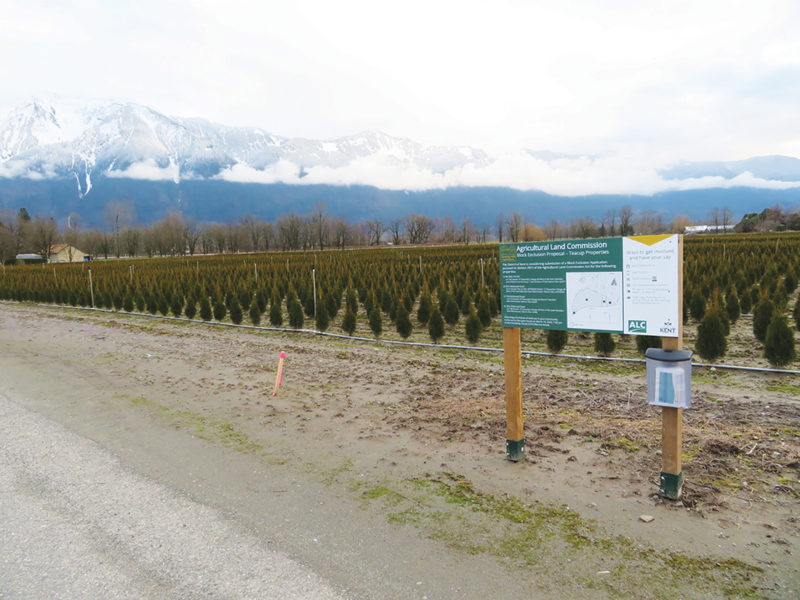
This summer has seen at least two municipalities move forward with exclusion applications in advance of new rules that take effect September 30. In the six weeks ended August 19, the ALC received four exclusion applications versus three in the same period a year earlier. These included bids by Kelowna to exclude 40 acres for a transit centre and the District of Kent’s request for 43 acres designated for residential development.

The increase in applications may not be dramatic, but both come ahead of changes that make local and First Nation governments the sole entities able to seek exclusions from the ALR.

The rules also require municipalities to hold public hearings prior to seeking exclusions, something not currently required.

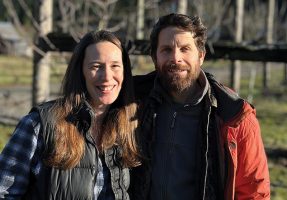
This concerns Jim Grieshaber-Otto of Cedar Isle Farm in Agassiz, who feels the District of Kent’s public engagement process was not in the spirit of the new regulation. Public feedback was being sought when the COVID-19 pandemic hit. Approximately 55% of district residents opposed the district’s plans but it voted in July to pursue the block exclusion without a public hearing after the initial information session.

“The district seems to have rushed to submit its application before the new, more restrictive rules apply,” Grieshaber-Otto contends in a submission to the ALC.

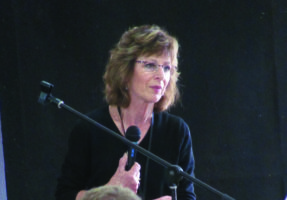
ALC CEO Kim Grout says there has been no rush to file applications in advance of the rules changing, either from municipalities or from individual landowners.

While the exclusion applications filed this summer make up 10% of the 38 applications the ALC received in the period, total applications in the period were down from 59 a year ago.

“It is possible we will see an upswing in applications but it is not showing yet in the data,” Grout says.

Centralized

Bill 15 also did away with the system of regional panels, centralizing decision-making. While regional representation is being maintained, new regulations aim to make decision-making faster and more efficient. All existing commissioners remained in place under the new structure, announced March 12. However, the chair of the ALC will now have greater input on government’s appointment of new commissioners. This has many observers anxiously watching what happens when the terms of 11 land commissioners expire in October.

There are 15 land commissioners besides the chair, meaning the next round of appointments will define the character of the commission as it adjusts to governance changes made under Bill 15.

District A Farmers Institute questions whether the new process is sufficiently free of political interference, however. It notes that the province’s agriculture minister has the final say over appointments, even though the ALC operates independently of government.

While the lieutenant governor in council must appoint the chair, the Agricultural Land Commission Act specifies that “the minister must appoint the other members after consulting with the chair.”

“[How] does not increase, rather than decrease, political interference (an issue the minister has stated she is concerned about)?” asks Janet Thony, president of District A Farmers Institute.

According to the ALC, all candidates for appointment to the commission must present themselves through the Crown Agency and Board Resourcing Office.

“The way things have been working since the legislation changed is CABRO sends the ALC any resumes/CVs they receive that appear to fit with the knowledge requirements in the legislation, and the chair of the ALC (and/or commissioners the chair appoints) interviews candidates and based on those interviews makes recommendations back to CABRO,” explains Grout, noting that CABRO then liaises with the province’s agriculture minister, who makes the final decision.
 

Related Posts

You may be interested in these posts from the same category.

Islands Trust sidelines ag in policy statement

ALC rejects Cowichan dike removal

Council calls for review of farm classification rules

Regulatory hurdles threaten farm income solutions

Landowners push back against rail trail plans

BC boosts agriculture spending

ALC members appointed

Islands Trust turns 50

Illegal dumping surges on Fraser Valley farmland

Premier boosts fill enforcement

Kelowna fallow farmland returns

ALR policy review shows room for improvement

Previous Post: « Sheep producers told to bear with wildlife
Next Post: Field days feeling the pinch of social distancing rules »

Copyright © 2025 Country Life in BC · All Rights Reserved