• Menu
  • Skip to primary navigation
  • Skip to main content
  • Skip to primary sidebar

Country Life In BC Logo

The agricultural news source in British Columbia since 1915

  • Headlines
  • Calendar
  • Subscribe
  • Advertise
  • About
  • Archives
  • Contact
  • Search
  • Headlines
  • Calendar
  • Subscribe
  • Advertise
  • About
  • Archives
  • Contact
  • Search

Primary Sidebar

Originally published:

April 2017
Vol. 103 Issue 4

Subscribe Now!

Sign up for free weekly FARM NEWS UPDATES

Select list(s) to subscribe to


By submitting this form, you are consenting to receive marketing emails from: Country Life in BC. You can revoke your consent to receive emails at any time by using the SafeUnsubscribe® link, found at the bottom of every email. Emails are serviced by Constant Contact
Your information will not be
shared or sold ever

Stories In This Edition

Study puts FV flooding costs at $1 billion

Provincial budget disappoints

Clock ticking for ogranic growers to get certified

Editorial: Po-tay-to, po-tah-to

Back Forty: It’s our responsibility to set the record straight

Public trust needs to be built, not lost

Saputo seeks damages over tainted milk

Letters: Water, not wells

Monster home debate ramps up

Province kicks in funding for acquifer troubles

Chicken growers unable to keep up with demand

Hatching egg producers urged to foster relationships

Egg producer face shortened timeline on cage-free birds

BC agriculture investment set to drop

Birds of a feather

Fruit wineries unite to form new association

Tough times for turkey growers

Thanks a million

Ag Briefs: Marketing board parts compnay with CEO

Bridge wins land commission support

What’s at stake

Cranberry prices bottoming out

Blossoming markets face growing pains

Sidebar: Tips for market success

Honey producers talk trade, farm status

Strawberry growers debate promotions strategy

Sidebar: Research priorities

Good prices may face market headwinds

Respectable start to bull sales

Sunshine Coast fights for brewers to locate on farmland

AI training hits the road

Move to protect wild sheep will affect producers

Farm folds

Strengthening our relations with land, food, people

Fast growing broccoli skips the cold phase

What’s the problem with a few deer

Worm counts, made easy

Cherry growers look for export efficiencies

Rising from the ashes

Small and large dairies showcase modern systems

Carrots to cattle on menu at Smither event

Sunshine Coast farm goes full boar with heritage breeds

4-H: New year for 4-H members underway

Wannabe: Don’t ever give up

Woodshed: Henderson has troubles passing the buck

Jude’s Kitchen: Graze green and light; it’s Spring!

More Headlines

Follow us on Facebook

Comments Box SVG iconsUsed for the like, share, comment, and reaction icons

6 days ago

... See MoreSee Less

View Comments
  • Likes: 4
  • Shares: 0
  • Comments: 0

Comment on Facebook

7 days ago

On the last day of the BC Organic Conference, Thursday, Molly Thurston of Pearl Agricultural Consulting helped growers learn how to manage bugs such as codling moth, wireworm, and rootworm in organic growing systems. Her talk alongside Renee Prasad included hands-on activities in which participants checked out various traps and examined pests under microscopes. Be sure to look for more upcoming ag events on our online calendar at www.countrylifeinbc.com/calendar/

#BCAg
... See MoreSee Less

On the last day of the BC Organic Conference, Thursday, Molly Thurston of Pearl Agricultural Consulting helped growers learn how to manage bugs such as codling moth, wireworm, and rootworm in organic growing systems. Her talk alongside Renee Prasad included hands-on activities in which participants checked out various traps and examined pests under microscopes. Be sure to look for more upcoming ag events on our online calendar at www.countrylifeinbc.com/calendar/

#BCAg
View Comments
  • Likes: 15
  • Shares: 0
  • Comments: 0

Comment on Facebook

1 week ago

Well-known organic farmer and podcaster Jordan Marr gets interviewed by Country Life in BC’s own columnist and potato mavin Anna Helmer during the opening session of the BC Organic Conference at Harrison Hot Springs yesterday. Sessions run today (Wednesday) and Thursday and include organic and regenerative growing practices and expanding and advocating for the organic sector, all under the background of the newly launched Organic BC banner.

#BCAg
... See MoreSee Less

Well-known organic farmer and podcaster Jordan Marr gets interviewed by Country Life in BC’s own columnist and potato mavin Anna Helmer during the opening session of the BC Organic Conference at Harrison Hot Springs yesterday. Sessions run today (Wednesday) and Thursday and include organic and regenerative growing practices and expanding and advocating for the organic sector, all under the background of the newly launched Organic BC banner.

#BCAg
View Comments
  • Likes: 37
  • Shares: 2
  • Comments: 1

Comment on Facebook

Interested in finding out more about this

3 weeks ago

Today, we remember those who sacrificed their lives or their well-being for our freedom. Lest we forget. ... See MoreSee Less

Today, we remember those who sacrificed their lives or their well-being for our freedom. Lest we forget.
View Comments
  • Likes: 8
  • Shares: 0
  • Comments: 0

Comment on Facebook

1 month ago

FarmFolk CItyFolk is hosting its biennial BC Seed Gathering in Harrison Hot Springs November 27 and 28. Farmers, gardeners and seed advocates are invited to learn more about seed through topics like growing perennial vegetables for seed, advances in seed breeding for crop resilience, seed production as a whole and much more. David Catzel, BC Seed Security program manager with FF/CF will talk about how the Citizen Seed Trail program is helping advance seed development in BC. Expect newcomers, experts and seed-curious individuals to talk about how seed saving is a necessity for food security. ... See MoreSee Less

Link thumbnail

BC Seed Gathering - FarmFolk CityFolk

farmfolkcityfolk.ca

Save the date for our upcoming 2023 BC Seed Gathering happening this November 3rd and 4th at the Richmond Kwantlen Polytechnic University campus.
View Comments
  • Likes: 1
  • Shares: 0
  • Comments: 0

Comment on Facebook

Subscribe | Advertise

The agricultural news source in British Columbia since 1915
  • Email
  • Facebook

Clock ticking for organic certification

April 1, 2017 byTamara Leigh

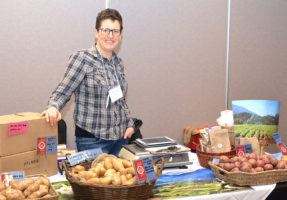
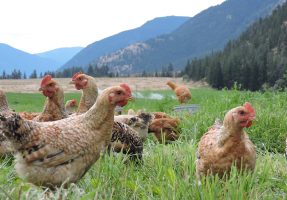
NANAIMO – There are few events as diverse as the Certified Organic Associations of BC (COABC) conference each year. Large and small-scale farmers spanning the spectrum of different crops, livestock, regions and experience, they are connected by a commitment to organic production systems. With the theme of ‘Relationships in Transition: Land, Livestock, Waterways and Community,’ this year’s conference in Nanaimo, February 24-26, covered topics ranging from perspectives on indigenous food systems to succession planning, traceability and pasturing chickens.

One of the most significant transitions discussed at the conference was the province’s new mandatory organic standard, which comes into force in September 2018. The BC Ministry of Agriculture is supposed to be leading outreach to industry about the regulation while COABC is focusing on providing the tools and information that producers need to make the transition.

“Our biggest priority needs to be on communication with all parties impacted by this change, and all parties involved,” says COABC president Carmen Wakeling. “We need to support producers interested in transitioning to become certified organic. Those who are not interested need to understand that they will no longer be able to use the word organic.”

The Food and Agricultural Products Classification Act was introduced in February 2016 and passed in December. The new regulations seek to increase clarity for consumers after seven years of confusion around the term organic. The confusion was created by a loophole that allowed food to be sold as organic within BC without having to be certified under a provincial or national certification program.

BC’s organic industry has pushed for clarification and the new regulations have been welcomed by COABC. Under the new regulations, uncertified producers marketing food as “organic” will face the possibility of penalties, including a $350 fine. The regulations come into effect in September 2018, allowing time for interested growers to make the transition.

COABC is encouraging their members to mentor growers interested in getting certified. COABC has also been developing the Organic Online System, an online database that will help new entrants achieve certified organic status. The tool is expected to save farmers time by providing a more efficient and streamlined process and will also be used as a source for gathering comprehensive statistics on BC’s organic sector.

While the online tool is being developed, COABC is working closely with the certifying bodies to make sure they have what they need to manage increased demand leading up to the September 2018 deadline.

“We want them to be able to succeed in the onslaught of certification applications we’re expecting. They need to have resources and knowledge to be able to manage that,” says Wakeling. “We don’t have a lot of time before the regulations come into effect and it can take one to three years to get certified. Producers need to consider decisions sooner than later. If they leave it to the last minute, they might get stuck without enough time to make the transition.”

Growers interested in transitioning to organic can find resources on the COABC website [www.coabc.ca].

Public trust

One of the other transitions that was not on the program but still came up at the conference was the issue of public trust. The COABC board has decided not to pay the BC Agriculture Council’s special member levy for a public trust campaign.

“One of the main reasons we have decided against it as organic producers is that we have built our organic principles around transparency and communication with consumers and feel we don’t need to invest further in it alongside a group with such diversity,” says Wakeling. “We always have the guiding principles of organics behind us, and that’s what we’ll stay true to.”

Despite COABC’s decision not to support the initiative, Wakeling stills sees value in the work, albeit from a slightly different point of view.

“Public trust is a good thing to pursue. It’s very much about consumer confidence with food, and it’s important to work continuously on improvements and transparency in our food system,” she says. “I accept that people in the sector want to improve, and I hope that’s what this work will bring – long-term improvement to the environmental practices and social practices in agriculture.
Related Posts

You may be interested in these posts from the same category.

RegenBC conference emphasizes context

Building soil structure with organic compost

Greenhouse sets example for others to follow

Passion and schooling pay off for young grower

BC organic growers flourish

Top grape grower recognized

Organic growers discuss challenges

New executive director for COABC appointed

COABC seeks new ED

Organics

Study compares organic, conventional diets

Farmers Market Organic

Organic growers prepare for the mainstream

Lillooet ranch goes green

Previous Post: « Mother Nature packs a wallop
Next Post: OP ED: When producers and special interest groups collide Sheep»

Copyright © 2025 Country Life in BC · All Rights Reserved