
RICHMOND – A landmark Aboriginal title ruling has some in BC’s agriculture sector worried about the future of farming, ranching and even private property itself.
In early August, the BC Supreme Court released its decision in Cowichan Tribes v. Canada after 513 days of trial. Justice Barbara Young found the Cowichan Nation has Aboriginal title over more than 700 acres of land along the south arm of the Fraser River – including land owned by the Crown and the City of Richmond, as well as privately held acreages, including farms, pricey mansions and a golf course.
BC Cattlemen’s Association general manager Kevin Boon calls this ruling “very unique and very precedent-setting” because it appears to have applied Aboriginal title to fee simple land.
The ruling says that Canada’s and Richmond’s fee-simple titles in the area are “defective and invalid.” While the Cowichan did not seek this same declaration for private owners, the court did find that Crown grants of
fee-simple land to private owners did not extinguish Aboriginal title.
“It’s created an air of uncertainty … not just for ranching, but for any business in the province that has interests in (or) investment in, a fee-simple type operation. It casts doubt for doing things like taking out a farm loan or a business loan,” Boon says.
Although the Cowichan Tribes v. Canada decision applies to one area of Richmond, Boon warns that similar decisions could eventually affect most of BC.
“While it’s related to a specific area right now, it will set precedents for all of the titles and the acts and the grants that have been done throughout history, and the validity of them,” he explains.
Boon says this ruling will create a climate of uncertainty that will not be limited to existing landowners.
“There’s those of us that already own – and that includes right from somebody that owns an apartment or a house, to someone that owns a parking lot, to someone that owns 10,000 acres of land. It’s all up for question. Then there’s the incentive for someone to come and invest in British Columbia,” he says.
BC is appealing the decision, with Attorney General Niki Sharma releasing a statement on August 11 saying the ruling “could have significant unintended consequences for fee-simple private property rights in BC that must be reconsidered by a higher court.”
Tsawwassen First Nation (TFN) and the Musqueam Indian Band are also appealing the ruling, saying it infringes on their own traditional territories. In a September 5 press release, TFN says it is already witnessing consequences of the ruling.
“The very next day, the Department of Fisheries and Oceans allowed Cowichan Tribes to fish during the height of the sockeye run, with what seems to be very little forethought about best management of the salmon fishery,” TFN stated.
Boon points out that even if the Cowichan decision is eventually overruled by a higher court, the process of doing so could take years.
“This has really cast a dark cloud right now over British Columbia,” he says.
Delta South MLA Ian Paton, agriculture critic for the Conservative Party of BC, supports the province’s appeal of the court ruling.
“We have to get to a point of certainty … so that if you’re a private property owner, if you’re a farmer or a rancher, do I continue making investments?” Paton says.
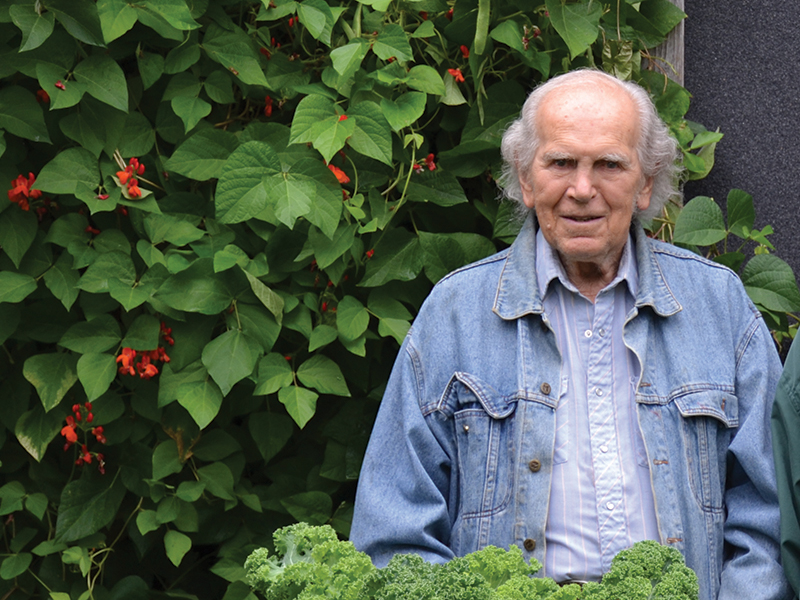
Former Richmond councillor Harold Steves, whose family has farmed in Richmond since 1877, worries that the Cowichan decision could result in the loss of good farmland.
Steves served on a committee during negotiations for the TFN treaty, which came into effect in 2009. The treaty was negotiated by the federal and provincial governments and Tsawwassen First Nation, and included a land transfer to Tsawwassen. Against Steves’ objections, the transfer included farmland within the Agricultural Land Reserve.
“Through the land claims, they gave it to Tsawwassen First Nation – with the proviso that part of it was owned for industry, which could be used for port expansion,” he explains.
If the recognition of Cowichan title leads to a treaty negotiation down the road, Steves is adamant that scarce Richmond farmland, which has “some of the best soils in the world,” be left off the table and not used as a bargaining chip.
“The Cowichan have got their own village on Vancouver Island; they don’t really need land in Richmond. So, it would be better to give them financial compensation rather than give them land,” says Steves.
Boon says the problems posed by the Cowichan ruling are emblematic of the BC government’s “reconciliation” agenda, which he argues is “segregating us” rather than “bringing people together.”
Boon points to the Declaration on the Rights of Indigenous Peoples Act (DRIPA), introduced by the BC NDP and unanimously passed by MLAs in 2019, establishing the United Nations Declaration on the Rights of Indigenous Peoples as the province’s framework for reconciliation. BC Conservative leader John Rustad has been a vocal opponent, vowing to repeal DRIPA on the grounds that it endangers property rights.
Boon also points to the BC NDP’s attempt to amend the Land Act last year to allow shared decision-making between the province and First Nations about the use of Crown land.
The plans were shelved in February 2024 after a significant public backlash, but Boon says he is aware of “two or three ranch deals that fell through” where “outside interests have decided ‘I’m not going to go ranching in BC’” as a result of the uncertainty.
“We depend on Crown land for about 85% of our summer grazing needs, so the fee simple land is tied very closely to that. And if that decision-making power is shared by an unelected group whose interests are of their own, and not of every other British Columbian – as an elected official is supposed to be – then there’s an uncertainty as to whether that land is still going to be available for a ranching operation,” Boon explains.
Boon argues that, since the economies of rural and urban BC are intertwined, city dwellers should be equally concerned by this uncertainty.
“The natural resource sector in British Columbia supplies well over 50% of the jobs,” he says.
Paton argues that BC’s agricultural community needs more certainty on the province’s approach going forward.
“Who knows, the NDP got back into power just about a year ago, and are they going to bring this Land Act back again now that they’ve got another three-year mandate?” Paton asks.
Boon says the concerns sweeping through the ranching community about the province’s reconciliation agenda are directed at the government, not at their Indigenous neighbours, who have always been an integral part of ranching throughout BC history.
“The First Nations have been part of our ranching community since we first came in with the first cattle. First Nations were our first cowboys … We’ve got lots of First Nations ranchers – good ranchers – they know cattle, they know livestock. We’re probably closest aligned with First Nations as anybody is,” says Boon. “We fully support reconciliation, but the way the government is going about it, we don’t feel is fair or well thought out.”
All content on this website is copyrighted, and cannot be republished or reproduced without permission.



 Plant, animal health lab announced