• Menu
  • Skip to primary navigation
  • Skip to main content
  • Skip to primary sidebar

Country Life In BC Logo

The agricultural news source in British Columbia since 1915

  • Headlines
  • Calendar
  • Subscribe
  • Advertise
  • About
  • Archives
  • Contact
  • Search
  • Headlines
  • Calendar
  • Subscribe
  • Advertise
  • About
  • Archives
  • Contact
  • Search

Primary Sidebar

Originally published:

FEBRUARY 2021
Vol. 107 Issue 2

Subscribe Now!

Sign up for free weekly FARM NEWS UPDATES

Loading form…

Your information will not be
shared or sold ever

Stories In This Edition

CPR on ALR Track

Sea of greens

Farm properties rising

Genomics lab expands service to local growers

Editorial: Put farmers first

Back 40: Knowing when to pull back on extensions

Viewpoint: A watershed moment for BC farms

Egg producer questions support for local eggs

Milk consumption up among young minorities

Nutrient recovery system in third phase

North Saanich approves Sandown proprosal

Tsartlip acquire Woodwyn Farm with provincial help

Woodwynn Farm was first known as Mawuec

Pandemic was profitable for nursery growers

Researcher brings experience to sweet role

Consultant delivered practical advice

Tributes pour in for Island farmer Colin Springford

On-farm abattoir approved for Alberni Valley

Plans for a provincial weather network move forward

Feedlots under pressure with kill instability

If you go out in the woods today …

Round bale bounty

CFIA services get a funding boost

Help available for farm business succession

Sidebar: Considering all the options

Diversification helps farms prepare for challenges

Creston advocacy group continues push for food hub

Frind matches his love of data with grape production

Greenhouse sets example for others to follow

On-farm food networks wire farms for success

OK irrigation systems have a long history

Pemberton family farms beer with deep roots

When life gives you lemons

Personal money strategy as important as farm stragegy

Farm Story: Winter brings the distractions of technology

Well-designed vegetable coolers make for hot sales

Woodshed: Janice Newberry sets the record straight

Research: Plants can recognize attacking herbivores

Jude’s Kitchen: Super simple

More Headlines

Follow us on Facebook

Comments Box SVG iconsUsed for the like, share, comment, and reaction icons

2 days ago

Full-time students employed in BC agriculture during the summer season are eligible to apply for a bursary of up to $3,000. The bursary, administered by the Investment Agriculture Foundation, aims to increase youth and domestic seasonal worker employment in the ag sector. Funding is awarded on a first-come, first-serve basis. More information is available at tinyurl.com/5ef6pe3m

#BCAg IAF
... See MoreSee Less

Full-time students employed in BC agriculture during the summer season are eligible to apply for a bursary of up to $3,000. The bursary, administered by the Investment Agriculture Foundation, aims to increase youth and domestic seasonal worker employment in the ag sector. Funding is awarded on a first-come, first-serve basis. More information is available at https://tinyurl.com/5ef6pe3m

#BCAg IAF
View Comments
  • Likes: 13
  • Shares: 11
  • Comments: 0

Comment on Facebook

3 days ago

BC fruit and vegetable farmers are being asked to share their views on farming technology in a 10-minute survey from Royal Roads University and the University of the Fraser Valley. The survey looks at how fruit and vegetable farmers are adopting emerging farming technologies -- such as digital tools, “controlled environment agriculture systems” (greenhouses) and agri-genomics (DNA analysis) -- to cope with changing climate conditions. The survey takes about 10 minutes to complete, and participants will be eligible to win an assortment of $50-$200 gift cards.

insights.kaianalytics.com/s3/PAS2026
... See MoreSee Less

BC fruit and vegetable farmers are being asked to share their views on farming technology in a 10-minute survey from Royal Roads University and the University of the Fraser Valley. The survey looks at how fruit and vegetable farmers are adopting emerging farming technologies -- such as digital tools, “controlled environment agriculture systems” (greenhouses) and agri-genomics (DNA analysis) -- to cope with changing climate conditions. The survey takes about 10 minutes to complete, and participants will be eligible to win an assortment of $50-$200 gift cards. 

https://insights.kaianalytics.com/s3/PAS2026
View Comments
  • Likes: 5
  • Shares: 1
  • Comments: 0

Comment on Facebook

3 days ago

The District of Coldstream is proposing the creation of farm property tax subclasses to distinguish between small-scale and large-scale farm operations. Currently, all farms are classified as Class 9 regardless of size or infrastructure needs. The district argues larger farms require more municipal services and should be taxed accordingly. It plans to pitch its proposal at the Southern Interior Local Government Association convention in Revelstoke at the end of April. Support there could escalate the discussion to the Union of BC Municipalities convention next September in Vancouver.

#BCAg
... See MoreSee Less

The District of Coldstream is proposing the creation of farm property tax subclasses to distinguish between small-scale and large-scale farm operations. Currently, all farms are classified as Class 9 regardless of size or infrastructure needs. The district argues larger farms require more municipal services and should be taxed accordingly. It plans to pitch its proposal at the  Southern Interior Local Government Association convention in Revelstoke at the end of April. Support there could escalate the discussion to the Union of BC Municipalities convention next September in Vancouver. 

#BCAg
View Comments
  • Likes: 12
  • Shares: 2
  • Comments: 11

Comment on Facebook

Which municipal services do they require more of? Even larger farms typically still have only one or possibly two dwellings. Most have their own well and septic, and I suppose it depends on location, but most rural properties don't have garbage pick up either. And whether 20 driveways or one join the road, the cost to plow that road is the same. I no longer live within a municipality so of course there could be costs I've overlooked that are contributing to the District's proposal.

Large farms put more back into the community too.

The larger farms are the only farms paying wages, allowing people to spend money in their communities, the beauty of a network of small business. Small farms more often then not, is a single transaction, a hobby. Large- buy feed, raise cow, calf is born, sell calf, pay wage(support livlihoods), buy fence posts, buy more feed and so forth. Feeding the community. Small- Buy feed, raise cow, kill cow, eat cow.

And this is why farmers left California. British Columbia is no different

I am not sure how to post the actual Resolution that Council Pat Cochrane put forward but here is the link to the special meeting they are holding to pass the resolution: www.coldstream.ca/government-bylaws/news-alerts/notice-special-council-meeting-3.

Why not find ways to bring in more business's and audit municipal spending and regulate short term rentals (because Coldstream has essentially zero places to stay technically, insane) instead of raising taxes arbitrarily because "bigger costs more"

Attending that meeting, they claimed that “large farms” use more municipal services, yet Cochrane consistently stated he was going after “smaller estate properties not actively farming.” This is not only contradictory but misinformed. It would take him but three door knocks before he learned that the “estate farms” not actively farming are typically leased to a larger conglomerate to maintain farm classification. “Rural living at its finest,” though it seems not a soul on council is well-versed in this wheelhouse. What’s worse is that they somehow don’t think it’s necessary to bring in a single subject expert before blindly tossing around recommendations and solutions to problems that don’t really exist—or at least not as they perceive them. Don’t get me started on their rhetoric comparing the value of class 9 properties to other residential classes, when even my 12 year old understands that the values are drastically different when one property can be subdivided, and an ALR property cannot. Forever to the left of the point.

They want to tax a large farm more? Do people realize that farmers aren't becoming rich. Also, a small or hobby farm isn't contributing much to the local economy or community. This doesn't make sense. If we don't support our farmers. We need them. We can't import all our food.

What bs. I can't do a water and sewer hook up for an agricultural building, (a farm vegie stand) on a 160 acre farm in downtown Kelowna because there is already one at the far end of the lot for the principal residence. What extra infrastructure would they be talking about. Our irrigation is by licensed ground water well put in, powered and serviced by me. Any change in tax code should be on farm estates that do bogus farm gate sales at the minimum requirement, not viable commercial farming enterprizes that employ and contribute economic benefits to so many other businesses

Instead of increasing property taxes on large farms, I think governments need to revise the threshold needed for a property to qualify for farm status. That threshold has not changed in over 20 years and many non farmers are taking advantage of the ridiculously low threshold that was intended for real farmers.

And then you tax the farmers more and wonder why food prices keep going up. Why is it that the only thing government does is find more reasons and ways to tax people?

View more comments

4 days ago

The Township of Langley Farm and Ranch Exhibition Society is hosting a public open house this evening to gather input on plans to transform the historic Belmont Farm into an agricultural exhibition, education and heritage hub. Farmers, ranchers, and community members are invited to share their feedback. The open house is at the George Preston Rec Centre, 6-8 pm.

Township of Langley Farm and Ranch Exhibition Society
#BCAg
... See MoreSee Less

The Township of Langley Farm and Ranch Exhibition Society is hosting a public open house this evening to gather input on plans to transform the historic Belmont Farm into an agricultural exhibition, education and heritage hub. Farmers, ranchers, and community members are invited to share their feedback. The open house is at the George Preston Rec Centre, 6-8 pm. 

Township of Langley Farm and Ranch Exhibition Society 
#BCAg
View Comments
  • Likes: 23
  • Shares: 0
  • Comments: 2

Comment on Facebook

Me too :(

Shucks, would have liked to attend but just seeing this now.

4 days ago

The sold-out Southern Interior Horticulture show continues today. Education sessions range from rodent control to new tree fruit varieties, with the afternoon devoted to improving spraying techniques for orchardists and vineyard managers. When not listening to speakers, producers are checking the trade show.

#BCAg
... See MoreSee Less

The sold-out Southern Interior Horticulture show continues today. Education sessions range from rodent control to new tree fruit varieties, with the afternoon devoted to improving spraying techniques for orchardists and vineyard managers. When not listening to speakers, producers are checking the trade show.

#BCAg
View Comments
  • Likes: 9
  • Shares: 0
  • Comments: 0

Comment on Facebook

Subscribe | Advertise

The agricultural news source in British Columbia since 1915
  • Email
  • Facebook

CPR on ALR track

Rail projects not subject to ALC approval

February 1, 2021 byPeter Mitham

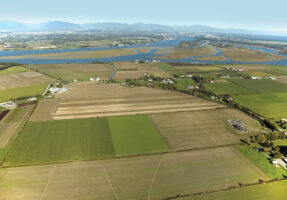
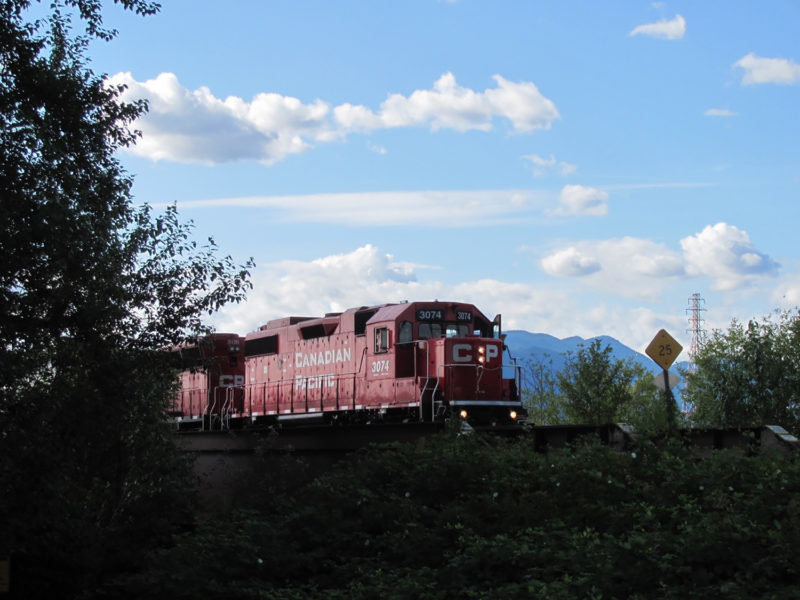
PITT MEADOWS – Pitt Meadows could lose more than 100 acres of protected farmland if CP Rail wins approval to expand its operations in the community.

Plans for the CP Logistics Park [cplogisticspark.ca] were unveiled in December following consultations with the municipality, Katzie First Nation and Vancouver Fraser Port Authority last summer. An initial public consultation on the project wrapped up January 15.

“CP is proposing to construct a multi-modal, multi-commodity transload and logistics facility adjacent to its Vancouver Intermodal Facility in Pitt Meadows, to meet increased rail demand in Canada’s largest trade gateway,” the rail company says.

Project documents outline plans for 13 silos accommodating 15,600 tonnes of peas, lentils and beans (the equivalent of 147 train cars, or one unit train), an auto transload facility, and 11 tanks for holding ethanol and transportation fuels from Alberta and the US Midwest for distribution locally and overseas.

The project will occupy 101 acres south of Lougheed Highway. CP acquired the properties making up the site between 2012 and 2017. The land falls within the Agricultural Land Reserve. However, railway development falls within the jurisdiction of the federal government. CP does not need to file an application with the Agricultural Land Commission to develop a rail line on the property.

This concerns Shannon Roberts of Blooming Meadows, who operates a small-lot mixed farm with her sister near the proposed facility. She also worries about site safety, light pollution and the effect of particulate matter from site activities on her laying hens and field-grown cut flowers.

“A dirty flower is not a sellable flower,” she says, noting that hundreds of trucks will be needed to bring fill to the site, which sits on the floodplain adjacent to the Pitt River.

Preload will affect the water table in the area, which already suffers from drainage issues.

“I honestly don’t feel like I’m going to be able to farm my land,” she said. “I feel like it will be flooded.”

Drainage concerns

Similar concerns were raised when CP bought 58 acres of the site in 2012. Pitt Meadows, which is set to receive at least $4 million in property taxes each year from the proposed development, said at the time it was confident CP would work to mitigate drainage problems.

During an open house in January attended by close to 100 people, CP environmental assessment manager Joe Van Humbeck said the railway is studying the project’s impact on surface water and groundwater, and drafting storm water management plans.

“This data will feed into our engineering team to ensure that our facility includes the measures required to protect the Katzie Slough, the groundwater as well as the other attributes of the environment,” he says.

CP assistant vice-president, market strategy and demand management Jeff Edwards says mitigation plans for adjacent farmland are also under development.

“We recognize the importance of this valuable land and the fact that there is a great deal of support behind the agricultural land across the Lower Mainland,” he says.

However, he adds that the site is ideal for the project, since it’s adjacent to CP’s existing facilities in Pitt Meadows. While the loss will be felt locally, the project will benefit the agriculture sector nationally.

“We are opening markets and supporting the greater Canadian agricultural community through this development,” Edwards says. “I realize that’s not as specific to the local agricultural community … but we look forward to further conversations with local agricultural organizations, and I hope we get to have more of those conversations in the near future to better understand the impacts and the mitigation that we can work with them on.”

Speaking as director of operations for Pitt Meadows in 2012, Kim Grout – now CEO of the Agricultural Land Commission – said CP has a long-term vision for its properties. The commission is among the parties that intend to provide feedback on CP’s plans for the farmland.

A summary report from the first consultation will be available in March, with mitigation plans unveiled this summer. Construction of the project could begin as early as 2026 if federal authorities approve.


Related Posts

You may be interested in these posts from the same category.

Reclassification sparks farm definition debate

Islands Trust sidelines ag in policy statement

ALC rejects Cowichan dike removal

Council calls for review of farm classification rules

Regulatory hurdles threaten farm income solutions

Landowners push back against rail trail plans

ALC members appointed

Islands Trust turns 50

Illegal dumping surges on Fraser Valley farmland

Premier boosts fill enforcement

Kelowna fallow farmland returns

ALR policy review shows room for improvement

Previous Post: « Egg producer questions support for local eggs
Next Post: Genomics lab expands service to local growers »

Copyright © 2026 Country Life in BC · All Rights Reserved