• Menu
  • Skip to primary navigation
  • Skip to main content
  • Skip to primary sidebar

Country Life In BC Logo

The agricultural news source in British Columbia since 1915

  • Headlines
  • Calendar
  • Subscribe
  • Advertise
  • About
  • Archives
  • Contact
  • Search
  • Headlines
  • Calendar
  • Subscribe
  • Advertise
  • About
  • Archives
  • Contact
  • Search

Primary Sidebar

Originally published:

DECEMBER 2020
Vol. 106 Issue 12

Subscribe Now!

Sign up for free weekly FARM NEWS UPDATES

Select list(s) to subscribe to


By submitting this form, you are consenting to receive marketing emails from: Country Life in BC. You can revoke your consent to receive emails at any time by using the SafeUnsubscribe® link, found at the bottom of every email. Emails are serviced by Constant Contact
Your information will not be
shared or sold ever

Stories In This Edition

Abattoirs eye pandemic funding

Water fight

Turkey sales strengthen

Orchardists forge ahead following late-season freeze

Editorial: Back to the future

Back 40: Pandemic gives leaders a bosst, but what about farmers

Viewpoint: BC agriculture set to ead food conversations

Kamloops farmers push back on irrigation plan

Sidebar: A new tool for municipalities

ILT puts broiler farms on the defensive

Snowed under

Antimicrobial phase-out delayed

BC Tree Fruits makeover gets green light

Keremeos supply store closes

Province rethinks land matching pitch

Ag Briefs: Land commission appts announced

Ag Briefs: Blueberry council set for elections

Ag Briefs: Award honours young agrologist

Ag Briefs: Horticultural loss

Ag in the Classroom prepares for change

Beekeepers go virtual for 100th anniversary

Sidebar: Pandemic puts pause on bee research

Island farmers frustrated by ferry waits

Slaughter limitations forcing producers out

Livestock specialist has close ties to ranching

Cattle take lead in fire prevention efforts

New food hub planned for Salmon Arm

Passion and schooling pay off for young grower

Cleanfarms looks into ag plastic recycling program

Robotic strawberry picker on the horizon

Agritech venture aims to unite data management

Sidebar: Microsoft moves in

Up in smoke

New tool helps farmers avoid nutrient runoff

Peace region weather network expanded

Sidebar: Adaption network hosts webinar series

Tarps provide targeted alternative to cover crops

Orchardists making greater use of decisionaid system

Asian parasitoids come to the rescue of berry growers

Research: Keeping cows’ reproductive cycle on track

Agroforestry project makes farm viable

Young farmers encouraged to cultivate resilience

Farm Story: A change of season brings a change of mind

Universal broadband fund cheers farmers

Woodshed: New beginnings for Deborah and Susan

4-H members finish season at virtual Ag Expo

Jude’s Kitchen: Classic festive appies for the holidays

More Headlines

Follow us on Facebook

Comments Box SVG iconsUsed for the like, share, comment, and reaction icons

2 weeks ago

The Canadian Food Inspection Agency is preparing to implement changes to its livestock traceability rules that will include mandatory computer reporting within seven days on movement of animals for veterinary appointments, community pastures, exhibitions, carcass and on-farm disposal and the births and deaths of every animal on your farm. Writer Tom Walker first brought these changes to the attention of our readers back in June 2023. We've posted his story to our website:

www.countrylifeinbc.com/cfia-proposes-traceability-updat#BCAg#BCag
... See MoreSee Less

The Canadian Food Inspection Agency is preparing to implement changes to its livestock traceability rules that will include mandatory computer reporting within seven days on movement of animals for veterinary appointments, community pastures, exhibitions, carcass and on-farm disposal and the births and deaths of every animal on your farm. Writer Tom Walker first brought these changes to the attention of our readers back in June 2023. Weve posted his story to our website: 

https://www.countrylifeinbc.com/cfia-proposes-traceability-updates/

#BCag
View Comments
  • Likes: 11
  • Shares: 21
  • Comments: 15

Comment on Facebook

I love hpw the cow in the picture hasn't even got a RFID tag in it but I digress. We can not read the link, it says "we are not permitted to read drafts". Please post again with the correct link.

Dairy farmers having been doing this several years. The app we use has become quite simple to use

Including equine?

Premise ID was slowly rolled through the country, voluntary then mandatory. Transparency and 'Consultation' has been light. Those who tried to bring this for discussion a couple years ago, because of forseen overreach, were quite often labeled conspiracy theorists and that it wasnt meant to be so heavily regulated and controlled. Gardens and seeds will be next. "Invasive species" reporting, check out the plants medicinal properties. Read the BC intentions papers. The premise ID that already heavy regulated commodities have claims to be treated different in the intentions papers on page 8. www2.gov.bc.ca/assets/gov/farming-natural-resources-and-industry/agriculture-and-seafood/food-saf...

Says i am "not allowed to preview draft".

Also concerning is the part on compliance...they can 'stumble onto' any farm and if you're not complying there are consequences.

When the CFIA stumbles into the wrong place compliance will be met with civil engagement

Says I can't preview draft

This is government overreach - Do Not Comply!

Do not comply

Fu

As if the price of beef isn't bad enough for consumers,,,,,be prepared to be gouged some more now

Ridiculous!!

Let's hold up on the beef exports tell we can get our own house in order... we need to deregulated, cheapen up the supply chain back into a 5 buck a pound rage so the good people canada can eat healthy food.. fuck your bean diets, that's retarded

This, along with the majority of new legislation pertaining to any type of farm, is a blatant squeeze on any sort of small, alternative agricultural venture. I am a massive believer in working together and sharing resources and costs and solutions - do not get me wrong - but this and the water registration among others, is an overreach (at most generous) and an absolute killer to smaller, local initiatives that LITERALLY save lives during extreme events. There is ONE ROAD into and out of my community. We don’t need or want some sort of backlogged government response when shit goes sideways. We want the ability AND SUPPORT to provide for our communities without penalty when things go badly. We want to produce sustainability for our communities. We live here, we work here, we want to STAY HERE. Stop making it harder.

View more comments

3 weeks ago

BC's minimum piece rates for 15 hand-harvested crops increased 2.6% on December 31. Crops include peaches, apricots, brussels sprouts, daffodils, mushrooms, apples, beans, blueberries, cherries, grapes, pears, peas, prune plums, raspberries and strawberries. Farm-worker piece rates in BC were increased by 11.5% in January 2019 and 6.9% in December 2024. BC’s current minimum wage sits at $17.85 per hour.

#BCAg
... See MoreSee Less

BCs minimum piece rates for 15 hand-harvested crops increased 2.6% on December 31. Crops include peaches, apricots, brussels sprouts, daffodils, mushrooms, apples, beans, blueberries, cherries, grapes, pears, peas, prune plums, raspberries and strawberries. Farm-worker piece rates in BC were increased by 11.5% in January 2019 and 6.9% in December 2024. BC’s current minimum wage sits at $17.85 per hour. 

#BCAg
View Comments
  • Likes: 10
  • Shares: 0
  • Comments: 2

Comment on Facebook

I'm not sure what they're telling us. Did peace rates have to increase so that Farm workers could make minimum wage?

They deserve it, but the general public will be whining about increased prices in the stores. Will need to make more information average to the g.p.

3 weeks ago

... See MoreSee Less

View Comments
  • Likes: 14
  • Shares: 0
  • Comments: 1

Comment on Facebook

105 Mile Ranch

4 weeks ago

... See MoreSee Less

View Comments
  • Likes: 7
  • Shares: 0
  • Comments: 0

Comment on Facebook

1 month ago

Water volumes from the Nooksack River are at levels similar to 1990 and 2021, but the province says flows should peak at 10pm tonight. The shorter duration, as well as conditions in other watercourses within the watershed and performance of flood protection infrastructure should avoid a catastrophe on the scale of 2021. However, several landslides mean road closures have once again effectively isolated the Lower Mainland from the rest of the province.

#BCAg
... See MoreSee Less

Water volumes from the Nooksack River are at levels similar to 1990 and 2021, but the province says flows should peak at 10pm tonight. The shorter duration, as well as conditions in other watercourses within the watershed and performance of flood protection infrastructure should avoid a catastrophe on the scale of 2021. However, several landslides mean road closures have once again effectively isolated the Lower Mainland from the rest of the province.

#BCAg
View Comments
  • Likes: 9
  • Shares: 3
  • Comments: 1

Comment on Facebook

Family living in Sumas WA say it's very much like '21. They have the same amount of water in their house as last time.

Subscribe | Advertise

The agricultural news source in British Columbia since 1915
  • Email
  • Facebook

Passion and schooling pay off for young grower

A fresh vision helps revive Kootenay family farm

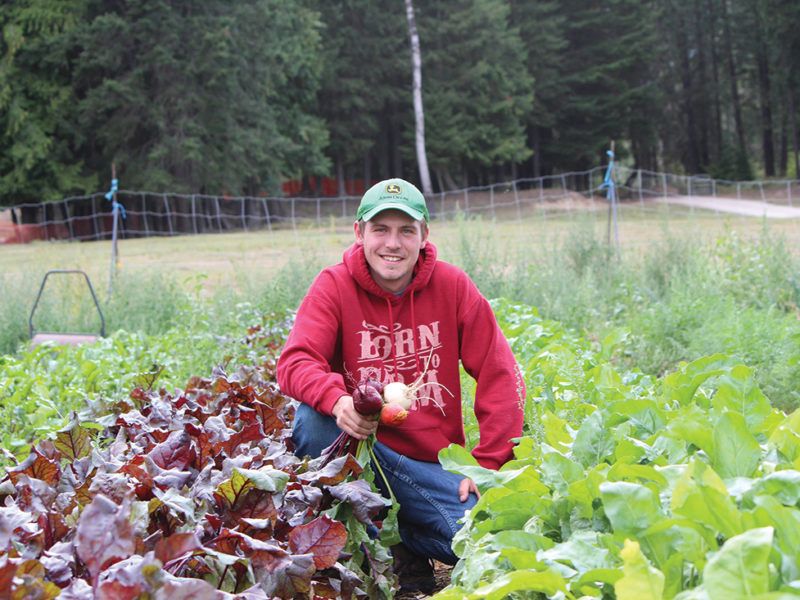
Matthew Carr says a university education has helped him develop his farm business. PHOTO / LINDEN LANE FARMS

December 1, 2020 byMyrna Stark Leader

KRESTOVA – Matthew Carr’s first memory of a job in agriculture is working alongside his grandmother processing poultry on her farm near Krestova, a community of about 200 at the mouth of the Slocan Valley. Carr was about 10. He gave up soccer to pull gizzards for 10 cents apiece.

“I now finally figured out it was because my hands were so small, they could get in inside the bird and do the job really well,” recalls Carr, now 26.

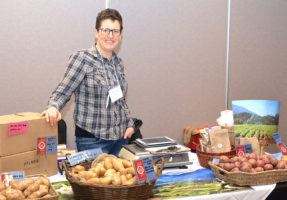
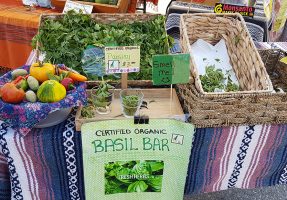
Today, he’s wrapping up the 2020 season at Linden Lane Farms, a four-acre certified organic farm located on his grandparent’s 150-acre property. The farm produces vegetables, small fruits, vegetable and herb transplants, sweet potato slips and seed garlic, as well as fruit trees and edible perennials. The operation began as his summer job while he played junior hockey from 2011-2015 and while attending the University of Saskatchewan.

Carr is fascinated by plants, an interest that likely started with a Grade 11 school propagation project. He was so interested he constructed a propagation table at home, growing mostly ornamental shrubs. A young entrepreneur, he sold them locally through word of mouth and online through Kijiji. He continued to scale up until it got too big for his parents’ backyard in Bonnington, east of Castlegar.

“My dad was tired of people showing up at our house all the time thinking we were a big wholesale nursery,” says Carr with a smile.

As a result, he relocated the business to his grandparent’s farm, about a 15-minute drive away. He was raising plants like willows, ninebarks and spirea as field-grown nursery stock. The same season, he capitalized on a local nursery’s end-of-season sell-off.

“They gave me a smoking deal, like $50 a truck bed-full,” explains Carr. “So, I filled my pickup three times with leftover seedlings, tomatoes, peppers, eggplant and squash which my sister and I planted in a 100×100-foot garden on the farm,” says Carr.

The plants flourished. When he left for Fernie to play hockey that year, there was more than 1,000 pounds of tomatoes and lots of squash in the field. The produce was shared with family and neighbours, and Matthew’s grandmother made enough tomato sauce and juice to last a decade.

That winter, Matthew and his father discussed how the successful gardening project might be a way to utilize the farm in Krestova. In the early 2000s, new provincial regulations effectively shut down his grandmother’s

on-farm meat processing facility that served small-scale and backyard producers. The farm scaled back to a modest hobby farm, home to plenty of livestock, including goats, sheep, chickens, turkeys and Angus-Jersey-cross beef cattle.

But seeing Matthew’s growing interest, his grandparents created an opportunity – a land-match, if you will, before it was popular. It started as a one-acre lease, including access to water, utilities and equipment for Matthew to pursue his business. That same year, his school guidance councilor recognized his interest and enrolled Carr in the Prairie Horticulture Certificate Program at the University of Saskatchewan while he was still in Grade 12.

“There isn’t much for BC high school students interested in agriculture but I was able to take online university classes for high school credit,” explains Carr.

His grandparents urged him to pursue something other than farming, but he enrolled at the University of Saskatchewan and continued to learn about plants as he pursued a Bachelor of Science in horticulture. He spent his summers building up Linden Lane Farms, with help from his family. Graduating in 2019, he returned to farming full-time.

This was a good year at Linden Lane, with sales up 60% versus 2019. About 25% of the farm’s business came from selling nursery stock, 15% from an annual subscription-based CSA program that serves 74 families weekly, 15% from wholesale sales to Kootenay Co-op in Nelson and 45% from sales at Nelson’s twice-weekly farmer’s market. In addition to family, he employed eight people full-time at peak season.

Carr credits his post-secondary education for teaching him how to gather and analyze research data. This aids in plant growing and farm management decisions. He also built a valuable network of advisers and contacts.

“One of my profs when I was at school is one of the top plant breeders in the world. Being able to phone or text profs or researchers for advice has been invaluable. And my classmates all have specialties – horticulture therapy, floriculture, greenhouses, vegetables, cannabis. I can also call on them for advice, which is great,” says Carr, who remains inspired by plant physiology.

While he doesn’t believe farmers must have degrees, he hasn’t given up the idea of going back to school for post-graduate studies. But right now, in addition to farming, he’s working towards his professional agrologist designation with a focus on organic horticultural agronomy.

He says farming has rewards. He’s his own boss. The business continues to take shape and there’s pride in reinvigorating a farm that’s been in the family since 1978. Succession discussions with his grandparents, now in their 70s, are a work in progress.

“We’re building more and more infrastructure, so my grandparents are kind of nervous. They’ve been farming for years on the property so having me come and change up things a little … is a little difficult for them,” says Carr.

In the meantime, Linden Lane is expanding according to his strategic business plan. If he gets time before the end of the year, he’ll develop a half-acre for fruit production, mostly berries and some fruit trees, not only for market but also as an educational component.

“We’re one of the largest edible plant nurseries in our region but because we specialize strictly in edible products, the orchard will be an educational space where we can show people things like pruning or trellising methods, while trialing new cultivars for the region,” he explains.

The breadth of Linden Lane’s production is apparent in the more than 250 edible plant varieties its nursery produces. A website enables him to share information about each beyond what can be written on a tag. The site also allows customers to pre-order and place deposits, strengthening the farm’s cash flow in early spring. Carr says online shopping is growing, and that trend has accelerated during the COVID-19 pandemic.

“I would say COVID had a lot to do with tripling our online nursery sales this year and we’re really hopeful those sales continues,” he says. “We had quite a few positive responses from people who liked being able to order their plants online, then pick them up in May.”

With less than 2% of food in the region produced locally, he’s confident there’s a market. He’s currently seeking CanadaGAP certification to open the door to grocery store sales. That in turn would aid his plan to grow Linden Lane to 10 to 15 acres. The additional cultivated area would allow for better and longer cover crop rotations and provide pasture for the family’s livestock to graze and help reinvigorate the sandy soil.

Carr says one of the challenges of expanding production will be developing an irrigation system to draw water from the Slocan River.

“Today when the cows come in, they suck that water right out of the trough and you can see the sprinklers just drop on the garden,” he says.

Finally, he thinks the size will be manageable from an employer perspective. After working the first few years himself for pennies per hour, he plans to continue to hire and expand his team. While it saddens him to shift from grower to farm manager, he looks forward to becoming more involved in industry and making a difference.
 

Related Posts

You may be interested in these posts from the same category.

Hopcotts take OYF title

RegenBC conference emphasizes context

Building soil structure with organic compost

Greenhouse sets example for others to follow

BC organic growers flourish

Top grape grower recognized

Organic growers discuss challenges

New executive director for COABC appointed

COABC seeks new ED

Organics

Study compares organic, conventional diets

Farmers Market Organic

Organic growers prepare for the mainstream

Lillooet ranch goes green

Previous Post: « 4-H members finish season at virtual Ag Expo
Next Post: Province rethinks land matching pitch »

Copyright © 2026 Country Life in BC · All Rights Reserved