• Menu
  • Skip to primary navigation
  • Skip to main content
  • Skip to primary sidebar

Country Life In BC Logo

The agricultural news source in British Columbia since 1915

  • Headlines
  • Calendar
  • Subscribe
  • Advertise
  • About
  • Archives
  • Contact
  • Search
  • Headlines
  • Calendar
  • Subscribe
  • Advertise
  • About
  • Archives
  • Contact
  • Search

Primary Sidebar

Originally published:

OCTOBER 2023
Vol. 109 Issue 10

Subscribe Now!

Sign up for free weekly FARM NEWS UPDATES

Select list(s) to subscribe to


By submitting this form, you are consenting to receive marketing emails from: Country Life in BC. You can revoke your consent to receive emails at any time by using the SafeUnsubscribe® link, found at the bottom of every email. Emails are serviced by Constant Contact
Your information will not be
shared or sold ever

Stories In This Edition

Reprieve for water users

BCTF packinghouses on the block

Rest easy

Flower co-op celebrates 60 years

Editorial: Give us this day

Back 40: The heat is on, and hard choices are needed

Viewpoint: International journalists see the best of BC

Westwold ranchers speak out against irrigation ban

Communication critical to solve water issues

Ag Briefs: Canada loses New Zealand trade challenge

Ag Briefs: Cherry promotion promising

Reliance on foreign workers under scrutiny

IAFBC keeps growing its business

Poultry growers on edige as fall bird migrations start

ALR policy review shows room for improvement

Western corn rootworm detected in OK

On-farm slaughter expands limited options

Building a business around community

Outstanding in her field

Weather ideal for grain harvest

New project offers value-added opportunities

Autonomous seeders move forward

BC hosts national Christmas tree conference

BC fairs hit hard by post-COVID volunteer shortage

Sidebar: Fairs resume post-COVID with new challenges

Panel dishes “the real dirt on farming”

Farm Story: Good corn, like good farming, isn’t cheap

Longer trial, strong results

Tidy orchards ensure clean hazelnut harvest

DFWT blueberry rest program expands east

Ditching the plastic mulch

Compost tease: learning through trial and error

Woodshed: Kenneth bets the water dowzer double or nothing

Quesnel youth awarded 4-H scholarship

Harvest thanks

More Headlines

Follow us on Facebook

Comments Box SVG iconsUsed for the like, share, comment, and reaction icons

6 days ago

... See MoreSee Less

View Comments
  • Likes: 4
  • Shares: 0
  • Comments: 0

Comment on Facebook

6 days ago

On the last day of the BC Organic Conference, Thursday, Molly Thurston of Pearl Agricultural Consulting helped growers learn how to manage bugs such as codling moth, wireworm, and rootworm in organic growing systems. Her talk alongside Renee Prasad included hands-on activities in which participants checked out various traps and examined pests under microscopes. Be sure to look for more upcoming ag events on our online calendar at www.countrylifeinbc.com/calendar/

#BCAg
... See MoreSee Less

On the last day of the BC Organic Conference, Thursday, Molly Thurston of Pearl Agricultural Consulting helped growers learn how to manage bugs such as codling moth, wireworm, and rootworm in organic growing systems. Her talk alongside Renee Prasad included hands-on activities in which participants checked out various traps and examined pests under microscopes. Be sure to look for more upcoming ag events on our online calendar at www.countrylifeinbc.com/calendar/

#BCAg
View Comments
  • Likes: 15
  • Shares: 0
  • Comments: 0

Comment on Facebook

1 week ago

Well-known organic farmer and podcaster Jordan Marr gets interviewed by Country Life in BC’s own columnist and potato mavin Anna Helmer during the opening session of the BC Organic Conference at Harrison Hot Springs yesterday. Sessions run today (Wednesday) and Thursday and include organic and regenerative growing practices and expanding and advocating for the organic sector, all under the background of the newly launched Organic BC banner.

#BCAg
... See MoreSee Less

Well-known organic farmer and podcaster Jordan Marr gets interviewed by Country Life in BC’s own columnist and potato mavin Anna Helmer during the opening session of the BC Organic Conference at Harrison Hot Springs yesterday. Sessions run today (Wednesday) and Thursday and include organic and regenerative growing practices and expanding and advocating for the organic sector, all under the background of the newly launched Organic BC banner.

#BCAg
View Comments
  • Likes: 37
  • Shares: 2
  • Comments: 1

Comment on Facebook

Interested in finding out more about this

3 weeks ago

Today, we remember those who sacrificed their lives or their well-being for our freedom. Lest we forget. ... See MoreSee Less

Today, we remember those who sacrificed their lives or their well-being for our freedom. Lest we forget.
View Comments
  • Likes: 8
  • Shares: 0
  • Comments: 0

Comment on Facebook

1 month ago

FarmFolk CItyFolk is hosting its biennial BC Seed Gathering in Harrison Hot Springs November 27 and 28. Farmers, gardeners and seed advocates are invited to learn more about seed through topics like growing perennial vegetables for seed, advances in seed breeding for crop resilience, seed production as a whole and much more. David Catzel, BC Seed Security program manager with FF/CF will talk about how the Citizen Seed Trail program is helping advance seed development in BC. Expect newcomers, experts and seed-curious individuals to talk about how seed saving is a necessity for food security. ... See MoreSee Less

Link thumbnail

BC Seed Gathering - FarmFolk CityFolk

farmfolkcityfolk.ca

Save the date for our upcoming 2023 BC Seed Gathering happening this November 3rd and 4th at the Richmond Kwantlen Polytechnic University campus.
View Comments
  • Likes: 1
  • Shares: 0
  • Comments: 0

Comment on Facebook

Subscribe | Advertise

The agricultural news source in British Columbia since 1915
  • Email
  • Facebook

Communication critical to solve water issues

Government silence in Westwold a study in crisis mismanagement

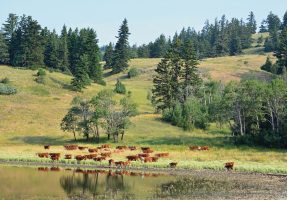
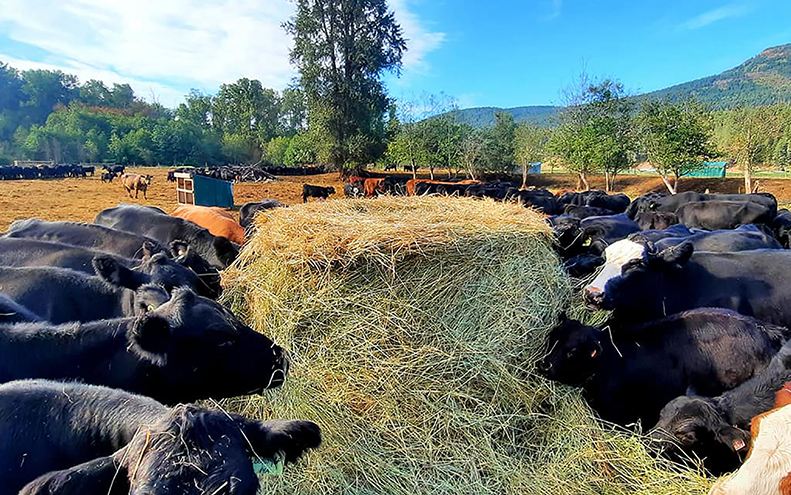
Good forage is in short supply across BC this year thanks to a province-wide drought, and irrigation bans imposed by the province are drawing fire from producers. SCHWEB FAMILY CATTLE

October 1, 2023 byTom Walker

WESTWOLD — The Salmon River watershed is a complex ecosystem. A variety of water use interests, long-term environmental impacts and minimal mitigation efforts make the river problematic.

A key issue is the river’s importance as a salmon-bearing stream, which makes it especially vulnerable to regulations designed to protect aquatic life.

But the watershed is also the sole water source for scores of agricultural users, including dairy, beef and forage operations as well as smaller mixed farms and residences. Salmon Lake, off Douglas Lake Road, is one of the origins of the river but there is no dam to control outflows.

Another concern is forest management. The entire region has been impacted by logging as well as the White Rock Lake wildfire in 2021, resulting in reduced upland water-holding capacity and much larger and more intense spring freshets.

The combination of issues isn’t unique to the Salmon River, but they’ve come to a head here with particular intensity over the past three years. Ranchers and farmers are especially concerned at the apparent lack of research presented to justify a curtailment order delivered to forage operations in the lower Salmon River watershed on August 15.

The order, as well as a follow up press release from the BC Ministry of Forests, claimed the decision to restrict irrigation was “science-based.” Streamflows had fallen below 1,270 litres per second, according to the order, and action was needed to protect fish populations.

The decision was in line with reports dating back to the 1970s which said low streamflow thresholds were key to protecting the local salmon run here, as in other sensitive watersheds around the province.

But the province failed to respond to multiple requests from water licensees for a meeting to review the decision, which would have given farmers an opportunity to understand the underlying science. Instead, messaging from the province thanked them for taking steps to reduce water use and defer the curtailment order, which was presented as a last resort to save the fish.

Yet a 110-page report on the conditions, trends and issues completed for the Salmon River Watershed Roundtable in 1995 provided a thorough overview of the problems and made a number of recommendations.

Of chief importance was a study of the “water budget,” the key supply and demand levels for the watershed as well as the relationships between surface water, groundwater, the region’s aquifers, adjacent wetlands and the likelihood of some valley water draining south toward the Okanagan. Groundwater licensing, regulation and user fees, were also recommended.

The report recommended exploring additional water storage capacity, as well as water conservation. The protection and restoration of salmon habitat was also recommended.

One recommendation from the 1995 report was partially carried out.

“My husband was contracted to work on riverbank restoration,” says Westwold rancher Trudy Schweb. “He helped to install rip-rap and plant shade trees along the river banks, but the funding ran out and the project was never completed.”

BC Cattlemen’s Association general manger Kevin Boon says his organization has been discussing headwater control with government for years.

“What I don’t understand is the lack of involvement from DFO,” he says. “They are responsible for salmon. Why are they not investing in mitigation projects?”

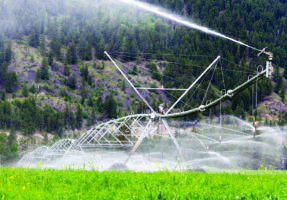
Irrigation technology has improved significantly and many hay fields along the valley are watered by the latest pivot systems, but they are expensive.

“We would love to buy a pivot system but it is not within our budget right now,” says Schweb.

While the province introduced a $20 million agricultural water infrastructure program to assist producers expand water storage and undertake irrigation improvements, it was quickly oversubscribed.

Some producers have criticized the program for requiring costly studies that both complicate and double the cost of improvements. For her part, Schweb thinks the money would be better spent developing headwater storage that could help control spring flows and release water later in the season to support spawning salmon.

Regardless of where money is spent, none of the solutions are going to be cheap.

“There is a huge investment needed in water management and infrastructure for both food security and management of all of our other needs including fish,” says Boon, noting that irrigation is crucial to forage producers, who must water fields immediately following a cut in order to foster the next crop.

“It’s like starting a new lawn, the grass needs to be watered immediately,” he says.

Boon believes a local watershed council would help bring all sides to the table to develop a comprehensive plan for the management of the watershed. Similar work is underway in the Koksilah and has been recommended for the Tsolum, both of which were also subject to  curtailment orders this summer.

“[Build] a plan for required storage and management to insure that there is adequate water available when it is needed for fish habitat that is not reliant on or detrimental to the investment that has been made by agriculture,” Boon says.

It would also go a long way to addressing the lack of communication that’s met the concerns of Westwold producers this year. Rather than sending natural resource officers in bulletproof vests to ticket and fine frustrated farmers, listening to their concerns and providing a direct response would go a long way towards garnering community support.

“It’s been more than a month. If they would just meet with us, I know we could come up with some ideas to support both the farmers and the salmon,” Schweb says.
Related Posts

You may be interested in these posts from the same category.

Breathing new life into historic ranches

Province lacks reconciliation roadmap: ranchers

Cowichan title decision creates uncertainty

Southern Interior irrigators shut down

Crown land conflicts reveal policy gaps

Beef herd drops

Feed available but stocks low

BC Cherry holds AGM

Land Act changes deferred

Land Act firestorm

Dam violations face fines

Rangeland forage allocation studied

Previous Post: « Okanagan egg producers chosen
Next Post: BC pumpkins weigh in »

Copyright © 2025 Country Life in BC · All Rights Reserved