• Menu
  • Skip to primary navigation
  • Skip to main content
  • Skip to primary sidebar

Country Life In BC Logo

The agricultural news source in British Columbia since 1915

  • Headlines
  • Calendar
  • Subscribe
  • Advertise
  • About
  • Archives
  • Contact
  • Search
  • Headlines
  • Calendar
  • Subscribe
  • Advertise
  • About
  • Archives
  • Contact
  • Search

Primary Sidebar

Originally published:

July 2017
Vol. 103 Issue 7

Subscribe Now!

Sign up for free weekly FARM NEWS UPDATES

Loading form…

Your information will not be
shared or sold ever

Stories In This Edition

4-H Gator draw

Poultry Abuse underscores need to measure up

Political uncertainty creates angst

Water tops list of ranchers’ concerns at AGM

Editorial: Trust is an active verb

Back Forty: Time to celebrate our home and rural land

Greenhouse growers propose infrastructure project

Letter: Seat belts must be worn at all times

Ag Brief: Blueberry growers pack meeting

Ag Brief: Blueberry growers pack meeting

Barn fires spark focus on prevention

Emergency plan critical for livestock owners

BCAC hires new communications director

Abbotsford seeks exclusion to boost industrial land base

Otter Co-op posts another record-breaking year

Food report card gives BC passing grade

Agriculture’s success testifies to investment funding

Ag Brief: Hullcar abatement order shut down

Mission investigation inconclusive

Abbotsford tickets thousands

Price set as growers eye ambitious growth target

High prices, change coming for nurseries

BC tree fruit outlooks is a bowl of cherries

BC greenhouses are family-friendly operations

Sidebar: Why greenhouses aren’t organic

Greenhouse showcases production systems

BC agricultual history depicted in museum murals

BC agriculture vital part of Canada’s 150 years

Research: Grazing time for cows

Deep roots give Shannon Farm bright future

Fraser Lake ranchers honoured for excellence

Cattlemen invest in research to boost productivity

New livestock industry co-ordinator embraces dream job

Researchers study sheep diseases to understand potential risks

Blueberry processors focus on fruit quality

Sidebar: SWD can make timing harvest tricky

Urban growing, libations and greenhouses

Municipalities committing to urban farming

Young farmers hear production, packing trips

Pencil Patch offers hands-on experience

Summer camps foster farm focus for kids

New group of 4-H Ambassadors engage BC

Woodshed:

Just when you thought it couldn’t get worse

Jude’s Kitchen: Summertime

More Headlines

Follow us on Facebook

Comments Box SVG iconsUsed for the like, share, comment, and reaction icons

1 hour ago

The Agricultural Land Commission is laying off staff after years of flat funding under the BC NDP. ALC chair Jennifer Dyson warns that application volumes, enforcement activity and legal obligations have all risen while its operating budget has stayed effectively flat — meaning longer wait times ahead for some services.

#BCAg
... See MoreSee Less

Link thumbnail

Land Commission lays off staff

www.countrylifeinbc.com

With no budget increase this year, the Agricultural Land Commission (ALC) is laying off six staff to make ends meet. “Ongoing financial constraints and the requirement to operate within the approved...
View Comments
  • Likes: 0
  • Shares: 1
  • Comments: 0

Comment on Facebook

6 days ago

A BC Forest Practices Board investigation has found overgrazing has damaged grasslands in the Coutlee Range Unit near Merritt — and the range-use plan meant to prevent it was unenforceable. With complaints about overgrazing on the rise and grasslands covering just 1% of BC's land mass, the findings raise fresh questions about how the province manages one of its most vulnerable — and valuable — food-producing ecosyste#BCAg#BCAg ... See MoreSee Less

Link thumbnail

Board finds overgrazing rules unenforceable unmeasurable

www.countrylifeinbc.com

MERRITT – A BC Forest Practices Board investigation has found instances of non-compliance related to overgrazing have damaged open grasslands in the Mine pasture, part of the Coutlee Range Unit near...
View Comments
  • Likes: 6
  • Shares: 6
  • Comments: 6

Comment on Facebook

Several ranchers in recent years have gone into temporary non use on that range , so that means the grass should grow. But drought conditions/lack of rain and snow don’t allow that to happen . Dried up springs , creeks waterholes in various pastures add to over grazing where there is water , as livestock and everything else stay close to the water source . So even though less cattle are on it , over grazing appears. There is a large volume of horses on it 365 days/year which is wrong ! They pull grass right out of the ground when it’s just trying to grow ,, opens the door for weeds to grow in. That don’t help it. Aging infrastructure ( fences) laying on the ground, pipe line building , ( lack of commitment to fence maintenance) amongst all users contributes also to over grazing. Recreational atv users leaving gates open between pastures allows livestock to go back or ahead in pastures also expidites over grazing. Logging ( bcts) has no problem laying out cut locks on both sides of a fence , then it gets smashed down during logging and they don’t take responsibility to stand it back up or clean the cattle gaurds out when they are done , that happened 4 years ago on pasture 5 up there . I bet it is still not fixed . There are lots of contributing factors to the problem.

Tragedy of the commons.

I looked through the report. I saw nothing about the effects of noxious weeds on productive grasslands. This particular area is vulnerable because of the Ministry’a efforts to diversify the use of the Grasslands.

This pasture is under tremendous pressure not only from cattle but from irresponsible local residents who treat it as a landfill dumping all manner of household debris here. And don't even get me started on the mud bogging and camping in sensitive riparian areas. The feral horses are in this pasture 365 days a year just hammering it. Would sure be nice to see some enforcement action on people who are intentionally ripping up the grasslands and riparian areas. Cattle could be a valuable resource for rebuilding soils and native grasses in this area with the help of electric fencing and/or e-collars. The humans will be harder to manage.

The Forest and Range Practices Act was written by lawyers for global forest licencee shareholders. Results-based = unenforceable.

Also, can we talk about the impact of a pipeline being built through the middle of this field for multiple years?

View more comments

1 week ago

East Kootenay rancher Randy Reay is digging a new well after two natural water sources dried up on his Crown tenures. A new Living Lakes Canada assessment found 15% of mapped aquifers in the region are high-priority for monitoring, yet 80% of those go unmonitored. With over 48% of BC's provincial observation wells reporting below-normal groundwater levels, ranchers and researchers are sounding the alarm on water security. The story is in our March edition, and we've posted it to our website thi#BCAgk.

#BCAg
... See MoreSee Less

Link thumbnail

Water woes: groundwater under pressure across BC

www.countrylifeinbc.com

JAFFRAY – As a young boy growing up in the Kootenay-Boundary region, Randy Reay never expected to run out of water. But this year, in mid-February, his fields are bare. There is no snow halfway up t...
View Comments
  • Likes: 8
  • Shares: 7
  • Comments: 1

Comment on Facebook

Jaffrey is in the east Kootenays not kooteney boundary

2 weeks ago

BC farmers are bracing for prolonged higher input costs as war in the Middle East drives up fuel and fertilizer prices. Nitrogen fertilizer costs were already climbing before the Iran conflict began, with prices still roughly 60% above pre-pandemic levels. Farm Credit Canada warns that unlike 2022, strong commodity prices may not offset rising costs this time. Local suppliers expect supply challenges and further price increases ahead.

#BCAg
... See MoreSee Less

Link thumbnail

Fertilizer prices on the rise

www.countrylifeinbc.com

War in the Middle East has delivered a generational shock to energy prices, meaning BC farmers can expect a prolonged period of higher costs not just for fuel but also for fertilizer.
View Comments
  • Likes: 2
  • Shares: 1
  • Comments: 0

Comment on Facebook

2 weeks ago

... See MoreSee Less

View Comments
  • Likes: 1
  • Shares: 0
  • Comments: 0

Comment on Facebook

Subscribe | Advertise

The agricultural news source in British Columbia since 1915
  • Email
  • Facebook

Greenhouse growers propose infrastructure project

July 1, 2017 byLinda Della Santi

The BC Greenhouse Growers’ Association (BCGGA) has ongoing concerns around the availability of good, clean water for our greenhouses.

During the water shortage and drought in the summer of 2015, agriculture minister Norm Letnick was quoted in the August issue of Country Life in BC saying that “commercial greenhouses and other large agricultural water users could be restricted if the drought persists”. Greenhouse

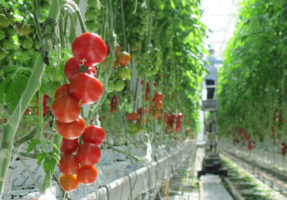
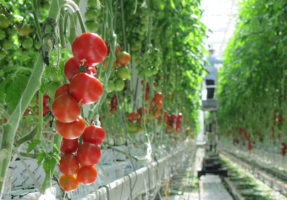
Reliable and sufficient water supply is crucial for agricultural development and food security in the province. Our greenhouse vegetable plants would not survive any interruption in water supply.

The Water Sustainability Act (WSA) came into force on February 29, 2016. It modernizes BC’s strategy for using water efficiently throughout the province. Within the WSA, greenhouses are, remarkably, not considered an agricultural use of water but rather an industrial use. The WSA commits to secure agricultural access to water but as greenhouses are not considered to be agriculture, we have concerns with water interruption in summer months during a drought.

Some greenhouse owners have reported rumours about water:

  • Municipalities and possibly the provincial government will not be allowing any new agricultural businesses to use municipal water.
  • Those farms that are on municipal water will not be permitted to continue using it in the future.
  • Water connections would be restricted to one inch for agriculture.
  • Some municipalities do not permit municipal water to be used for open field irrigation and this prohibition will be extended to greenhouse irrigation.

No basis

We have met with many levels of government in the past year and discussed these rumours. Government officials say there is no basis for these rumours and deny that there is anything in the works. Environment minister Mary Polak did, however, comment that municipal water – or potable water – is very expensive to produce and finding alternative water supplies when potable water is not necessary would be an attractive solution to high- cost municipal potable water.

For a variety of climate reasons, greenhouse vegetable growers are mainly clustered in the Lower Mainland and, more specifically, near water such as in north Abbotsford and Delta. Our growers have found that proximity to bodies of water – the Fraser River and the ocean – helps provide a climate in the summer months that our crops prefer: lower temperatures and higher humidity. Growers in these areas are on municipal water systems.

The greenhouse sector engages in production practices that promote the sustainable use of water:

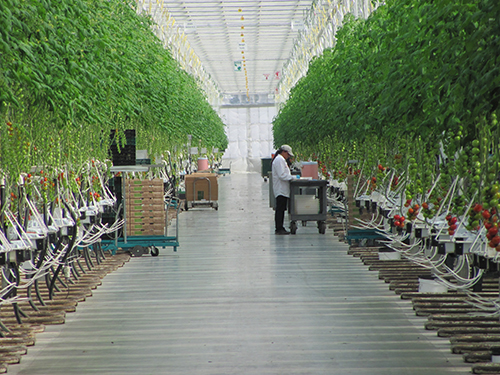
  • Our farms grow their plants in bags, many in gutters, allowing for the collection of water the plant doesn’t use. This water is treated and recycled back to the plants.
  • Rainwater is collected from the roof into holding ponds, then used for irrigation.

These practices have reduced our overall consumption of fresh water, making the best use possible of this valuable resource.

We acknowledge that potable water is expensive to produce and we do not necessarily require fully potable water for irrigation. Alternative sources of water, such as drilled wells in north Abbotsford and Delta, will not produce water that will be abundant enough or suitable for irrigation purposes. Soil-based farmers in Delta use Fraser River water that is pumped into the ditch system. This source of water is not sufficiently clean for greenhouse use, and would compromise our food safety.

There is a long-term solution to provide greenhouses with secure access to clean, non-potable water from the Fraser River. This would require an infrastructure project to provide farmers with a treatment system and pipeline dedicated to agriculture. An infrastructure project such as this would benefit the entire Lower Mainland agricultural complex.

This large infrastructure project would be an excellent project to access the recently created Canada Infrastructure Bank. The federal government created this bank as a new tool to provide low-cost financing for new infrastructure projects to help provinces and municipalities build the projects their communities need.

Partnerships

This project clearly reflects the objectives of green infrastructure projects to deliver clean air and safe water systems. Our industry will continue to explore this possibility with municipal, provincial and federal government authorities. We welcome other sectors to join us in this initiative.

Linda Delli Santi is the executive director of the BC Greenhouse Growers’ Association.

Related Posts

You may be interested in these posts from the same category.

Carbon tax relief begins

Greenhouse, nursery specialist named

COVID-19 hits Fraser Valley farms

A new generation keeps the family greenhouse growing

Beefsteak tomatoes get smoked

Tomato virus targeted

BCAC defends pot growers

Greenhouse growers see rebound in acreage

Greenhouse vegetables rebound from cannabis

Province offers greenhouse growers tax relief

Previous Post: « Poultry abuse underscores need to measure up
Next Post: Emergency plan critical for livestock owners »

Copyright © 2026 Country Life in BC · All Rights Reserved