• Menu
  • Skip to primary navigation
  • Skip to main content
  • Skip to primary sidebar

Country Life In BC Logo

The agricultural news source in British Columbia since 1915

  • Headlines
  • Calendar
  • Subscribe
  • Advertise
  • About
  • Archives
  • Contact
  • Search
  • Headlines
  • Calendar
  • Subscribe
  • Advertise
  • About
  • Archives
  • Contact
  • Search

Primary Sidebar

Originally published:

June 2018
Vol. 104 Issue 6

Subscribe Now!

Sign up for free weekly FARM NEWS UPDATES

Loading form…

Your information will not be
shared or sold ever

Stories In This Edition

A Taste of Spring

Flooding wallops southern interior

Ottawa wires CAP cash

Minimum wage hike squeezes farm margins

Editorial: The new democracy

Back Forty: Horgan on receiving end of pipeline challenge

Viewpoint: BC has led country in national check-off support

New chair appointed to land commission

Richmond expands farmhouse provisions

Demand for land drives farmland values higher

Biosolids raise a stink with neighbours

Rising wine sales boost demand for red grapes

Game-changer on dividend splitting

Mushroom merger

Wildfire, flood review has First Nations focus

Sidebar: Snapshot of recommendations

Labour tops issues as hothouse growers meet

Growers on look-out for activists

Antimicrobial lockdown

Ag briefs: Island farmers on lookout for armyworm

Ag briefs: AgSafe elects new chair

Ag briefs: No flood of licences

Ag briefs: Direct delivery

Hops revival gains traction with feds

Wildfire top concern of grape growers

Sidebar: Preparing for fires in the Okanagan

Nuffield scholars

Two studies promise to ensure slaughter capacity

Sidebar: Consultation schedule

Oversight sought

Bumper crop of invasive weeds after wildfires

Elk sights have producers concerned

Guichon heads back to life on the ranch

Research: Grazing cattle the sustainable way

Farmers markets focus on cultivating trust

Veggie days open house

Co-ops offer values-based alternatives

Region focuses on boosting local food usage

Bonus coupon

Growing opportunity

Garden City project breaks sustainable ground

Weevils pose challenges

Protecting pollinators key for crop yields

Wannabe: Keeping up with the times

Young farmers turn on, tune in and download

Woodshed: Kenneth has another go at the Massey

4-H BC thanks partners for their support

Jude’s Kitchen: Co-op food


More Headlines

Follow us on Facebook

Comments Box SVG iconsUsed for the like, share, comment, and reaction icons

3 hours ago

The Agricultural Land Commission is laying off staff after years of flat funding under the BC NDP. ALC chair Jennifer Dyson warns that application volumes, enforcement activity and legal obligations have all risen while its operating budget has stayed effectively flat — meaning longer wait times ahead for some services.

#BCAg
... See MoreSee Less

Link thumbnail

Land Commission lays off staff

www.countrylifeinbc.com

With no budget increase this year, the Agricultural Land Commission (ALC) is laying off six staff to make ends meet. “Ongoing financial constraints and the requirement to operate within the approved...
View Comments
  • Likes: 0
  • Shares: 1
  • Comments: 0

Comment on Facebook

6 days ago

A BC Forest Practices Board investigation has found overgrazing has damaged grasslands in the Coutlee Range Unit near Merritt — and the range-use plan meant to prevent it was unenforceable. With complaints about overgrazing on the rise and grasslands covering just 1% of BC's land mass, the findings raise fresh questions about how the province manages one of its most vulnerable — and valuable — food-producing ecosyste#BCAg#BCAg ... See MoreSee Less

Link thumbnail

Board finds overgrazing rules unenforceable unmeasurable

www.countrylifeinbc.com

MERRITT – A BC Forest Practices Board investigation has found instances of non-compliance related to overgrazing have damaged open grasslands in the Mine pasture, part of the Coutlee Range Unit near...
View Comments
  • Likes: 6
  • Shares: 6
  • Comments: 6

Comment on Facebook

Several ranchers in recent years have gone into temporary non use on that range , so that means the grass should grow. But drought conditions/lack of rain and snow don’t allow that to happen . Dried up springs , creeks waterholes in various pastures add to over grazing where there is water , as livestock and everything else stay close to the water source . So even though less cattle are on it , over grazing appears. There is a large volume of horses on it 365 days/year which is wrong ! They pull grass right out of the ground when it’s just trying to grow ,, opens the door for weeds to grow in. That don’t help it. Aging infrastructure ( fences) laying on the ground, pipe line building , ( lack of commitment to fence maintenance) amongst all users contributes also to over grazing. Recreational atv users leaving gates open between pastures allows livestock to go back or ahead in pastures also expidites over grazing. Logging ( bcts) has no problem laying out cut locks on both sides of a fence , then it gets smashed down during logging and they don’t take responsibility to stand it back up or clean the cattle gaurds out when they are done , that happened 4 years ago on pasture 5 up there . I bet it is still not fixed . There are lots of contributing factors to the problem.

Tragedy of the commons.

I looked through the report. I saw nothing about the effects of noxious weeds on productive grasslands. This particular area is vulnerable because of the Ministry’a efforts to diversify the use of the Grasslands.

This pasture is under tremendous pressure not only from cattle but from irresponsible local residents who treat it as a landfill dumping all manner of household debris here. And don't even get me started on the mud bogging and camping in sensitive riparian areas. The feral horses are in this pasture 365 days a year just hammering it. Would sure be nice to see some enforcement action on people who are intentionally ripping up the grasslands and riparian areas. Cattle could be a valuable resource for rebuilding soils and native grasses in this area with the help of electric fencing and/or e-collars. The humans will be harder to manage.

The Forest and Range Practices Act was written by lawyers for global forest licencee shareholders. Results-based = unenforceable.

Also, can we talk about the impact of a pipeline being built through the middle of this field for multiple years?

View more comments

1 week ago

East Kootenay rancher Randy Reay is digging a new well after two natural water sources dried up on his Crown tenures. A new Living Lakes Canada assessment found 15% of mapped aquifers in the region are high-priority for monitoring, yet 80% of those go unmonitored. With over 48% of BC's provincial observation wells reporting below-normal groundwater levels, ranchers and researchers are sounding the alarm on water security. The story is in our March edition, and we've posted it to our website thi#BCAgk.

#BCAg
... See MoreSee Less

Link thumbnail

Water woes: groundwater under pressure across BC

www.countrylifeinbc.com

JAFFRAY – As a young boy growing up in the Kootenay-Boundary region, Randy Reay never expected to run out of water. But this year, in mid-February, his fields are bare. There is no snow halfway up t...
View Comments
  • Likes: 8
  • Shares: 7
  • Comments: 1

Comment on Facebook

Jaffrey is in the east Kootenays not kooteney boundary

2 weeks ago

BC farmers are bracing for prolonged higher input costs as war in the Middle East drives up fuel and fertilizer prices. Nitrogen fertilizer costs were already climbing before the Iran conflict began, with prices still roughly 60% above pre-pandemic levels. Farm Credit Canada warns that unlike 2022, strong commodity prices may not offset rising costs this time. Local suppliers expect supply challenges and further price increases ahead.

#BCAg
... See MoreSee Less

Link thumbnail

Fertilizer prices on the rise

www.countrylifeinbc.com

War in the Middle East has delivered a generational shock to energy prices, meaning BC farmers can expect a prolonged period of higher costs not just for fuel but also for fertilizer.
View Comments
  • Likes: 2
  • Shares: 1
  • Comments: 0

Comment on Facebook

2 weeks ago

... See MoreSee Less

View Comments
  • Likes: 1
  • Shares: 0
  • Comments: 0

Comment on Facebook

Subscribe | Advertise

The agricultural news source in British Columbia since 1915
  • Email
  • Facebook

New chair appointed to land commission

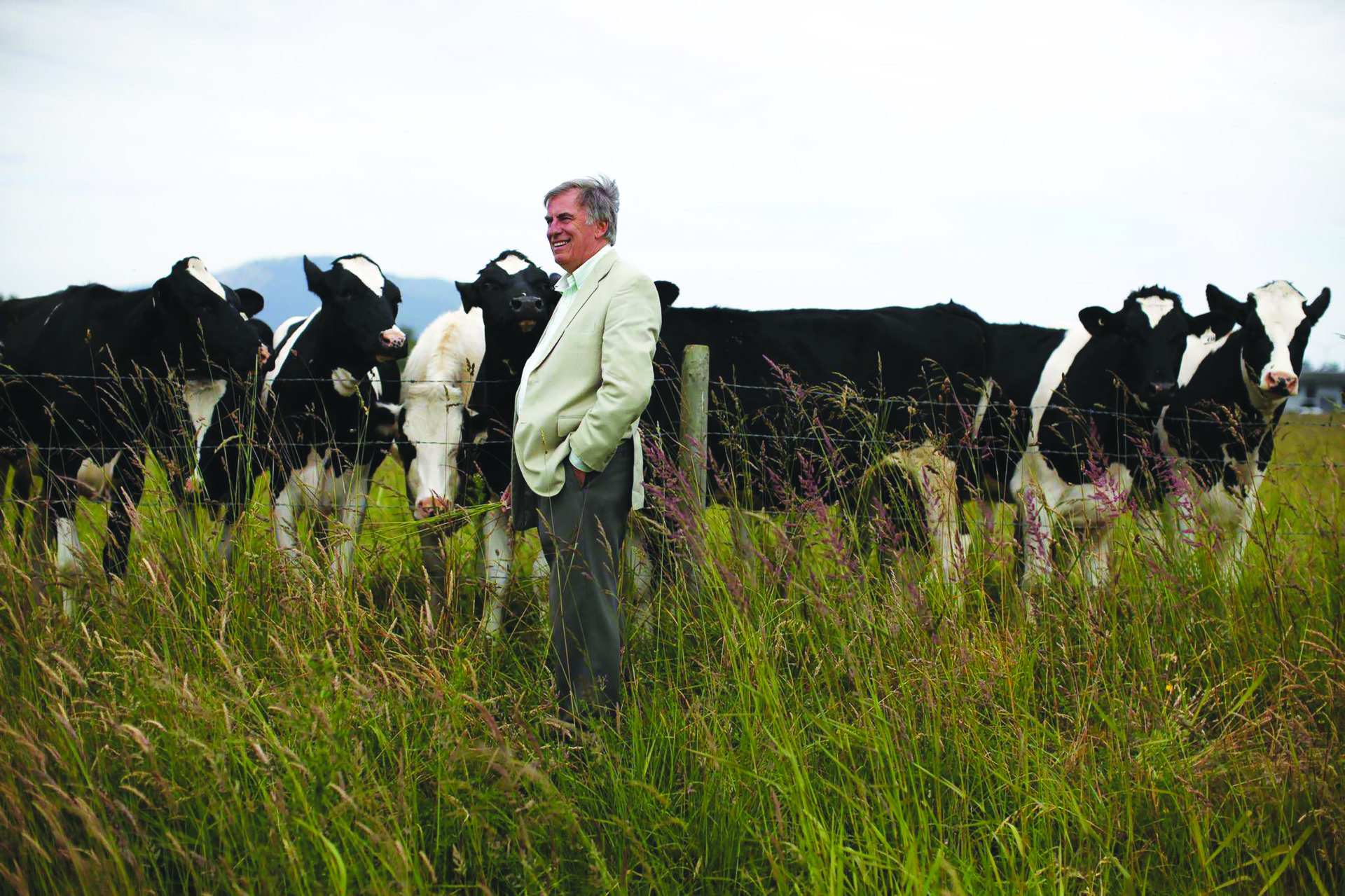
While he’s disappointed, Frank Leonard isn’t surprised his term wasn’t renewed

June 1, 2018 byPeter Mitham [photo By Chad Hipolito]

VICTORIA – The outgoing chair of the Agricultural Land Commission believes it’s in good hands as the province prepares to receive recommendations for its revitalization.

The province appointed Frank Leonard chair of the commission in 2015 following the abrupt termination of Richard Bullock. Leonard’s completed his three-year term and his appointment was not renewed.

“I enjoyed it. I’m grateful to have served in that role, and I’m certainly going to miss it,” Leonard told Country Life in BC. “I think I’m the only one who kept telling people I was not likely to be reappointed. … It wasn’t so much the job I was doing, it’s just the flavour I’ve had in my past life around politics. So I get it, I was prepared for it, though I’m disappointed to leave.”

Leonard served as mayor of Saanich from 1996 to 2014, and previously worked in his family’s tire business. His career led to several involvements with municipal government organizations.

Leonard has now been replaced by Jennifer Dyson, a Vancouver Island water buffalo farmer who was most recently chair of the nine-member panel charged with gathering public feedback and reviewing options for revitalizing the Agricultural Land Reserve.

Dyson’s appointment sends a clear signal that the province is keen to implement recommendations of the panel, which will draft its report under the leadership of vice-chair Vicki Huntington.

Leonard believes he’s leaving the commission in good hands. Key staff, including CEO Kim Grout, remain in place and the commission continues to enjoy the larger budget granted it under former agriculture minister Norm Letnick.

“The biggest difference I made was in changing the management and in managing the change. I’ve had people, even on social media, comment that they thought that the land use decisions I made were appropriate and consistent with the legislation,” he said, acknowledging that social media can make reputations as well as break them. “People didn’t see a difference in the land use decisions. … Applications that were taking more than two years when I arrived [were] being done in 90 working days when I left. People were still getting ‘yes’ or ‘no’ as appropriate [but] they were getting the answer a lot sooner.”

When he was appointed, Leonard said the best way to protect the ALR was to ensure that the farms within it were financially viable. This is in sync with the arguments BC agriculture minister Lana Popham has put forward, and the thrust of several comments made during both formal and informal discussions regarding the future of the ALR during the recent consultation, which ended April 30.

However, Leonard worries at the exact shape revitalization may take, given the political differences between the current government and that of the BC Liberals.

“There’s some nostalgia for the ALR prior to the Liberals bringing in legislation that changed it,” he says “I’m hoping ‘revitalization’ isn’t a cover word for ‘back to the future.’”

While the two-zone structure introduced in 2014 has been “less than successful,” Leonard says regional panels that allow landowners to make a case to local commissioners are important.

“I wouldn’t fight very hard to keep the zones but the panels, I think, have been very successful,” he says. “Doing site visits, having face-to-face contact with applicants, have just given us so much more credibility with applicants and with stakeholders, rather than having people meet in Burnaby once a month and make decisions. It’s much more respectful to applicants to have local people on their property listening to them and letting them tell their story.”

Bullock, for his part, continues to advocate for farmland protection. Shortly after his dismissal in May 2015, just seven months before the end of his five-year term, he gave a presentation to the Institute for Sustainable Food Systems at Kwantlen Polytechnic University (KPU) in Richmond that framed his termination as politically motivated.

BC NDP agriculture critic Lana Popham told Country Life in BC at the time she agreed, calling Bullock’s termination, “a completely incompetent decision.”

“He has always championed agriculture, and he knows how important it’s going to be in our future,” she said. “That is not something that this current government wants to hear.”

KPU hopes Popham gives Bullock a more sympathetic hearing. KPU asked him to write the foreword to its recent white paper on farmland protection. The paper aimed to challenge free market ideals in order to ensure farmland is valued for food production, and used for that purpose.

“The ALC is positioned to move to the next stage, one in which the ALR is accepted as simply being a part of who we are,” Bullock wrote in his foreword. “The minister must be bold in her recommendations to move this key legislation forward. At this juncture,
Related Posts

You may be interested in these posts from the same category.

Reclassification sparks farm definition debate

ALC rejects Cowichan dike removal

Regulatory hurdles threaten farm income solutions

Landowners push back against rail trail plans

ALC members appointed

Islands Trust turns 50

Illegal dumping surges on Fraser Valley farmland

Premier boosts fill enforcement

ALR policy review shows room for improvement

Surrey ALR inclusion cheered

ALC rejects Teacup appeal

Whistleblowers at FIRB, ALC protected

Previous Post: « Minimum wage hike squeezes farm margins
Next Post: Elk sightings have producers concerned »

Copyright © 2026 Country Life in BC · All Rights Reserved