• Menu
  • Skip to primary navigation
  • Skip to main content
  • Skip to primary sidebar

Country Life In BC Logo

The agricultural news source in British Columbia since 1915

  • Headlines
  • Calendar
  • Subscribe
  • Advertise
  • About
  • Archives
  • Contact
  • Search
  • Headlines
  • Calendar
  • Subscribe
  • Advertise
  • About
  • Archives
  • Contact
  • Search

Primary Sidebar

Originally published:

July 2018
Vol. 104 Issue 7

Subscribe Now!

Sign up for free weekly FARM NEWS UPDATES

Loading form…

Your information will not be
shared or sold ever

Stories In This Edition

Sweet basil

Committee cancels meetings

Sidebar: Greater co-ordination; less conflict

Prince George packing plant gets further study

Sidebar: Co-op model lets producers pocket profits

Editorial: Buy the billions

Back Forty: Canada isn’t the cure for what ails US dairy

OpEd: Dairy industry will endure current trade issues

ALC allegations nix Delta farmer’s vision

Letters: Elk know no boundaries

Precautions taken against Japanese beetle

Great spring for nurseries

Chicken pricing formula isn’t right

Pitt crew

Criteria for Crown tenure still unclear

McClary’s leased to Aquilinis

Strawberries kick berry season off to good start

Food advocates grapple with rural-urban interface

Research updates presented to cherry growers

New farmers need to research livestock needs

Time for tea

Ag Brief: Farmers still waiting on new ag waste regs

Ag Brief: Drought watch

AgBrief: Good to meet ewe

Ag Brief: Staff change at FF/CF

Ag Brief: Market trail

Riparian restorations benefit from farm funding

Young Farmers network at Okanagan tour

Salmon Arm fleece brings top dollar

Perseverance, ingenuity aid haskap harvest

BC ranchers praised for wildfire response

Committee work pinpoints rancher priorities

Mentorship program helps expand horizons

Tour gives public insight to dairy farming

Island welcomes Angus breeders

Experts weigh in on future of raspberry cultivars

Preparation, customer service key to market success

Top 10 list for market success

UVF ag curriculum continues to diversify

Research: Going green

Buy BC relaunched

Farm camps for kids

Henderson continues on crash course

Jude’s Kitchen: It’s easy to make July veggie month

More Headlines

Follow us on Facebook

Comments Box SVG iconsUsed for the like, share, comment, and reaction icons

3 hours ago

BC Supreme Court has blocked an attempt by remaining BC Tree Fruits Cooperative members to amend a rule that would have excluded former members from receiving their share of the co-op’s remaining assets. In her ruling, Justice Miriam Gropper called the bid to amend Rule 125, which would allow 32% of the surplus to be distributed among former members based on tonnage shipped to the co-op during its last six years of operation, “oppressive and unfairly prejudicial.” The co-op closed in July 2024, and remaining assets are estimated at between $12 and $15 million.

#BCAg
... See MoreSee Less

BC Supreme Court has blocked an attempt by remaining BC Tree Fruits Cooperative members to amend a rule that would have excluded former members from receiving their share of the co-op’s remaining assets. In her ruling, Justice Miriam Gropper called the bid to amend Rule 125, which would allow 32% of the surplus to be distributed among former members based on tonnage shipped to the co-op during its last six years of operation, “oppressive and unfairly prejudicial.” The co-op closed in July 2024, and remaining assets are estimated at between $12 and $15 million.

#BCAg
View Comments
  • Likes: 2
  • Shares: 4
  • Comments: 0

Comment on Facebook

1 day ago

From our Country Life in BC family to yours, HAPPY FAMILY DAY!

Photo by Liz Twan

#BCAg
... See MoreSee Less

From our Country Life in BC family to yours, HAPPY FAMILY DAY!

Photo by Liz Twan

#BCAg
View Comments
  • Likes: 10
  • Shares: 1
  • Comments: 1

Comment on Facebook

🥰🐮🩷

3 days ago

Full-time students employed in BC agriculture during the summer season are eligible to apply for a bursary of up to $3,000. The bursary, administered by the Investment Agriculture Foundation, aims to increase youth and domestic seasonal worker employment in the ag sector. Funding is awarded on a first-come, first-serve basis. More information is available at tinyurl.com/5ef6pe3m

#BCAg IAF
... See MoreSee Less

Full-time students employed in BC agriculture during the summer season are eligible to apply for a bursary of up to $3,000. The bursary, administered by the Investment Agriculture Foundation, aims to increase youth and domestic seasonal worker employment in the ag sector. Funding is awarded on a first-come, first-serve basis. More information is available at https://tinyurl.com/5ef6pe3m

#BCAg IAF
View Comments
  • Likes: 13
  • Shares: 11
  • Comments: 0

Comment on Facebook

4 days ago

BC fruit and vegetable farmers are being asked to share their views on farming technology in a 10-minute survey from Royal Roads University and the University of the Fraser Valley. The survey looks at how fruit and vegetable farmers are adopting emerging farming technologies -- such as digital tools, “controlled environment agriculture systems” (greenhouses) and agri-genomics (DNA analysis) -- to cope with changing climate conditions. The survey takes about 10 minutes to complete, and participants will be eligible to win an assortment of $50-$200 gift cards.

insights.kaianalytics.com/s3/PAS2026
... See MoreSee Less

BC fruit and vegetable farmers are being asked to share their views on farming technology in a 10-minute survey from Royal Roads University and the University of the Fraser Valley. The survey looks at how fruit and vegetable farmers are adopting emerging farming technologies -- such as digital tools, “controlled environment agriculture systems” (greenhouses) and agri-genomics (DNA analysis) -- to cope with changing climate conditions. The survey takes about 10 minutes to complete, and participants will be eligible to win an assortment of $50-$200 gift cards. 

https://insights.kaianalytics.com/s3/PAS2026
View Comments
  • Likes: 5
  • Shares: 1
  • Comments: 0

Comment on Facebook

4 days ago

The District of Coldstream is proposing the creation of farm property tax subclasses to distinguish between small-scale and large-scale farm operations. Currently, all farms are classified as Class 9 regardless of size or infrastructure needs. The district argues larger farms require more municipal services and should be taxed accordingly. It plans to pitch its proposal at the Southern Interior Local Government Association convention in Revelstoke at the end of April. Support there could escalate the discussion to the Union of BC Municipalities convention next September in Vancouver.

#BCAg
... See MoreSee Less

The District of Coldstream is proposing the creation of farm property tax subclasses to distinguish between small-scale and large-scale farm operations. Currently, all farms are classified as Class 9 regardless of size or infrastructure needs. The district argues larger farms require more municipal services and should be taxed accordingly. It plans to pitch its proposal at the  Southern Interior Local Government Association convention in Revelstoke at the end of April. Support there could escalate the discussion to the Union of BC Municipalities convention next September in Vancouver. 

#BCAg
View Comments
  • Likes: 12
  • Shares: 2
  • Comments: 11

Comment on Facebook

Which municipal services do they require more of? Even larger farms typically still have only one or possibly two dwellings. Most have their own well and septic, and I suppose it depends on location, but most rural properties don't have garbage pick up either. And whether 20 driveways or one join the road, the cost to plow that road is the same. I no longer live within a municipality so of course there could be costs I've overlooked that are contributing to the District's proposal.

Large farms put more back into the community too.

The larger farms are the only farms paying wages, allowing people to spend money in their communities, the beauty of a network of small business. Small farms more often then not, is a single transaction, a hobby. Large- buy feed, raise cow, calf is born, sell calf, pay wage(support livlihoods), buy fence posts, buy more feed and so forth. Feeding the community. Small- Buy feed, raise cow, kill cow, eat cow.

And this is why farmers left California. British Columbia is no different

I am not sure how to post the actual Resolution that Council Pat Cochrane put forward but here is the link to the special meeting they are holding to pass the resolution: www.coldstream.ca/government-bylaws/news-alerts/notice-special-council-meeting-3.

Why not find ways to bring in more business's and audit municipal spending and regulate short term rentals (because Coldstream has essentially zero places to stay technically, insane) instead of raising taxes arbitrarily because "bigger costs more"

Attending that meeting, they claimed that “large farms” use more municipal services, yet Cochrane consistently stated he was going after “smaller estate properties not actively farming.” This is not only contradictory but misinformed. It would take him but three door knocks before he learned that the “estate farms” not actively farming are typically leased to a larger conglomerate to maintain farm classification. “Rural living at its finest,” though it seems not a soul on council is well-versed in this wheelhouse. What’s worse is that they somehow don’t think it’s necessary to bring in a single subject expert before blindly tossing around recommendations and solutions to problems that don’t really exist—or at least not as they perceive them. Don’t get me started on their rhetoric comparing the value of class 9 properties to other residential classes, when even my 12 year old understands that the values are drastically different when one property can be subdivided, and an ALR property cannot. Forever to the left of the point.

They want to tax a large farm more? Do people realize that farmers aren't becoming rich. Also, a small or hobby farm isn't contributing much to the local economy or community. This doesn't make sense. If we don't support our farmers. We need them. We can't import all our food.

What bs. I can't do a water and sewer hook up for an agricultural building, (a farm vegie stand) on a 160 acre farm in downtown Kelowna because there is already one at the far end of the lot for the principal residence. What extra infrastructure would they be talking about. Our irrigation is by licensed ground water well put in, powered and serviced by me. Any change in tax code should be on farm estates that do bogus farm gate sales at the minimum requirement, not viable commercial farming enterprizes that employ and contribute economic benefits to so many other businesses

Instead of increasing property taxes on large farms, I think governments need to revise the threshold needed for a property to qualify for farm status. That threshold has not changed in over 20 years and many non farmers are taking advantage of the ridiculously low threshold that was intended for real farmers.

And then you tax the farmers more and wonder why food prices keep going up. Why is it that the only thing government does is find more reasons and ways to tax people?

View more comments

Subscribe | Advertise

The agricultural news source in British Columbia since 1915
  • Email
  • Facebook

Prince George packing plant gets further study

Steering committee will review past work, future directions

July 1, 2018 byTom Walker

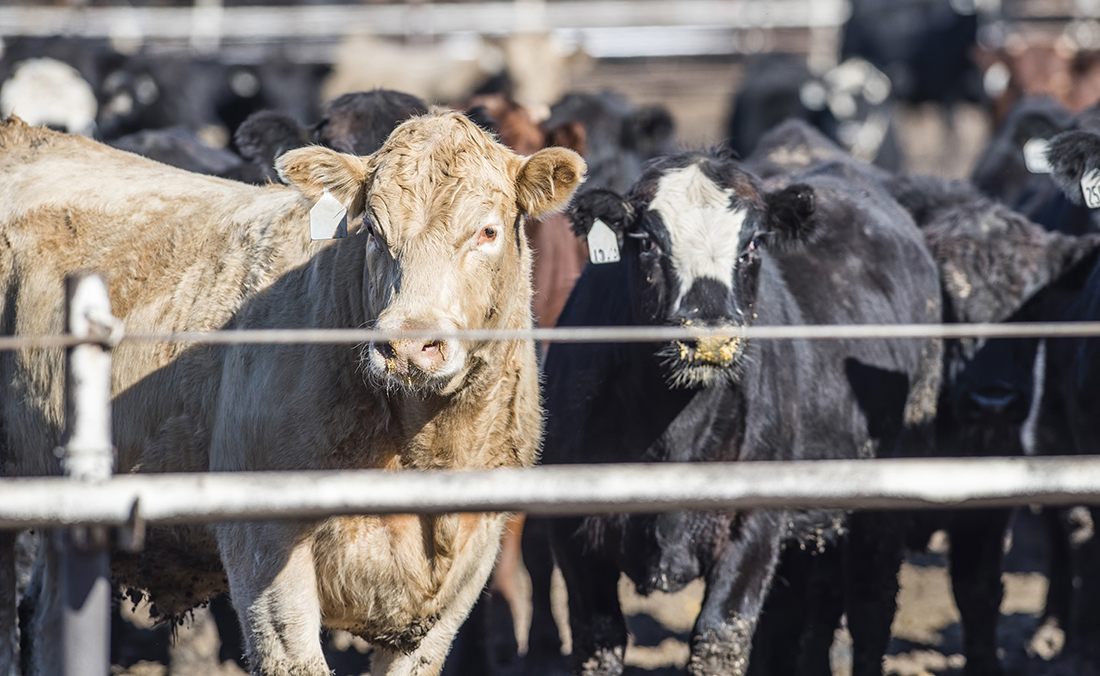
SMITHERS – The possibility of a larger scale, federally inspected beef processing plant for BC is getting a boost from the province with $450,000 to support further study.

BC agriculture minister Lana Popham announced the funding at the BC Cattlemen’s Association annual general meeting in Smithers on June 1.

“Bringing a federally inspected beef processing plant to Prince George comes with so many benefits,” says Popham. “Eighty full-time, good-paying jobs by 2020, and up to 650 spin-off jobs.”

BCCA general manager Kevin Boon says multiple opportunities would follow the plant’s construction, which is estimated to cost up to $27 million.

“We see it as an opportunity to grow not only the cattle industry but also the feeding industry as well as the grain industry,” he says.

Boon cautions that the study is just the next phase in a careful planning process.

“Don’t start buying fence posts to build your own feedlot yet,” Boon told AGM delegates.

The new funds will support an industry-wide steering committee that includes people familiar with cattle industry production levels and economics, as well as operating and building packing plants.

The steering committee’s job is to thoroughly question plans for the project.

“We have told them we really want to be challenged on this,” Boon says. “We have to have people at the table who will tell us when something won’t work. We don’t want a failure.”

The committee’s first job will be to assess the three previous studies and see if they should proceed to the next phase.

“We started with a value chain market analysis,” says Boon. “We looked at what consumers in the Pacific Northwest want and what they are willing to pay more for.”

The work found that BC product can demand a premium, as can beef free of hormones and antibiotics. Animal welfare is important to customers, but they’re not willing to pay more for it.

The most recent study examined the viability of locating a plant in Prince George versus shipping cattle to Alberta. Prince George’s central location puts it within 700 km of producers, the range considered ideal given the economics of transportation.

“This gives feedlots that are already in the province more opportunity to fatten,” he says. “It will also support the growth of a larger feeding industry, likely in the Nechako area, and more feed grains to be grown in the Peace region.”

A business plan targets a daily run of 200 head or a total of about 50,000 a year. This is approximately a quarter of BC’s annual calf production, plus additional backgrounded animals.

Adding value to the BC industry is the aim of the new, local plant, Boon explains. The cattle industry in BC is really untapped for processing, he says.

“We can get a significantly higher return per whole carcass if we can process here and seek specialty markets both at home and in Asia, Europe and the Middle East for individual cuts, rather than exporting whole carcasses or selling all into the local market,” he says.

While a federal plant is required for export, retailers in Western Canada also require it to move product across provincial lines, Boon adds.

There are nine go/no go stages in the process. The first one will follow the committee’s discussion of previous work on the project.

By the end of August, if the project is a go, they will take the concept to producers for feedback. The new funds will then support work on a governance model, with the venture likely taking the form of a next-generation co-op.

“We have an extraordinary amount of work to do yet,” Boon says. “But maybe put those posts for a new feedlot on order. I think this could work.”


Related Posts

You may be interested in these posts from the same category.

New licences, new inspections

BC abattoir volume up 30% in 2020

Province reveals abattoir changes

SlaughterRight training launched by ag ministry

Rural recovery funds agriculture

Meat producers frustrated by consultations

Abattoir association calls for action

Closures underscore need for licensing reform

Rethinking the concept for mobile abattoirs

Industry mourns abattoir champion

Island farmers renew request for local abattoir

Abattoirs required to cut back overtime

Previous Post: « Strawberries kick berry season off to a good start
Next Post: Forage action plan nears completion »

Copyright © 2026 Country Life in BC · All Rights Reserved