• Menu
  • Skip to primary navigation
  • Skip to main content
  • Skip to primary sidebar

Country Life In BC Logo

The agricultural news source in British Columbia since 1915

  • Headlines
  • Calendar
  • Subscribe
  • Advertise
  • About
  • Archives
  • Contact
  • Search
  • Headlines
  • Calendar
  • Subscribe
  • Advertise
  • About
  • Archives
  • Contact
  • Search

Primary Sidebar

Originally published:

February 2018
Vol. 104 Issue 2

Subscribe Now!

Sign up for free weekly FARM NEWS UPDATES

Select list(s) to subscribe to


By submitting this form, you are consenting to receive marketing emails from: Country Life in BC. You can revoke your consent to receive emails at any time by using the SafeUnsubscribe® link, found at the bottom of every email. Emails are serviced by Constant Contact
Your information will not be
shared or sold ever

Stories In This Edition

Province launches ALR review

You lookin’ at me

Ambrosia royalties disputed

BC municipalities tackle farmland housing

Editorial: Love and money

Back 40: It’s time for farmers to speak up

Op-Ed: More workers needed to meet local demand

Ag waste regulation needs united front

Milk production catching up to demand

FIRB appointment comes ahead of busy year

Cottage dairy diversifies with milk dispensing system

Wildfire recovery underpins growing range of programs

Cowichan goats inspire global ambitions

Worker housing issue hinges on collaboration

Growers should file early, file complete

Disaster assistance

BCAC public trust manager steps down

Sidebar: Are you smarter than a 10th grader

Koski steps in at Investment Ag

Farmers keen to make land connections

Courtenay co-op seeks community investment

Backers flock to support sheep farm

Okanagan Spirits focuses on innovation

Research supports year-round starling traps

Feedback sought on water regs

New food guide demands changes in marketing meat

Cattle production expected to rise in 2018

Cattle production expected to rise in 2018

Affordable workshops for new farmers

Dreams become udder reality

Sheep federation charting new future

Growers watching stink bug’s spread

Research: How beavers will help improve cow digestion

Fly larvae offer sustainable alternative protein

Fish help balance greenhouse growing system

Island home to Canada’s top Highland breeder

Where good food comes from

Wannabe: Waste not, want not

Woodshed: When there is good-bad, and bad-bad

Jude’s Kitchen: Red & chocolatey

More Headlines

Follow us on Facebook

Comments Box SVG iconsUsed for the like, share, comment, and reaction icons

7 days ago

... See MoreSee Less

View Comments
  • Likes: 4
  • Shares: 0
  • Comments: 0

Comment on Facebook

7 days ago

On the last day of the BC Organic Conference, Thursday, Molly Thurston of Pearl Agricultural Consulting helped growers learn how to manage bugs such as codling moth, wireworm, and rootworm in organic growing systems. Her talk alongside Renee Prasad included hands-on activities in which participants checked out various traps and examined pests under microscopes. Be sure to look for more upcoming ag events on our online calendar at www.countrylifeinbc.com/calendar/

#BCAg
... See MoreSee Less

On the last day of the BC Organic Conference, Thursday, Molly Thurston of Pearl Agricultural Consulting helped growers learn how to manage bugs such as codling moth, wireworm, and rootworm in organic growing systems. Her talk alongside Renee Prasad included hands-on activities in which participants checked out various traps and examined pests under microscopes. Be sure to look for more upcoming ag events on our online calendar at www.countrylifeinbc.com/calendar/

#BCAg
View Comments
  • Likes: 15
  • Shares: 0
  • Comments: 0

Comment on Facebook

1 week ago

Well-known organic farmer and podcaster Jordan Marr gets interviewed by Country Life in BC’s own columnist and potato mavin Anna Helmer during the opening session of the BC Organic Conference at Harrison Hot Springs yesterday. Sessions run today (Wednesday) and Thursday and include organic and regenerative growing practices and expanding and advocating for the organic sector, all under the background of the newly launched Organic BC banner.

#BCAg
... See MoreSee Less

Well-known organic farmer and podcaster Jordan Marr gets interviewed by Country Life in BC’s own columnist and potato mavin Anna Helmer during the opening session of the BC Organic Conference at Harrison Hot Springs yesterday. Sessions run today (Wednesday) and Thursday and include organic and regenerative growing practices and expanding and advocating for the organic sector, all under the background of the newly launched Organic BC banner.

#BCAg
View Comments
  • Likes: 37
  • Shares: 2
  • Comments: 1

Comment on Facebook

Interested in finding out more about this

3 weeks ago

Today, we remember those who sacrificed their lives or their well-being for our freedom. Lest we forget. ... See MoreSee Less

Today, we remember those who sacrificed their lives or their well-being for our freedom. Lest we forget.
View Comments
  • Likes: 8
  • Shares: 0
  • Comments: 0

Comment on Facebook

1 month ago

FarmFolk CItyFolk is hosting its biennial BC Seed Gathering in Harrison Hot Springs November 27 and 28. Farmers, gardeners and seed advocates are invited to learn more about seed through topics like growing perennial vegetables for seed, advances in seed breeding for crop resilience, seed production as a whole and much more. David Catzel, BC Seed Security program manager with FF/CF will talk about how the Citizen Seed Trail program is helping advance seed development in BC. Expect newcomers, experts and seed-curious individuals to talk about how seed saving is a necessity for food security. ... See MoreSee Less

Link thumbnail

BC Seed Gathering - FarmFolk CityFolk

farmfolkcityfolk.ca

Save the date for our upcoming 2023 BC Seed Gathering happening this November 3rd and 4th at the Richmond Kwantlen Polytechnic University campus.
View Comments
  • Likes: 1
  • Shares: 0
  • Comments: 0

Comment on Facebook

Subscribe | Advertise

The agricultural news source in British Columbia since 1915
  • Email
  • Facebook

The Back 40: It’s time for farmers to speak up

February 1, 2018 byBob Collins

British Columbia’s Agricultural Land Reserve is about to mark its 45th anniversary.

The landmark legislation was the first of its kind in North America when it was introduced by the NDP government of Premier Dave Barrett in 1973. It was immediately contentious and has remained so throughout its history. The fact that it still exists is a strong indication that fundamentally it was the right thing to do. It continues to get broad, if sometimes grudging, support. The devil, though, is in the details and there has never been anything close to unanimity regarding those details.

Participate in any general discussion of the ALR and you’ll soon hear something like: “I support the concept BUT …”

There is general agreement about saving farmland but the wheels start falling off when the questions are asked: When? Where? How? And at whose expense?

Disagreements about the answers have turned the ALR into a political football.

The ALR and the rules that govern it have been punted from one end of the political spectrum to the other for the past four and a half decades. The initial legislation was met with fierce resistance from the farm community who feared – with ample reason – that the social objective of saving farmland would be achieved by government appropriation of their existing property rights. Thousands demonstrated and the government initiated some changes, including provision for limited appeals to the cabinet’s Environmental and Land Use Committee.

The Agricultural Land Commission was created to administer the legislation. The ALC was also given jurisdiction to administer green belt land, landbank land and parkland. The ALC also made land purchases and long-term agricultural lease agreements.

The government of the day tried to appease angry farmers with cost of production and farm income insurance schemes.

The Socreds were elected in December of 1975. The following year, they replaced the ALC commissioners and amended the ALR Act. New commissioners were restricted to four-year terms and appeal requests could be made directly to the minister.

There were several high-profile cabinet reversals of ALC rulings throughout the 1980s. In 1988, an order-in-council made golf courses legal in the ALR. By November 1991, there were 181 golf course proposals awaiting ALC approval.

Two days after the NDP returned to power in 1991, the golf course order-in-council was rescinded and a moratorium was placed on golf course applications. Eventually, approximately 120 were approved.

In 1993, the right to appeal directly to cabinet was abolished but was replaced by a provincial interest reference clause which was described at the time as giving cabinet a “pre-emptive override of the ALC process.”

The clause was first used to allow ALR exclusion of the Six Mile Ranch property near Kamloops. That decision caused a rift in NDP ranks and resulted in the Quayle report clarifying provincial interest and ensuring accountability. The report also called for the amalgamation of the ALC and the Forest Land Commission. Enabling legislation was passed in 1999 and was replaced by a new act in 2001 when the Liberals formed government.

The ALC was restructured into six regional three-member panels and plans were made to delegate some of the ALC’s authority to regional district and municipal governments. This was abandoned when only 14 of the 136 governments approached were prepared to discuss the matter.

The Liberals also streamlined ALC regulations. In 2005, the ALC reported that regulations had been cut by 75% since 2001. In 2014, the ALR was split in two with different rules for each half. Permissible activities were expanded dramatically outside of the South Coast and Okanagan.

All the while, there has been a constant chorus of boos, cheers, chants and rants from the stands depending on who had the ball at the time.

The NDP/Green Alliance is now running the show and on January 4, NDP agriculture minister Lana Popham named a nine-member committee to host regional meetings, conduct an online consultation and make recommendations on how to “revitalize” the ALR. I suspect that Minister Popham is hoping to make a long pass and regain a big chunk of lost field position.

The recommendations from the new committee should provide her with a list of plays to choose from.

This is all far from over and those among us who have been watching the action since the kick-off way back in ’73 might be excused if it all looks like more of the same.

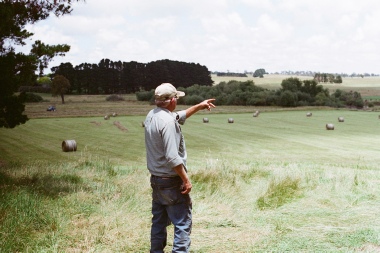
The one thing that seems to have fallen by the wayside over the years is the farmers and ranchers who turn the land on the ALR maps into working farms and ranches.

Minister Popham has quoted former agriculture minister Corky Evans to the effect: “We have saved the land but forgotten the farmer.”

There will be no shortage of interests providing input to the committee. If we don’t buy into the consultative process and speak up, we just might be left out of the equation altogether.
Related Posts

You may be interested in these posts from the same category.

Islands Trust sidelines ag in policy statement

ALC rejects Cowichan dike removal

Council calls for review of farm classification rules

Regulatory hurdles threaten farm income solutions

Kelowna fallow farmland returns

ALR policy review shows room for improvement

ALR settles Treaty 8 claims

Surrey ALR inclusion cheered

Good land at risk

There is a future for BC’s apple industry

Province opens ALR to agritech development

ALR opened for agritech

Previous Post: « Cowichan goats inspire global ambitions
Next Post: Weed will be an ag product unlike any other »

Copyright © 2025 Country Life in BC · All Rights Reserved