• Menu
  • Skip to primary navigation
  • Skip to main content
  • Skip to primary sidebar

Country Life In BC Logo

The agricultural news source in British Columbia since 1915

  • Headlines
  • Calendar
  • Subscribe
  • Advertise
  • About
  • Archives
  • Contact
  • Search
  • Headlines
  • Calendar
  • Subscribe
  • Advertise
  • About
  • Archives
  • Contact
  • Search

Primary Sidebar

Originally published:

MAY 2021
Vol. 107 Issue 5

Subscribe Now!

Sign up for free weekly FARM NEWS UPDATES

Select list(s) to subscribe to


By submitting this form, you are consenting to receive marketing emails from: Country Life in BC. You can revoke your consent to receive emails at any time by using the SafeUnsubscribe® link, found at the bottom of every email. Emails are serviced by Constant Contact
Your information will not be
shared or sold ever

Stories In This Edition

Water licence angst

Green gold

Pandemic puts pinch on finances

Province to lift restrictions on second homes

Editorial: On the level

Back 40: Asian giant hornets aren’t welcome here

OpEd: Proposed meat regs a step in the right direction

Province plans pilot for new drought ratings

Sidebar: Universal

High snowpack limits drought

Jack Frost nips potential for huge cherry crop

Ag Briefs: Dog attacks put sheep producers on alert

Ag Briefs: Poultry scholarship established

Ag Briefs: BC Tree Fruits extends CEO contract

Letters: Build soil with carbon tax

Funding revived for local gov’t agriculture plans

Sidebar: Mission expands definition of accessory use agriculture

Record funding flowed through IAFBC last year

Lotsa tomatoes

AgSafe embraces new governance structure at AGM

ALR exclusion fails to win ag committee support

BC dairy industry sees steady demand

Dairy producers work to resolve quality issues

Tree fruit consultations off to flying start

Canada holds off Asian giant hornet restructions

Strawberry groewrs eye new varieties

Funding stopped up for raspberry replant

Beekeepers welcome technology transfer program

Island couple step up to revive local abattoir

Tech crucial to speed variety development

Research: Urban farms can contribute to food security

Building soil structure with organic compost

Locally grown asparagus fills a niche market

BC propagator awarded research grant

Understanding the methodology to farm financing

Seed bank continues legacy of seed-savers

New owners to extend Woodside Farm’s legacy

Ruckle Farm looks toward the future

Farm Story: Spring deliveries inspire the urge to get farming

Farmer-chef connections still paying off

Woodshed: Henderson between a rock and a hard place

Pandemic forces BC agricultural fairs to adapt

Jude’s Kitchen: Herbs & sprouts

More Headlines

Follow us on Facebook

Comments Box SVG iconsUsed for the like, share, comment, and reaction icons

2 weeks ago

The Canadian Food Inspection Agency is preparing to implement changes to its livestock traceability rules that will include mandatory computer reporting within seven days on movement of animals for veterinary appointments, community pastures, exhibitions, carcass and on-farm disposal and the births and deaths of every animal on your farm. Writer Tom Walker first brought these changes to the attention of our readers back in June 2023. We've posted his story to our website:

www.countrylifeinbc.com/cfia-proposes-traceability-updat#BCAg#BCag
... See MoreSee Less

The Canadian Food Inspection Agency is preparing to implement changes to its livestock traceability rules that will include mandatory computer reporting within seven days on movement of animals for veterinary appointments, community pastures, exhibitions, carcass and on-farm disposal and the births and deaths of every animal on your farm. Writer Tom Walker first brought these changes to the attention of our readers back in June 2023. Weve posted his story to our website: 

https://www.countrylifeinbc.com/cfia-proposes-traceability-updates/

#BCag
View Comments
  • Likes: 11
  • Shares: 21
  • Comments: 15

Comment on Facebook

I love hpw the cow in the picture hasn't even got a RFID tag in it but I digress. We can not read the link, it says "we are not permitted to read drafts". Please post again with the correct link.

Dairy farmers having been doing this several years. The app we use has become quite simple to use

Including equine?

Premise ID was slowly rolled through the country, voluntary then mandatory. Transparency and 'Consultation' has been light. Those who tried to bring this for discussion a couple years ago, because of forseen overreach, were quite often labeled conspiracy theorists and that it wasnt meant to be so heavily regulated and controlled. Gardens and seeds will be next. "Invasive species" reporting, check out the plants medicinal properties. Read the BC intentions papers. The premise ID that already heavy regulated commodities have claims to be treated different in the intentions papers on page 8. www2.gov.bc.ca/assets/gov/farming-natural-resources-and-industry/agriculture-and-seafood/food-saf...

Says i am "not allowed to preview draft".

Also concerning is the part on compliance...they can 'stumble onto' any farm and if you're not complying there are consequences.

When the CFIA stumbles into the wrong place compliance will be met with civil engagement

Says I can't preview draft

This is government overreach - Do Not Comply!

Do not comply

Fu

As if the price of beef isn't bad enough for consumers,,,,,be prepared to be gouged some more now

Ridiculous!!

Let's hold up on the beef exports tell we can get our own house in order... we need to deregulated, cheapen up the supply chain back into a 5 buck a pound rage so the good people canada can eat healthy food.. fuck your bean diets, that's retarded

This, along with the majority of new legislation pertaining to any type of farm, is a blatant squeeze on any sort of small, alternative agricultural venture. I am a massive believer in working together and sharing resources and costs and solutions - do not get me wrong - but this and the water registration among others, is an overreach (at most generous) and an absolute killer to smaller, local initiatives that LITERALLY save lives during extreme events. There is ONE ROAD into and out of my community. We don’t need or want some sort of backlogged government response when shit goes sideways. We want the ability AND SUPPORT to provide for our communities without penalty when things go badly. We want to produce sustainability for our communities. We live here, we work here, we want to STAY HERE. Stop making it harder.

View more comments

3 weeks ago

BC's minimum piece rates for 15 hand-harvested crops increased 2.6% on December 31. Crops include peaches, apricots, brussels sprouts, daffodils, mushrooms, apples, beans, blueberries, cherries, grapes, pears, peas, prune plums, raspberries and strawberries. Farm-worker piece rates in BC were increased by 11.5% in January 2019 and 6.9% in December 2024. BC’s current minimum wage sits at $17.85 per hour.

#BCAg
... See MoreSee Less

BCs minimum piece rates for 15 hand-harvested crops increased 2.6% on December 31. Crops include peaches, apricots, brussels sprouts, daffodils, mushrooms, apples, beans, blueberries, cherries, grapes, pears, peas, prune plums, raspberries and strawberries. Farm-worker piece rates in BC were increased by 11.5% in January 2019 and 6.9% in December 2024. BC’s current minimum wage sits at $17.85 per hour. 

#BCAg
View Comments
  • Likes: 10
  • Shares: 0
  • Comments: 2

Comment on Facebook

I'm not sure what they're telling us. Did peace rates have to increase so that Farm workers could make minimum wage?

They deserve it, but the general public will be whining about increased prices in the stores. Will need to make more information average to the g.p.

3 weeks ago

... See MoreSee Less

View Comments
  • Likes: 14
  • Shares: 0
  • Comments: 1

Comment on Facebook

105 Mile Ranch

4 weeks ago

... See MoreSee Less

View Comments
  • Likes: 7
  • Shares: 0
  • Comments: 0

Comment on Facebook

1 month ago

Water volumes from the Nooksack River are at levels similar to 1990 and 2021, but the province says flows should peak at 10pm tonight. The shorter duration, as well as conditions in other watercourses within the watershed and performance of flood protection infrastructure should avoid a catastrophe on the scale of 2021. However, several landslides mean road closures have once again effectively isolated the Lower Mainland from the rest of the province.

#BCAg
... See MoreSee Less

Water volumes from the Nooksack River are at levels similar to 1990 and 2021, but the province says flows should peak at 10pm tonight. The shorter duration, as well as conditions in other watercourses within the watershed and performance of flood protection infrastructure should avoid a catastrophe on the scale of 2021. However, several landslides mean road closures have once again effectively isolated the Lower Mainland from the rest of the province.

#BCAg
View Comments
  • Likes: 9
  • Shares: 3
  • Comments: 1

Comment on Facebook

Family living in Sumas WA say it's very much like '21. They have the same amount of water in their house as last time.

Subscribe | Advertise

The agricultural news source in British Columbia since 1915
  • Email
  • Facebook

Water licence angst

Experts sound alarm with time ticking on well registration

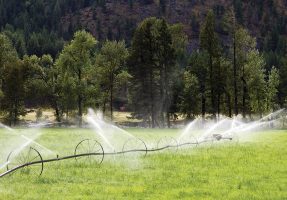
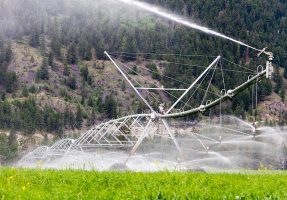
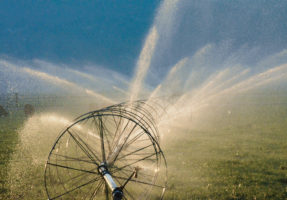
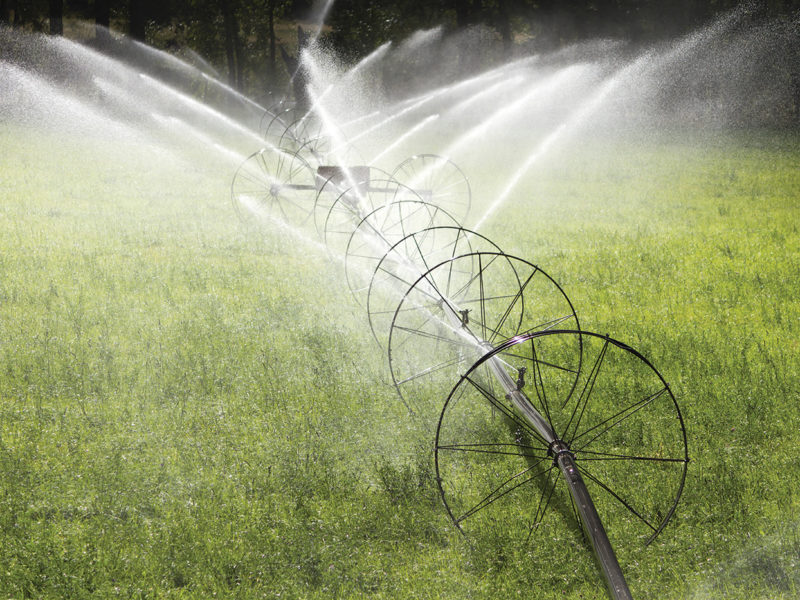
Irrigation wheel line sprinkler watering an alfalfa field farmland located in Keremeos, British Columbia, Canada.

May 1, 2021 byKate Ayers & Peter Mitham

DUNCAN – It’s been more than three years since Ken Ellison applied for licences to draw water from the three wells on his farm in the Cowichan Valley as part of a new groundwater management regime introduced under the Water Sustainability Act in 2016.

With water restrictions in his area becoming more common, the idea of having priority access in the event of water restrictions under the first in time, first in right (FITFIR) provisions of the new act appealed to him.

But, like hundreds of other well owners, Ellison has yet to receive his licences. Adding to his frustration, the same act he believed would protect his water rights was invoked in 2019 to prevent Ellison and other farmers in the Koksilah watershed from irrigating their crops.

“Our water was taken away from us for six weeks, with absolutely no consideration for FITFIR and still to this date I have heard nothing about a confirmation on my licences,” he says. “The promise of FITFIR is the only reason that I went forward with these applications, and government has mishandled this program the whole way through!”

Ellison is not alone in his frustration. Other users have seen the provisions of the new regime for non-domestic groundwater users as needlessly confusing and more restrictive than anticipated. Many have simply held off applying for a licence.

According to the most recent statistics  from the BC Ministry of Forests, Lands, Natural Resource Operations and Rural Development, just 4,069 licence applications had been received by March 31 of an estimated 20,000 wells in the province. And of these applications, just 1,292 licences have been issued.

This is shaping up to be a massive headache for government, which initially gave existing users two years to register their wells and obtain groundwater licences. The province waived application fees as an incentive. But a lack of uptake forced the province to extend the deadline twice. Users now have until March 1, 2022 to register their wells without losing their FITFIR designation. The province is on record saying that no further extensions will be given.

“If the vast majority of users do not apply, they are not going to stop using their water, so government will have a big enforcement and non-compliance problem on their hands,” says the province’s former deputy comptroller of water rights Mike Wei, who helped draft the new groundwater regulation. “Politically, that will be a difficult thing to manage.”

The concerns were highlighted in a report Wei co-authored for the Partnership for Water Sustainability in BC last month.

New users – those who applied for wells drilled or commissioned on or after March 1, 2016 – also require a licence. However, historical users without a licence on March 1, 2022 will be deemed new users, too.

“Any new-use applications received prior to theirs will get a more senior priority date. By not applying, historical groundwater users are effectively giving their current volume of groundwater use back to the government for reallocation,” notes the report.

Wei appreciates the frustration Ellison and other applicants have experienced.

“When you apply, people don’t hear anything from government for years and silence is deadly,” Wei says.

In addition to not keeping applicants informed, the government has not explained the benefits of applying for a licence and the consequences of non-compliance to those who have yet to apply, Wei says. Historical water users put their livelihoods at risk by not applying for a licence and there could be far-reaching implications for BC farmers and rural businesses.

“The transition is meant to bring people into the fold, not to exclude people from the fold,” he says. “If the government signals that and communicates clearly what all this means for the average business person, that would be great. It’s not a tax grab; it’s a transition from one system of right of access to another.”

To build confidence in the new groundwater regime, the recent report says the province should dedicate adequate staff to processing applications and promptly issue licences to existing users.

The recent provincial budget took a step in this direction with an $11 million allocation to support FrontCounterBC offices around the province.

BC Agriculture Council executive director Reg Ens expects much of this to be spent on staffing, improving service delivery and reducing processing times.

“Specifically where we’re hoping that helps is with the groundwater licensing issue –  that huge backlog that’s there,” he says.

The report also urges the province to explain the consequences of not obtaining a licence, and being open to extending the application deadline.

Wei thinks the province should undertake compliance activities to show it’s serious about unauthorized water use. It also needs to rethink its deadline for implementation.

“I just don’t see 10 months being sufficient, especially during a pandemic with no end in sight,” says Wei. “Government is the only one who can extend the timeframe.”
 

Related Posts

You may be interested in these posts from the same category.

Southern Interior irrigators shut down

Island farmers fish for water solutions

Groundwater enforcement picks up

Water licence fight highlights need for change

Westwold producers challenge curtailment

Watershed strategy could hang ag out to dry

No licence, no problem

Watershed security report

Groundwater users could lose rights next year

Feeling the heat on water

Water licensing process needs streamlining

No extension for groundwater

Previous Post: « Province to lift restrictions on second homes
Next Post: Census of Agriculture launches »

Copyright © 2026 Country Life in BC · All Rights Reserved