• Menu
  • Skip to primary navigation
  • Skip to main content
  • Skip to primary sidebar

Country Life In BC Logo

The agricultural news source in British Columbia since 1915

  • Headlines
  • Calendar
  • Subscribe
  • Advertise
  • About
  • Archives
  • Contact
  • Search
  • Headlines
  • Calendar
  • Subscribe
  • Advertise
  • About
  • Archives
  • Contact
  • Search

Primary Sidebar

Originally published:

October 2018
Vol. 104 Issue 10

Subscribe Now!

Sign up for free weekly FARM NEWS UPDATES

Loading form…

Your information will not be
shared or sold ever

Stories In This Edition

Sheep thrills

Farm employers on edge

Right-to-farm case upheld

Snow puts the brakes on Peace grain harvest

Editorial: The hands that feed us

Back Forty: Saving farmland fruitless without water

Op Ed: US could learn a thing (or two) from Canada

Piece-rate study sets stage for payday changes

Photo: Day at the Farm

Berry growers report decent growing season

FIRB posed to set live BC chicken prices – again

BCYAF grants support key 4-H initiatives

Cherry growers hit hardest by wildfire smoke

Ag Briefs: Winner

Ag Briefs: Right to Farm Act review cancelled

Local governments can’t undermine ALR rules

Winfield grower has ambitious cannabis plans

Province funds land-matching program

BC Fresh expands to meet national demand

Challenging year fails to daunt new producer

Corn trials focus on lower heat units for BC

When the right thing turns out to be wrong

Wildfires prompt local response planning

Mixer-feeder offers all-in-one feeding option

Non-traditional forage mixtures promising

Small farmers network targets knowledge gap

Hazelnut renewal enters second phase

Research: Scratch that itch

Partners announced for farmers’ market trail

FV land limitations means higher density

Fair lives up to its farm roots

Pumpkin growers use crop to reach out to public

Wannabe Farmer: The usual gives plenty of cause for thanks

Woodshed: Wishful thinking as Caribbean holiday nears

Jude’s Kitchen: Fall heralds heartier meals, yummy appies


More Headlines

Follow us on Facebook

Comments Box SVG iconsUsed for the like, share, comment, and reaction icons

3 hours ago

The Agricultural Land Commission is laying off staff after years of flat funding under the BC NDP. ALC chair Jennifer Dyson warns that application volumes, enforcement activity and legal obligations have all risen while its operating budget has stayed effectively flat — meaning longer wait times ahead for some services.

#BCAg
... See MoreSee Less

Link thumbnail

Land Commission lays off staff

www.countrylifeinbc.com

With no budget increase this year, the Agricultural Land Commission (ALC) is laying off six staff to make ends meet. “Ongoing financial constraints and the requirement to operate within the approved...
View Comments
  • Likes: 0
  • Shares: 1
  • Comments: 0

Comment on Facebook

6 days ago

A BC Forest Practices Board investigation has found overgrazing has damaged grasslands in the Coutlee Range Unit near Merritt — and the range-use plan meant to prevent it was unenforceable. With complaints about overgrazing on the rise and grasslands covering just 1% of BC's land mass, the findings raise fresh questions about how the province manages one of its most vulnerable — and valuable — food-producing ecosyste#BCAg#BCAg ... See MoreSee Less

Link thumbnail

Board finds overgrazing rules unenforceable unmeasurable

www.countrylifeinbc.com

MERRITT – A BC Forest Practices Board investigation has found instances of non-compliance related to overgrazing have damaged open grasslands in the Mine pasture, part of the Coutlee Range Unit near...
View Comments
  • Likes: 6
  • Shares: 6
  • Comments: 6

Comment on Facebook

Several ranchers in recent years have gone into temporary non use on that range , so that means the grass should grow. But drought conditions/lack of rain and snow don’t allow that to happen . Dried up springs , creeks waterholes in various pastures add to over grazing where there is water , as livestock and everything else stay close to the water source . So even though less cattle are on it , over grazing appears. There is a large volume of horses on it 365 days/year which is wrong ! They pull grass right out of the ground when it’s just trying to grow ,, opens the door for weeds to grow in. That don’t help it. Aging infrastructure ( fences) laying on the ground, pipe line building , ( lack of commitment to fence maintenance) amongst all users contributes also to over grazing. Recreational atv users leaving gates open between pastures allows livestock to go back or ahead in pastures also expidites over grazing. Logging ( bcts) has no problem laying out cut locks on both sides of a fence , then it gets smashed down during logging and they don’t take responsibility to stand it back up or clean the cattle gaurds out when they are done , that happened 4 years ago on pasture 5 up there . I bet it is still not fixed . There are lots of contributing factors to the problem.

Tragedy of the commons.

I looked through the report. I saw nothing about the effects of noxious weeds on productive grasslands. This particular area is vulnerable because of the Ministry’a efforts to diversify the use of the Grasslands.

This pasture is under tremendous pressure not only from cattle but from irresponsible local residents who treat it as a landfill dumping all manner of household debris here. And don't even get me started on the mud bogging and camping in sensitive riparian areas. The feral horses are in this pasture 365 days a year just hammering it. Would sure be nice to see some enforcement action on people who are intentionally ripping up the grasslands and riparian areas. Cattle could be a valuable resource for rebuilding soils and native grasses in this area with the help of electric fencing and/or e-collars. The humans will be harder to manage.

The Forest and Range Practices Act was written by lawyers for global forest licencee shareholders. Results-based = unenforceable.

Also, can we talk about the impact of a pipeline being built through the middle of this field for multiple years?

View more comments

1 week ago

East Kootenay rancher Randy Reay is digging a new well after two natural water sources dried up on his Crown tenures. A new Living Lakes Canada assessment found 15% of mapped aquifers in the region are high-priority for monitoring, yet 80% of those go unmonitored. With over 48% of BC's provincial observation wells reporting below-normal groundwater levels, ranchers and researchers are sounding the alarm on water security. The story is in our March edition, and we've posted it to our website thi#BCAgk.

#BCAg
... See MoreSee Less

Link thumbnail

Water woes: groundwater under pressure across BC

www.countrylifeinbc.com

JAFFRAY – As a young boy growing up in the Kootenay-Boundary region, Randy Reay never expected to run out of water. But this year, in mid-February, his fields are bare. There is no snow halfway up t...
View Comments
  • Likes: 8
  • Shares: 7
  • Comments: 1

Comment on Facebook

Jaffrey is in the east Kootenays not kooteney boundary

2 weeks ago

BC farmers are bracing for prolonged higher input costs as war in the Middle East drives up fuel and fertilizer prices. Nitrogen fertilizer costs were already climbing before the Iran conflict began, with prices still roughly 60% above pre-pandemic levels. Farm Credit Canada warns that unlike 2022, strong commodity prices may not offset rising costs this time. Local suppliers expect supply challenges and further price increases ahead.

#BCAg
... See MoreSee Less

Link thumbnail

Fertilizer prices on the rise

www.countrylifeinbc.com

War in the Middle East has delivered a generational shock to energy prices, meaning BC farmers can expect a prolonged period of higher costs not just for fuel but also for fertilizer.
View Comments
  • Likes: 2
  • Shares: 1
  • Comments: 0

Comment on Facebook

2 weeks ago

... See MoreSee Less

View Comments
  • Likes: 1
  • Shares: 0
  • Comments: 0

Comment on Facebook

Subscribe | Advertise

The agricultural news source in British Columbia since 1915
  • Email
  • Facebook

Wildfires prompt local response planning

Bulkley Valley residents prepare for the inevitable after the worst fire season on record

October 2, 2018 byDan Mesec

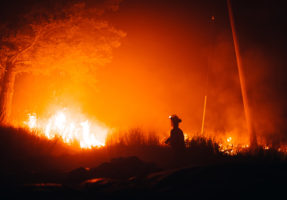
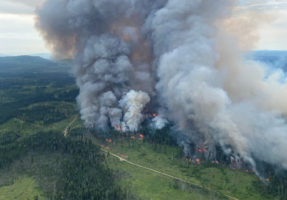
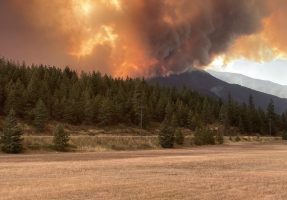
SMITHERS – As wildfires in BC’s Central Interior seared the land and sent homesteaders, farmers and ranchers scrambling to evacuate animals, their neighbours to the northwest sprang into action.

It didn’t take long for rural residents in the Bulkley Valley to open their pastures to anyone who needed it to house livestock or provide much-needed hay and grain to animals displaced by the fires.

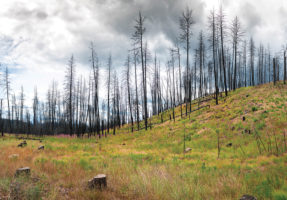
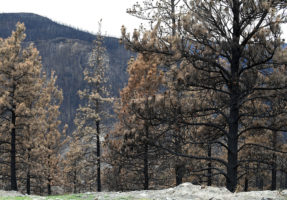
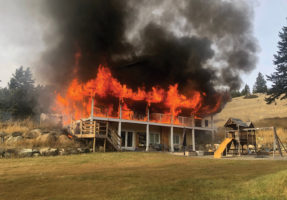
The events also proved that many were unprepared for the ferocity of what is now the worst wildfire season in BC history.

With that in mind, many rural residents are now facing the grim prospect that intense wildfires are a fact of life and preparations for next season have already begun. Soon after the first evacuation notices went out near François Lake and Fraser Lake, the Northwest Forest Fire Support Network (NWFFSN) launched to support those displaced by the fires and tend to evacuated livestock.

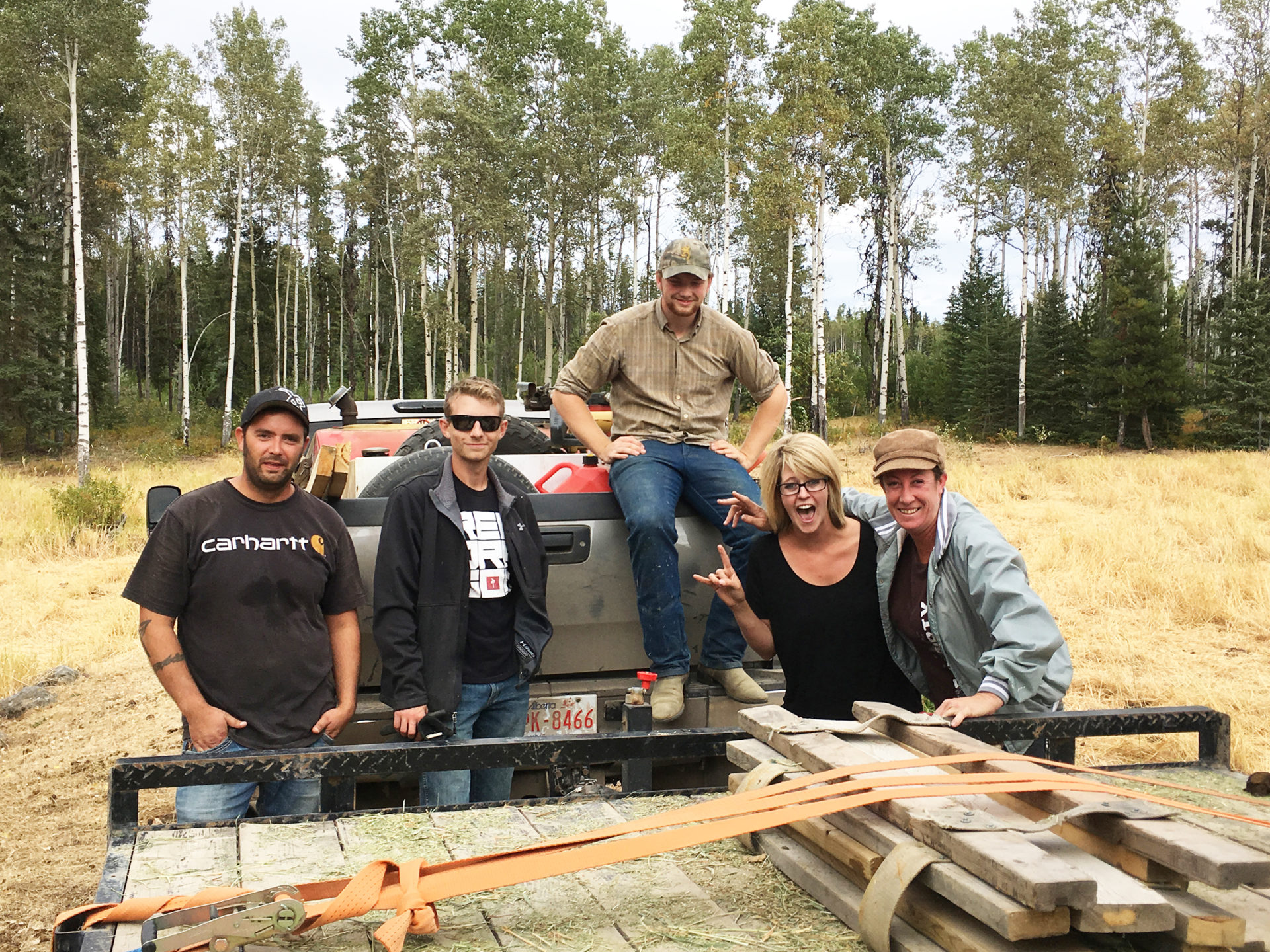
“I remember watching the forest fire scene in the Bambi movie as a kid and wondering ‘what are the animals behind the fences going to do?’ said Deanna Bell, a Houston resident who grew up on a farm. “So a group of us got together to see what we could do to help. We started a Facebook page and a GoFundMe account and ended up on Global News and a bunch of newspapers and have already paid out nearly $25,000. Every cent of that money has gone towards the animals, or towards the feed or people hauling feed.”

Bell says they are trying to help as many people as possible and have already organized dozens of shipments of feed and found temporary housing for animals from as far away as Telegraph Creek. Although they’ve been successful in helping locate and provide animal feed and hay for several weeks, the challenge now is equipping farmers and ranchers for the winter. It’s not an easy task.

“People’s fences are burnt, their pasture is burnt, their hay is burnt; I asked one lady, who’s got 30 horses, what they will need for hay for the winter,” Bell said. “She needs 210 bales of hay at 1,200 pounds a piece. If you do the math, that’s $18,900. That’s for one producer.”

Although Bell says it’s going to be tough to ensure every farm and ranch has what they need to take care of their animals over the winter, she and other members of the NWFFSN are prepared to help.

In communities like Houston, Hazelton and Smithers, people are pulling together to relocate animals, load trailers full of hay headed east and

co-ordinate with the Regional District of Bulkley-Nechako to ensure those who need support get it.

The aggressiveness of the 2018 wildfire season has alarmed many in the region.

About 200 kilometres west of Burns Lake in the Bulkley Valley, where smoke lingered for a few days but never experienced the brunt of the fires, many ranchers and farmers are worried about the years to come and wonder how they will protect their lands after hearing about the devastation just a couple hundred kilometres away.

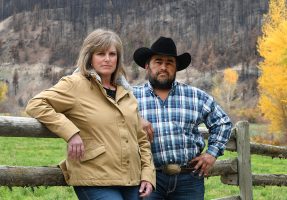
“With the fires this summer, everyone in rural areas is really spooked,” said Monty Bassett, a former rancher near Smithers. “Because we are in between municipalities and so spread out, it’s a low priority for the government. So we came up with the idea of starting some kind of fire response unit.”

Bassett and about 20 other ranchers and farmers outside Smithers in Driftwood, are holding meetings in preparation for how they’ll work together to develop an effective first-response unit to ensure if fires do make it to the Bulkley Valley, they don’t get out of control before the BC Wildfire Service can respond.

Equipment and access to resources like training, hoses and water pumps are just some of the plans they hope to bring up once they meet with government officials later this fall. One idea that seems to be gaining traction with the community is utilizing an old water tanker as a would-be fire truck to put out potential brush fires before they become a major problem.

“When you have these monster fires and they can send ash kilometres away, I think it’s time we start protecting ourselves,” said Bassett. “Years ago, there was a barn fire and a bunch of us ran to put it out. After the fire we thought the community should have a centralized fire truck. I think it’s time to revitalize that idea, as we’re all assuming these wildfires will just continue.”
 

Related Posts

You may be interested in these posts from the same category.

Wildfires rip through Southern Interior

Wildfire threat remains high

Ranchers facing rangeland losses

Ranchers face rangeland losses

Wildfire 2021: ‘They keep locals in the dark. That is really problematic.’

Don’t blame the wildfires

Wildfire state of emergency ends

Province announces wildfire recovery funds

Province pledges emergency funding

Record temps kill poultry

Wildfires spark emergency declaration

Livestock producers count losses

Previous Post: « Right to Farm Act review cancelled
Next Post: Right to Farm Act review cancelled »

Copyright © 2026 Country Life in BC · All Rights Reserved