• Menu
  • Skip to primary navigation
  • Skip to main content
  • Skip to primary sidebar

Country Life In BC Logo

The agricultural news source in British Columbia since 1915

  • Headlines
  • Calendar
  • Subscribe
  • Advertise
  • About
  • Archives
  • Contact
  • Search
  • Headlines
  • Calendar
  • Subscribe
  • Advertise
  • About
  • Archives
  • Contact
  • Search

Primary Sidebar

Originally published:

August 2017
Vol. 103 Issue 8

Subscribe Now!

Sign up for free weekly FARM NEWS UPDATES

Select list(s) to subscribe to


By submitting this form, you are consenting to receive marketing emails from: Country Life in BC. You can revoke your consent to receive emails at any time by using the SafeUnsubscribe® link, found at the bottom of every email. Emails are serviced by Constant Contact
Your information will not be
shared or sold ever

Stories In This Edition

Out of harms way: photo

Wildfires put hundreds of ranchers at risk

Popham appointed ag minister

LIFO a hindrance, supply managed groups say

Dream job

Editorial: Trial by Fire

Back Forty: Future of farming – without the farmer

OpEd: Annual fairs celebrate hard work, diversity of farmers

Ranchers first line of defense against wildfires

Photo: Too close for comfort

Wildfire destroys Ashcroft dairy, feedlot

Weather delivers a lighter berry crop

BC turkey allocations fall as consumption lags

Photo: Fan club

Kelowna ag plan looks to strengthen farming

Ag brief: Ag council announces new executive members

Ag Brief: Rollover claims farmer

Ag Brief: Scholarship winner announced

Ag Brief: FCC steps up

Letter: Protect farmland

Village Farms sets to roll with cannibis

Photo: Matsqui retirement

Surprise audits part of tighter food safety regimes

NAFTA on block

Demand for ranchland drives BC property sales

Photo: Strike

Island farmers grapple with armyworm infestation

Berryhill opens new Chilliwack processing plant

Alfalfa winterkill puts chill on Nechako Valley exports

Sidebar: Feed, pasture in short supply

Tractor parade honours well-loved

Cowichan farmer

Partnership creates forage possiblities

Sidebar: How did it work

Cover crop trials aim to throw new

seeds into mix

Research: Is bigger always better

Salmon a cash cow for BC fish farmers

Sidebar: Would you rather be a fish?

Kwantlen gives governments food system options

KPU field lab grows opportunities for students, public

Summerland location of choice for innovation centre

Soft landing

Impacts of farming under stress often hidden

Hedgerows offer native plants for native bugs

Sidebar: Cultivating pollinators

BC sheep producers take honours at national competition

Fair Season

Stock show

Wannabe – when fire rages

Alpacas find a haven in the North Okanagan

Woodshed: Henderson’s mishap no laughing matter

Dairy farm breakfasts welcome public

Dilly-icious dishes

More Headlines

Follow us on Facebook

Comments Box SVG iconsUsed for the like, share, comment, and reaction icons

6 days ago

... See MoreSee Less

View Comments
  • Likes: 4
  • Shares: 0
  • Comments: 0

Comment on Facebook

7 days ago

On the last day of the BC Organic Conference, Thursday, Molly Thurston of Pearl Agricultural Consulting helped growers learn how to manage bugs such as codling moth, wireworm, and rootworm in organic growing systems. Her talk alongside Renee Prasad included hands-on activities in which participants checked out various traps and examined pests under microscopes. Be sure to look for more upcoming ag events on our online calendar at www.countrylifeinbc.com/calendar/

#BCAg
... See MoreSee Less

On the last day of the BC Organic Conference, Thursday, Molly Thurston of Pearl Agricultural Consulting helped growers learn how to manage bugs such as codling moth, wireworm, and rootworm in organic growing systems. Her talk alongside Renee Prasad included hands-on activities in which participants checked out various traps and examined pests under microscopes. Be sure to look for more upcoming ag events on our online calendar at www.countrylifeinbc.com/calendar/

#BCAg
View Comments
  • Likes: 15
  • Shares: 0
  • Comments: 0

Comment on Facebook

1 week ago

Well-known organic farmer and podcaster Jordan Marr gets interviewed by Country Life in BC’s own columnist and potato mavin Anna Helmer during the opening session of the BC Organic Conference at Harrison Hot Springs yesterday. Sessions run today (Wednesday) and Thursday and include organic and regenerative growing practices and expanding and advocating for the organic sector, all under the background of the newly launched Organic BC banner.

#BCAg
... See MoreSee Less

Well-known organic farmer and podcaster Jordan Marr gets interviewed by Country Life in BC’s own columnist and potato mavin Anna Helmer during the opening session of the BC Organic Conference at Harrison Hot Springs yesterday. Sessions run today (Wednesday) and Thursday and include organic and regenerative growing practices and expanding and advocating for the organic sector, all under the background of the newly launched Organic BC banner.

#BCAg
View Comments
  • Likes: 37
  • Shares: 2
  • Comments: 1

Comment on Facebook

Interested in finding out more about this

3 weeks ago

Today, we remember those who sacrificed their lives or their well-being for our freedom. Lest we forget. ... See MoreSee Less

Today, we remember those who sacrificed their lives or their well-being for our freedom. Lest we forget.
View Comments
  • Likes: 8
  • Shares: 0
  • Comments: 0

Comment on Facebook

1 month ago

FarmFolk CItyFolk is hosting its biennial BC Seed Gathering in Harrison Hot Springs November 27 and 28. Farmers, gardeners and seed advocates are invited to learn more about seed through topics like growing perennial vegetables for seed, advances in seed breeding for crop resilience, seed production as a whole and much more. David Catzel, BC Seed Security program manager with FF/CF will talk about how the Citizen Seed Trail program is helping advance seed development in BC. Expect newcomers, experts and seed-curious individuals to talk about how seed saving is a necessity for food security. ... See MoreSee Less

Link thumbnail

BC Seed Gathering - FarmFolk CityFolk

farmfolkcityfolk.ca

Save the date for our upcoming 2023 BC Seed Gathering happening this November 3rd and 4th at the Richmond Kwantlen Polytechnic University campus.
View Comments
  • Likes: 1
  • Shares: 0
  • Comments: 0

Comment on Facebook

Subscribe | Advertise

The agricultural news source in British Columbia since 1915
  • Email
  • Facebook

Wildfires put hundreds of ranchers at risk

Angie Mindus / Williams Lake Tribune

August 1, 2017 byPeter Mitham

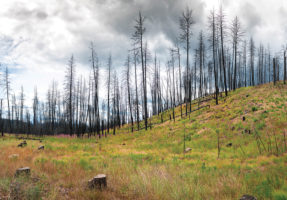
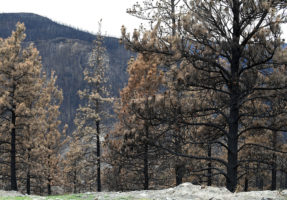
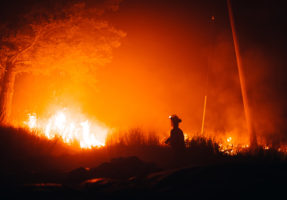
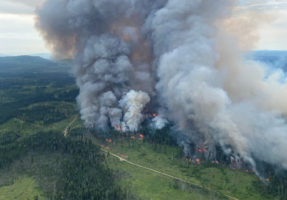
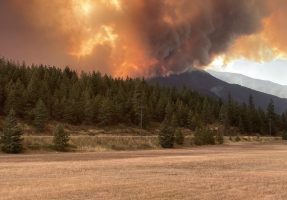
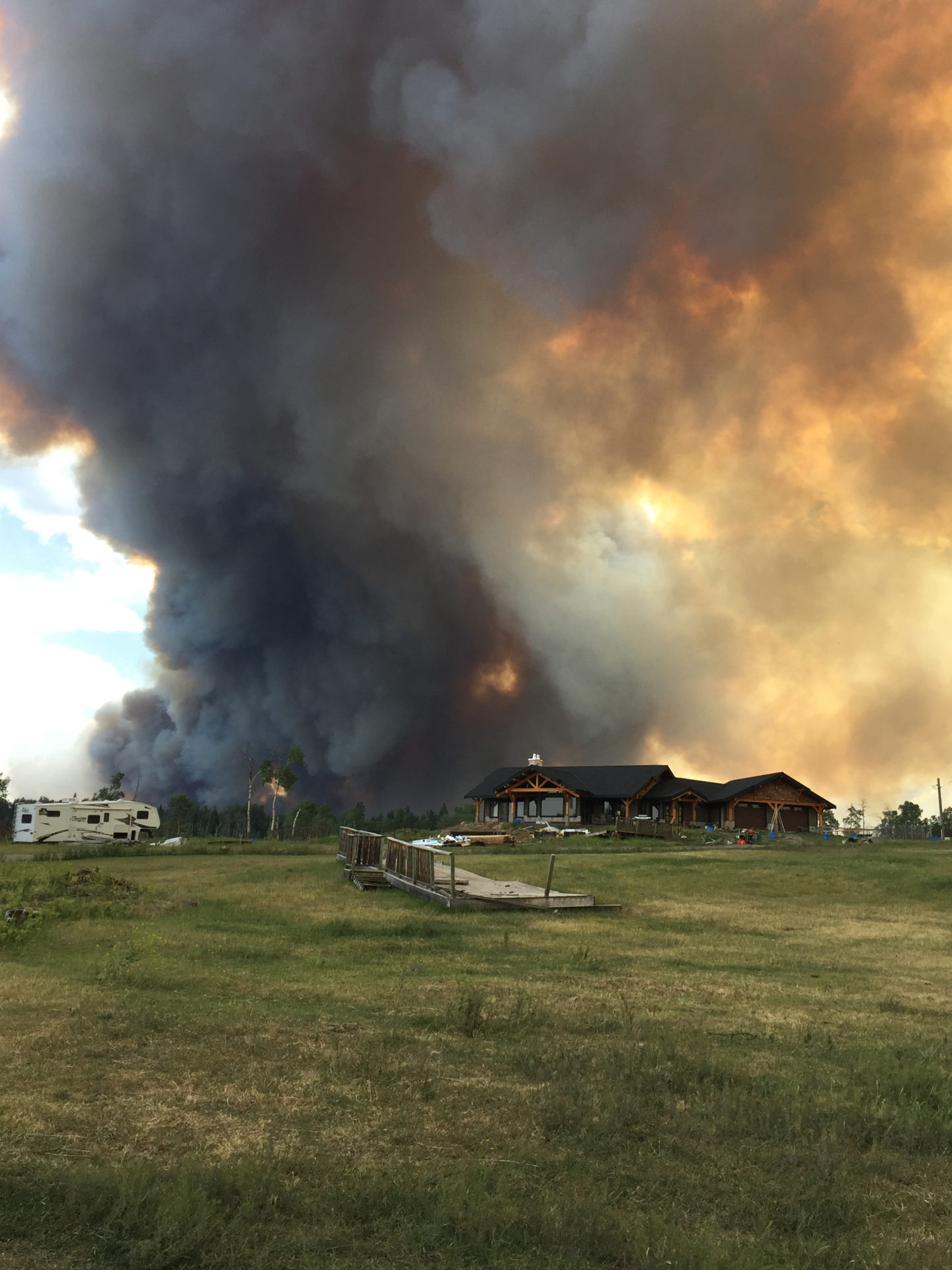
WILLIAMS LAKE – An unprecedented spate of wildfires that erupted across the central Interior in early July has put ranchers throughout BC on tenterhooks, wondering what the remainder of the summer will bring.

Dry lightning west of Williams Lake sparked more than 140 wildfires on July 7 alone, faster than the BC Wildfire Service could record them.

“It’s sort of unprecedented,” says Kevin Boon, general manager of the BC Cattlemen’s Association (BCCA) in Kamloops. “It’s one thing when you get one or two fires started, but when you get 150 in one day, it really changes things.”

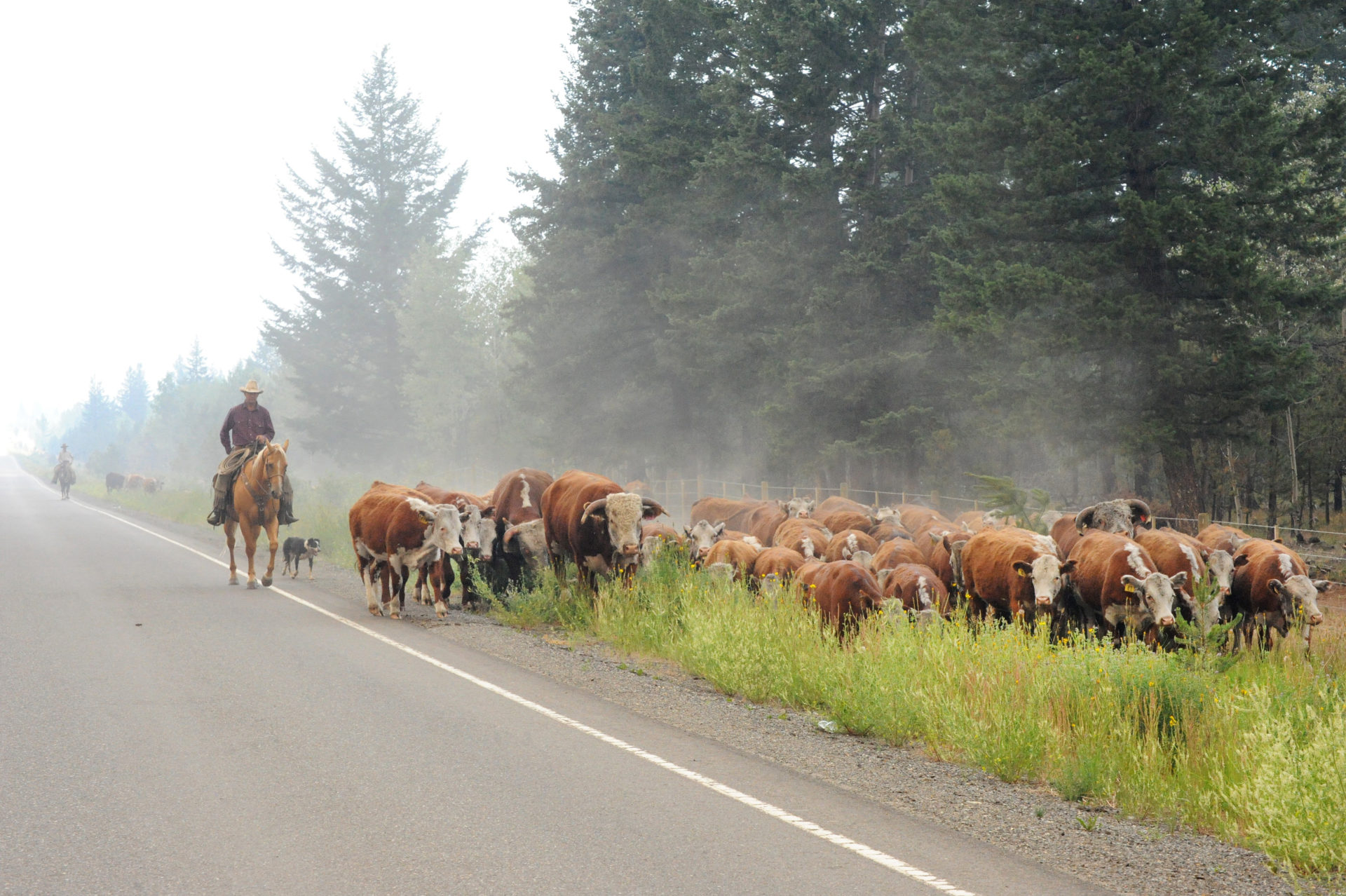
As this edition went to press, there were more than 150 wildfires burning larger than 1,075 square feet (0.01 hectares). Together with extinguished fires, they represented more than a million acres of scorched earth, rangeland and forest. The July fires displaced nearly 50,000 people at their peak, and the BCCA estimated that more than 10,000 cattle – not to mention horses and other livestock – were at risk. Many animals were evacuated to Prince George and Williams Lake, but when Williams Lake was evacuated July 14, many owners faced tough decisions.

“The ranchers are trying to stay on the ranches as long as possible to manage those so they can keep them contained as long as they can and move them to what they hope will be more safe spots as they go along,” Boon said. “But it’s a chore.”

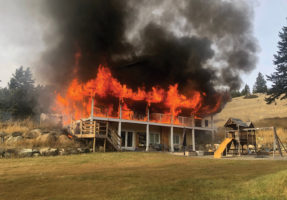
While livestock losses are unknown, a variety of sources confirmed the loss of cattle and other animals. Bradner R Farms lost nearly a dozen dairy cattle either directly or indirectly as a result of a fire at Ashcroft, which also devastated the local First Nations reserve. A video a UBC researcher shot during a harrowing journey through the fire zone around Hanceville noted the presence of animals in the flames.

The full tally won’t be known until ranchers can get back into the evacuation zones and round up their animals, however.

Weather-driven

Driving the fires has been a complex yet conducive mix of conditions.

Winter delivered above-average snowpacks to many parts of the province, and a late spring prevented farmers in many areas from getting into sodden fields until late May. Areas such as Riske Creek were even recording morning temperatures of -3 degrees Celsius as late as the week of July 10.

The cool, damp conditions provided the right conditions for forage and vegetation of all types to grow.

But then a sudden onset of summery heat in late June sucked moisture out of the ground.

Temperatures at 100 Mile House, the community closest to the Gustafsen Lake fire, shifted from a high of 16 degrees Celsius on June 21, to 25 degrees on June 23 – a day when the morning temperature was just 2 degrees. The following day, temperatures reached 29 degrees. During the first half of July, temperatures regularly exceeded 25 and often 30 degrees.

Over the same period, Ashcroft, one of the first communities to burn, saw just three days below 30 degrees, and two days where temperatures hit 38 and 39 degrees.

A lack of rain pushed the month to one of the driest on record, leaving nothing to replenish the lost moisture and shrivelling the spring’s lush growth into the perfect fodder for fire.

“The moisture that is in and under the canopy of the trees and on the grass has disappeared overnight. We went from, three weeks ago, ample moisture to having these 35, 38 degree days and it’s just dried things out immensely,” Boon said. “It’s just a tinderbox, pretty much Prince George south.”

The tinder began lighting in early July as careless humans and impartial lightning began doing their work, culminating in the firestorm that struck the Cariboo on July 7.

Far from over

The sharp start to the fire season has many wondering what comes next, given that the hottest days of summer have yet to arrive.

“There’s not too many ranchers in the province and people in the country that aren’t sitting a bit on pins and needles watching what’s happening in these fire areas,” Boon said. “It just takes one spark from one little thing and it could be totally innocent.”

The spark could be from horseshoes on rocks, or a metal implement, or even an ember lurking in a fleck of dry cigarette ash.

“There are so many little hazards out there that we don’t think are possible – they can happen,” Boon said. “We’re all at risk. This is a big firepit right now.”

While a controlled burn took place in the Mayfield Lake area west of Dog Creek Road this spring in an effort to mitigate the risk of a catastrophic wildfire in the Cariboo, each season’s moisture and weather remain critical risk factors for wildfire.

“We sometimes think, well, a fire went through here a few years ago and we think that we’re safe for a few years, but we’re safe until the ground gets dry again,” Boon said.

Once the fires have passed, ranchers will face a host of risks, both financial and operational.

Claims for lost property and livestock will be key, as well as arranging feed supplies for animals if dry conditions limit forage opportunities over the summer.

“The grazing lands to get us through the summer … are going to probably come up a little bit short, depending how much this fire burns – and the subsequent fires coming up because we’re at the start of fire season,” Boon said.

Two years ago, during the drought of 2015, government and financial institutions offered assistance ranging from flexible payment options to special credit facilities to help tide producers over.

Communities and businesses such as TNT Hay & Cattle Sales have also rallied to provide in-kind support for evacuated livestock in the short-term, while the outgoing BC Liberals pledged $100 million in relief funds that the incoming BC NDP government is open to increasing. In addition, Farm Credit Canada has pledged $25,000 in relief funding.

Rebuilding ranch infrastructure will be the next hurdle, from outbuildings and irrigation systems to fences.

Collisions between cattle and motor vehicles were a hot topic for ranchers before this summer’s fires, and will be even more of a concern in areas where the flames passed. With millions being spent to renew the existing fence infrastructure, any losses to highway fencing are critical.

When the fast-moving Rock Creek fire burned through kilometres of new fencing, ranchers moved swiftly to replace what had been lost – as much for their cattle’s safety as that of motorists.

“We were building fence before the fire was out, and we expect to be doing the same [this year],” Boon said. “It’s a huge issue for us.”
Related Posts

You may be interested in these posts from the same category.

Wildfires rip through Southern Interior

Wildfire threat remains high

Ranchers facing rangeland losses

Ranchers face rangeland losses

Wildfire 2021: ‘They keep locals in the dark. That is really problematic.’

Don’t blame the wildfires

Wildfire state of emergency ends

Province announces wildfire recovery funds

Province pledges emergency funding

Record temps kill poultry

Wildfires spark emergency declaration

Livestock producers count losses

Previous Post: « Poultry abuse underscores need to measure up
Next Post: Ranchers first line of defense against wildfires »

Copyright © 2025 Country Life in BC · All Rights Reserved