• Menu
  • Skip to primary navigation
  • Skip to main content
  • Skip to primary sidebar

Country Life In BC Logo

The agricultural news source in British Columbia since 1915

  • Headlines
  • Calendar
  • Subscribe
  • Advertise
  • About
  • Archives
  • Contact
  • Search
  • Headlines
  • Calendar
  • Subscribe
  • Advertise
  • About
  • Archives
  • Contact
  • Search

Primary Sidebar

Originally published:

September 2018
Vol. 104 Issue 9

Subscribe Now!

Sign up for free weekly FARM NEWS UPDATES

Loading form…

Your information will not be
shared or sold ever

Stories In This Edition

BC faces another summer of fire

Heather takes the cake

ALR report confirms agenda

Organic labelling regulations kick in September 1

Editorial: Inside information

Back Forty: Quantum change in the barn and kitchen

OpEd: Civic elections important for agriculture

Armyworm infestation hits North Okanagan

New entrants face scrutiny, but no waitlist

Surprise quota increase for dairies

Carrot field day

National apple programs focus of OK meeting

Okanagan tree fruits grab international spotlight

Farmers put food hub on wish list

Farming matters

Potato trials reflect change in consumer tastes

Veterinary partnership aimrs to improve service

Ag Brief: New public trust manager planning workshops

Ag Brief: BCAC hires new environmental programs mgr

Ag Brief: Poultry specialist joins IAF

Ag Brief: Salmon farmers hire new executive director

Ag Brief: New island agrologist

Automation good investment for nursery

Hort show offering more educational opportunities

Grant harnesses opportunities for farming

Flood management requires collaboration

Rancher goes wireless to manage irrigation

Wildfire lessons learned, but still work to be done

National park reserve consultations to resume

BC youth prevail at Western Canadian Classic

Land trust for Metro Vancouver floated again

Cawston market garden looks to future

Summer Institute plants seeds of knowledge

Cariboo farm thrives with mentorship

Research: Genetic editing stops deadline pig virus

Ploughing championship in sight

Coop rentals connect urbanites with farming

Maple Ridge consults on backyard chickens

Organic pioneers reflect on growth, changes in sector

Hooked on 4-H

Fair time

Woodshed: Sweet-talkin’ Henderson makes vacation plans

Wannabe: Here’s to the ordinary

Feast of Fields

Jude’s Kitchen: September and birthday celebrations

More Headlines

Follow us on Facebook

Comments Box SVG iconsUsed for the like, share, comment, and reaction icons

6 days ago

A BC Forest Practices Board investigation has found overgrazing has damaged grasslands in the Coutlee Range Unit near Merritt — and the range-use plan meant to prevent it was unenforceable. With complaints about overgrazing on the rise and grasslands covering just 1% of BC's land mass, the findings raise fresh questions about how the province manages one of its most vulnerable — and valuable — food-producing ecosyste#BCAg#BCAg ... See MoreSee Less

Link thumbnail

Board finds overgrazing rules unenforceable unmeasurable

www.countrylifeinbc.com

MERRITT – A BC Forest Practices Board investigation has found instances of non-compliance related to overgrazing have damaged open grasslands in the Mine pasture, part of the Coutlee Range Unit near...
View Comments
  • Likes: 6
  • Shares: 6
  • Comments: 6

Comment on Facebook

Several ranchers in recent years have gone into temporary non use on that range , so that means the grass should grow. But drought conditions/lack of rain and snow don’t allow that to happen . Dried up springs , creeks waterholes in various pastures add to over grazing where there is water , as livestock and everything else stay close to the water source . So even though less cattle are on it , over grazing appears. There is a large volume of horses on it 365 days/year which is wrong ! They pull grass right out of the ground when it’s just trying to grow ,, opens the door for weeds to grow in. That don’t help it. Aging infrastructure ( fences) laying on the ground, pipe line building , ( lack of commitment to fence maintenance) amongst all users contributes also to over grazing. Recreational atv users leaving gates open between pastures allows livestock to go back or ahead in pastures also expidites over grazing. Logging ( bcts) has no problem laying out cut locks on both sides of a fence , then it gets smashed down during logging and they don’t take responsibility to stand it back up or clean the cattle gaurds out when they are done , that happened 4 years ago on pasture 5 up there . I bet it is still not fixed . There are lots of contributing factors to the problem.

Tragedy of the commons.

I looked through the report. I saw nothing about the effects of noxious weeds on productive grasslands. This particular area is vulnerable because of the Ministry’a efforts to diversify the use of the Grasslands.

This pasture is under tremendous pressure not only from cattle but from irresponsible local residents who treat it as a landfill dumping all manner of household debris here. And don't even get me started on the mud bogging and camping in sensitive riparian areas. The feral horses are in this pasture 365 days a year just hammering it. Would sure be nice to see some enforcement action on people who are intentionally ripping up the grasslands and riparian areas. Cattle could be a valuable resource for rebuilding soils and native grasses in this area with the help of electric fencing and/or e-collars. The humans will be harder to manage.

The Forest and Range Practices Act was written by lawyers for global forest licencee shareholders. Results-based = unenforceable.

Also, can we talk about the impact of a pipeline being built through the middle of this field for multiple years?

View more comments

1 week ago

East Kootenay rancher Randy Reay is digging a new well after two natural water sources dried up on his Crown tenures. A new Living Lakes Canada assessment found 15% of mapped aquifers in the region are high-priority for monitoring, yet 80% of those go unmonitored. With over 48% of BC's provincial observation wells reporting below-normal groundwater levels, ranchers and researchers are sounding the alarm on water security. The story is in our March edition, and we've posted it to our website thi#BCAgk.

#BCAg
... See MoreSee Less

Link thumbnail

Water woes: groundwater under pressure across BC

www.countrylifeinbc.com

JAFFRAY – As a young boy growing up in the Kootenay-Boundary region, Randy Reay never expected to run out of water. But this year, in mid-February, his fields are bare. There is no snow halfway up t...
View Comments
  • Likes: 8
  • Shares: 7
  • Comments: 1

Comment on Facebook

Jaffrey is in the east Kootenays not kooteney boundary

2 weeks ago

BC farmers are bracing for prolonged higher input costs as war in the Middle East drives up fuel and fertilizer prices. Nitrogen fertilizer costs were already climbing before the Iran conflict began, with prices still roughly 60% above pre-pandemic levels. Farm Credit Canada warns that unlike 2022, strong commodity prices may not offset rising costs this time. Local suppliers expect supply challenges and further price increases ahead.

#BCAg
... See MoreSee Less

Link thumbnail

Fertilizer prices on the rise

www.countrylifeinbc.com

War in the Middle East has delivered a generational shock to energy prices, meaning BC farmers can expect a prolonged period of higher costs not just for fuel but also for fertilizer.
View Comments
  • Likes: 2
  • Shares: 1
  • Comments: 0

Comment on Facebook

2 weeks ago

... See MoreSee Less

View Comments
  • Likes: 1
  • Shares: 0
  • Comments: 0

Comment on Facebook

2 weeks ago

Cameron Stockdale is the new executive director of provincial farm safety organization AgSafeBC. Find out more in this week's Farm News Update from Country Life in B#BCAg#BCAg ... See MoreSee Less

Link thumbnail

New leadership at AgSafe BC

www.countrylifeinbc.com

Cameron Stockdale is the new executive director of provincial farm safety organization AgSafeBC, succeeding Wendy Bennett. Bennett left AgSafeBC in September 2025, following 12 years with the…
View Comments
  • Likes: 5
  • Shares: 1
  • Comments: 0

Comment on Facebook

Subscribe | Advertise

The agricultural news source in British Columbia since 1915
  • Email
  • Facebook

Cariboo farm thrives with mentorship

Short-season production comes with long days

September 5, 2018 byMyrna Stark Leader

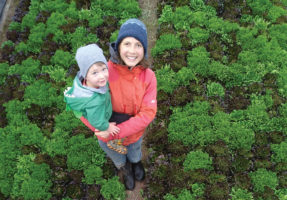
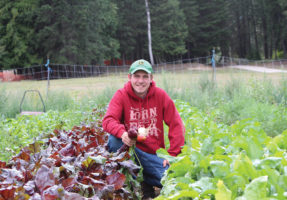
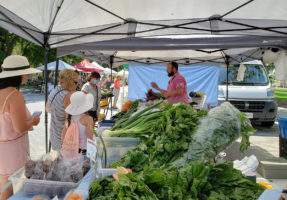
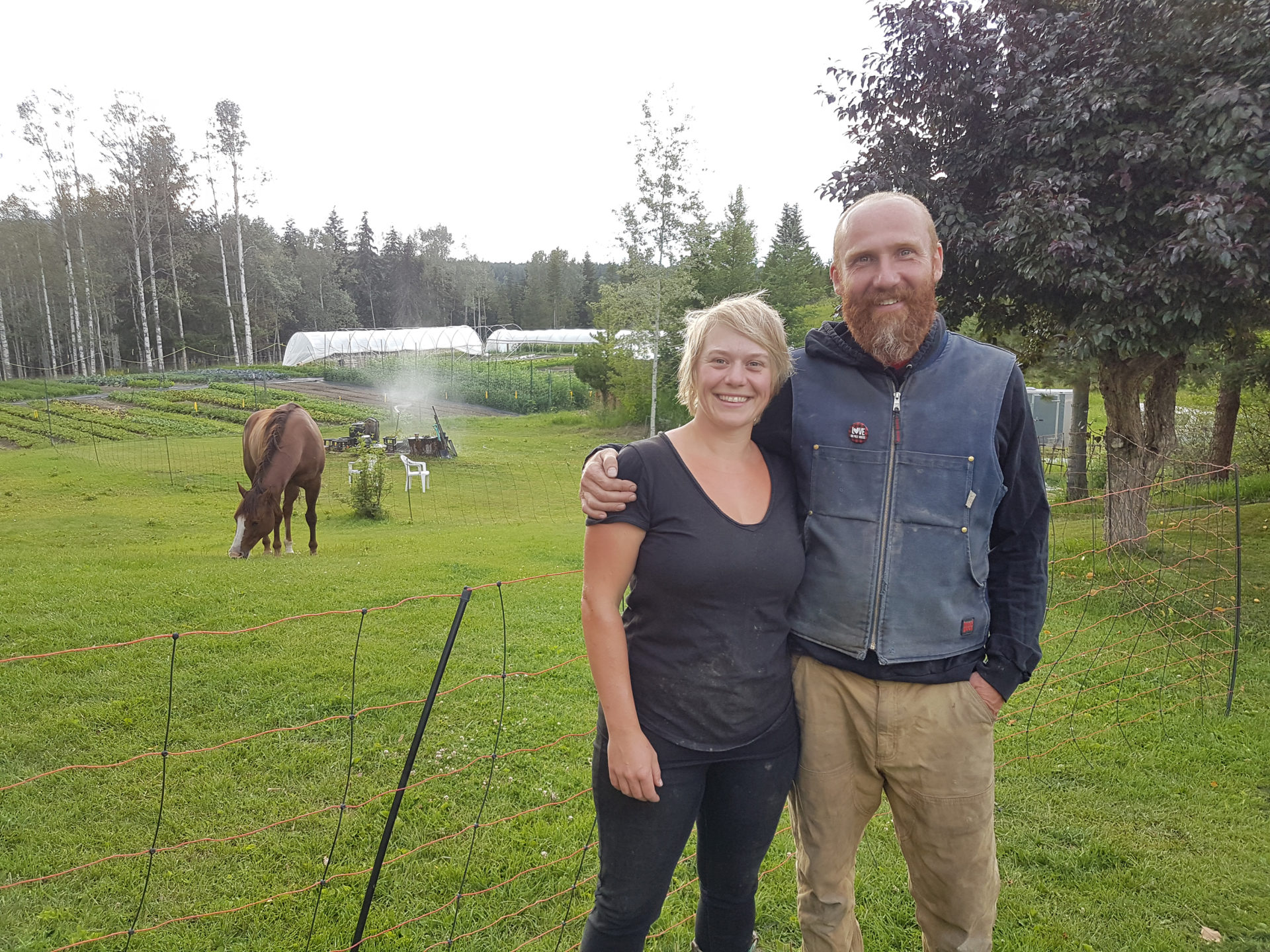
100 MILE HOUSE – At 8 pm, Robin Hunt and her husband of almost two years, Johan Bos, are finishing washing and prepping their produce for the next day’s 20-minute drive to the South Cariboo farmers’ market in 100 Mile House. It’s hard work, but both say it’s satisfying to do a job that helps feed people and sustains the land.

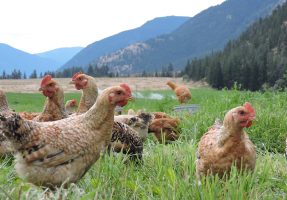
Two years ago, the couple turned a half-acre of pasture in Forest Grove into a market garden producing vegetables, strawberries and other small fruit. They also raise heritage chickens for meat and eggs. A herd of pigs was also part of the mix but this year they’re focusing on the garden.

Both were on the coast working, she in film and photography and he as a lighting technician for concerts and other events. They met online but discovered they shared a common best friend. At the time, she lived above a horse barn in Squamish, had a couple horses and was already passionate about farming – for the lifestyle and personal fulfilment.

“The true passion started at 21. I built a 4×20-foot raised bed. It had everything – the tiniest little carrots. I learned lots and my gardens kept getting bigger,” Hunt recalls, saying she eventually convinced Bos to move to a rented farm in the Squamish valley where for two years they raised 30 chickens, boarded horses, had gardens, eggs and launched a small community-supported agriculture (CSA) venture.

“I always wanted to run my own business and did so as a freelancer, so I said let’s give it a shot,” says Bos who, along with Hunt, advise others to spend a year working for someone else on a farm to learn more.

They say they couldn’t have been farmers if they’d had to buy property in Squamish but when Hunt’s grandfather died in 2016 they moved to Forest Grove and Big Rock Ranch to be with her grandmother, Karen Smith. The 148 acres was named for the high rock point on the property that overlooks the house and surrounding countryside. Hunt’s grandparents were both teachers and over the years leased their land for cattle grazing to the neighbouring Pincott Ranches Ltd.

“Johan is in charge of the livestock, bookkeeping, accounting, website design, YouTube and construction and I’m more in charge of the vegetable production and sales, marketing to public, restaurants and businesses and social media,” Hunt explains.

Market gardening here is challenging. The last frost can be as late as June 1 and the first in mid-September. To beat the short season, they’ve constructed two greenhouses and will be doing a third next year to give more plants a head start.

Hunt has strong feelings that food should be raised sustainability, which for her means working towards organic certification.

“We add ladybugs and beneficial nematodes to the garden to deal with issues like wireworms and aphids. We deal with things as nature would,” she explains.

She worries that people don’t think enough about the hours it takes to produce their food or how it reaches them. When wildfires limited travel in and around Forest Grove last year, she was able to provide a measure of local food security with deliveries of produce and eggs from the ranch. It was a small contribution that made her feel good.

Game changers

The couple are avid learners. They’ve borrowed great ideas to farm economically. Their cold storage, for example, is housed in an insulated shipping container cooled by a modified home air conditioner fitted with a CoolBot.

“It tricks the unit to go way cooler than it’s supposed to go. It’s a more affordable way to make a cool room and is way easier and cheaper to fix if something breaks,” Hunt says.

They’ve created a cleaning station for the produce that features an improvised air-bubbling system for washing greens. A washing machine has been retrofitted to spin-dry salad.

“The drying rack and the washing station is from Urban Farmer Curtis Stone and we want to build a germination chamber,” Bos says.

They bought a flame-weeder, a walk-behind tractor and attachments. YouTube videos taught them to build a tiny house that provides additional income as a vacation rental.

A mentorship engagement through Young Agrarians has been a key influence on their farming careers.

“Through meeting others, we began to see that this could be more than just a hobby, that it could be living for the two of us,” says Hunt. “We also obtained a mentor, Seann Dory, who met with us weekly for 30 hours. He started Sole Food Street Farms in Vancouver and is running Salt and Harrow Farm on [Vancouver] Island.”

Dory remains available to them, even though the formal mentorship is over.

“He said, ‘You guys are doing really good, even if you feel like the weeds are out of control and there’s too much work.’ He’s been really good at grounding us and showing us that we’re not alone,” says Bos.

“We usually call him around the burn-out point. … We say, ‘How do you guys do this in eight or 10-hour days?’ and he said, ‘We’re not. We’re doing 12-hour days just like you and it’s hard. It’s July but you will get to winter and have down time,’” Hunt adds. “We love it, but where’s the quality of life? We do try and find balance by taking Sundays off and away from the farm.”

Planning for profit

Recently, they submitted a one-minute video that saw them selected for a lifetime scholarship for The Market Gardener Master Class, an online learning forum for tools like crop plans from Quebec small-scale organic vegetable grower and author Jean-Martin Fortier. It’s a big win because Fortier promotes human-scale, ecological and – as importantly – profitable agriculture.

The couple’s future goal is for the farm to support themselves and a couple of employees. But for now, Bos will continue monthly contract lighting jobs and Hunt may do some film work in the off-season to supplement their farm income and pay back a small loan used mostly for equipment like their 2018 853 BCS Walk Behind Tractor.

“Part of the challenge right now is that we invested a lot,” says Hunt. “We’re seeing good sales, and our CSA members are happy, but it’s not easy. You have to start somewhere and ignite the interest in local farming, especially in a community like ours where people are still getting used to a profitable small-scale farm.”

To that end, she’s chair and he’s a director of the South Cariboo Farmers’ Market Society.

“We’ve talked to others who have reviewed our finances and what we’ve accomplished for a couple of people who just started this two years ago, [and] they say we are doing good,” adds Bos. “You have to set your financial goals and then work backwards. And it’s about determining the level of income you need or want.”
 

Related Posts

You may be interested in these posts from the same category.

RegenBC conference emphasizes context

Building soil structure with organic compost

Greenhouse sets example for others to follow

Passion and schooling pay off for young grower

BC organic growers flourish

Top grape grower recognized

Organic growers discuss challenges

New executive director for COABC appointed

COABC seeks new ED

Organics

Study compares organic, conventional diets

Farmers Market Organic

Organic growers prepare for the mainstream

Lillooet ranch goes green

Previous Post: « Armyworm posing little risk this season
Next Post: Wildfire lessons learned, but still work to be done »

Copyright © 2026 Country Life in BC · All Rights Reserved