• Menu
  • Skip to primary navigation
  • Skip to main content
  • Skip to primary sidebar

Country Life In BC Logo

The agricultural news source in British Columbia since 1915

  • Headlines
  • Calendar
  • Subscribe
  • Advertise
  • About
  • Archives
  • Contact
  • Search
  • Headlines
  • Calendar
  • Subscribe
  • Advertise
  • About
  • Archives
  • Contact
  • Search

Primary Sidebar

Originally published:

OCTOBER 2019
Vol. 105 Issue 10

Subscribe Now!

Sign up for free weekly FARM NEWS UPDATES

Loading form…

Your information will not be
shared or sold ever

Stories In This Edition

ALC cracks down

Pat Jasper …

Bill will rein in activists

BC considers making premises ID mandatory

Bin there, done that

Unsung heroes

The Back Forty: It’s time government changed its narrative

Viewpoint: Banning plastic bags ignores reality

New round of changes coming to land reserve

Hullcar farmers file first NMP plans under new code

Classy champion

Most farmers support Daylight Savings Time

South Vancouver food hub to connect farmers

Egg-splaining

Dunn leaps to dairy sector

UBCO study looks at context for climate change

City Beet harvests profits from urban gardens

Forage trial presents options for producers

Growers step up to continue corn silage trials

Density key to efficient, healthy silage storage

Weather affecting corn trials

Bumper crop pushes down blueberry prices

Valley has protential to be an agritech hub

Ministry working on land use inventory

Join initiatives a priority for feeders

Best of the best

Canadian beef herd sinks to 30-year low

Familiar challenges face fourth-generation rancher

No-till seeding showcased at field day

Market Musings: Grass-fed cattle come to market with big gains

Blight-resistant trees focus of hazelnut field day

Replant, pest support for hazelnut growers

Bright berries

New packing line can handle BC’s pear crop

Mission Hilll aims to be fully organic by 2021

Research: Clean cud promotes dental health in ruminants

Remote market supports growth of local growers

Farm groups exploring food hub opportunities

Zoom! Zoom!

Chilliwack farms hopping with insects

Livestock still a main attraction at annual fair

PNE agriculture auction keeps on giving

4-H skills still key despite changes in farming

Thousands converge on Westham Island

Woodshed: Vacation time invites all kinds of cover-ups

Kootenay grower shoots forward with microgreens

Jude’s Kitchen: Harvest local

More Headlines

Follow us on Facebook

Comments Box SVG iconsUsed for the like, share, comment, and reaction icons

6 days ago

A BC Forest Practices Board investigation has found overgrazing has damaged grasslands in the Coutlee Range Unit near Merritt — and the range-use plan meant to prevent it was unenforceable. With complaints about overgrazing on the rise and grasslands covering just 1% of BC's land mass, the findings raise fresh questions about how the province manages one of its most vulnerable — and valuable — food-producing ecosyste#BCAg#BCAg ... See MoreSee Less

Link thumbnail

Board finds overgrazing rules unenforceable unmeasurable

www.countrylifeinbc.com

MERRITT – A BC Forest Practices Board investigation has found instances of non-compliance related to overgrazing have damaged open grasslands in the Mine pasture, part of the Coutlee Range Unit near...
View Comments
  • Likes: 6
  • Shares: 6
  • Comments: 6

Comment on Facebook

Several ranchers in recent years have gone into temporary non use on that range , so that means the grass should grow. But drought conditions/lack of rain and snow don’t allow that to happen . Dried up springs , creeks waterholes in various pastures add to over grazing where there is water , as livestock and everything else stay close to the water source . So even though less cattle are on it , over grazing appears. There is a large volume of horses on it 365 days/year which is wrong ! They pull grass right out of the ground when it’s just trying to grow ,, opens the door for weeds to grow in. That don’t help it. Aging infrastructure ( fences) laying on the ground, pipe line building , ( lack of commitment to fence maintenance) amongst all users contributes also to over grazing. Recreational atv users leaving gates open between pastures allows livestock to go back or ahead in pastures also expidites over grazing. Logging ( bcts) has no problem laying out cut locks on both sides of a fence , then it gets smashed down during logging and they don’t take responsibility to stand it back up or clean the cattle gaurds out when they are done , that happened 4 years ago on pasture 5 up there . I bet it is still not fixed . There are lots of contributing factors to the problem.

Tragedy of the commons.

I looked through the report. I saw nothing about the effects of noxious weeds on productive grasslands. This particular area is vulnerable because of the Ministry’a efforts to diversify the use of the Grasslands.

This pasture is under tremendous pressure not only from cattle but from irresponsible local residents who treat it as a landfill dumping all manner of household debris here. And don't even get me started on the mud bogging and camping in sensitive riparian areas. The feral horses are in this pasture 365 days a year just hammering it. Would sure be nice to see some enforcement action on people who are intentionally ripping up the grasslands and riparian areas. Cattle could be a valuable resource for rebuilding soils and native grasses in this area with the help of electric fencing and/or e-collars. The humans will be harder to manage.

The Forest and Range Practices Act was written by lawyers for global forest licencee shareholders. Results-based = unenforceable.

Also, can we talk about the impact of a pipeline being built through the middle of this field for multiple years?

View more comments

1 week ago

East Kootenay rancher Randy Reay is digging a new well after two natural water sources dried up on his Crown tenures. A new Living Lakes Canada assessment found 15% of mapped aquifers in the region are high-priority for monitoring, yet 80% of those go unmonitored. With over 48% of BC's provincial observation wells reporting below-normal groundwater levels, ranchers and researchers are sounding the alarm on water security. The story is in our March edition, and we've posted it to our website thi#BCAgk.

#BCAg
... See MoreSee Less

Link thumbnail

Water woes: groundwater under pressure across BC

www.countrylifeinbc.com

JAFFRAY – As a young boy growing up in the Kootenay-Boundary region, Randy Reay never expected to run out of water. But this year, in mid-February, his fields are bare. There is no snow halfway up t...
View Comments
  • Likes: 8
  • Shares: 7
  • Comments: 1

Comment on Facebook

Jaffrey is in the east Kootenays not kooteney boundary

2 weeks ago

BC farmers are bracing for prolonged higher input costs as war in the Middle East drives up fuel and fertilizer prices. Nitrogen fertilizer costs were already climbing before the Iran conflict began, with prices still roughly 60% above pre-pandemic levels. Farm Credit Canada warns that unlike 2022, strong commodity prices may not offset rising costs this time. Local suppliers expect supply challenges and further price increases ahead.

#BCAg
... See MoreSee Less

Link thumbnail

Fertilizer prices on the rise

www.countrylifeinbc.com

War in the Middle East has delivered a generational shock to energy prices, meaning BC farmers can expect a prolonged period of higher costs not just for fuel but also for fertilizer.
View Comments
  • Likes: 2
  • Shares: 1
  • Comments: 0

Comment on Facebook

2 weeks ago

... See MoreSee Less

View Comments
  • Likes: 1
  • Shares: 0
  • Comments: 0

Comment on Facebook

2 weeks ago

Cameron Stockdale is the new executive director of provincial farm safety organization AgSafeBC. Find out more in this week's Farm News Update from Country Life in B#BCAg#BCAg ... See MoreSee Less

Link thumbnail

New leadership at AgSafe BC

www.countrylifeinbc.com

Cameron Stockdale is the new executive director of provincial farm safety organization AgSafeBC, succeeding Wendy Bennett. Bennett left AgSafeBC in September 2025, following 12 years with the…
View Comments
  • Likes: 5
  • Shares: 1
  • Comments: 0

Comment on Facebook

Subscribe | Advertise

The agricultural news source in British Columbia since 1915
  • Email
  • Facebook

Ministry working on land use inventory

Mapping project lays foundation for future water management

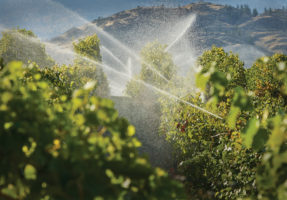
BC Ministry of Agriculture photo

October 2, 2019 byAngela Abrahao

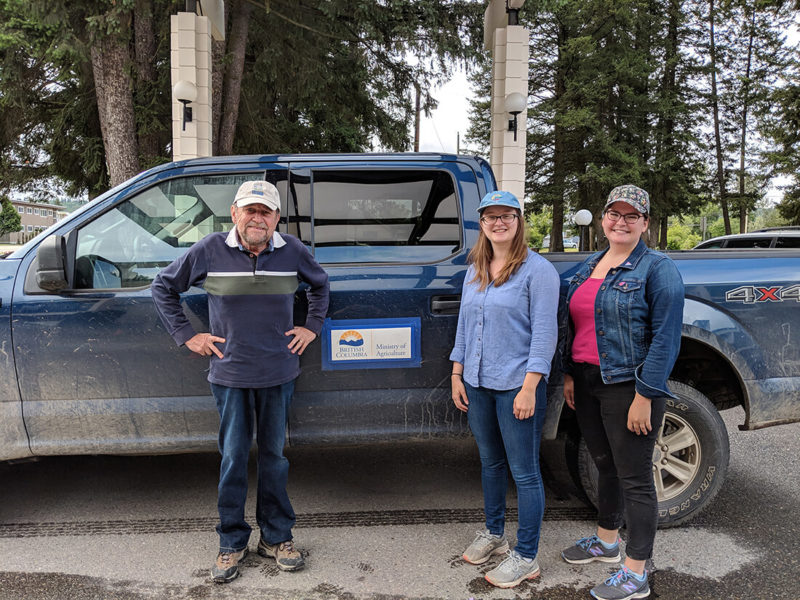
WILLIAMS LAKE—Producers used to keeping an eye out for suspicious activity were on alert in the Cariboo this summer when an unfamiliar vehicle bearing Alberta plates was spotted with a crew claiming to be working for the BC Ministry of Agriculture.

But all was well: the vehicle was indeed carrying a team of consultants whose work had been announced on social media by agriculture minister Lana Popham and distributed by ministry staff to stakeholders in the area. The crew was charged with conducting an Agricultural Land Use Inventory (ALUI) in the Cariboo as part of efforts to develop an agricultural water demand model (AWDM) for the region.

The inventory’s goal is to define the amount of actively farmed land in the region, provide a benchmark for monitoring land use change, identify land use trends for areas with historic ALUIs and assist land use planning including official community plans and Crown land use planning. ALUIs have been completed for the areas of south Cariboo, Lac La Hache and Green Lake.

The AWDM will enable the examination of water management alternatives that consider future land use changes, define potential impacts of climate change and identify appropriate adaptation strategies and inform future water storage modelling projects.

The agriculture ministry is using orthophoto satellite imagery to get an accurate representation of land surfaces.

The crew working in the Cariboo region this summer were verifying the orthophoto images for accuracy against what actually exists – that the images match up with the reality on the ground.

When paired with Statscan data, consultants will be able to confirm the location, crop, irrigation type and verify use for each land parcel in the region. This information is then run through the agricultural water demand model that will be used to determine how much water is needed on agricultural land and to look at changes in climate conditions and to assess future demand for water.

The main objective of the project is to have accurate information to be shared with local municipalities and regional districts so that they can make decisions about how to adapt and plan for climate change.

“The ALUI and AWDM is key information when local governments and other partners/agencies plan for agriculture,” explains Cariboo Chilcotin Coast regional agrologist Nicole Pressey. “With the changing climate and its potential impacts on food production in the region, resources such as the AWDM, the ALUI, the Climate Action Initiative’s Livestock Surface Water and Cariboo Pest projects and beneficial management practices through the Environmental Farm Plan can help producers, food processors, local governments and partners prepare for the change, and be resilient in the face of change.”

The project is especially important in the Cariboo for producers planning their livestock water use. The ministry hopes it will help private owners to think about water use, storage and management plans. Producers in the region are acutely aware of water use and there are parallel initiatives involving water projects happening in the Cariboo region. The Cariboo Cattlemen’s Association has engaged in several livestock surface water projects in recent years in partnership with the BC Agriculture and Food Climate Action Initiative.

“Although the funding for the livestock surface water project water developments applies to public land, it is important that all producers are aware of the work so they are aware of the tools necessary to be resilient in the face of change,” explains Pressey. “People cannot control the change, but they can control how they prepare for it.”
 

Related Posts

You may be interested in these posts from the same category.

Groundwater deadline firm

Groundwater users could lose rights next year

Grant funding for nutrient management projects

No extension for groundwater

Ranchers troubled by inconsistencies in well licensing

Dairy producers surveyed on regulation impact

Groundwater bill causes confusion for Island farmer

Slow drip on groundwater licences

Irrigation

Water fees questioned

Irrigation

Groundwater application deadline extended

BREAKING NEWS! Groundwater licencing deadline extended

Critics urge licence delay

Previous Post: « Food-X connects shoppers, farmers
Next Post: City Beet harvests profits from urban gardens »

Copyright © 2026 Country Life in BC · All Rights Reserved