• Menu
  • Skip to primary navigation
  • Skip to main content
  • Skip to primary sidebar

Country Life In BC Logo

The agricultural news source in British Columbia since 1915

  • Headlines
  • Calendar
  • Subscribe
  • Advertise
  • About
  • Archives
  • Contact
  • Search
  • Headlines
  • Calendar
  • Subscribe
  • Advertise
  • About
  • Archives
  • Contact
  • Search

Primary Sidebar

Originally published:

February 2018
Vol. 104 Issue 2

Subscribe Now!

Sign up for free weekly FARM NEWS UPDATES

Select list(s) to subscribe to


By submitting this form, you are consenting to receive marketing emails from: Country Life in BC. You can revoke your consent to receive emails at any time by using the SafeUnsubscribe® link, found at the bottom of every email. Emails are serviced by Constant Contact
Your information will not be
shared or sold ever

Stories In This Edition

Province launches ALR review

You lookin’ at me

Ambrosia royalties disputed

BC municipalities tackle farmland housing

Editorial: Love and money

Back 40: It’s time for farmers to speak up

Op-Ed: More workers needed to meet local demand

Ag waste regulation needs united front

Milk production catching up to demand

FIRB appointment comes ahead of busy year

Cottage dairy diversifies with milk dispensing system

Wildfire recovery underpins growing range of programs

Cowichan goats inspire global ambitions

Worker housing issue hinges on collaboration

Growers should file early, file complete

Disaster assistance

BCAC public trust manager steps down

Sidebar: Are you smarter than a 10th grader

Koski steps in at Investment Ag

Farmers keen to make land connections

Courtenay co-op seeks community investment

Backers flock to support sheep farm

Okanagan Spirits focuses on innovation

Research supports year-round starling traps

Feedback sought on water regs

New food guide demands changes in marketing meat

Cattle production expected to rise in 2018

Cattle production expected to rise in 2018

Affordable workshops for new farmers

Dreams become udder reality

Sheep federation charting new future

Growers watching stink bug’s spread

Research: How beavers will help improve cow digestion

Fly larvae offer sustainable alternative protein

Fish help balance greenhouse growing system

Island home to Canada’s top Highland breeder

Where good food comes from

Wannabe: Waste not, want not

Woodshed: When there is good-bad, and bad-bad

Jude’s Kitchen: Red & chocolatey

More Headlines

Follow us on Facebook

Comments Box SVG iconsUsed for the like, share, comment, and reaction icons

11 hours ago

... See MoreSee Less

View Comments
  • Likes: 6
  • Shares: 0
  • Comments: 0

Comment on Facebook

1 day ago

Four 4-H members were walking the Islands Ag Show Friday sharing leftover flower lollipops to exhibitors. The colourful pops were prizes for those who guessed answers based on the 4-H project boards on display at the show. Left to right, Talia Prenger, Kate Barter, Ella Prenger and Emma Barter of Parksville and Qualicum thought making lollipops into flowers "was really cute," says Kate. The Islands Ag Show wraps up today at 2 pm at the Cowichan Exhibition Centre. Stop by our booth and say hi to Ronda, Bob and Ann!

#BCAg
... See MoreSee Less

Four 4-H members were walking the Islands Ag Show Friday sharing leftover flower lollipops to exhibitors. The colourful pops were prizes for those who guessed answers based on the 4-H project boards on display at the show. Left to right, Talia Prenger, Kate Barter, Ella Prenger and Emma Barter of Parksville and Qualicum thought making lollipops into flowers was really cute, says Kate. The Islands Ag Show wraps up today at 2 pm at the Cowichan Exhibition Centre. Stop by our booth and say hi to Ronda, Bob and Ann! 

#BCAg
View Comments
  • Likes: 23
  • Shares: 4
  • Comments: 0

Comment on Facebook

3 weeks ago

The Canadian Food Inspection Agency is preparing to implement changes to its livestock traceability rules that will include mandatory computer reporting within seven days on movement of animals for veterinary appointments, community pastures, exhibitions, carcass and on-farm disposal and the births and deaths of every animal on your farm. Writer Tom Walker first brought these changes to the attention of our readers back in June 2023. We've posted his story to our website:

www.countrylifeinbc.com/cfia-proposes-traceability-updat#BCAg#BCag
... See MoreSee Less

The Canadian Food Inspection Agency is preparing to implement changes to its livestock traceability rules that will include mandatory computer reporting within seven days on movement of animals for veterinary appointments, community pastures, exhibitions, carcass and on-farm disposal and the births and deaths of every animal on your farm. Writer Tom Walker first brought these changes to the attention of our readers back in June 2023. Weve posted his story to our website: 

https://www.countrylifeinbc.com/cfia-proposes-traceability-updates/

#BCag
View Comments
  • Likes: 11
  • Shares: 21
  • Comments: 15

Comment on Facebook

I love hpw the cow in the picture hasn't even got a RFID tag in it but I digress. We can not read the link, it says "we are not permitted to read drafts". Please post again with the correct link.

Dairy farmers having been doing this several years. The app we use has become quite simple to use

Including equine?

Premise ID was slowly rolled through the country, voluntary then mandatory. Transparency and 'Consultation' has been light. Those who tried to bring this for discussion a couple years ago, because of forseen overreach, were quite often labeled conspiracy theorists and that it wasnt meant to be so heavily regulated and controlled. Gardens and seeds will be next. "Invasive species" reporting, check out the plants medicinal properties. Read the BC intentions papers. The premise ID that already heavy regulated commodities have claims to be treated different in the intentions papers on page 8. www2.gov.bc.ca/assets/gov/farming-natural-resources-and-industry/agriculture-and-seafood/food-saf...

Says i am "not allowed to preview draft".

Also concerning is the part on compliance...they can 'stumble onto' any farm and if you're not complying there are consequences.

When the CFIA stumbles into the wrong place compliance will be met with civil engagement

Says I can't preview draft

This is government overreach - Do Not Comply!

Do not comply

Fu

As if the price of beef isn't bad enough for consumers,,,,,be prepared to be gouged some more now

Ridiculous!!

Let's hold up on the beef exports tell we can get our own house in order... we need to deregulated, cheapen up the supply chain back into a 5 buck a pound rage so the good people canada can eat healthy food.. fuck your bean diets, that's retarded

This, along with the majority of new legislation pertaining to any type of farm, is a blatant squeeze on any sort of small, alternative agricultural venture. I am a massive believer in working together and sharing resources and costs and solutions - do not get me wrong - but this and the water registration among others, is an overreach (at most generous) and an absolute killer to smaller, local initiatives that LITERALLY save lives during extreme events. There is ONE ROAD into and out of my community. We don’t need or want some sort of backlogged government response when shit goes sideways. We want the ability AND SUPPORT to provide for our communities without penalty when things go badly. We want to produce sustainability for our communities. We live here, we work here, we want to STAY HERE. Stop making it harder.

View more comments

1 month ago

BC's minimum piece rates for 15 hand-harvested crops increased 2.6% on December 31. Crops include peaches, apricots, brussels sprouts, daffodils, mushrooms, apples, beans, blueberries, cherries, grapes, pears, peas, prune plums, raspberries and strawberries. Farm-worker piece rates in BC were increased by 11.5% in January 2019 and 6.9% in December 2024. BC’s current minimum wage sits at $17.85 per hour.

#BCAg
... See MoreSee Less

BCs minimum piece rates for 15 hand-harvested crops increased 2.6% on December 31. Crops include peaches, apricots, brussels sprouts, daffodils, mushrooms, apples, beans, blueberries, cherries, grapes, pears, peas, prune plums, raspberries and strawberries. Farm-worker piece rates in BC were increased by 11.5% in January 2019 and 6.9% in December 2024. BC’s current minimum wage sits at $17.85 per hour. 

#BCAg
View Comments
  • Likes: 9
  • Shares: 0
  • Comments: 2

Comment on Facebook

I'm not sure what they're telling us. Did peace rates have to increase so that Farm workers could make minimum wage?

They deserve it, but the general public will be whining about increased prices in the stores. Will need to make more information average to the g.p.

1 month ago

... See MoreSee Less

View Comments
  • Likes: 14
  • Shares: 0
  • Comments: 1

Comment on Facebook

105 Mile Ranch

Subscribe | Advertise

The agricultural news source in British Columbia since 1915
  • Email
  • Facebook

Feedback sought on water regs

February 1, 2018 byTom Walker

Proposed regulations are a long-standing industry priority

VICTORIA – The provincial government is seeking public feedback on new livestock watering regulations.

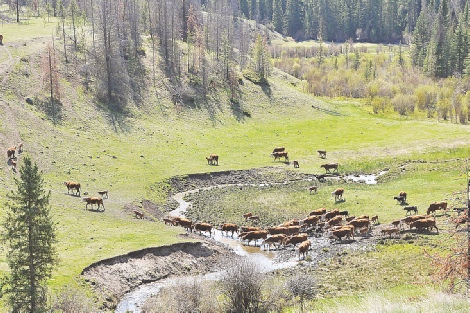
An intentions paper released in January focuses on cattle, which represent 96% of livestock grazing 21 million hectares of Crown rangeland and 5 million hectares of private rangeland across the province.

Rangeland grazing is the backbone of the BC cattle industry, but cattle need water.

“That grass is of no use to us if the cattle can’t drink water at the same time,” says Kevin Boon, general manager of the BC Cattlemen’s Association (BCCA).

We’re not talking about a lot of water. A cow-calf pair on rangeland in the Southern Interior needs about 45 litres a day, less than your morning shower. This amounts to about 1% of the average summer precipitation in the Interior, the province says.

The paper describes rangeland use by livestock as “insignificant when compared to demand from irrigation and other uses, as well as in relation to typical runoff from the watershed area where the livestock graze.”

The report of the BC ranching task force identified livestock water use as the highest priority for regulatory improvement in 2009. The new regulations were drafted under the authority of the 2016 Water Sustainability Act following more than two years of discussion with industry.

“We are glad to see the regulations moving forward,” says Boon. “We have been working with the government to ensure that they understand the needs of the industry and establish regulations that are workable.”

The intentions paper emphasizes “needs” and “workable.”

Ranchers still retain the right to access water on the range but proposed regulations make it much easier to manage that access. Easier management, in turn, improves the ability of ranchers to protect water quality.

These regulations are specifically for rangeland watering, described as “low livestock density” and do not apply to livestock watering in high-density areas, such as feedlots or corrals.

Cattle will still be allowed to drink water directly from a stream that is not designated for protection. However, ranchers will be able to manage access to reduce the impact cattle might have.

One option is a nose hole, which gives cattle limited access to a fenced-off water source. Diverting water though a pipe into an off-stream watering trough keeps cattle away from the stream, and a float control regulates the water running through the system.

Under the proposed regulations, nose holes, off-stream watering systems and minor temporary diversions such as a sling pump could be constructed without notifying a habitat officer but will still be subject to the standards and regulations of the Forest Practices Act and the Range Act.

Dugouts provide an important source of water storage for ranchers. They may provide access to shallow groundwater or collect and store ephemeral water or surface water runoff for later use. Dugouts are specifically addressed in the proposed regulations.

Authorization will not be required for an existing dugout used exclusively for watering livestock if it was built before the proposed regulations take effect, if it is smaller than 2,500 cubic metres, it does not have a dam or berm more than two metres high nor one regulated under Part 2 of the dam safety regulations. The proposed regulations also don’t require authorization for new dugouts used exclusively for watering livestock if they’re not on a perennial stream or on an ephemeral stream tributary to a perennial stream.

BCCA is comfortable with the intentions paper and the public consultation process, which ends February 16.

“It needs to be done right,” Boon says. “The process will not hold it up too long and we have to work with other interests in relation to water.”
Related Posts

You may be interested in these posts from the same category.

Groundwater deadline firm

Groundwater users could lose rights next year

Grant funding for nutrient management projects

No extension for groundwater

Ranchers troubled by inconsistencies in well licensing

Dairy producers surveyed on regulation impact

Groundwater bill causes confusion for Island farmer

Ministry working on land use inventory

Slow drip on groundwater licences

Irrigation

Water fees questioned

Irrigation

Groundwater application deadline extended

BREAKING NEWS! Groundwater licencing deadline extended

Previous Post: « Goat farmers get behind new dairy association
Next Post: Cowichan goats inspire global ambitions »

Copyright © 2026 Country Life in BC · All Rights Reserved